 Save to Pinterest
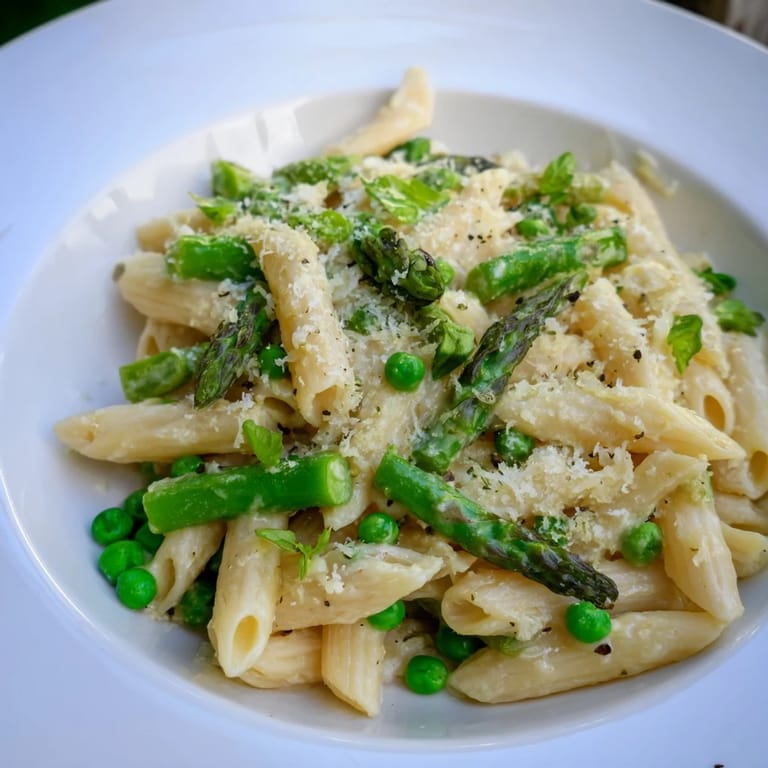
 The first time I made this pasta, it was one of those Tuesday nights when the fridge was nearly empty but the farmers market haul from the weekend was still vibrant. I threw everything into a skillet without much of a plan, and somehow the combination of bright spring vegetables and that creamy garlic sauce felt like discovering something completely new. Now it's become the dish I make when I want dinner to feel special without actually taking any special effort.
Last spring, my neighbor dropped by unexpectedly while I had this bubbling away on the stove. She ended up staying for dinner and left with the recipe scribbled on the back of an old envelope, texting me two days later that her family had already requested it again.
Ingredients
- 350 g (12 oz) penne pasta: The ridges hold onto the sauce beautifully, and the short shape means every bite gets an even distribution of vegetables
- 200 g (7 oz) asparagus, trimmed and cut into pieces: Choose spears that snap cleanly when bent, and cut them into similar sizes so they cook evenly
- 150 g (1 cup) fresh or frozen peas: Frozen work perfectly here, but if you find fresh peas at the market, they're worth the effort to shell
- 150 g (1 cup) green beans, trimmed and cut: Haricots verts are lovely and tender, but regular green beans work just as well
- 2 tbsp olive oil: This forms the base of your sauce, so use something you'd happily put on a salad
- 3 cloves garlic, finely minced: Fresh garlic is nonnegotiable here, jarred minced garlic lacks the aromatic punch this dish needs
- 60 ml (1/4 cup) vegetable broth: This helps deglaze the pan and adds depth without overwhelming the delicate flavors
- 120 ml (1/2 cup) heavy cream: Creates that luxurious velvety texture that makes the sauce coat every strand of pasta
- 60 g (2/3 cup) freshly grated Parmesan cheese: Buy a wedge and grate it yourself, pregrated cheese has anti-caking agents that prevent smooth melting
- 1/2 tsp freshly ground black pepper: Freshly cracked pepper has a floral complexity that preground cannot match
- 1/4 tsp salt (or to taste): The Parmesan is already salty, so taste before adding more
- Zest of 1 lemon: Use a microplane or fine grater to avoid the bitter white pith
- 1 tbsp fresh lemon juice: Brightens the whole dish and cuts through the richness of the cream
- Extra grated Parmesan: For serving, because everyone always wants more cheese on top
- Fresh basil or parsley, chopped: Adds a pop of color and a fresh herbal finish
Tired of Takeout? 🥡
Get 10 meals you can make faster than delivery arrives. Seriously.
One email. No spam. Unsubscribe anytime.
Instructions
- Get your pasta water going:
- Bring a large pot of salted water to a boil and cook the penne until it's just al dente, usually a minute less than the package suggests. Reserve that half cup of starchy pasta water before draining, it's liquid gold for pulling your sauce together later.
- Start the aromatic base:
- While the pasta cooks, warm the olive oil in a large skillet over medium heat. Add the minced garlic and let it sizzle for about one minute until it's fragrant and starting to turn golden, but not brown.
- Add the spring vegetables:
- Toss in the asparagus pieces, green beans, and peas. Sauté them for three to four minutes, stirring occasionally, until they're tender but still hold their bright green color.
- Build the sauce foundation:
- Pour in the vegetable broth and let it bubble for two minutes, scraping up any flavorful bits from the bottom of the pan. Reduce the heat to low and stir in the heavy cream and grated Parmesan, cooking until the cheese melts completely and the sauce becomes silky smooth.
- Bring it all together:
- Add the cooked penne to the skillet and toss everything together. If the sauce seems too thick, add some of that reserved pasta water a splash at a time until you reach a glossy, coating consistency.
- Finish with brightness:
- Season everything with black pepper, salt to taste, the lemon zest, and lemon juice. Give it one final toss to distribute all the flavors evenly.
- Serve immediately:
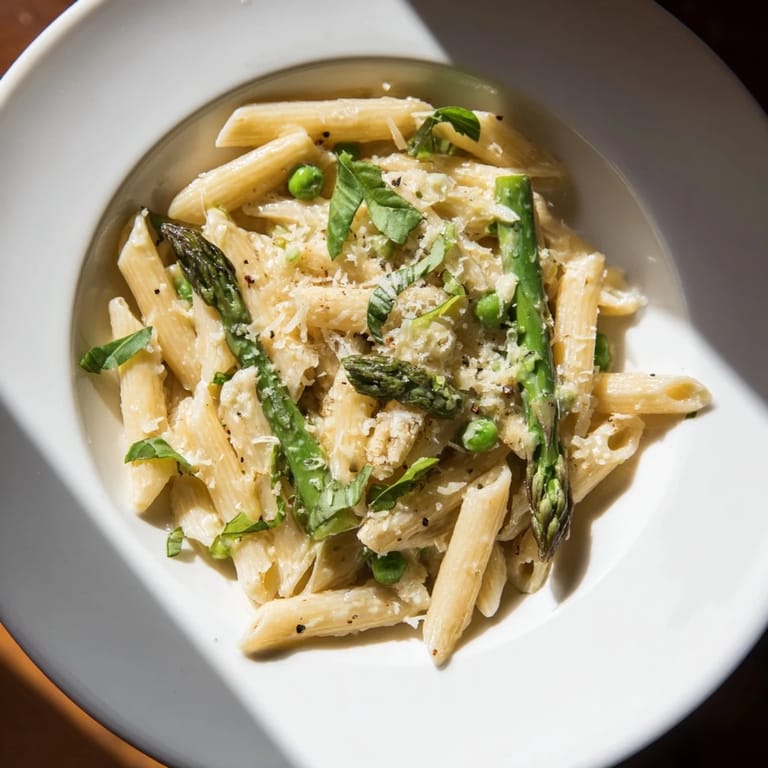
- Plate the pasta while it's steaming hot, and don't be shy with extra Parmesan and fresh herbs on top.
 Save to Pinterest
 This pasta has become my go-to for spring dinners, especially when I want something that feels comforting but not heavy. Something about the bright green vegetables against that creamy sauce makes the whole table feel a bit more festive.
Make It Your Own
Once you've made this a few times, you'll start noticing how flexible the template really is. I've added shaved asparagus ribbons when I wanted something elegant, and sometimes I toss in handfuls of baby spinach at the very end for extra color and nutrition. The vegetable combination changes with whatever looks best at the market, but the cream and Parmesan foundation remains constant.
Perfecting the Sauce
The secret to restaurant-quality sauce at home is patience when melting the cheese. Keep the heat low and stir constantly, and if you notice any graininess, remove the pan from the heat completely and keep stirring, the residual heat will smooth everything out. I've learned that rushing this step is what separates a good pasta from a great one.
Timing and Preparation
The most common mistake I see people make is starting the vegetables too early. Time your pasta water to boil as you start prepping vegetables, so everything comes together at the same moment. Having all ingredients measured and ready before you turn on the stove makes the whole process feel effortless rather than frantic.
- Cut all vegetables into similar sizes so they cook at the same rate
- Grate the cheese and zest the lemon before you start cooking
- Keep the pasta water draining within arm's reach of the stove
 Save to Pinterest
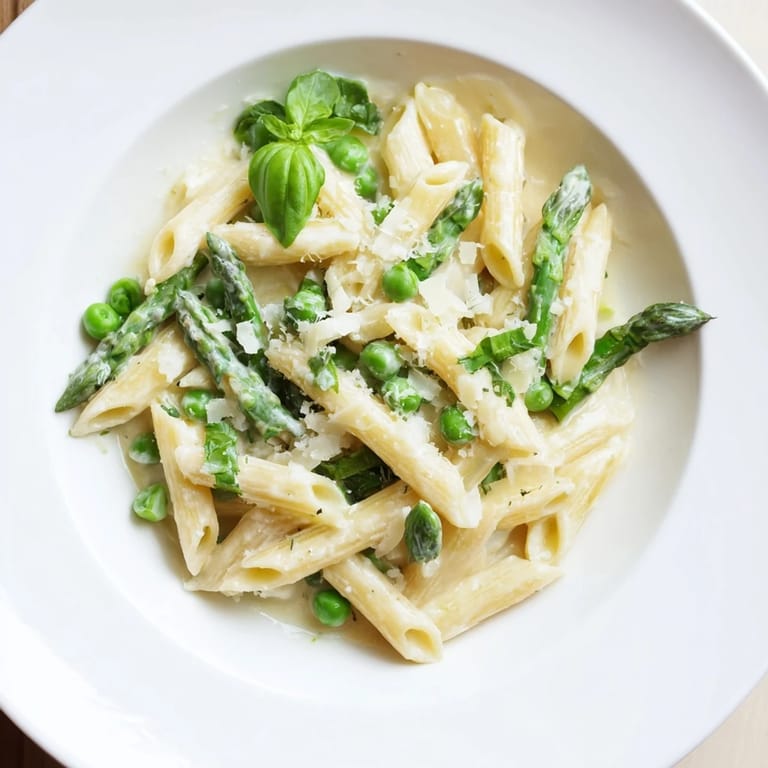
 There's something deeply satisfying about a recipe that celebrates vegetables this time of year without pretending to be anything other than what it is: simple, comforting food that makes people happy around your table.
Common Recipe Questions
- → How can I keep the vegetables crisp and vibrant?
Sauté the asparagus, green beans, and peas just until tender, allowing them to retain their bright color and slight crunch.
- → What’s the purpose of reserved pasta water in this dish?
Adding reserved pasta water helps to loosen the sauce and bind it smoothly to the pasta for a silky texture.
- → Can I substitute Parmesan with another cheese?
Yes, a hard cheese with a nutty flavor, like Grana Padano, works well to maintain the dish's creamy richness.
- → How can I make this dish lighter?
Use half-and-half instead of heavy cream for a lighter texture while preserving creaminess.
- → What herbs complement this pasta best?
Fresh basil or parsley add a fragrant, fresh note to balance the creamy sauce and vegetables.