 Save to Pinterest
 My neighbor stopped by one April afternoon with a basket of fresh peas from her garden, and I suddenly remembered why I'd never quite mastered risotto—it demands your full attention, your constant stirring, your presence at the stove. That day, with mint growing wild in her yard and the kitchen warming up for the first time in months, something clicked. The risotto became less about technique and more about that quiet, meditative rhythm of adding broth, stirring, waiting, repeating. Now it's the dish I make when I want to slow down and actually taste spring.
I served this to my in-laws on a Sunday evening when the conversation had hit one of those awkward lulls, and watching my mother-in-law taste that first spoonful—her face just softening—that's when I realized risotto isn't really about impressing people, it's about feeding them something that makes them feel seen. They came back for seconds and asked for the recipe three times.
Ingredients
- Fresh or frozen spring peas, 1 cup: Use frozen if fresh aren't available; they're just as good and sometimes sweeter since they're picked at peak ripeness and frozen immediately.
- Small onion, finely chopped: The knife work here matters—smaller pieces mean they dissolve into the risotto and create a silky base rather than little chunks.
- Garlic cloves, 2, minced: Don't skip the mincing step; garlic slivers will overpower the dish, but properly minced garlic becomes background magic.
- Fresh mint leaves, 2 tablespoons, finely chopped: Add this at the very end so it stays bright green and peppery; cooking mint turns it bitter and dull.
- Lemon zest, from 1 lemon, optional but really not: This is where the whole dish gets its backbone—the acidity cuts through the richness and makes everything else taste more like itself.
- Arborio rice, 1 1/2 cups: This short-grain variety has a higher starch content that creates that signature creamy texture; don't substitute it with long-grain rice.
- Unsalted butter, 3 tablespoons divided: Use real butter here, not margarine—you'll taste the difference in every spoonful, and half of it goes in at the end to make the risotto luxurious.
- Parmesan cheese, 1/2 cup grated: Grate it fresh if you possibly can; pre-grated cheese has anti-caking agents that make the risotto grainy instead of creamy.
- Heavy cream, 1/4 cup, optional: I skip it sometimes and don't miss it, but on nights when I want pure comfort, those few tablespoons make it cloud-like.
- Vegetable broth, 4 cups kept warm: Warm broth is essential—cold broth will shock the rice and prevent it from cooking evenly, which is the secret to that perfect al dente texture.
- Dry white wine, 1/2 cup: The acidity helps break down the rice starches and builds flavor; don't use cooking wine with salt already added.
- Extra-virgin olive oil, 2 tablespoons: This is your base fat along with the butter, and good olive oil adds a peppery note that complements the peas and mint.
- Salt and freshly ground black pepper to taste: Taste as you go—risotto needs more seasoning than you'd think, but add it gradually so you don't overshoot.
Tired of Takeout? 🥡
Get 10 meals you can make faster than delivery arrives. Seriously.
One email. No spam. Unsubscribe anytime.
Instructions
- Get your broth ready and keep the warmth going:
- Pour your vegetable broth into a medium saucepan and set it over low heat, where it will sit quietly simmering the whole time you're cooking the risotto. This matters more than you'd think—warm broth absorbs into the rice smoothly, while cold broth makes the grains tense up and cook unevenly.
- Build your aromatic foundation:
- Heat the olive oil and 2 tablespoons of butter together in a large, heavy-bottomed skillet over medium heat until the butter foams. Add your finely chopped onion and let it soften and turn translucent, about 4 minutes, stirring occasionally—you're not looking for color here, just tenderness and sweetness.
- Wake up the garlic:
- Add your minced garlic and cook for about 1 minute, just until the kitchen fills with that toasty garlic aroma. Stir constantly so it doesn't stick or brown; you want it fragrant and soft, not bitter.
- Toast the rice in fat:
- Pour in the Arborio rice and stir it around in the butter and oil for about 2 minutes, making sure every grain gets coated. You'll notice the grains becoming slightly translucent at the edges—that's your signal that they're ready to drink up the wine.
- Deglaze with wine and build flavor:
- Pour in the dry white wine all at once and stir constantly, letting the liquid absorb into the rice and the alcohol cook off. This usually takes 2-3 minutes, and the pan will start to smell complex and deep.
- Add broth one patient ladleful at a time:
- Begin adding your warm broth one ladle at a time, stirring frequently—not constantly, but often enough that you're keeping the rice moving and releasing its starches. Wait until each addition is mostly absorbed before adding the next; this is the meditative part, the part that takes about 18-20 minutes total and during which you cannot walk away.
- Slip the peas in near the finish:
- When you have about 5 minutes of cooking left, stir in your fresh or frozen peas. They'll warm through gently and stay bright and sweet rather than turning soft and mealy.
- Finish with richness and brightness:
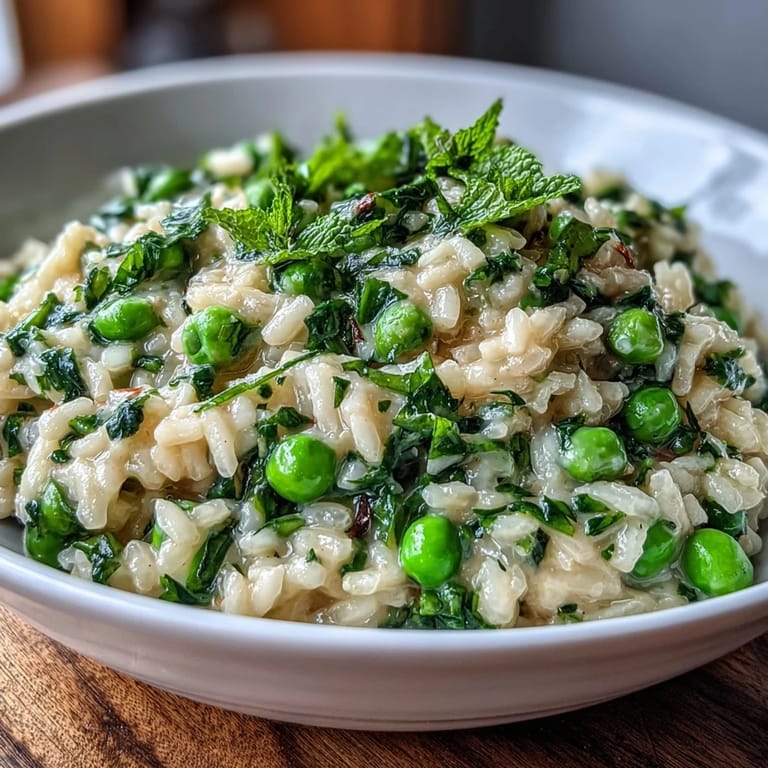
- Once the rice is creamy and al dente (meaning tender but still with a tiny bit of resistance when you bite it), remove the pan from heat. Stir in the remaining tablespoon of butter, the grated Parmesan, the heavy cream if you're using it, your fresh chopped mint, and the lemon zest. The residual heat will melt everything together into pure luxury.
- Season and rest briefly:
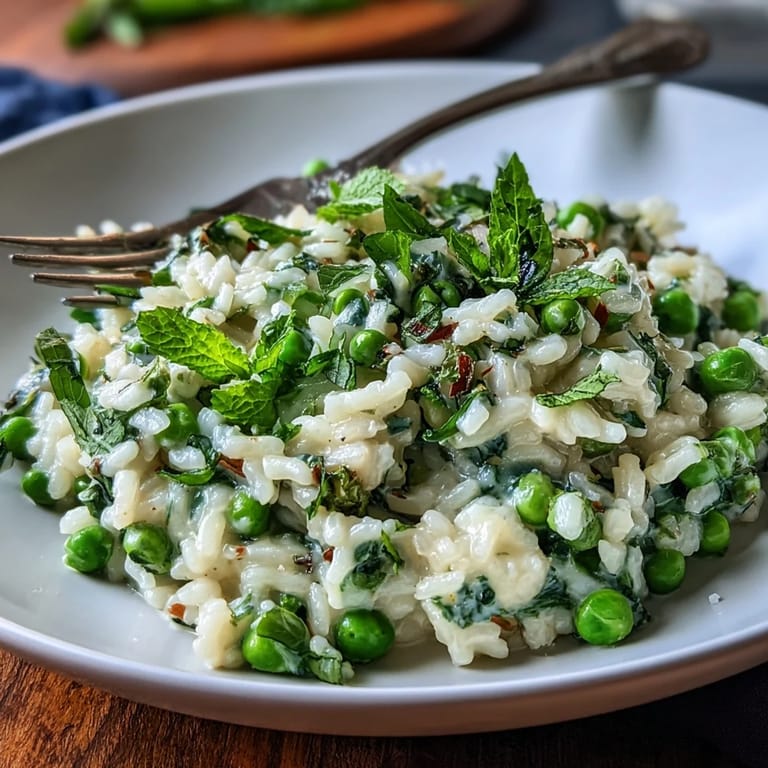
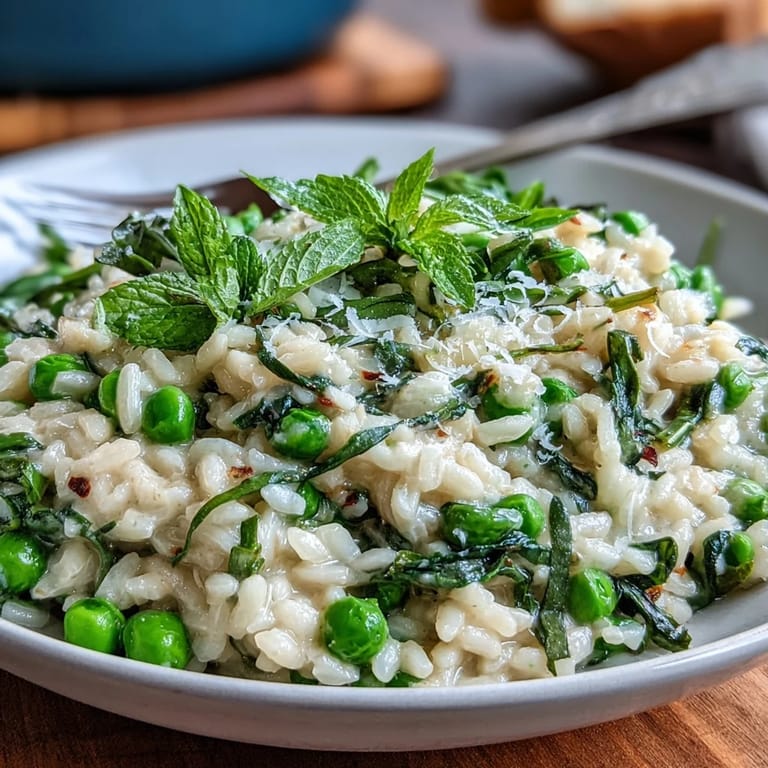
- Taste carefully and season with salt and pepper—you'll probably need more than you expect because rice absorbs seasoning. Let the risotto sit for 2 minutes off the heat so it sets up just slightly, then serve immediately while it's still flowing and warm, with extra mint and Parmesan scattered on top.
 Save to Pinterest
 Last spring, my daughter helped me stir and taste, and she announced that risotto was basically just fancy rice. I couldn't argue with her, but I also watched her eat two bowls, and I think she understood without me saying it that sometimes ordinary ingredients treated with care become something worth remembering.
The Rhythm of Risotto
Risotto teaches you something about patience if you let it—there's no rushing the process without consequence, but once you surrender to the pace of it, the stirring becomes almost meditative. The rice gradually swells and softens, the kitchen fills with steam and butter and vegetable broth, and by the time you're done, you've been present for something rather than just going through motions. That presence is what makes it taste different than rice made any other way.
Playing with Spring Vegetables
Peas and mint are the classic pairing, but this risotto is flexible enough to dance with whatever your market has that week—a handful of tender baby spinach stirred in at the end stays bright and adds a whisper of earthiness, or shaved asparagus cooked with the peas if you catch them at that perfect thin, tender stage. I've even made this with fresh corn and basil in July, and it tasted like an entirely different season but used exactly the same technique. The point isn't the specific vegetables; the point is using what's at its peak and knowing that risotto will cradle whatever you choose.
Pairing and Serving Thoughts
This risotto sits happily in the middle of the table as its own main event, especially if you've added the optional cream and finished it with a shower of fresh mint and Parmesan. But it also plays well with others—a simple green salad with lemon dressing on the side, or some grilled chicken breast or toasted pine nuts scattered on top if you want to add protein. I've served it both ways, and I've noticed that people slow down more when it's the star of the plate than when it's playing supporting role.
- If you want to save money, skip the heavy cream entirely; the butter and Parmesan create plenty of richness on their own.
- For a vegan version, use vegan butter and a cashew-based Parmesan alternative, and the risotto will still taste good, though you'll lose some of that salty umami note.
- Make sure your broth isn't overly salted before you start, since Parmesan and the cheese you finish with will add significant salt.
 Save to Pinterest
 Make this risotto when you want to remember that cooking is partly about technique and partly about showing up, and that the meals people remember most are often the ones that didn't rush. Serve it while it's still flowing, and watch what happens to the table.
Common Recipe Questions
- → What type of rice is best for this dish?
Arborio rice is ideal due to its high starch content, which creates the creamy texture characteristic of this dish.
- → Can frozen peas be used instead of fresh?
Yes, frozen peas can be added toward the end of cooking to maintain their sweetness and texture.
- → How do I achieve the creamy consistency without overcooking?
Gradually add warm broth while stirring frequently, allowing each addition to absorb before adding more, cooking until grains are tender but firm.
- → What wine pairs well with this dish?
Light white wines like Sauvignon Blanc or Pinot Grigio complement the fresh and creamy flavors beautifully.
- → Is it necessary to use butter and cream?
Butter adds richness and creaminess, while the cream is optional and can be omitted or replaced with alternatives for dietary preferences.