 Save to Pinterest
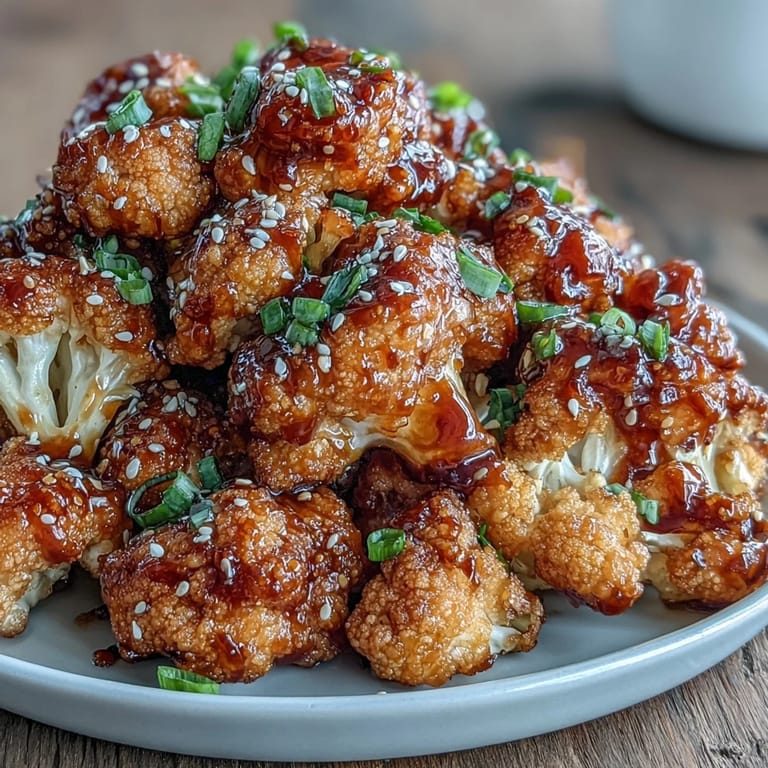
 My sister called me mid-Tuesday asking if I could make something that tasted like takeout but wouldn't leave my kitchen smelling like a deep fryer for a week. That's when I remembered General Tso's chicken from my college days and wondered what would happen if I swapped the meat for cauliflower and let the air fryer do the heavy lifting. The first batch came out golden and crackling, and when I tossed it in that tangy-sweet-spicy sauce, something clicked—this wasn't a compromise version of the real thing, it was its own revelation.
I brought this to a potluck last month where everyone was expecting the usual suspects, and watching people circle back for thirds while debating whether it was better than the real deal was honestly the best kitchen validation I could ask for. One friend asked for the recipe right there, sauce-stained napkin in hand, and I knew I'd stumbled onto something special.
Ingredients
- Cauliflower: One large head cut into bite-sized florets works best—you want pieces substantial enough to stay crispy without being massive, which would leave the center undercooked.
- All-purpose flour: Two-thirds cup creates the structure for your batter and needs to be whisked with the cornstarch or it'll clump.
- Cornstarch: One-third cup is the secret to that crackling exterior; it fries up differently than flour alone and gets impossibly crisp.
- Baking powder: One teaspoon adds airiness to the coating, making it light rather than dense.
- Salt: Half a teaspoon in the batter, though taste as you go since the sauce is salty too.
- Garlic powder and white pepper: Half a teaspoon each seasons the coating itself so every bite has flavor, not just the outside.
- Cold water: Three-quarters cup keeps the batter thin enough to coat smoothly; warm water makes it gluey.
- Low-sodium soy sauce: One-third cup is your umami backbone, the depth that makes people ask what's in this.
- Rice vinegar: One-quarter cup adds brightness and cuts through the richness so the sauce doesn't feel heavy.
- Sugar: One-third cup balances the salty and sour, creating that addictive sweet-tangy profile.
- Hoisin sauce: Two tablespoons brings funk and complexity; don't skip it or the sauce feels one-dimensional.
- Cornstarch slurry: One tablespoon cornstarch mixed with half a cup water thickens the sauce perfectly without making it gloppy.
- Fresh garlic and ginger: Two cloves minced and one teaspoon grated give you that fresh heat that bottled versions can't replicate.
- Chili garlic sauce: One to two teaspoons depending on your heat tolerance; this is where you control the fire.
- Toasted sesame oil: One tablespoon at the end adds a nutty finish and smells like you know what you're doing.
- Scallions and sesame seeds: For garnish, these add texture and color that make the dish look intentional rather than rushed.
Tired of Takeout? 🥡
Get 10 meals you can make faster than delivery arrives. Seriously.
One email. No spam. Unsubscribe anytime.
Instructions
- Heat your air fryer:
- Set it to 400°F and let it preheat for a few minutes while you prep everything else; a properly heated air fryer makes all the difference between limp and crispy.
- Build your batter:
- Whisk flour, cornstarch, baking powder, salt, garlic powder, and white pepper in a large bowl, then add cold water slowly while whisking so you end up with something smooth and pourable, not lumpy. The consistency should coat the back of a spoon but drip off when you lift it.
- Coat the cauliflower:
- Toss your florets into the batter and make sure every piece is covered; this is tedious but matters because bare spots won't crisp up the same way. Work in batches if your bowl is small.
- Air fry in batches:
- Lightly spray your air fryer basket with oil, arrange florets in a single layer without crowding (they need air circulation to crisp, not steam), and cook at 400°F for 15 to 18 minutes, shaking the basket halfway through. They should be golden and sound crackling when you shake them.
- Make the sauce while you wait:
- In a small bowl, mix cornstarch with water to create a slurry that'll thicken the sauce without lumps. In a saucepan over medium heat, combine soy sauce, rice vinegar, sugar, hoisin, minced garlic, ginger, chili garlic sauce, and sesame oil, and let it come to a simmer.
- Thicken and finish:
- Pour in that cornstarch slurry while stirring constantly and watch the sauce go from thin and glossy to thick and clingy, about 1 to 2 minutes; remove from heat right when it coats a spoon.
- The marriage moment:
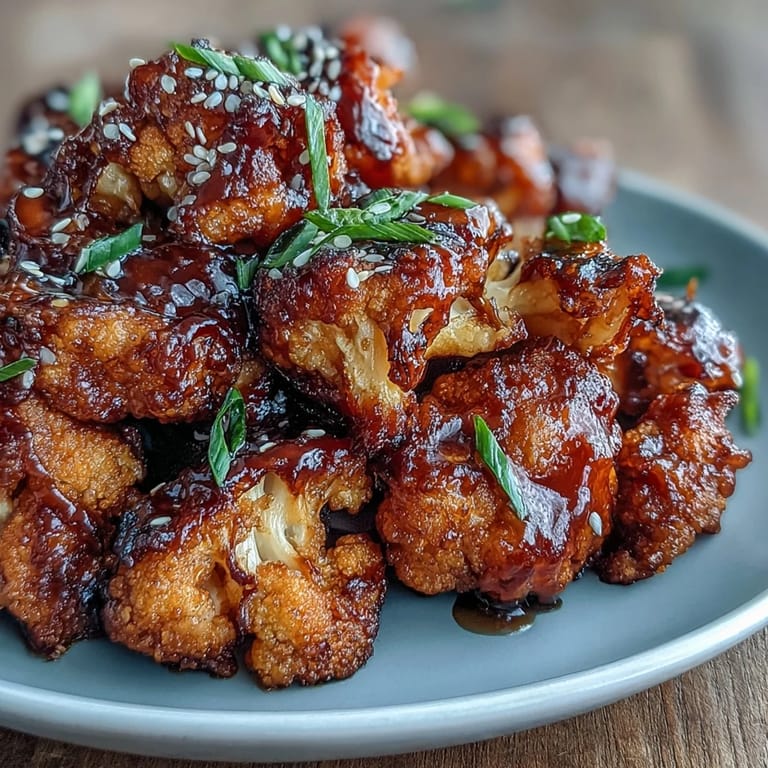
- Toss your hot, crispy cauliflower directly into the hot sauce so it absorbs all those flavors while still steaming. Transfer to a serving platter, scatter scallions and sesame seeds on top, and serve while everything's still hot.
 Save to Pinterest
 What started as a quick solution to a Tuesday night craving has become the recipe I reach for when I want to feel like I'm taking care of people, even if it's just myself at the kitchen counter at 8 PM with leftovers. There's something about watching something transform from pale and battered to golden and glossy that reminds me why I love cooking in the first place.
Customizing Your Heat Level
The chili garlic sauce is where this recipe lives or dies depending on your tolerance for spice, and I've learned that one person's perfect is another person's cry for milk. Start with one teaspoon and taste the sauce before you toss in the cauliflower; you can always add more but you can't take it back, and it's worth the extra minute to get it right.
What to Serve Alongside
I've paired this with steamed jasmine rice, cauliflower rice for the low-carb crew, and even over noodles when I'm feeling decadent. The sauce is forgiving enough that it works with almost anything, but if I'm being honest, sometimes I just eat it straight from the platter with chopsticks, no sides needed.
Making It Your Own
The beauty of this recipe is how flexible it is without losing its identity, and I've experimented with add-ins that surprised me. Broccoli florets cooked alongside the cauliflower absorb the same sauce beautifully, red bell pepper strips add sweetness and texture, and even some people swear by tossing in cashews at the end for crunch.
- For gluten-free, swap regular flour for a one-to-one blend and use tamari instead of soy sauce; the texture won't be identical but it's still delicious.
- If you want extra sauce to drizzle or have leftovers that aren't as crispy the next day, double the sauce recipe and store it separately.
- Leftover coated florets can be reheated in the air fryer at 350°F for about 5 minutes to restore some of the crispiness.
 Save to Pinterest
 This recipe proved to me that you don't need to deep fry or sacrifice flavor to make something that feels special, and it's become the dish I recommend when people say they're bored with their usual rotation. Make it once and you'll understand why it keeps appearing on my table.
Common Recipe Questions
- → What is the best way to achieve crispy cauliflower?
Coating cauliflower florets in a batter made with flour and cornstarch before air frying helps achieve a crispy exterior without excess oil.
- → How can I adjust the spiciness of the sauce?
Modify the amount of chili garlic sauce according to your heat preference, starting with less and adding more gradually.
- → Can I substitute ingredients for dietary needs?
Use gluten-free flour and tamari instead of regular flour and soy sauce to make this dish gluten-free while maintaining flavor.
- → What garnishes complement the dish?
Thinly sliced scallions and toasted sesame seeds add texture and a fresh, nutty finish to the cauliflower.
- → Is air frying better than deep frying for this dish?
Air frying provides a lighter version with similar crispiness by circulating hot air, reducing oil usage while maintaining texture.