 Save to Pinterest
 There's something about the smell of garlic roasting in the oven that stops you mid-thought. I discovered this soup entirely by accident one autumn afternoon when I had more garlic than I knew what to do with and my kitchen felt too quiet. The combination of slowly caramelized onions with that sweet, mellow roasted garlic turned into something so rich and comforting that I ended up making it three times that week. It's the kind of dish that tastes like someone who knows you made it.
I made this for my neighbor one winter when she'd been under the weather, and watching her face when that first spoonful hit—the warmth, the depth—it felt like I'd given her something more valuable than soup. She called it liquid gold, which seemed excessive until she brought the empty pot back the next day asking for the recipe. That's when I knew this wasn't just dinner.
Ingredients
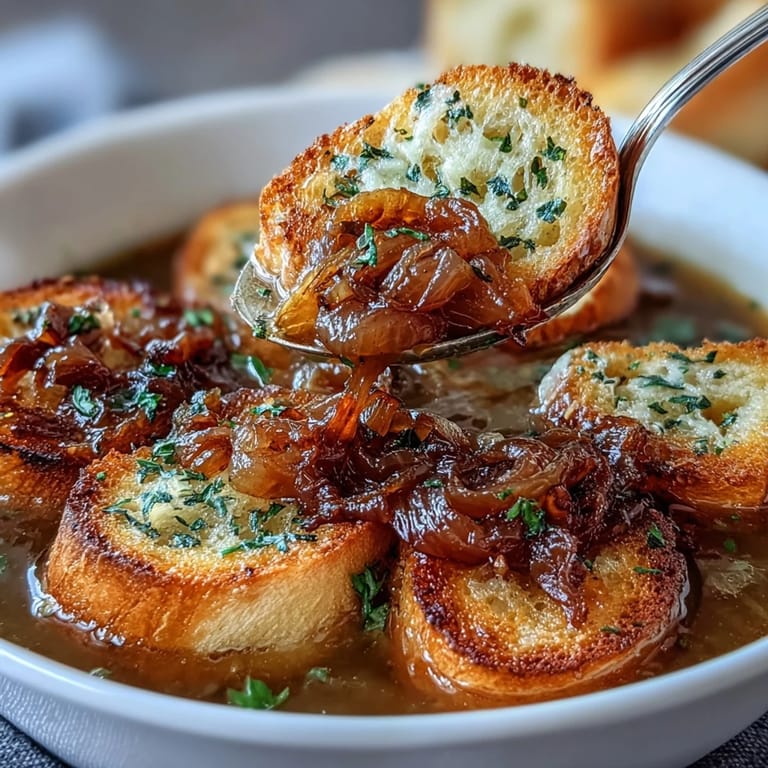
- Yellow onions: Three large ones sliced thin are your foundation; they'll caramelize into jammy sweetness if you're patient and keep stirring.
- Garlic heads: Two whole heads roasted transform into silky, nutty paste that dissolves into the broth like it was always meant to be there.
- Olive oil and butter: Use both for that combination of depth and richness; the butter especially matters when you're building flavor.
- Leek, celery, carrot: This aromatic trio supports everything else, adding layers most people won't identify but absolutely will taste.
- Dry white wine: It cuts through the richness and pulls up all those caramelized bits stuck to the pot bottom.
- Vegetable broth: Five cups becomes your canvas; quality broth makes an actual difference here.
- Soy sauce: Optional but not really—a teaspoon adds a savory undertone that makes people wonder what your secret ingredient is.
- Fresh thyme, bay leaf, oregano: These herbs bloom as everything simmers, each one whispering its own contribution.
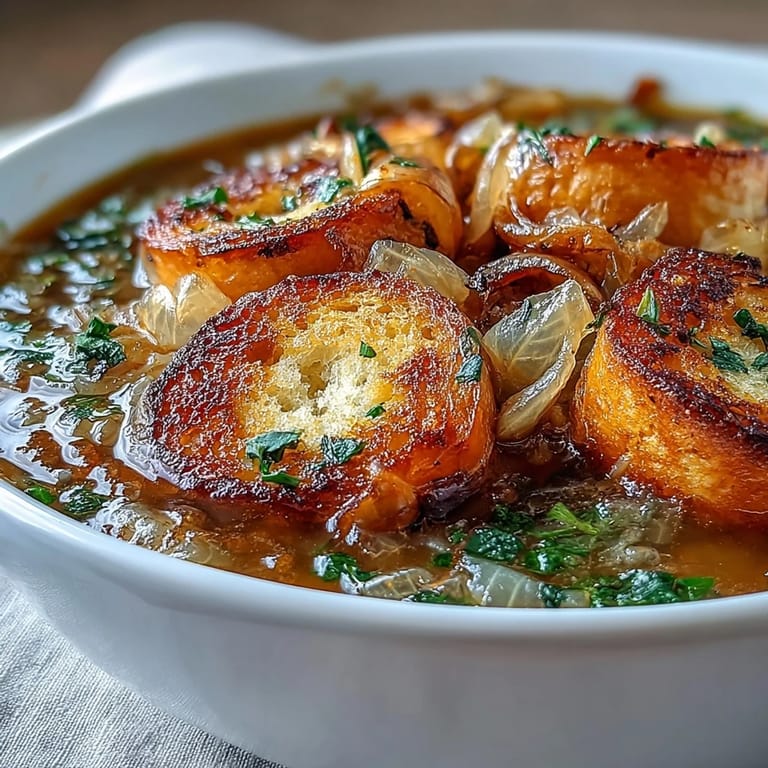
- Day-old baguette: Stale bread is actually what you want; it gets crispy and nutty rather than chewy.
- Herb crouton seasonings: Parsley, thyme, garlic powder, and salt turn bread cubes into something people eat by the handful.
Tired of Takeout? 🥡
Get 10 meals you can make faster than delivery arrives. Seriously.
One email. No spam. Unsubscribe anytime.
Instructions
- Roast the garlic until it's soft and golden:
- Preheat your oven to 400°F and slice the tops off both garlic heads to expose the cloves. Drizzle with a tablespoon of olive oil, wrap tightly in foil, and let them roast for 40 minutes until they're completely soft and the kitchen smells incredible. When they're cool enough to handle, squeeze the roasted garlic out from the skins like toothpaste from a tube—it should come out smooth and almost buttery.
- Caramelize the onions slowly with patience:
- Heat the remaining tablespoon of olive oil and butter together in a large pot over medium-low heat, then add your sliced onions along with the leek, celery, and carrot. This is where most people rush, but don't—keep stirring every few minutes for 25 to 30 minutes until the onions turn deep golden and almost jam-like. They'll stick slightly to the pot bottom, which is actually perfect because those brown bits are flavor.
- Deglaze and reduce the wine:
- Pour in the white wine and scrape up everything stuck to the pot bottom with a wooden spoon, watching it sizzle and release all that caramelized goodness. Let it simmer for a few minutes until the liquid reduces by about half and the alcohol smell mellows out.
- Build the broth and simmer:
- Stir in your roasted garlic, vegetable broth, the optional teaspoon of soy sauce, thyme sprigs, bay leaf, and oregano. Bring everything to a boil, then lower the heat and let it simmer uncovered for 25 minutes while you make the croutons.
- Make crispy, aromatic croutons:
- Toss your baguette cubes with olive oil, fresh parsley, dried thyme or Italian herbs, garlic powder, and a pinch of salt, then spread them on a baking sheet. Bake at 400°F for 10 to 12 minutes, stirring once halfway through, until they're golden and crispy enough to actually crunch.
- Finish and adjust:
- Remove the thyme sprigs and bay leaf from your pot, then taste and season with salt and pepper. If you prefer a smoother soup, use an immersion blender to puree part or all of it, depending on whether you want texture or silkiness.
- Serve with generosity:
- Ladle the soup into bowls and pile on a generous handful of those herb croutons, then add a small parsley garnish if you have fresh on hand.
 Save to Pinterest
 There was a moment last spring when my daughter came home from college and walked into the kitchen while this was simmering, and before I could even say hello, she just sat down. We didn't talk much—just sat there breathing in the steam, waiting—and it felt like everything that mattered was in that bowl. That's when a recipe stops being instructions and becomes a language.
The Magic of Slow Roasting
Roasted garlic isn't just a technique; it's a transformation. Raw garlic is sharp and assertive, but when you roast it slowly, the sulfur compounds mellow and the natural sugars caramelize, turning each clove into something closer to a sweet paste than anything garlicky. The first time I bit into a roasted clove straight from the oven, I actually gasped—it was almost creamy, almost sweet, almost like what garlic dreams of becoming. Your oven does the work here, and that patience pays back in flavor that tastes like you've been cooking all day.
Caramelization Is About Time, Not Temperature
People always ask if they can turn up the heat to speed through caramelizing the onions, and the answer is a firm no. Medium-low heat and steady stirring over 25 to 30 minutes creates sweetness and depth that high heat can never touch—high heat just burns them bitter. I learned this the hard way, of course, back when I thought efficiency mattered more than flavor. Now I see those 30 minutes as the actual cooking, the part where everything transforms, and I don't even want to rush.
Optional Additions That Elevate
This soup is beautiful as written, but it also welcomes small additions that feel personal. A teaspoon of soy sauce adds a savory undertone that makes people ask what your secret is, while grated Gruyère or Parmesan on top turns it into something almost creamy without actually adding cream. Some people substitute half the onions with shallots for a slightly sweeter profile, or they add a splash of balsamic vinegar at the end for subtle depth.
- Drizzle truffle oil over the finished soup if you're feeling indulgent and want to turn an ordinary Thursday into something memorable.
- Fresh thyme sprigs on top of the croutons add a whisper of herbal fragrance that people notice on that first spoonful.
- A grind of fresh black pepper right before serving makes every bowl feel individually considered and warm.
 Save to Pinterest
 This soup lives in that beautiful space where it feels fancy enough to serve guests but honest enough to eat alone in your quietest moments. Make it when you need to slow down, taste it when you need to remember what real food feels like.
Common Recipe Questions
- → How do I roast garlic properly for this soup?
Slice the garlic heads tops off, drizzle with olive oil, wrap in foil, and roast at 400°F for about 40 minutes until soft and golden.
- → What is the best way to caramelize the onions?
Cook onions slowly over medium-low heat with butter and olive oil, stirring frequently for 25–30 minutes until deeply golden and sweet.
- → Can I make the soup smoother?
Yes, for a velvety texture, blend part or all of the soup with an immersion blender before serving.
- → How are the herb croutons prepared?
Toss bread cubes with olive oil, dried herbs, garlic powder, and salt, then bake at 400°F for 10–12 minutes until crisp and golden.
- → Are there suitable substitutions for a vegan version?
Omit butter and use olive oil only. Check crouton ingredients to ensure they contain no dairy or animal products.