 Save to Pinterest
 One Tuesday afternoon, I was standing in my kitchen feeling uninspired by the same sad salads I kept making for lunch. My friend Sofia had just mentioned how she'd discovered Mediterranean bowls at a local café, and something about her description—the way she talked about the warm roasted vegetables hitting cool greens and creamy hummus—made me want to recreate that magic at home. That day I threw together whatever vegetables needed using, scattered them with chickpeas, and drizzled everything with a quick tahini dressing I'd improvised. What emerged was this beautiful, nourishing bowl that somehow felt both simple and special. Now it's become my go-to when I want something that looks impressive but doesn't demand fussing.
I made this for my book club last month, and something unexpected happened—three people came back for seconds, and the one person on my couch who swears she doesn't eat vegetables actually asked for the recipe. She was so focused on the hummus and tahini dressing that she barely noticed how much roasted eggplant she was eating. Watching her realize it afterward made me laugh, and I realized this bowl has this quiet power to make food feel more generous and less like obligation.
Ingredients
- Mixed salad greens (arugula, spinach, romaine): Use whatever feels fresh in your hands—the mix matters less than the quality, so buy what looks brightest at your market.
- Zucchini: Dice it into roughly half-inch pieces so it caramelizes evenly without turning mushy.
- Red bell pepper: The sweetness balances the earthier vegetables, so don't skip it even if you think you might.
- Red onion: Slice it thin enough that it softens but thick enough to keep its shape and slight bite.
- Eggplant: Cut into cubes similar in size to the zucchini so everything roasts at the same pace.
- Olive oil: Use good oil here since it's tossed raw with the vegetables before roasting—I use about two tablespoons, which might seem modest but is exactly enough.
- Dried oregano and smoked paprika: These are the seasonings that make the vegetables taste like they've traveled to Greece, so measure generously.
- Cooked chickpeas: If using canned, rinse them thoroughly under cold water to remove the thick liquid that can make them taste metallic.
- Tahini: Buy the kind with just sesame seeds if you can, since some brands add oils that make the dressing separate.
- Lemon juice: Fresh juice matters here—bottled lemon juice tastes thin and flat by comparison.
- Garlic: Mince it finely so it dissolves into the dressing rather than staying gritty.
- Kalamata olives: Pit them yourself if you buy them whole, since pitted ones sometimes taste less vibrant.
- Avocado: Slice it just before assembling so it doesn't brown and lose that beautiful green color.
- Hummus: Homemade is worth it if you have ten minutes, but store-bought works perfectly fine and tastes better than you'd expect.
Tired of Takeout? 🥡
Get 10 meals you can make faster than delivery arrives. Seriously.
One email. No spam. Unsubscribe anytime.
Instructions
- Heat your oven and prep the vegetables:
- Set the oven to 425°F and while it's warming, get your zucchini, bell pepper, red onion, and eggplant prepped on a cutting board—having everything ready before you toss saves you from standing there with wet hands.
- Season and spread:
- In a large bowl, toss your diced vegetables with olive oil, oregano, smoked paprika, salt, and pepper, then spread them in a single layer on a baking sheet without crowding—they'll roast better if they have space to actually caramelize rather than steam.
- Roast until the edges turn golden:
- Make the tahini dressing while vegetables roast:
- Combine tahini, lemon juice, water, minced garlic, cumin, and salt in a bowl and whisk until it's smooth and pourable—if it seems too thick, add water one tablespoon at a time because it should flow like a loose paste.
- Build your bowls:
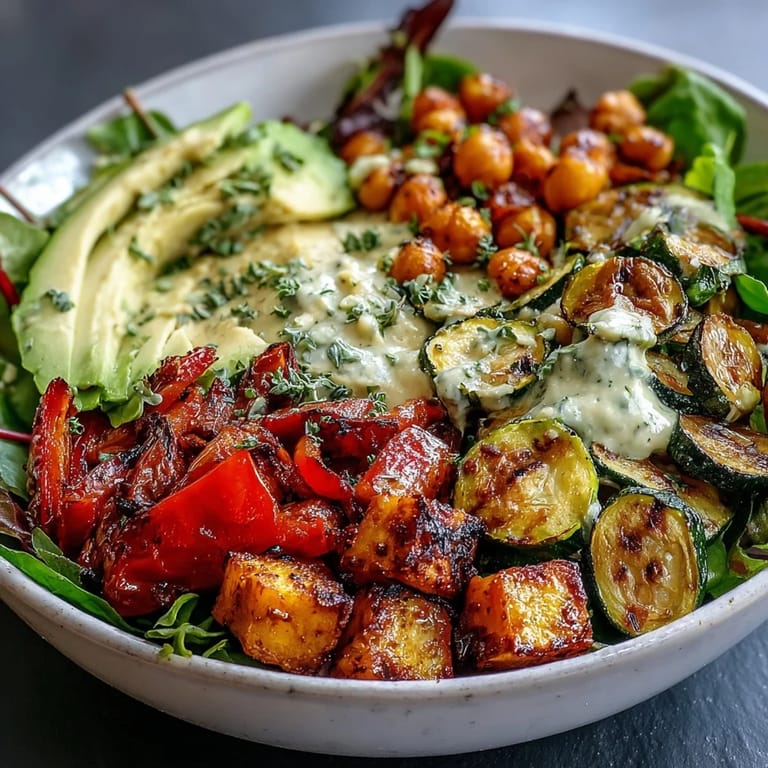
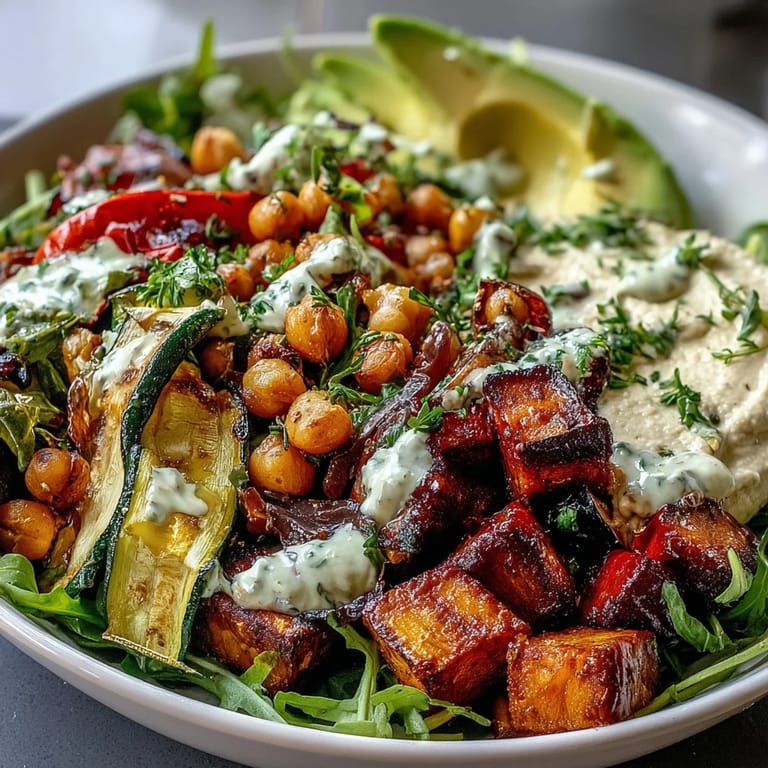
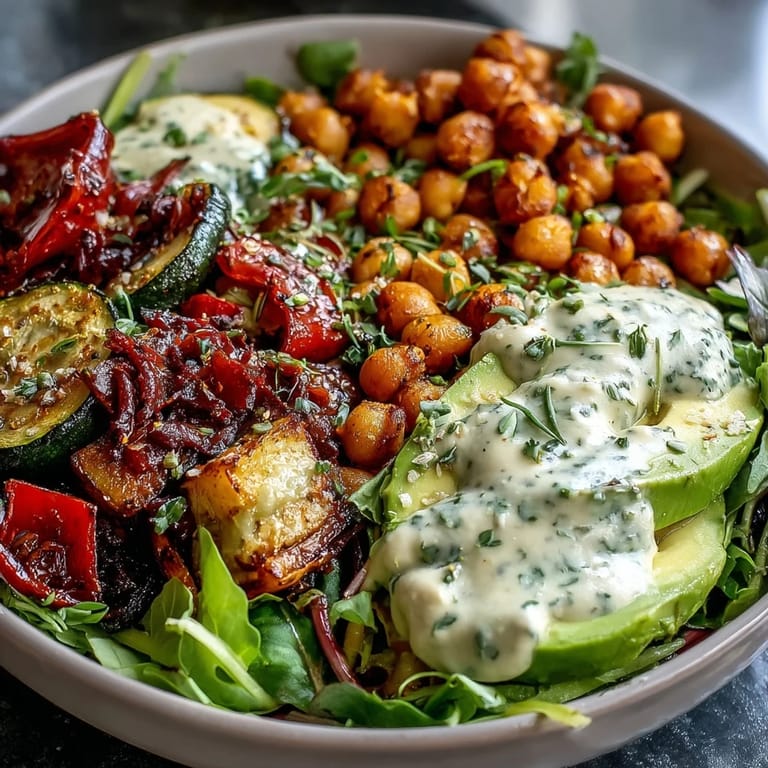
- Divide greens among four bowls, then top each with a handful of chickpeas, a good portion of the warm roasted vegetables, avocado slices arranged like you mean it, and a generous dollop of hummus tucked somewhere it looks intentional.
- Drizzle and serve immediately:
- Pour the tahini dressing over everything just before eating so the greens stay crisp and the dressing coats all the components evenly.
 Save to Pinterest
 My neighbor Marcus stopped by while I was eating one of these bowls, and instead of the usual polite "that looks good" comment, he actually pulled up a chair and asked questions about every component. We ended up talking for forty-five minutes about why Mediterranean food feels so satisfying, and he admitted that he'd been intimidated by vegetable-forward meals but this one seemed manageable. That's when I realized this bowl isn't just nourishing—it's approachable in a way that makes people want to cook.
Why the Roasting Step Matters So Much
The moment vegetables hit a hot oven, something magical happens—the natural sugars concentrate and caramelize, turning ordinary zucchini and eggplant into something with actual depth and sweetness. Raw vegetables would make this bowl taste fresh but one-dimensional, like you grabbed whatever was nearby without thinking. The twenty-five to thirty minutes in the oven is where this dish transforms from a side-salad situation into something that feels like a real meal, and honestly, it's the part that makes people sit up and notice what they're eating.
The Tahini Dressing as the Unsung Hero
I spent years making tahini dressing wrong—too thick, too garlicky, too separated—until I understood it needs to be whisked with intention and the water needs to be added gradually like you're coaxing it into existence. Once you get it right, it becomes the element that ties everything together, the thing that makes someone taste the hummus and the roasted vegetables and the greens all at once instead of as separate components on a plate. This dressing is what convinced my book club friend that she actually likes eggplant, which tells you everything about how important it is.
Customizing This Bowl Without Losing the Soul of It
The beauty of this bowl is that you can swap things without breaking what makes it work—use white beans instead of chickpeas, add quinoa for heartiness, top with toasted pine nuts or pumpkin seeds for crunch. I've made it with roasted sweet potato when I didn't have eggplant, and I've added fresh herbs like parsley or mint when I felt like the bowl needed brightness. The only things I never skip are the tahini dressing and the warm roasted vegetables, because those are what separate this from just throwing toppings on lettuce.
- Add a grain if you want something more substantial: Cooked quinoa or brown rice turns this from a side into a complete meal that keeps you full for hours.
- Toast your seeds or nuts before adding them: This takes thirty seconds under the broiler but makes them taste three times better and adds a textural contrast that makes every bite more interesting.
- Make extra tahini dressing and store it in a jar in the fridge because you'll start using it on other bowls, grain salads, and roasted vegetables throughout the week.
 Save to Pinterest
 This bowl became my answer to the question I ask myself on weekday evenings when I'm tired but don't want to eat something that tastes like obligation. It's generous without being complicated, and it somehow makes you feel like you've done something good for yourself.
Common Recipe Questions
- → Can I make the roasted vegetables ahead of time?
Yes, roast vegetables up to 3 days in advance and store in an airtight container in the refrigerator. They actually taste better after resting as the flavors meld together.
- → What can I substitute for tahini in the dressing?
Try almond butter, cashew butter, or sunflower seed butter as alternatives. Each brings a slightly different nutty flavor while maintaining creaminess.
- → How do I store leftovers?
Keep components separate in airtight containers. Store roasted vegetables, chickpeas, and dressing for up to 4 days. Add fresh greens and avocado just before serving.
- → Can I add a grain base?
Absolutely. Quinoa, brown rice, or farro make excellent additions. Cook about 1 cup dry grain to yield enough for all four servings.
- → Is this bowl protein-rich enough for a main meal?
With 1.5 cups of chickpeas plus tahini and hummus, each serving provides about 12 grams of protein. Add quinoa or serve with lentils for extra protein if desired.