 Save to Pinterest
 Last winter, I was standing in my kitchen on a Tuesday evening when the smell of caramelizing onions pulled me back to a friend's apartment in Portland where I'd eaten a version of this stew that completely changed how I thought about plant-based cooking. There was something about the way the sweet potatoes went soft and almost honey-like in the broth, how the spices didn't announce themselves but instead wrapped around everything. I went home and started experimenting, and what emerged was this stew—one that's become my quiet comfort through cold months and the kind of dish that fills your kitchen with enough warmth that you forget to turn up the heat.
I made this for my neighbor after her surgery, and watching her eat it at her kitchen table with the kind of focus people only give to food that genuinely nourishes them—that stuck with me. She asked for the recipe three times, and I kept saying I'd write it down, but the truth is recipes like this don't need writing until someone needs them badly enough.
Ingredients
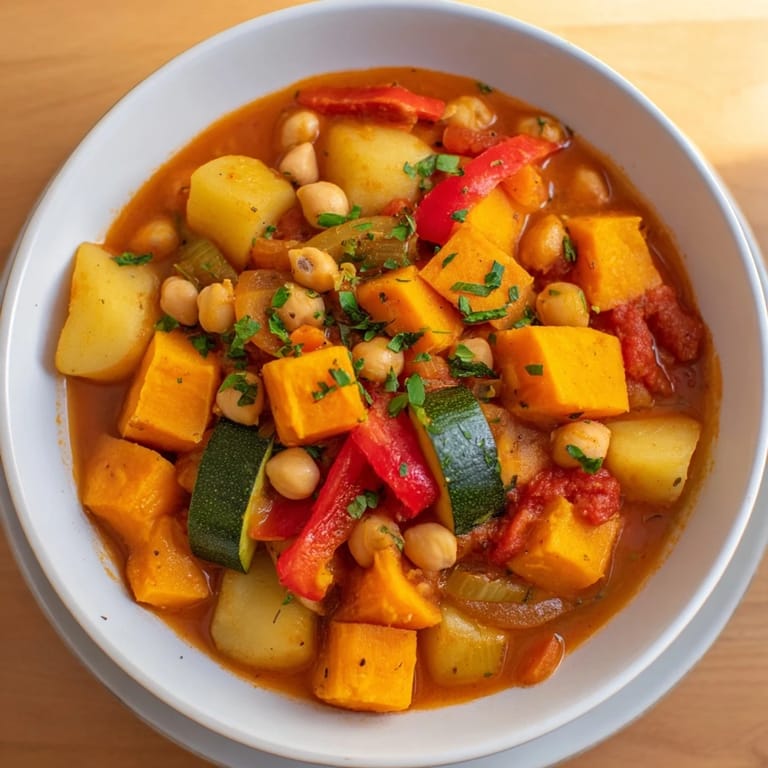
- Sweet potatoes: The star that gives this stew its body and natural sweetness; buy them firm and unblemished, and don't peel them until just before you cook since they oxidize quickly.
- Yellow potatoes: These hold their shape better than russets and add a subtle earthiness that grounds all the spices.
- Carrots, celery, and onion: This is your aromatic base, the holy trinity that makes everything taste intentional.
- Garlic: Fresh minced garlic matters here; jarred tastes metallic by the end of cooking.
- Red bell pepper and zucchini: They soften into the broth and add color and texture without overpowering.
- Cannellini and chickpeas: One tender, one with tooth; together they create protein and substance.
- Diced tomatoes and tomato paste: The backbone of your broth; the paste adds concentrated flavor that a splash of fresh tomato never could.
- Vegetable broth: Use a good quality one because it's doing the heavy lifting here.
- Smoked paprika, thyme, and cumin: These spices work in concert, not competition; together they taste warm without being spicy.
- Olive oil: Two tablespoons is just enough to build flavor without making the stew greasy.
- Bay leaf: Adds a whisper of something you can't quite name but would absolutely miss if it were gone.
Tired of Takeout? 🥡
Get 10 meals you can make faster than delivery arrives. Seriously.
One email. No spam. Unsubscribe anytime.
Instructions
- Build your base:
- Heat the olive oil in a large pot over medium heat until it shimmers slightly, then add the onion, celery, and carrot. You'll know they're ready when the onion turns translucent and you can smell the sweetness breaking through—about five minutes. This is where patience pays off; rushing this step means your broth will taste thin.
- Layer in the aromatics:
- Stir in the garlic, red bell pepper, and zucchini, cooking just long enough for the raw garlic smell to soften into something sweet and roasted. If you cook it too long the garlic turns bitter, so listen for the sizzle to become quieter.
- Toast your spices:
- Add the sweet potatoes, regular potatoes, paprika, thyme, cumin, pepper, and salt. Stir it all together and let it sit for two minutes—you want to hear the spices crackling slightly in the oil, which opens up their flavor.
- Build the broth:
- Stir in the tomato paste first, letting it coat all the vegetables and caramelize slightly before adding the tomatoes and broth. This small step makes the difference between a stew that tastes layered and one that tastes like you dumped everything in at once.
- First simmer:
- Bring the whole pot to a boil, then turn it down low, cover it, and let it sit for twenty minutes. The potatoes will soften, but you want them just tender enough to break with a wooden spoon, not falling apart.
- Bring in the beans:
- Add the drained cannellini and chickpeas, stirring them in gently. Simmer uncovered for another ten to fifteen minutes so the stew thickens slightly and everything tastes like it belongs together, not just like ingredients in a pot.
- Finish strong:
- If you're using spinach, stir it in and let it wilt for just two minutes. Taste it now, adjust the salt and pepper, fish out the bay leaf, and you're done.
 Save to Pinterest
 I remember my mother saying that the best soups and stews are the ones that don't need you to be impressive, that they just sit on the stove and become themselves. This stew does that—it asks nothing of you but time, and it gives back comfort.
Why This Stew Works
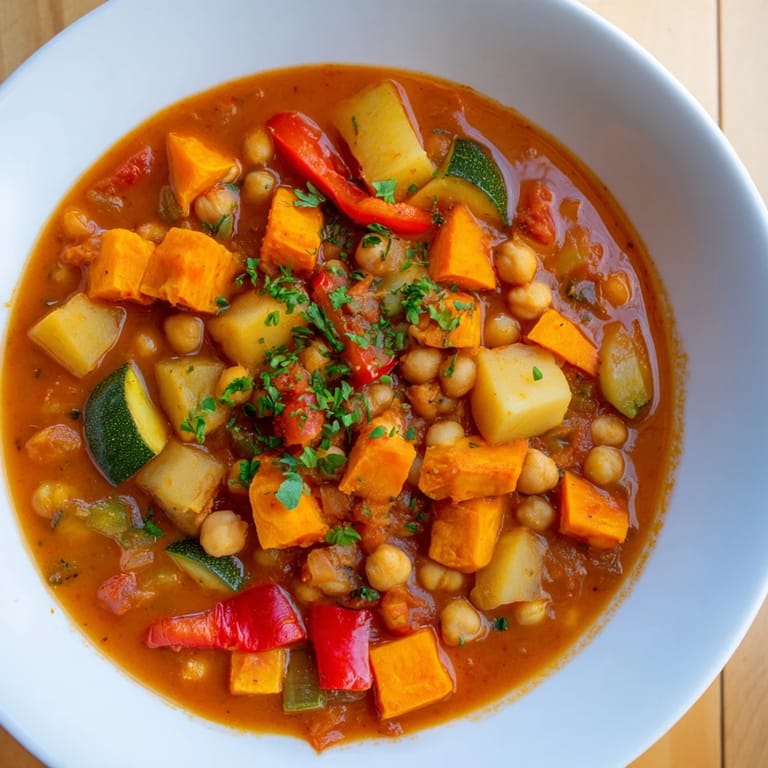
There's a reason this combination of vegetables and spices has fed people across continents for generations. The sweet potatoes bring natural sweetness and creaminess, the regular potatoes add substance and starch, and the beans give you protein and staying power. The spices are warm without being heavy—paprika adds a subtle smokiness, cumin brings earthiness, and thyme ties everything together with an almost floral note. Nothing dominates; everything harmonizes.
Flexibility and Swaps
One of my favorite things about this stew is how forgiving it is. In autumn when zucchini feels wrong, I add diced butternut squash instead. When I'm tired of chickpeas, I use white beans or lentils. I've made it with parsnips, with kale instead of spinach, with extra garlic on nights when I needed something almost medicinal. The formula stays the same—vegetables, beans, tomato, spice, broth—but the details can shift based on what's in your kitchen or what your mood needs.
Serving and Storage
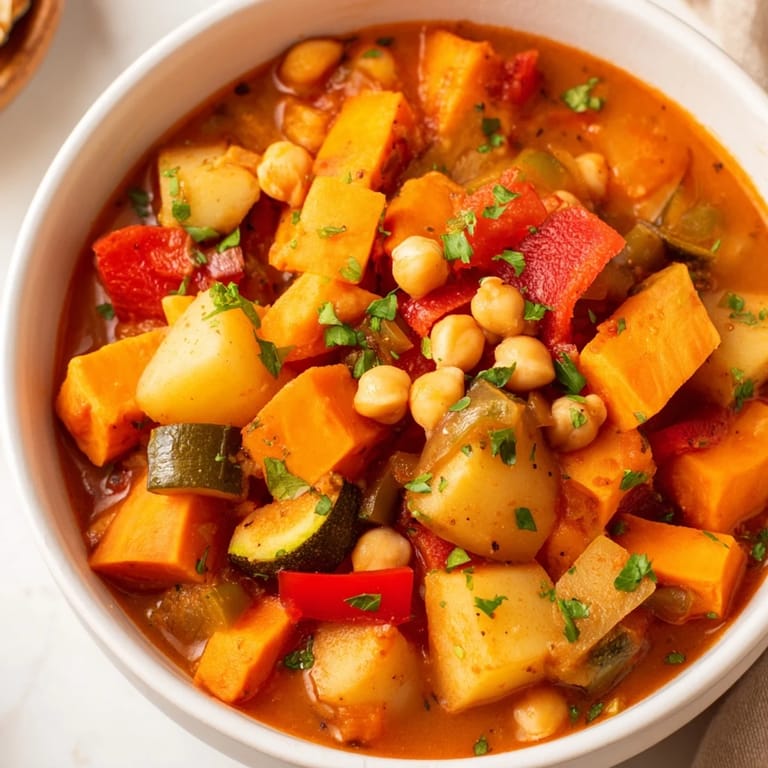
This stew feeds four people generously, but it also keeps beautifully in the refrigerator for four days and freezes for two months. I often make a double batch on Sunday and eat from it all week, which means I'm never more than a reheating away from a warm, nourishing meal. Serve it in shallow bowls with crusty bread for soaking up the broth, or over rice if you want it more substantial. A squeeze of lemon just before eating brightens everything.
- Leftovers actually taste better the next day when the flavors have had time to meld completely.
- If you're making it for company, set out the parsley and lemon wedges and let people finish their own bowls the way they like.
- This stew is naturally vegan, gluten-free, and dairy-free, but always check broth labels if they're store-bought since hidden allergens can hide there.
 Save to Pinterest
 There's something honest about a bowl of stew—it asks nothing of you but a spoon and an appetite. This one has fed me through lazy Sundays and impossible weeks, and it will do the same for you.
Common Recipe Questions
- → Can I use different types of beans?
Yes, you can substitute cannellini or kidney beans with lentils or other legumes as preferred.
- → How do I make the stew spicier?
Add ½ teaspoon of chili flakes during cooking to introduce a spicy kick without overpowering the flavors.
- → Is it possible to prepare this stew in advance?
Absolutely, this stew reheats well and flavors deepen after resting, making it ideal for meal prep.
- → Can I omit the baby spinach?
Yes, baby spinach is optional and can be excluded or substituted with other leafy greens.
- → What are good serving suggestions?
Serve with crusty bread or over rice to enhance the heartiness and enjoy a complete meal.