 Save to Pinterest
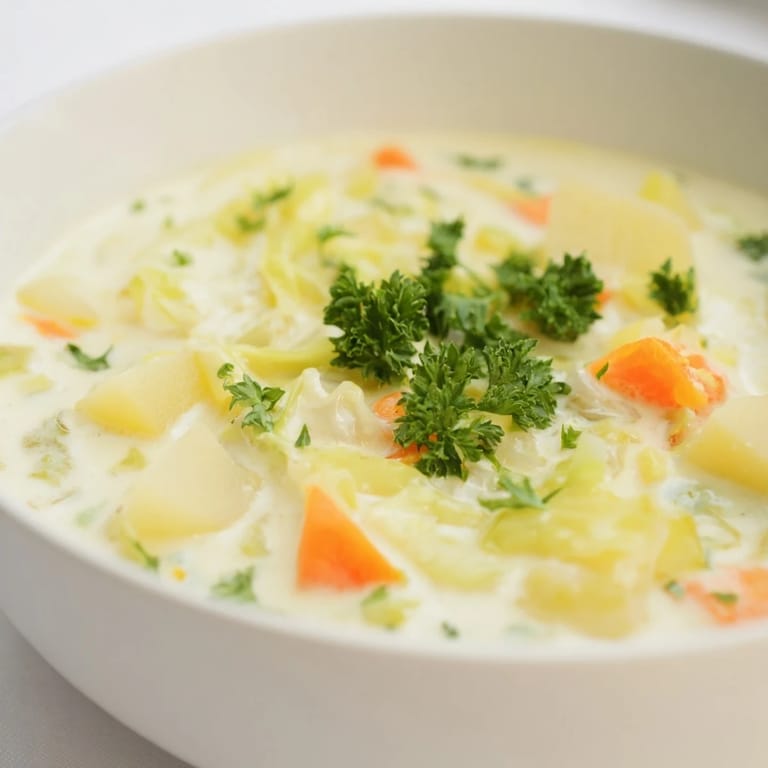
 There was a night last winter when the fridge looked nearly bare, just a half cabbage wedged in the drawer and a bag of potatoes rolling around. I almost ordered takeout, but something about the cold outside made me want to stay in and simmer something warm. What started as a scrappy experiment turned into one of those soups I now crave on gray afternoons. The cabbage sweetens as it cooks, the potatoes melt into silk, and the whole thing tastes like a hug in a bowl.
I made this for a friend who swore she hated cabbage, and she had two bowls before admitting what was in it. We sat at my kitchen table with the windows fogged up, tearing into crusty bread and talking until the pot was empty. That soup became our comfort food ritual whenever one of us needed to be fed, body and soul.
Ingredients
- Unsalted butter: This gives the base a silky richness, but olive oil works beautifully if you want to keep it dairy free.
- Yellow onion: Sweats down into soft, caramelized sweetness that forms the backbone of the soup.
- Garlic: Just two cloves bloomed in butter create a warm, aromatic foundation without overpowering.
- Green cabbage: Slice it thin so it melts into tender ribbons, adding a mild sweetness that balances the earthiness of the potatoes.
- Russet potatoes: Their starch breaks down beautifully, thickening the broth naturally and giving you that creamy, velvety texture.
- Carrots: A pop of color and a whisper of natural sweetness that rounds out every spoonful.
- Vegetable stock: The soul of the soup, choose one with good flavor or make your own if you have time.
- Whole milk or cream: Stirred in at the end, it turns the soup lush and comforting without making it heavy.
- Bay leaf and thyme: Quiet herbs that add depth, you will miss them if you skip them.
- Nutmeg: Just a pinch warms everything up and ties the flavors together in a way that feels almost magical.
- Fresh parsley: A handful of brightness right before serving makes the whole bowl feel alive.
Tired of Takeout? 🥡
Get 10 meals you can make faster than delivery arrives. Seriously.
One email. No spam. Unsubscribe anytime.
Instructions
- Start with the aromatics:
- Melt the butter in a large pot over medium heat until it foams, then add the diced onion and let it cook gently for about four minutes until soft and translucent. Stir in the garlic and let it bloom for just a minute, filling your kitchen with that unmistakable warm fragrance.
- Soften the vegetables:
- Toss in the sliced cabbage and diced carrots, stirring them around until they begin to soften and shrink, about five minutes. You will notice the cabbage losing its raw edge and starting to smell sweet.
- Simmer the soup:
- Add the diced potatoes, bay leaf, thyme, and vegetable stock, then bring everything to a boil before turning the heat down to a gentle simmer. Let it cook uncovered for 20 to 25 minutes, until the potatoes are falling apart tender and the cabbage is meltingly soft.
- Blend to your liking:
- Fish out the bay leaf, then use an immersion blender to puree part of the soup, leaving some chunks for texture and body. If you do not have an immersion blender, carefully transfer half the soup to a regular blender, puree it, and stir it back in.
- Finish with cream:
- Stir in the milk or cream, then season with salt, pepper, and a pinch of nutmeg to taste. Warm it through gently without letting it boil, so the dairy stays silky and does not curdle.
- Serve it up:
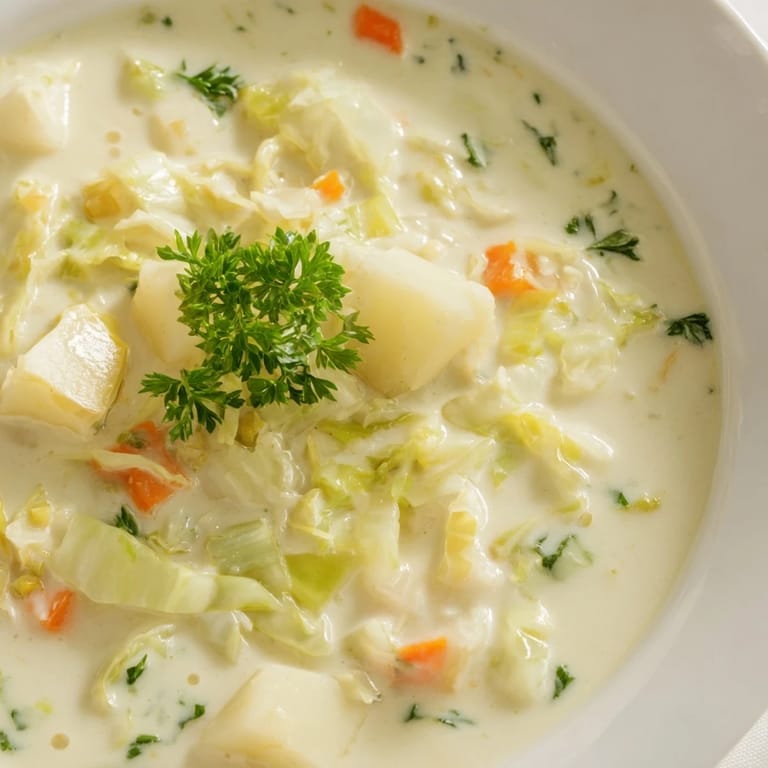
- Ladle the soup into bowls, scatter fresh parsley over the top, and serve it hot with crusty bread on the side. Watch people lean in close and breathe it in before taking that first spoonful.
 Save to Pinterest
 One evening I brought a thermos of this soup to a friend who had just had a baby, and she called me the next day to say it was the first meal that made her feel human again. There is something about the way it warms you from the inside out, gentle and nourishing without asking anything of you. It is the kind of food that reminds you someone cares.
Swaps and Variations
If you want to make this vegan, swap the butter for olive oil and use your favorite plant based milk, oat or cashew work especially well. For a heartier version, crisp up some chopped bacon or smoked sausage and stir it in at the end. Yukon Gold potatoes will give you an even creamier texture if you have them on hand, and a splash of white wine added with the stock brings a lovely brightness.
Storing and Reheating
This soup keeps beautifully in the fridge for up to four days, and it actually thickens and deepens in flavor as it sits. Reheat it gently on the stove, adding a splash of stock or milk to loosen it if it has gotten too thick. I do not recommend freezing it because the cream can separate, but if you plan to freeze, leave out the dairy and stir it in fresh after reheating.
Serving Suggestions
I love this soup with a hunk of sourdough or a warm baguette for dunking, but it is also wonderful over a scoop of cooked rice for something more filling. A crisp white wine like Riesling pairs beautifully, or just pour yourself a mug of the soup and curl up on the couch.
- Top with a drizzle of good olive oil and cracked black pepper for a simple, elegant finish.
- Add a handful of shredded sharp cheddar right before serving for a cheesy twist.
- Serve alongside a simple green salad dressed with lemon and olive oil to balance the richness.
 Save to Pinterest
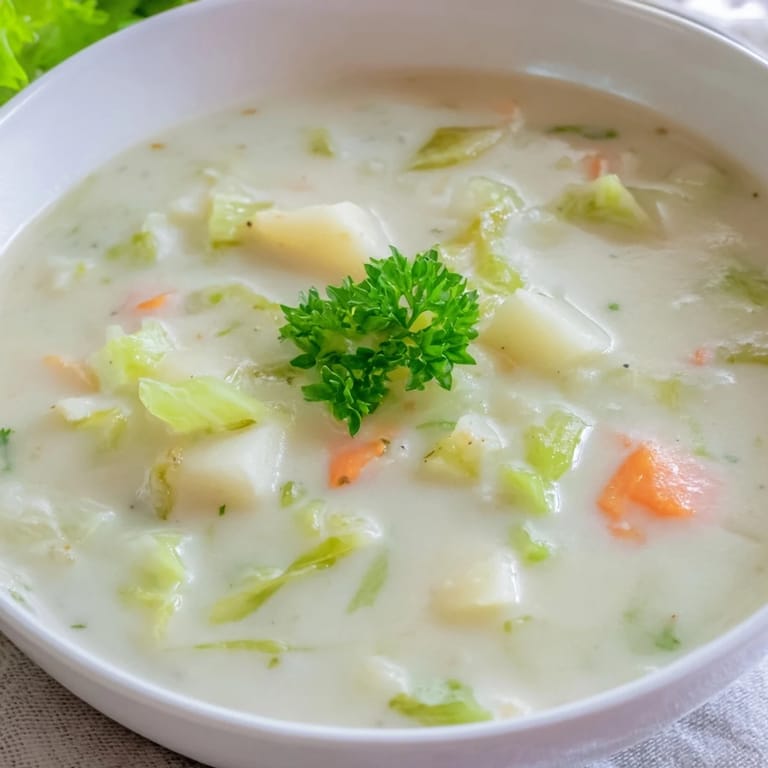
 This soup has become my go to whenever I need to feel grounded, or when someone I love needs comfort I cannot quite put into words. I hope it does the same for you.
Common Recipe Questions
- → Can I make this soup ahead of time?
Yes, this soup stores well for up to 3 days in the refrigerator. Reheat gently over low heat, adding a splash of stock or milk if the consistency has thickened. You can also freeze it for up to 2 months.
- → What type of potatoes work best?
Russet potatoes are ideal for their starchy content, which naturally thickens the soup. Yukon Gold potatoes offer extra creaminess if preferred. Avoid waxy varieties like red potatoes as they won't break down as easily.
- → How do I achieve the right consistency?
Use an immersion blender to purée approximately half the soup, leaving visible chunks for texture and body. If too thick, thin with additional stock; if too thin, simmer uncovered to reduce.
- → What are good serving accompaniments?
Crusty bread, croutons, and fresh herbs like parsley or chives complement this soup beautifully. A dollop of sour cream or crispy bacon bits add richness and contrast.
- → How do I adapt this for dietary restrictions?
For vegan versions, substitute butter with olive oil and use plant-based milk. For gluten-free preparation, ensure your stock is certified gluten-free and serve without bread.
- → Can I add other vegetables?
Absolutely. Celery, leeks, parsnips, or mushrooms work wonderfully. Adjust cooking times based on vegetable density, ensuring all ingredients become tender simultaneously.