 Save to Pinterest
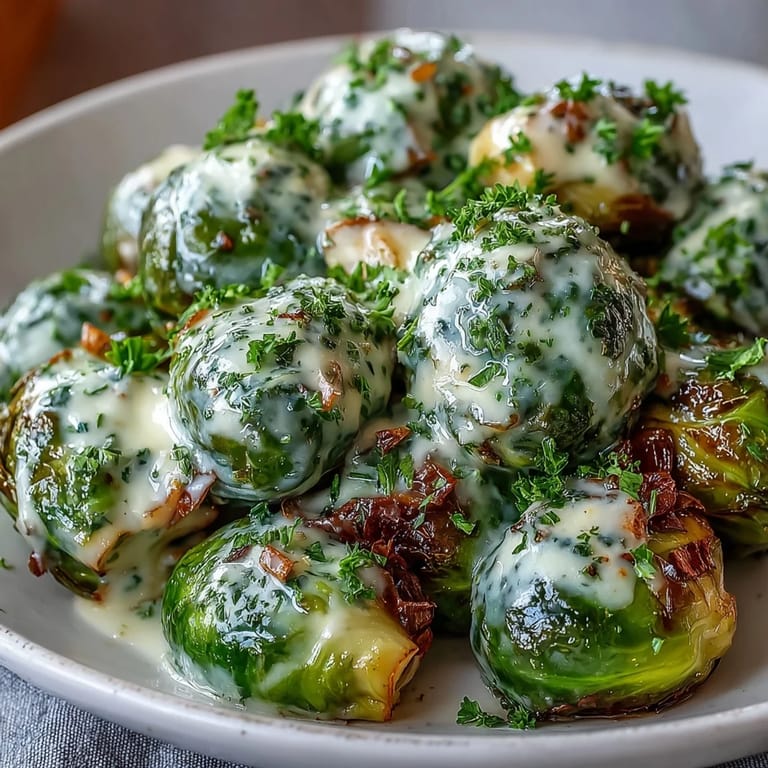
 My neighbor brought over a dish of Brussels sprouts one autumn evening, and I was skeptical until the first bite—the cream cheese and mustard sauce was nothing like the bitter, rubbery versions I'd avoided for years. She wouldn't share the recipe at first, just smiled and said I needed to figure out that Brussels sprouts could be elegant, not punishment on a plate. After some kitchen detective work and a few happy accidents, I landed on this version, which has become my go-to when I want something that tastes both comforting and a little bit fancy without the fuss.
I served this at a small dinner party last winter when someone mentioned they'd never liked Brussels sprouts, and watching them go back for seconds without even realizing what they were eating felt like a small victory. The kitchen smelled incredible while everything simmered—garlicky, mustardy, with that deep, toasty note from the browned onions. By the end of the evening, that skeptical guest asked for the recipe and admitted defeat.
Ingredients
- Brussels sprouts, 600 g: Look for ones that are tight and firm, roughly the same size so they cook evenly; trimming the stem and removing any yellowed outer leaves makes all the difference.
- Cream cheese, 150 g: Room temperature cream cheese blends smoothly into the sauce without lumps, so pull it out of the fridge while you prep everything else.
- Dijon mustard, 2 tablespoons: This is the secret—it adds tang and sophistication, keeping the sauce from tasting one-dimensional or too rich.
- Vegetable broth, 150 ml: Use good broth, not the sad stuff from a cube; it actually matters here since there's nothing else to hide behind.
- Butter, 2 tablespoons: Unsalted is best so you control the salt level, and it helps the onions turn golden and sweet.
- Onion, 1 small: Finely chop it so it disappears into the sauce and adds subtle sweetness rather than bitter chunks.
- Garlic clove, 1: Mince it small; one clove is enough to be noticed but not overwhelming.
- Lemon juice, 1 teaspoon: This brightens everything up at the end, so don't skip it or the sauce feels flat.
- Fresh parsley: A simple garnish that adds color and a hint of freshness on top.
- Salt and pepper to taste: Season gradually as you go so you don't oversalt the sauce.
Tired of Takeout? 🥡
Get 10 meals you can make faster than delivery arrives. Seriously.
One email. No spam. Unsubscribe anytime.
Instructions
- Blanch the Brussels sprouts:
- Bring a large pot of salted water to a rolling boil and add your trimmed sprouts, then cook for 5–7 minutes until they're just tender but still hold their shape when you pierce them with a fork. Drain them well and set aside—any excess water will dilute your sauce later.
- Sauté the aromatics:
- Melt butter over medium heat in a large skillet and add your finely chopped onion, stirring occasionally until it turns translucent and slightly golden, about 3–4 minutes. Add the minced garlic and cook for just another minute until the smell hits you—that's your signal it's ready.
- Build the sauce foundation:
- Lower the heat to medium-low, then add the room-temperature cream cheese and mustard, stirring gently until they blend together into a smooth, thick base. This takes patience—don't rush it or the cream cheese will clump.
- Smooth it out:
- Pour in the vegetable broth slowly while stirring constantly, watching as the sauce transforms from thick to silky and pourable. The key is keeping it smooth, so don't dump it all in at once.
- Season and taste:
- Add salt, pepper, and lemon juice, stirring well, then taste and adjust—you might need a bit more mustard if you want extra tang or a pinch more salt depending on your broth. This is your moment to make it exactly how you like it.
- Finish with the sprouts:
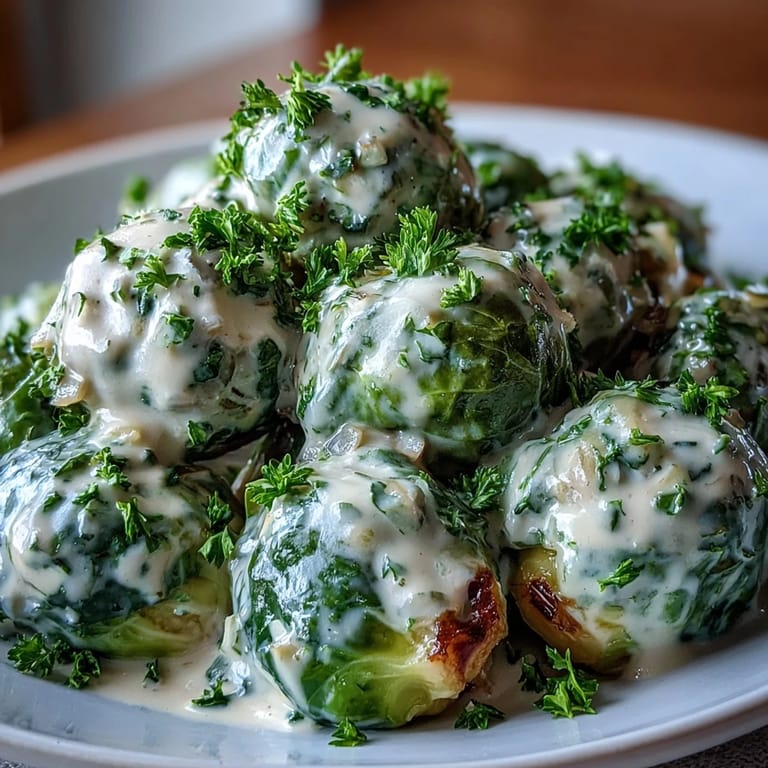
- Gently add the blanched Brussels sprouts to the skillet and toss them carefully to coat in the sauce, then let everything heat through for 2–3 minutes. Transfer to a serving dish and top with fresh parsley.
 Save to Pinterest
 There's something about this dish that shifts a simple vegetable into something people actually want to eat, which is why it now shows up at my table whenever I need a side that feels special but doesn't demand hours in the kitchen. It's become the kind of recipe I make without thinking, the one my hands remember.
Why This Sauce Works
The combination of cream cheese and Dijon mustard is almost mathematically perfect—the creaminess softens the mustard's bite, while the mustard lifts the cream cheese out of heavy, one-note territory into something bright and complex. The lemon juice at the end acts like a magician's wand, pulling all those flavors into focus and making the whole dish feel more refined than it actually is. I learned this by accident once when I forgot the lemon and the sauce tasted dull, then added it halfway through and suddenly everything snapped into place.
Timing and Temperature Matter
Low heat is crucial once the cream cheese hits the pan—if things get too hot, the sauce can break or separate, which looks sad and tastes gritty. I learned this the hard way my first attempt when I got impatient and cranked the heat, and the whole thing looked curdled by the end. Keep things gentle and your sauce will be smooth and luxurious every time.
Making It Your Own
This dish is forgiving and flexible, which is part of why I keep coming back to it—you can adjust the mustard level if you want it tangier, add a splash of white wine for extra depth, or even stir in crispy bacon or caramelized shallots if you're feeling adventurous. The sauce also keeps beautifully in the fridge, so you can make it ahead and reheat gently, or spread leftovers on sandwiches because honestly, that's good too.
- A pinch of cayenne pepper in the sauce adds subtle heat without making it spicy.
- Leftover sauce makes a surprisingly good dip for vegetables or crusty bread.
- This reheats well, so it's perfect for meal prep or making ahead for dinner parties.
 Save to Pinterest
 This recipe proves that Brussels sprouts don't have to be the thing people push around their plate—they can be the reason someone asks for seconds. That's worth celebrating.
Common Recipe Questions
- → Can I use frozen Brussels sprouts instead of fresh?
Yes, frozen Brussels sprouts work well. Thaw and pat them dry before boiling to reduce cooking time to 4-5 minutes, as they're already blanched.
- → What can I substitute for cream cheese?
Greek yogurt or sour cream can replace cream cheese for a tangier flavor. Use the same amount and whisk thoroughly to achieve a smooth, creamy consistency.
- → How do I prevent the Brussels sprouts from becoming mushy?
Boil them just until tender but still firm, about 5-7 minutes. Immediately drain and avoid overcooking. They'll finish cooking when tossed in the warm sauce.
- → Can this dish be made dairy-free?
Absolutely. Substitute the cream cheese with cashew cream or dairy-free cream cheese, and use olive oil or vegan butter. The sauce will still be rich and flavorful.
- → How long will leftovers keep?
Store in an airtight container in the refrigerator for up to 3 days. Reheat gently on the stovetop or in the microwave, adding a splash of broth if the sauce thickens.
- → What main dishes pair well with this side?
This pairs beautifully with roasted chicken, pork chops, grilled salmon, or beef tenderloin. It also complements grain bowls and works as a standalone vegetarian main with crusty bread.