 Save to Pinterest
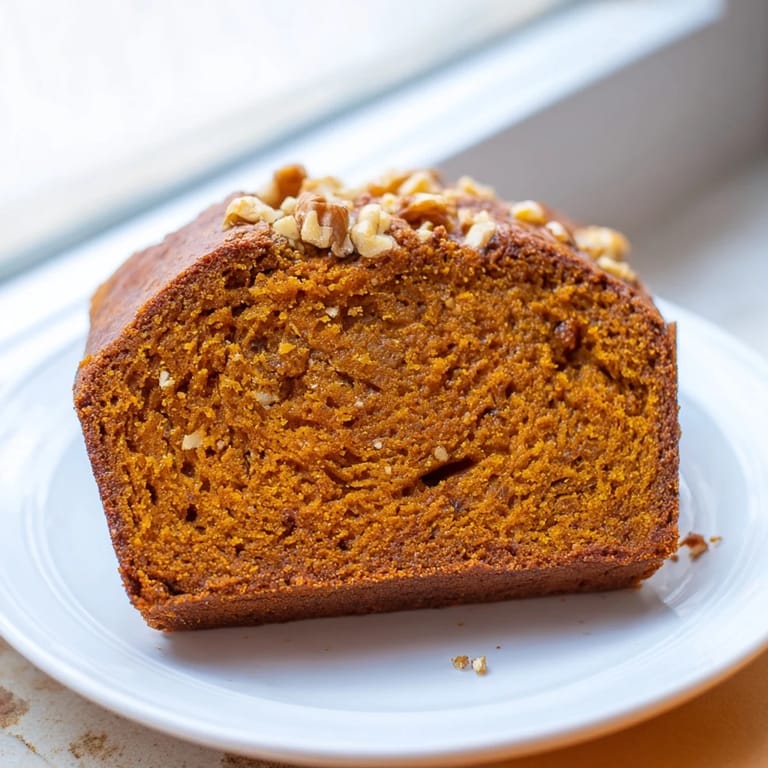
 There's something about September that makes me crave pumpkin bread, even though the season hasn't officially arrived. A few years back, my neighbor dropped off a loaf still warm from her oven, and I remember standing in my kitchen at six in the morning, eating thick slices with butter while the house filled with the smell of cinnamon and nutmeg. That moment stuck with me—not because it was special, but because it was so perfectly ordinary. Now I make this bread whenever I want to recreate that feeling: the comfort of something homemade, the way spices can transform a simple loaf into something memorable.
I made this for my book club once, and someone asked if I'd bought it from a bakery. I didn't correct them immediately—I let that compliment sit for a second. Later, a friend texted asking for the recipe because her kids actually asked for seconds, which rarely happens with anything homemade in her house. That's when I knew this recipe was the real thing.
Ingredients
- All-purpose flour (2 cups): The foundation that holds everything together; scooping directly from the bag compacts it, so spoon and level for better results.
- Pumpkin purée (1½ cups): Use actual pumpkin, not pie filling, which has added spices and sweetness that will throw off your balance.
- Cinnamon (1½ teaspoons): This is the lead flavor, so use good quality cinnamon if you have it—the difference is real.
- Granulated and brown sugar (¾ cup plus ½ cup): The combination gives you structure and moisture; don't skip the brown sugar.
- Eggs (2 large): Room temperature eggs mix more evenly, but honestly, cold ones work fine if you're not fussy.
- Vegetable oil or melted butter (½ cup): Oil keeps the crumb tender, but butter adds richness if that's what you prefer.
- Baking soda and baking powder (1 teaspoon and ½ teaspoon): This combination creates gentle rise without making the bread cakey.
- Walnuts or pecans, optional (½ cup): Toast them lightly first if you want them to taste nuttier, or skip them entirely if you're keeping it simple.
Tired of Takeout? 🥡
Get 10 meals you can make faster than delivery arrives. Seriously.
One email. No spam. Unsubscribe anytime.
Instructions
- Preheat and prepare:
- Get your oven to 350°F and set up your loaf pan with parchment paper—it makes sliding the finished loaf out effortless. This small step saves frustration.
- Whisk the dry team:
- Combine flour, cinnamon, nutmeg, cloves, ginger, baking soda, baking powder, and salt in a big bowl. A whisk breaks up any lumps and distributes the leavening agents evenly.
- Mix the wet mixture:
- In another bowl, whisk pumpkin, both sugars, eggs, oil, milk, and vanilla until smooth and well combined. The pumpkin should fully incorporate with the eggs.
- Bring them together gently:
- Pour the wet mixture into the dry ingredients and fold with a spatula until just combined—you want a few flour streaks to remain. Overmixing develops gluten and makes the bread tough.
- Add your extras:
- If you're using nuts or chocolate chips, fold them in now so they're evenly distributed throughout.
- Into the pan:
- Pour the batter into your prepared pan and smooth the top lightly. Uneven surfaces can lead to uneven baking, but don't obsess over perfection.
- Bake until golden:
- Bake for 55 to 65 minutes until a toothpick inserted in the center comes out clean or with just a few moist crumbs clinging to it. The few moist crumbs are actually your sign of a tender loaf.
- Cool with patience:
- Let the bread rest in the pan for 10 minutes, then turn it out onto a wire rack to cool completely. This waiting period is hard but worth it.
 Save to Pinterest
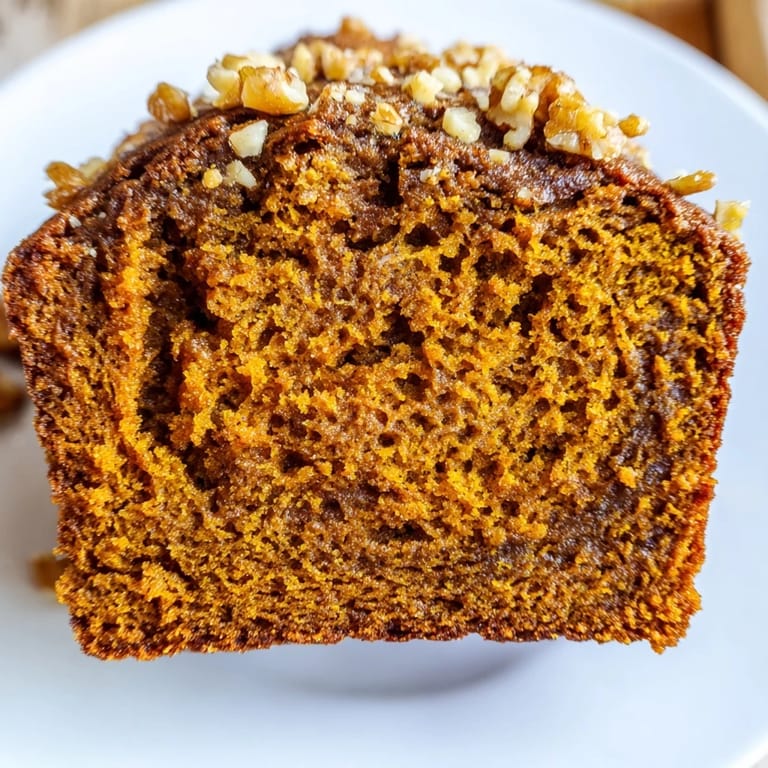
 The real magic happens the next day. Fresh from the oven it's good, but after sitting overnight, the flavors deepen and the crumb settles into something almost better. I started wrapping mine in parchment while it's still slightly warm—the steam keeps the loaf moist without making it soggy. That small habit changed how people respond to it.
Flavor Layers That Matter
The four spices here—cinnamon, nutmeg, cloves, and ginger—work like a choir where each voice is heard but none overpowers the others. Cinnamon takes the lead, but the others create warmth and depth underneath. The brown sugar adds caramel notes that granulated sugar alone can't provide, making the loaf taste less like generic pumpkin bread and more like something thoughtfully made. This combination is why people often guess there's more spice than there actually is.
Making It Your Own
The beauty of this recipe is how forgiving it is to small changes. I've made it with all butter instead of oil, and it turned richer but still tender. A friend swapped half the pumpkin purée for applesauce once, and honestly, it was different but still delicious. You can toast walnuts before folding them in for nuttier flavor, or scatter Demerara sugar across the top before baking for a subtle crunch. These aren't rules—they're invitations to make it feel like your own version.
Storage and Longevity
Wrapped tightly in parchment paper or plastic wrap, this bread stays fresh at room temperature for three days, sometimes longer if your kitchen isn't too warm. The moisture from the pumpkin and oil keeps it from drying out quickly. Freezing works beautifully too—slice it first if you like, then wrap individual slices in plastic wrap and freeze for up to two months. I grab a slice straight from the freezer and toast it in the morning, and it thaws and toasts perfectly.
- Room temperature storage works best in cool weather; wrap tightly to prevent it from absorbing odors.
- Freezing slices individually means you can grab one without thawing the whole loaf.
- Thawed slices toast beautifully and taste almost as good as fresh.
 Save to Pinterest
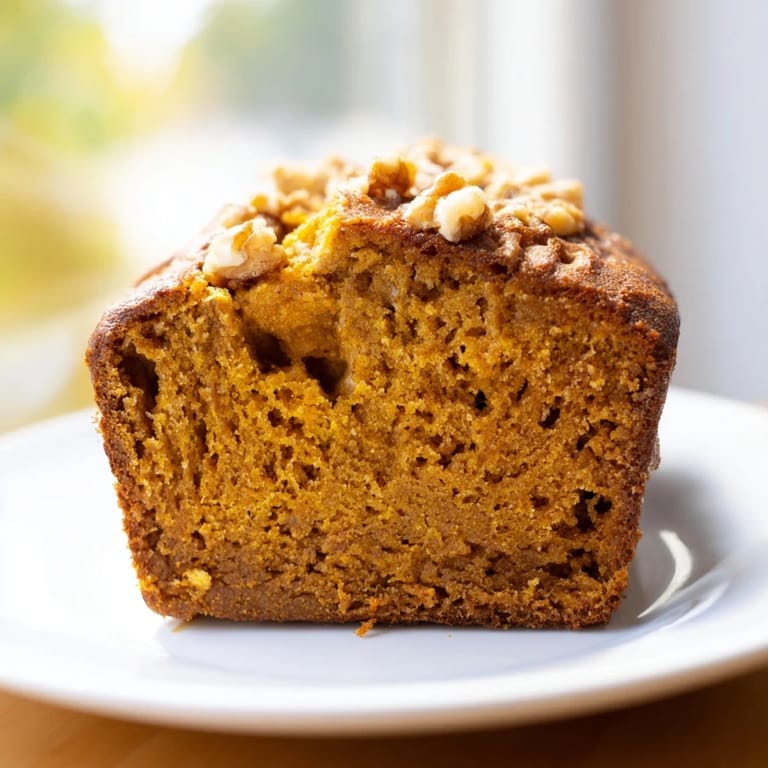
 This bread has become my comfort recipe, the one I make when I want to feel like I'm taking care of someone, including myself. It's proof that good food doesn't need to be complicated—just thoughtfully made.
Common Recipe Questions
- → What spices are used in this pumpkin loaf?
The loaf features cinnamon, nutmeg, cloves, and ginger for a warm, aromatic profile.
- → Can I add nuts or chocolate chips to the loaf?
Yes, folding in chopped walnuts, pecans, or chocolate chips adds extra texture and flavor.
- → How do I know when the loaf is baked?
Insert a toothpick into the center; it should come out clean or with a few moist crumbs when done.
- → What is the best way to store leftovers?
Keep leftovers wrapped tightly at room temperature for up to three days or freeze for up to two months.
- → Can I substitute vegetable oil with butter?
Yes, melted unsalted butter can be used instead of vegetable oil for a richer taste.