 Save to Pinterest
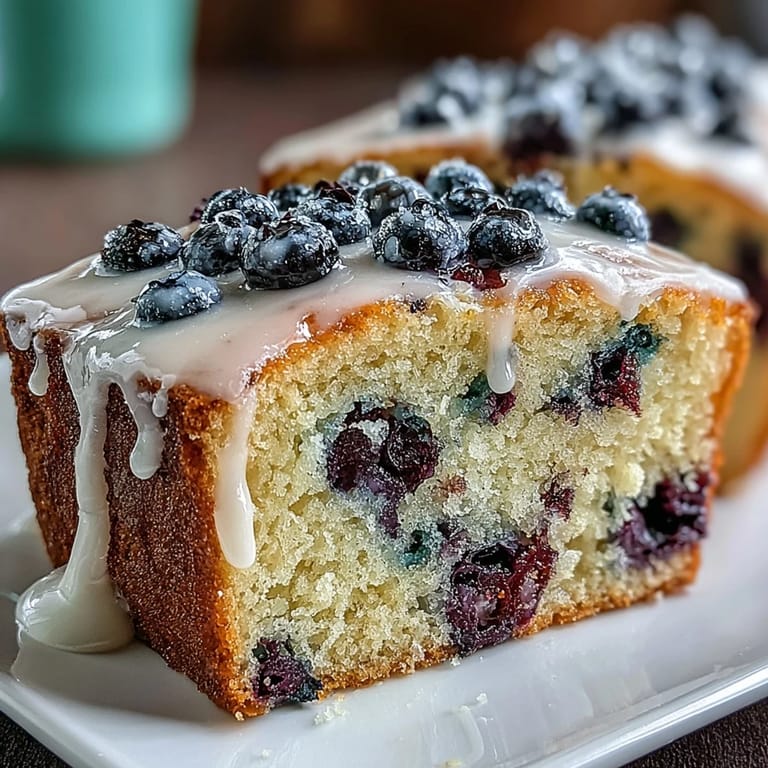
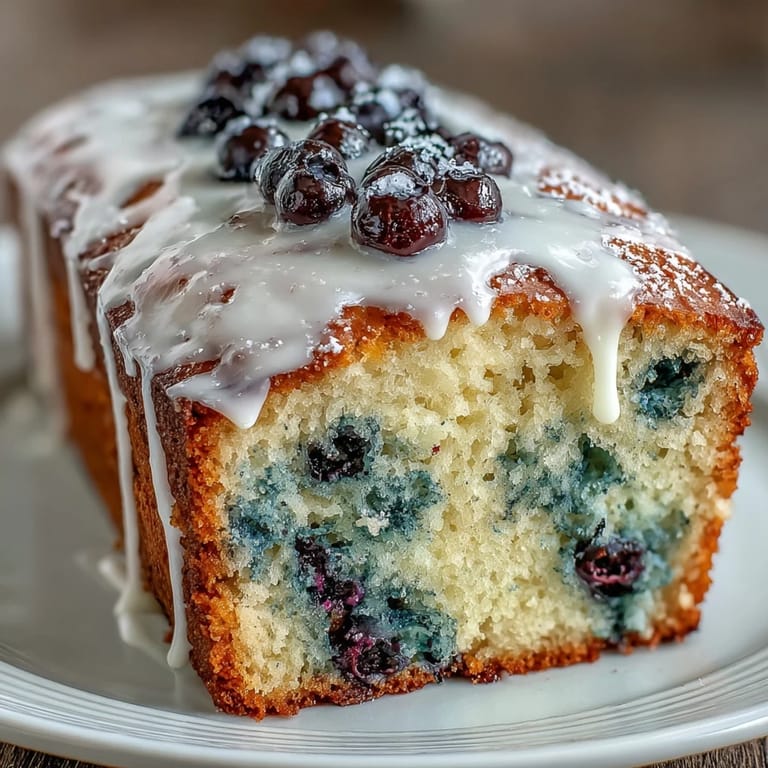
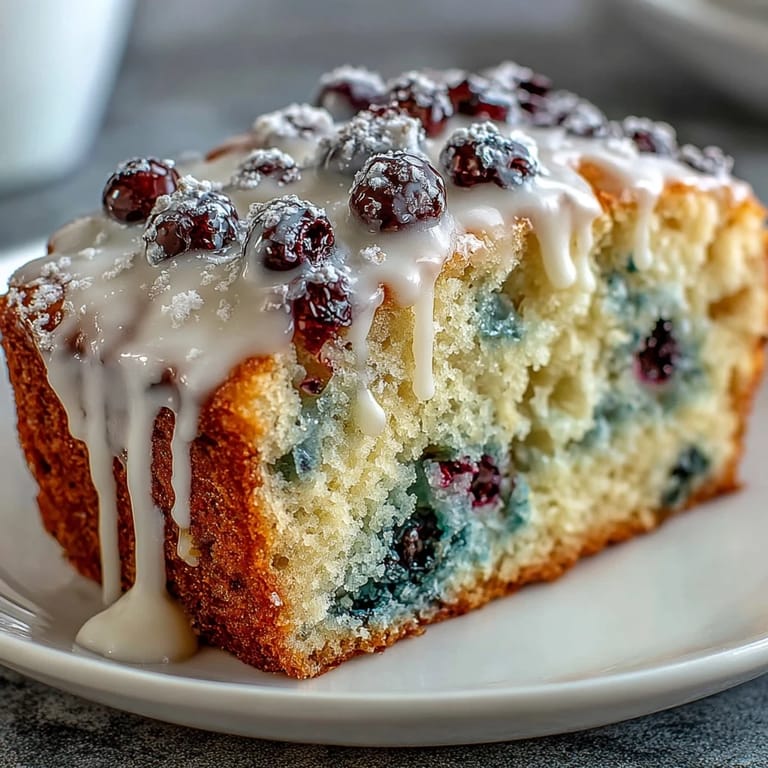
 My cousin texted me three weeks before her baby shower asking if I could bring something special, and my mind went straight to lemon. She's always been the type who orders tea at every gathering, so when I pulled this tender blueberry lemon loaf from the oven for the first time, watching those jewel-toned berries peek through the golden crumb, I knew I'd found her dessert. The way the glaze pooled into the crevices felt like edible elegance, exactly what you want when you're celebrating something beautiful and new.
I'll never forget standing in my cousin's kitchen an hour before the shower, setting this loaf on a tiered cake stand next to cucumber sandwiches and tiny pastries. Someone's elderly aunt took one bite, then came back for seconds before anyone else had even tried it—she told me it reminded her of her own mother's baking, and that moment made me understand why we bake for people at all.
Ingredients
- All-purpose flour (1 ½ cups): This is your foundation; measure it by spooning into your measuring cup and leveling off to avoid packing it down.
- Baking powder (1 tsp): The silent hero that gives you that tender crumb; check the date because old leavening agents won't lift your cake the way they should.
- Baking soda (½ tsp): Works alongside the baking powder and reacts with the sour cream to create moisture and height.
- Salt (¼ tsp): Don't skip this tiny amount; it brightens the lemon and deepens the blueberry flavor in ways you won't consciously notice until it's missing.
- Unsalted butter (½ cup, softened): Room temperature butter creams into the sugar smoothly, creating that light and fluffy base that makes the cake tender.
- Granulated sugar (1 cup): The creaming process with butter is where the magic starts; this aerates the mixture and gives structure.
- Eggs (2 large, room temperature): Cold eggs won't incorporate properly and can make your batter grainy; take them out of the fridge while you prep.
- Lemon zest (2 tsp): Microplane your zest right before adding it so the oils are still volatile and fragrant; this is where half your lemon flavor lives.
- Fresh lemon juice (⅓ cup): Use juice you've just squeezed, not the bottled kind, because the brightness matters in every bite.
- Sour cream or plain yogurt (½ cup): This creates moisture and a tender crumb while adding tang that makes the lemon sing louder.
- Vanilla extract (1 tsp): Pure vanilla only; the imitation stuff tastes tinny and won't complement the citrus.
- Fresh blueberries (1 cup): Use them frozen straight from the freezer if fresh aren't available; the ice crystals keep them from bleeding into the batter and staining everything purple.
- All-purpose flour for berries (1 tbsp): This tiny bit of flour clings to the berries and suspends them throughout the cake instead of letting them sink to the bottom.
- Powdered sugar for glaze (1 cup, sifted): Sift it even if it feels fussy; lumpy glaze looks unfinished and tastes grainy.
- Fresh lemon juice for glaze (2–3 tbsp): Adjust this to your preference; more juice makes it thinner and more tart, less makes it thicker and sweeter.
- Lemon zest for garnish (½ tsp optional): A whisper of zest on top makes the whole thing look professionally finished and gives a flavor reminder in each slice.
Tired of Takeout? 🥡
Get 10 meals you can make faster than delivery arrives. Seriously.
One email. No spam. Unsubscribe anytime.
Instructions
- Set your stage:
- Preheat your oven to 350°F and grease that 9x5-inch loaf pan, then line it with parchment paper so your cake slides out effortlessly. This matters more than you'd think when you're trying to keep everything intact.
- Combine your dry goods:
- Whisk the flour, baking powder, baking soda, and salt together in a medium bowl; this distributes the leavening evenly so you get a cake that rises gently and uniformly. Set it aside.
- Cream the butter and sugar:
- In a large bowl, beat the softened butter with sugar for 2–3 minutes until the mixture turns pale and fluffy; this aerates the batter and is non-negotiable for a tender cake. You'll see the texture change in real time, which is oddly satisfying.
- Add your eggs one at a time:
- Beat each egg in completely before adding the next; this prevents the batter from looking curdled or separated. After both eggs are in, add your lemon zest, lemon juice, sour cream, and vanilla, then mix until everything is smooth and unified.
- Fold in the dry ingredients:
- Add the flour mixture gradually, stirring just until you don't see any white streaks; overmixing develops gluten and makes the cake tough. Stop as soon as it comes together.
- Get those blueberries in there:
- Toss your blueberries with 1 tablespoon of flour, then gently fold them into the batter using a rubber spatula. The flour coating keeps them suspended and prevents that unfortunate purple-puddle situation.
- Into the pan:
- Pour the batter into your prepared loaf pan and smooth the top with a spatula so it bakes evenly. Don't overstir or press down; you want the batter to have some airiness.
- Bake with patience:
- Bake for 50–55 minutes; the cake will smell incredible around the 40-minute mark, but resist opening the oven until you're certain it's done. A toothpick inserted in the center should come out with just a few moist crumbs, not wet batter. If the top is browning too quickly, tent it loosely with foil during the last 15 minutes.
- Cool with restraint:
- Let the loaf cool in the pan for 10 minutes, then turn it out onto a wire rack to cool completely. Rushing this means you'll slice into a warm, fragile cake and lose the structure.
- Make your glaze:
- Whisk the sifted powdered sugar with 2 tablespoons of lemon juice until smooth, then taste it and add more juice if you prefer something thinner and more tart. The glaze should drip slightly but not run off the sides like a waterfall.
- Finish it off:
- Once the loaf is completely cool, drizzle the glaze over the top in whatever pattern feels right, then scatter a bit of lemon zest on top if you're feeling fancy. Slice with a sharp, thin-bladed knife for clean pieces.
 Save to Pinterest
 My hands were shaking a little when I carried that first slice to my cousin—it was silly, but I wanted it to taste as good as it looked. When she took a bite and closed her eyes for a second, I understood that this cake had become something bigger than sugar and flour. It was a small way of saying I'm here for this moment with you.
Why Fresh Lemon Juice Changes Everything
Bottled lemon juice has been sitting around waiting for you, and by the time it reaches your kitchen, those bright aromatics have started to fade. Fresh juice explodes with flavor in a way that tastes like actual lemons, and your guests will taste the difference in the brightness. I learned this the hard way when I tried a shortcut version once, and honestly, it wasn't worth the two minutes I saved.
Tea Party Pairings That Make Sense
This loaf was born for Earl Grey or English breakfast tea, but I've also served it alongside sparkling lemonade and it became an entirely different moment—lighter, more summery. Sparkling wine is another route, especially if your celebration leans fancy. The lemon cuts through richness and the tartness keeps you reaching for another slice instead of feeling overwhelmed.
Storage and Keeping Your Cake Fresh
This loaf stays moist and delicious for three days wrapped tightly in plastic wrap or stored in an airtight container at room temperature; the sour cream in the batter is working hard to keep everything tender. If you want it to last longer, wrap it well and freeze it for up to a month, then thaw at room temperature before serving. For a special touch, you can make the glaze fresh the morning of serving rather than ahead of time.
- Glazed loaves taste best within 24 hours, so consider glazing just before serving if you're making this more than a day ahead.
- If your kitchen is particularly warm, store it in the refrigerator and bring it to room temperature before eating for the best flavor.
- Leftover slices are absolutely magical toasted the next morning with a pat of butter melting into the warm crumb.
 Save to Pinterest
 Baking this cake has become my way of marking moments worth celebrating, and I hope it becomes yours too. There's something about pulling a golden, berry-studded loaf from the oven that reminds you that the best things in life really do take time.
Common Recipe Questions
- → How do I keep blueberries from sinking in the loaf?
Tossing blueberries in a tablespoon of flour before folding them into the batter helps suspend them evenly, preventing sinking during baking.
- → Can I substitute sour cream with another ingredient?
Yes, Greek yogurt works well as a substitute and adds a tangier flavor while maintaining moisture.
- → What’s the best way to bake the loaf evenly?
Bake at 350°F for 50–55 minutes, tenting with foil during the final 15 minutes if the top browns too quickly to ensure even cooking.
- → How do I make the glaze smooth and not too thick?
Whisk powdered sugar with 2 tablespoons of fresh lemon juice. Add more juice gradually until the glaze reaches desired consistency.
- → Can I use frozen blueberries directly from the freezer?
Yes, using frozen blueberries without thawing helps prevent bleeding and maintains vibrant color in the loaf.