 Save to Pinterest
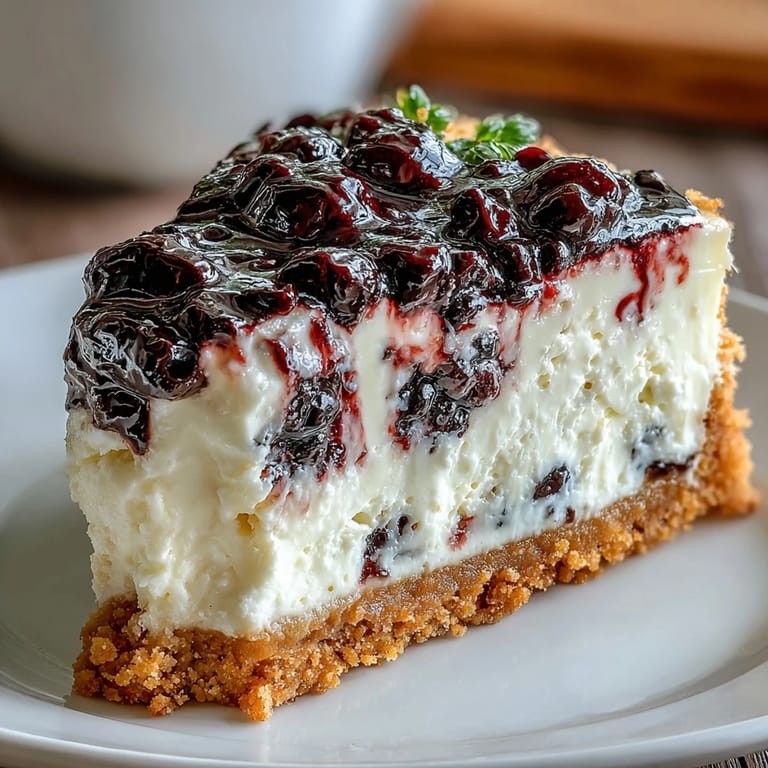
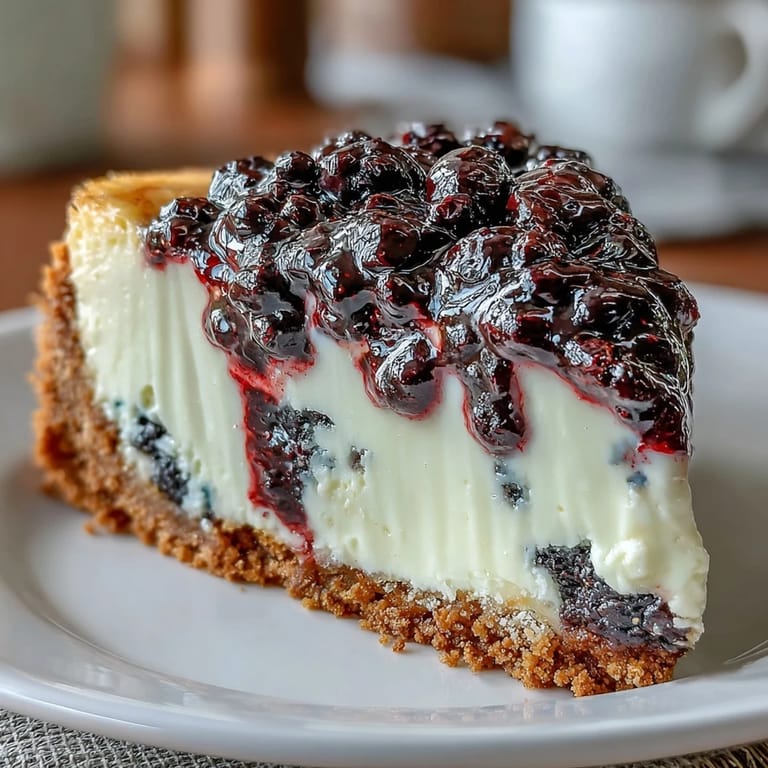
 There's something about the deep purple swirl of black currant compote against creamy white filling that made me fall in love with cheesecake all over again. My friend brought a slice to a dinner party one autumn evening, and I remember thinking it tasted like sophistication in dessert form—that perfect moment when tart and sweet stop fighting and start dancing together. The tanginess kept me coming back for another bite, then another, until I finally asked for the recipe and decided I had to master it myself.
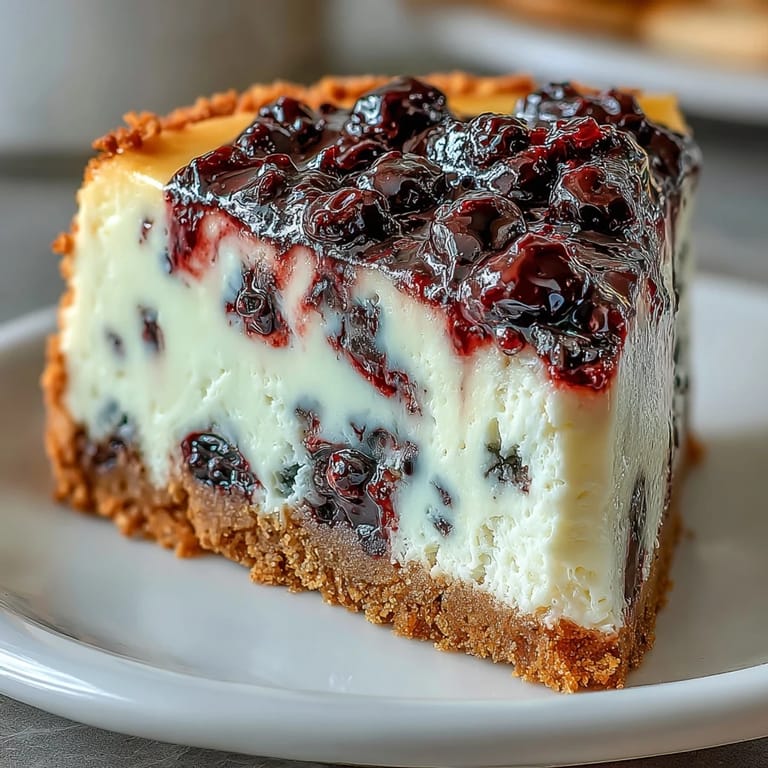
I made this for my partner's birthday dinner at home, and the moment they tasted it, their face went quiet in that way that means pure contentment. We'd spent the afternoon together—them chopping lemons while I stirred the compote, the kitchen filling with that dark berry smell. When we finally got to slice into it after those long hours of waiting, watching that marbled pattern emerge felt like opening a gift we'd wrapped for ourselves.
Ingredients
- Digestive biscuits or graham crackers, crushed (200 g): These form your foundation, and crushing them by hand instead of a food processor gives you better texture control—you want some substance, not powder.
- Unsalted butter, melted (80 g): The moisture that brings the crumbs together; salted butter can throw off your balance later.
- Granulated sugar (2 tbsp for crust, 70 g for compote, 200 g for filling): Each amount is precise because sugar affects texture differently at each stage.
- Black currants, fresh or frozen (250 g): These little berries are tart and sophisticated, but if you can't find them, frozen blueberries work when you're in a pinch.
- Lemon juice (1 tbsp for compote, plus zest for filling): This brightens everything without being obvious about it.
- Cornstarch slurry (1 tsp cornstarch mixed with 1 tbsp water): Just enough to thicken the compote so it doesn't sink and create a muddy bottom layer.
- Cream cheese, room temperature (700 g): This is non-negotiable—cold cream cheese will give you lumps and frustration.
- Eggs, room temperature (3 large): Cold eggs won't incorporate smoothly, and you need that silky texture.
- Sour cream (180 ml): The secret ingredient that adds a subtle tang and keeps things tender.
- All-purpose flour (1 tbsp): A tiny amount that stabilizes the filling without making it heavy.
- Pure vanilla extract (2 tsp): Real vanilla matters here because this dessert is all about subtle flavors.
- Salt (pinches throughout): A whisper of salt in each component amplifies the other flavors.
Tired of Takeout? 🥡
Get 10 meals you can make faster than delivery arrives. Seriously.
One email. No spam. Unsubscribe anytime.
Instructions
- Prepare your pan and preheat:
- Set your oven to 160°C and line a 23 cm springform pan with parchment paper on the bottom. This temperature is lower than standard cheesecake baking, which means gentler, more even cooking and fewer cracks in your finished cake.
- Make the crust:
- Combine your crushed biscuits with melted butter, sugar, and salt, then press firmly into the pan bottom—use the bottom of a measuring cup to really pack it down evenly. Bake for 10 minutes until it just starts to smell toasty, then let it cool while you move on.
- Cook the black currant compote:
- In a saucepan, heat the black currants with sugar and lemon juice over medium heat until they soften and release their deep purple juices, about 5 minutes. Stir in your cornstarch slurry and simmer just until thickened, maybe another minute, then remove from heat to cool completely—this step matters because warm compote will cook the filling unevenly.
- Create the filling:
- Beat room-temperature cream cheese and sugar together until smooth and creamy, then add eggs one at a time, beating gently after each one. Fold in the sour cream, flour, vanilla, lemon zest, and salt with a light hand—overmixing incorporates too much air and causes cracks.
- Layer and swirl:
- Pour the filling over the cooled crust, then spoon cool compote in small dollops across the surface. Use a skewer or thin knife to drag through the dollops in a gentle pattern—think organic marble, not aggressive streaks.
- Water bath and bake:
- Wrap the outside of your springform pan with foil if you're concerned about leaks, then place it in a larger roasting tin filled with hot water reaching halfway up the sides. Bake for 50–60 minutes until the edges are set but the center still jiggles slightly when gently shaken—that jiggle is your friend, not a sign of failure.
- The crucial cool-down:
- Turn off the oven and crack the door open, letting the cheesecake sit inside for a full hour as it cools gradually. This slow temperature transition is what stops those unsightly cracks from forming on top.
- Final chill:
- Let it cool completely at room temperature, then refrigerate for at least 4 hours or overnight before slicing. The chilling time isn't just about firming it up—it's when all the flavors really settle and meld together.
 Save to Pinterest
 I learned the hard way that cheesecake doesn't forgive rushing. The first time I made it, I didn't let the compote cool completely before swirling, and it created these brownish streaks instead of beautiful purple ones. Now I see that moment of patience—standing in the kitchen waiting for the compote to cool while I prepare the filling—as part of the meditation of making this dessert. It forces you to slow down, and somehow that translates into something more intentional on the plate.
The Magic of Black Currants
Black currants have this incredible depth that doesn't scream at you the way tart cherries do. They're understated and complex, which is exactly why they're so elegant paired with creamy cheesecake. If you can't find them fresh or frozen, don't skip this recipe—frozen blueberries or raspberries will give you a different personality, but they'll still be delicious. The important thing is that you're using berries with real tartness to balance the richness.
Why the Water Bath Matters
I used to think a water bath was fussy, an unnecessary step for people who had more time than sense. Then I made a cheesecake without one and got a cake that was overcooked on the edges and slightly gritty in texture. The water bath works like a protective blanket—it keeps the temperature around the cheesecake consistent and gentle, preventing the dramatic heat that causes cracks and curdling. Once I understood that it was about protecting the cake, not complicating the process, I never skipped it again.
Serving and Storage Wisdom
This cheesecake actually tastes better the next day after the flavors have had time to really integrate. I often make it a day or two before serving, which takes the pressure off timing and lets me focus on presentation. You can keep it refrigerated for up to five days, and it freezes beautifully for up to three months if you wrap it well.
- Slice with a hot, wet knife and wipe it clean between each cut for those clean edges that make it look professional.
- Serve with a spoonful of extra black currant compote on top or a dollop of unsweetened whipped cream if you want to gild the lily.
- If you need a gluten-free version, just swap the digestive biscuits for gluten-free alternatives and make sure your other ingredients are certified.
 Save to Pinterest
 This cheesecake has become my go-to for moments when I want to feel like I've created something truly special. There's something about presenting a perfectly sliced piece with that beautiful marbled swirl that reminds me why I love cooking—it's not just about feeding people, it's about giving them a moment of joy.
Common Recipe Questions
- → How is the black currant compote prepared?
Black currants are cooked with sugar and lemon juice until softened, then thickened with a cornstarch slurry and cooled before swirling into the filling.
- → Why is a water bath used during baking?
The water bath helps bake the filling evenly and gently, preventing cracks and ensuring a smooth, creamy texture.
- → Can I use frozen black currants for the compote?
Yes, both fresh and frozen black currants work well when making the compote.
- → What alternatives exist for the biscuit crust?
Digestive biscuits or graham crackers create a buttery crust, and gluten-free options can substitute for dietary needs.
- → How long should the cheesecake chill before serving?
Chill for at least 4 hours or overnight to allow flavors to meld and the filling to set firmly.
- → How to achieve a marbled effect with the compote?
Spoon dollops of cooled compote on the filling and gently swirl with a skewer or knife before baking.