 Save to Pinterest
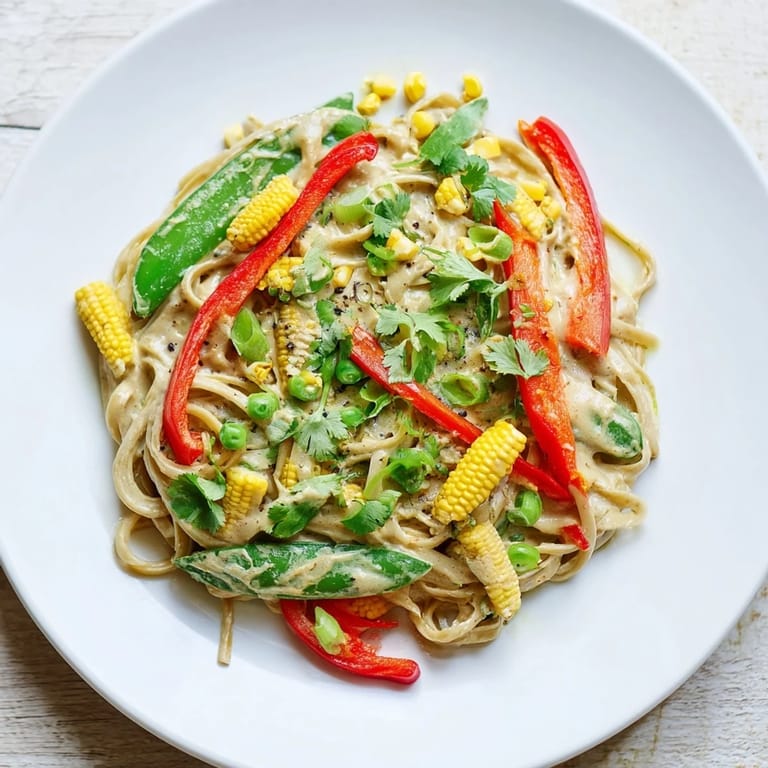
 I discovered this dish on a humid afternoon when my pantry held nothing but pasta, a can of coconut milk, and a jar of Thai green curry paste I'd been saving for something special. Rather than order takeout, I grabbed whatever vegetables were in the crisper drawer and tossed them into a wok with the curry sauce, watching the kitchen fill with that incredible aromatic steam. The result surprised me—it was like taking two cuisines I loved and letting them have a conversation on the plate. Now it's my go-to when I want something impressive but don't have the energy to overthink it.
I made this for my friend who'd been skeptical about fusion food, and watching her face when she tasted that first forkful—the way her eyes went wide at the combination of tender pasta and fragrant curry—made me feel like I'd cracked some kind of code. She asked for the recipe immediately, which almost never happens with her.
Ingredients
- Linguine or spaghetti, 350 g: Use whatever pasta shape you have; I prefer linguine because it catches the sauce better than thinner strands.
- Red bell pepper: Thinly sliced so it stays slightly crisp and sweet against the spicy curry.
- Zucchini: Halved lengthwise, then sliced into half-moons—this thickness means it won't turn mushy.
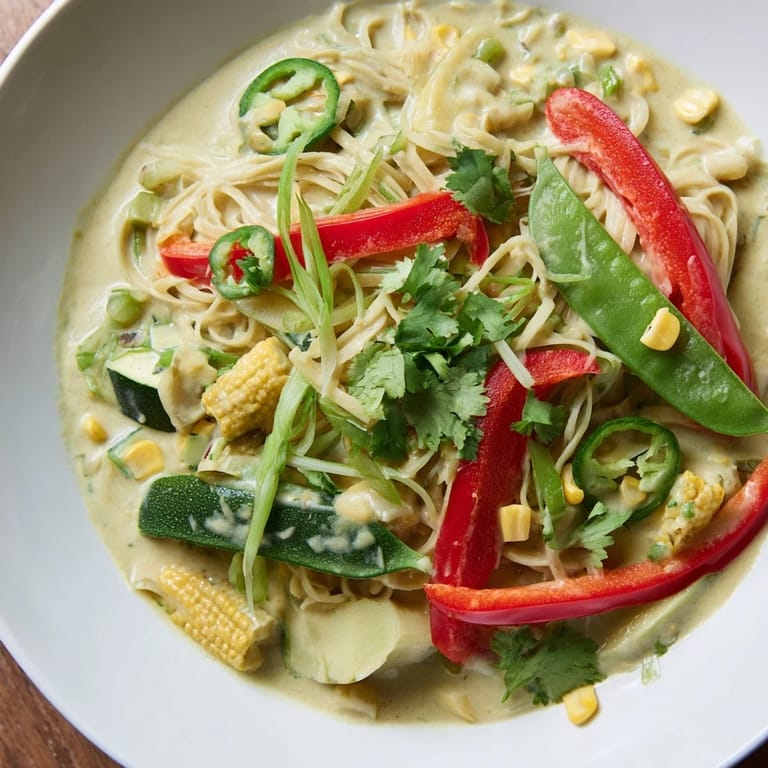
- Snap peas and baby corn, 100 g each: These stay firm through cooking, giving you that satisfying crunch.
- Spring onions, 2: Added at the end so their onion bite doesn't fade into the sauce.
- Fresh cilantro, 2 tbsp: This is non-negotiable; it's what lifts the entire dish at the finish.
- Thai green curry paste, 3 tbsp: The foundation of everything—taste your paste first so you know how much spice you're bringing.
- Coconut milk, 400 ml, full fat: This isn't the light version; the richness is essential to balance the spice.
- Soy sauce, 1 tbsp: Adds umami depth that makes you forget there's no meat.
- Brown sugar, 1 tbsp: A small amount rounds out the sharp edges without making it sweet.
- Ginger, 1 tsp freshly grated: Fresh matters here—it cuts through the richness with a clean bite.
- Lime juice from 1 lime: Save this for the very end so the brightness doesn't fade during cooking.
- Vegetable oil, 2 tbsp: Any neutral oil works; you need enough to bloom the curry paste properly.
Tired of Takeout? 🥡
Get 10 meals you can make faster than delivery arrives. Seriously.
One email. No spam. Unsubscribe anytime.
Instructions
- Boil your pasta:
- Get a large pot of generously salted water to a rolling boil—it should taste like the sea. Drop in your pasta and cook until it's just shy of fully tender, about a minute under the package time, so it finishes cooking when you toss it with the sauce later. Drain it into a colander but save that starchy water; you'll need it.
- Build the curry foundation:
- Heat oil in a large skillet or wok over medium heat until it shimmers, then add your curry paste and fresh ginger. Let this sauté for a minute or two until your kitchen smells unmistakably of Thai aromatics—you'll know when it's right.
- Create the sauce:
- Pour in the full-fat coconut milk, then add soy sauce and brown sugar, stirring constantly. Let it simmer gently for a few minutes while you take a breath—this is where the flavors marry together.
- Cook the vegetables:
- Add your bell pepper, zucchini, snap peas, and baby corn, stirring occasionally. You want them tender but still with a slight resistance when you bite them, which takes about five to six minutes; watch them rather than the clock.
- Unite everything:
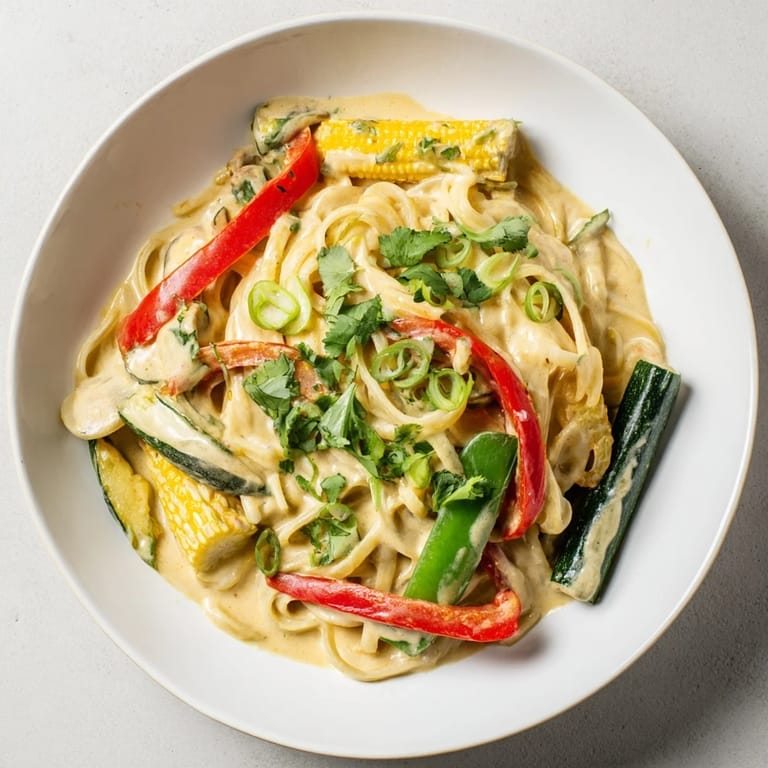
- Add your drained pasta directly to the skillet along with a splash of that reserved pasta water—about half a cup—and toss everything together. The starch in the water will help the sauce coat the pasta like a silky embrace, taking just two to three minutes.
- Finish with brightness:
- Stir in your spring onions, squeeze in that lime juice, and scatter the cilantro over the top. Taste it and adjust—maybe you need more lime, or a pinch more salt. This moment is yours to own.
 Save to Pinterest
 The first time I served this to my family during a chaotic weeknight dinner, my younger sibling looked up from their bowl and said, "Wait, is this just... pasta?" in a tone that made it clear they meant it as a compliment. Something about the way the coconut, spice, and pasta came together felt like proof that you don't need fancy ingredients or hours of cooking to make something feel special.
Choosing Your Curry Paste Wisely
Not all Thai green curry pastes are created equal, and this matters more than you might think. Some brands lean heavily into heat, others toward herbaceous brightness, and a few have that shrimp paste funk that can overwhelm if you're not expecting it. I've learned to buy a small jar first, taste it on a spoon with a bit of coconut milk, and only then commit to a full recipe. Many Asian markets have several options at different price points, and the mid-range ones tend to be more balanced than the cheapest or most premium versions. If you find a brand you love, stick with it—consistency in this ingredient means consistency in your finished dish.
Making It Your Own
The beauty of this recipe is that it's forgiving enough to adapt to whatever's in your fridge or what you're craving that day. I've made it with broccoli and carrots when the farmers market didn't have peppers, with extra ginger when I was fighting a cold, and even added a handful of spinach the time I was trying to sneak vegetables into a meal for someone particular. You could poach an egg into it, stir in some tofu for texture, or use rice noodles instead of pasta if that's what you have. The curry sauce is the backbone, and everything else is just conversation.
Wine Pairing & Serving Suggestions
A crisp white wine like Riesling or Sauvignon Blanc sits perfectly alongside this, cutting through the richness of the coconut while complementing the spice. I've also had luck with a slightly chilled Pinot Grigio or even a light rosé if that's your preference. The key is something aromatic and minerally that doesn't fight the curry—think of it as adding another voice to the conversation rather than shouting over it.
- Serve immediately while the pasta is still warm and the vegetables hold their slight firmness.
- Garnish generously with fresh cilantro, lime wedges, and crushed roasted cashews or peanuts for texture and richness.
- If you're feeding someone with nut allergies, skip the garnish nuts and add a drizzle of chili oil instead for complexity.
 Save to Pinterest
 This dish has quietly become the one I make when I want to feel capable without fussing, and when I want other people to feel seen and cared for through food. That's worth more than any fancy technique.
Common Recipe Questions
- → What pasta types work best with Thai green curry sauce?
Linguine or spaghetti work well, as their shape holds the sauce nicely while allowing for a smooth, balanced bite.
- → Can the dish be made vegan?
Yes, ensure the green curry paste has no shrimp or fish sauce and use plant-based ingredients throughout.
- → How to adjust the spice level?
Add less green curry paste for milder flavors or increase it for extra heat. Garnishing with sliced red chili also controls spiciness.
- → What vegetables complement the curry sauce?
Bell pepper, zucchini, snap peas, baby corn, and spring onions provide a crisp contrast and vibrant flavors.
- → How to keep vegetables crisp in the dish?
Cook them just until tender but still crisp, usually 5–6 minutes, to maintain texture and color.
- → Can protein be added to enhance the meal?
Yes, adding cooked chicken, shrimp, or tofu adds protein and complements the curry flavors well.