 Save to Pinterest
 I discovered this salmon recipe on a rainy Tuesday when I had exactly four salmon fillets thawing on my counter and a half-empty jar of gochujang staring at me from the pantry. The combination felt risky at first—would orange juice and Korean chili paste actually play well together?—but something about the tangy-sweet promise made me commit. Twenty minutes later, my kitchen smelled like caramelized citrus and spice, and I knew I'd found something worth making again and again.
I made this for my sister the first time she visited after moving away, and watching her dig into that caramelized salmon with a smile bigger than her fork reminded me why I love cooking for people. She asked for the recipe immediately, which was the highest compliment I could have received that day.
Ingredients
- Salmon fillets (4, skin-on, 150 g each): Skin-on keeps the flesh moist and gives you a crispy, salty textured bottom—always ask your fishmonger for fillets of similar thickness so they cook evenly.
- Gochujang (2 tablespoons): This Korean chili paste is where the soul of this dish lives; it's fermented, funky, and slightly sweet, so don't skip it or swap it for regular chili sauce.
- Orange juice (1/4 cup, freshly squeezed): Fresh juice makes all the difference because it brings brightness that bottled can't match; the acid also helps balance the richness of the salmon.
- Soy sauce (2 tablespoons): Choose a good-quality brand; it anchors the glaze and deepens the umami without overpowering the citrus.
- Honey (2 tablespoons): This is your secret sweetness that balances the heat and helps the glaze caramelize beautifully on the salmon.
- Rice vinegar (1 tablespoon): It adds a subtle sharpness that keeps the glaze from feeling one-dimensional.
- Fresh ginger (1 teaspoon, grated): Grate it fresh just before using; bottled ginger tastes tired and won't give you that fresh bite.
- Garlic (1 clove, minced): One clove is gentle and just enough to add depth without screaming at you.
- Sesame oil (1 teaspoon): A little goes a long way with this nutty, toasted oil; it's the finishing touch that makes you wonder why restaurant food tastes so good.
- Jasmine rice (1 1/2 cups): Its fragrant, slightly floral notes complement the salmon without competing for attention.
- Water (3 cups): The ratio of rice to water matters; too much and it's mushy, too little and it's crunchy.
- Unsalted butter (2 tablespoons): Butter makes jasmine rice sing, adding a luxurious richness that feels indulgent.
- Salt (1/2 teaspoon): This seasons both the rice and salmon gently.
- Scallions (3, thinly sliced): Their sharp green freshness is the final note that brings everything into balance.
- Sesame seeds (1 teaspoon, toasted) and orange zest (optional): These are the garnishes that make people think you fussed more than you actually did.
Tired of Takeout? 🥡
Get 10 meals you can make faster than delivery arrives. Seriously.
One email. No spam. Unsubscribe anytime.
Instructions
- Build your glaze:
- In a medium bowl, whisk together the gochujang, orange juice, soy sauce, honey, rice vinegar, ginger, garlic, and sesame oil until smooth and glossy. This is where your flavor foundation lives, so taste it as you go—it should sing with all five flavor notes at once.
- Marinate the salmon:
- Pat your salmon fillets completely dry with paper towels (wet fish won't caramelize), then place them skin-side up in a shallow dish and spoon 2 tablespoons of glaze over each fillet. Let them sit for 10 minutes while you get the rice started; this short marinate is all you need to add flavor without overwhelming the delicate fish.
- Cook the rice:
- Rinse your jasmine rice under cold water, stirring gently with your fingers until the water runs completely clear—this removes excess starch and helps each grain stay separate and fluffy. In a medium saucepan, combine the rinsed rice, 3 cups of water, butter, and salt, then bring to a boil over high heat. Once it's boiling, reduce the heat to low, cover with the lid, and let it simmer undisturbed for exactly 15 minutes.
- Finish the rice properly:
- Remove the pot from heat and let it sit, covered, for 5 minutes—this resting time lets the rice finish cooking gently from residual heat. Then fluff it with a fork, breaking up any clumps and releasing the steam that's trapped inside.
- Prep and broil:
- While the rice cooks its final minutes, preheat your broiler to high and line a baking sheet with foil, then lightly oil it to prevent sticking. Place your marinated salmon fillets skin-side down on the sheet (the skin acts as a shield to keep the bottom moist), brush the tops generously with more glaze, and slide them 5–7 inches below the broiler element.
- Watch and brush:
- Broil for 3–4 minutes, then pull the sheet out and brush the salmon with additional glaze—this creates those beautiful caramelized edges that make your mouth water. Return to the broiler for another 3–4 minutes until the fish is caramelized and opaque throughout with an internal temperature around 52–54°C (125–130°F for medium-rare and juicy).
- Thicken the remaining glaze:
- While the salmon cooks, pour any leftover glaze into a small saucepan and simmer over medium heat for 2–3 minutes until it thickens slightly and becomes glossy and syrupy. This reduction concentrates all those flavors and makes the final drizzle even more impactful.
- Plate and serve:
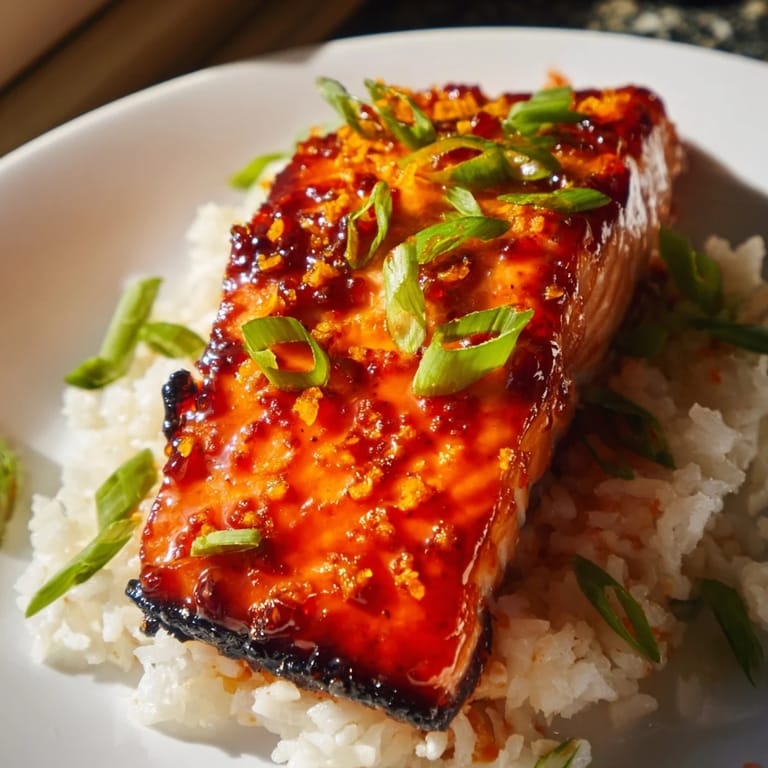
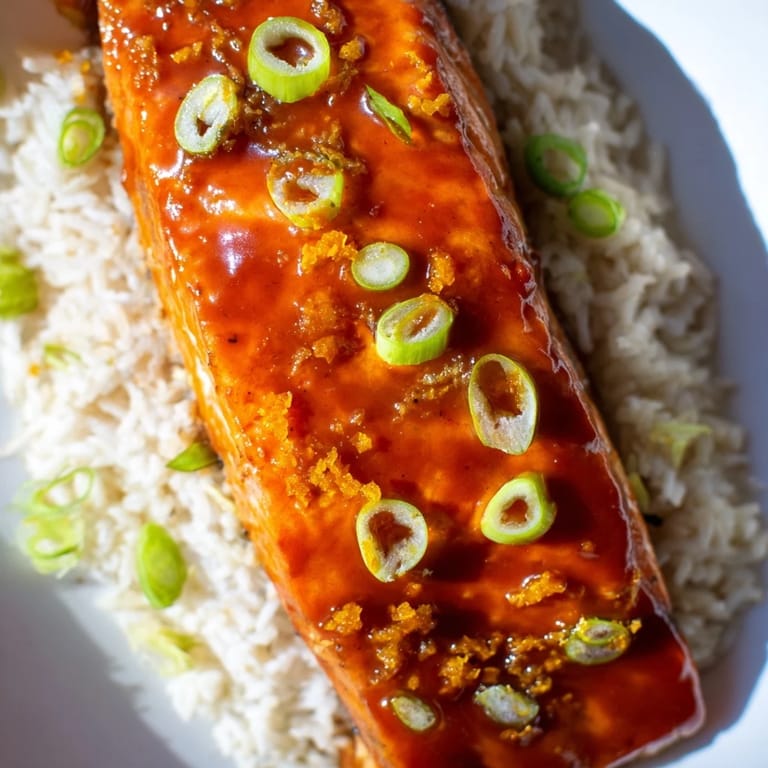
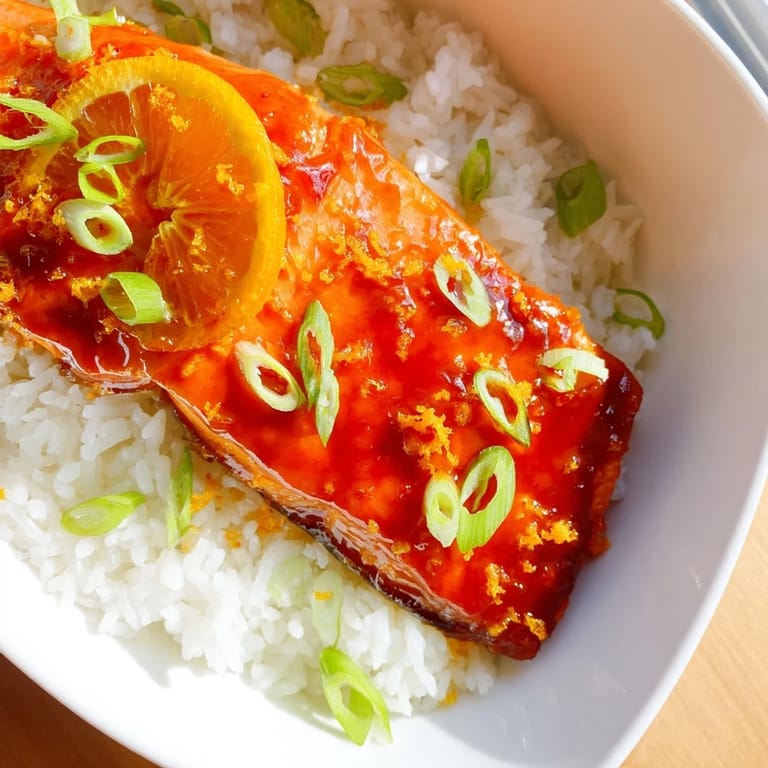
- Divide the fluffy buttery rice among four bowls, top each with a glazed salmon fillet (skin-side down so you get that crispy textured surface), and drizzle generously with the thickened sauce. Finish with a scatter of fresh scallions, toasted sesame seeds, and a whisper of orange zest if you're feeling fancy, then serve immediately while everything is warm.
 Save to Pinterest
 The first time my partner took a bite of this salmon, he closed his eyes for a moment and said, 'This is what makes you happy, isn't it?'—and he was right, because there's something about creating something beautiful and delicious that just works. Now whenever we have people over, someone inevitably asks for this recipe, and I'm always happy to share it.
Why This Glaze Changes Everything
Most salmon recipes rely on butter or lemon to feel fancy, but this gochujang-orange combination is a different kind of magic. The Korean chili paste adds a fermented depth that makes people pause and ask what exactly they're tasting, while the fresh orange juice keeps everything bright and prevents the heat from being harsh. Together, they create layers of flavor that make a simple broiled fillet taste like you spent hours on it.
Rice as Your Canvas
The jasmine rice here isn't just a side dish—it's the cushion that lets the salmon and glaze shine. Fluffy, buttery, and slightly fragrant, it soaks up every drop of that reduced glaze and becomes something more than the sum of its parts. If you're feeling adventurous, brown rice or quinoa work beautifully too, though they'll need slightly more water and cooking time.
Serving and Pairing Ideas
This dish sings on its own, but a few thoughtful touches elevate it from weeknight dinner to something you'd serve at a table where you want to impress. The fresh scallions and sesame seeds matter more than you might think—they add texture and a sharp contrast that keeps each bite interesting. If you have fresh orange zest on hand, don't skip it.
- Pair with a crisp white wine like Sauvignon Blanc or a bright, citrusy IPA to echo the orange notes.
- A simple cucumber and avocado salad on the side adds coolness and creaminess if you want something fresh.
- Leftovers (if you have them) are secretly even better the next day when the flavors have had time to marry.
 Save to Pinterest
 This recipe has become my go-to when I want to feel like a competent cook without spending hours in the kitchen, and that's probably the highest compliment any recipe can receive. Every time I make it, someone walks into the kitchen asking what smells so incredible, and that moment never gets old.
Common Recipe Questions
- → How do I achieve the sticky glaze on the salmon?
Marinate the salmon briefly in the gochujang orange mixture and brush additional glaze before and during broiling for a caramelized, sticky finish.
- → Can I use a different type of rice?
Yes, brown rice or quinoa work well as alternatives, though cooking times will vary.
- → What cooking temperature ensures perfect salmon?
Broil the salmon 5–7 inches from heat for 6–8 minutes until internal temperature reaches 52–54°C (125–130°F) for medium doneness.
- → Are there options to adjust the spice level?
Adding a pinch of chili flakes to the glaze increases heat, or reduce gochujang for milder flavor.
- → What garnishes enhance the dish?
Fresh scallions, toasted sesame seeds, and a sprinkle of orange zest add freshness and complementary textures.