 Save to Pinterest
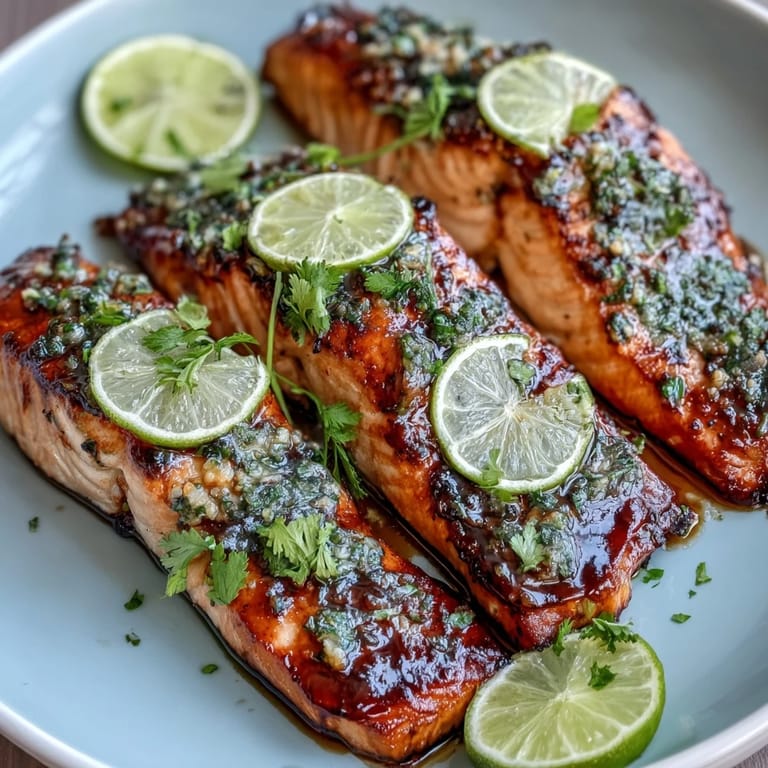
 My neighbor knocked on the door one Tuesday evening with a bottle of wine and a question: could I help her nail a dinner for her in-laws the next night? I'd been experimenting with salmon all week, and something about the way she described wanting it to feel effortless yet impressive clicked. That's when this honey-lime garlic butter salmon came together—a dish that proved you don't need hours in the kitchen to create something that tastes like you've been cooking all day.
Watching my neighbor's face when she tasted it that Thursday night was the real payoff. Her mother-in-law asked for the recipe before dessert, and suddenly I was texting it to half her extended family. What made it stick in everyone's memory wasn't complexity—it was how the salmon stayed tender while the butter turned golden and the lime kept everything fresh.
Ingredients
- Salmon fillets (4, about 6 oz each): The thickness matters more than you'd think; uniform pieces cook evenly, so ask your fishmonger to cut them similarly sized, and don't panic if one's slightly thicker—just pull it out a minute early.
- Unsalted butter (4 tablespoons, melted): Unsalted lets the honey and lime shine without competing saltiness, and melting it first makes whisking the glaze ridiculously smooth.
- Honey (1/3 cup): The sweetness caramelizes in the oven's heat, creating those beautiful amber pools on the baking sheet that you'll want to drizzle over everything.
- Lime juice (3 tablespoons, freshly squeezed): Bottled lime juice tastes like regret; fresh limes take two minutes and transform the whole dish into something bright and alive.
- Garlic (4 cloves, minced): Raw garlic softens during baking and becomes almost sweet, but mince it fine so it distributes evenly throughout the glaze.
- Salt and black pepper (1/2 teaspoon and 1/4 teaspoon): These are your baseline; taste the glaze before applying it and adjust if your honey or limes skew one direction.
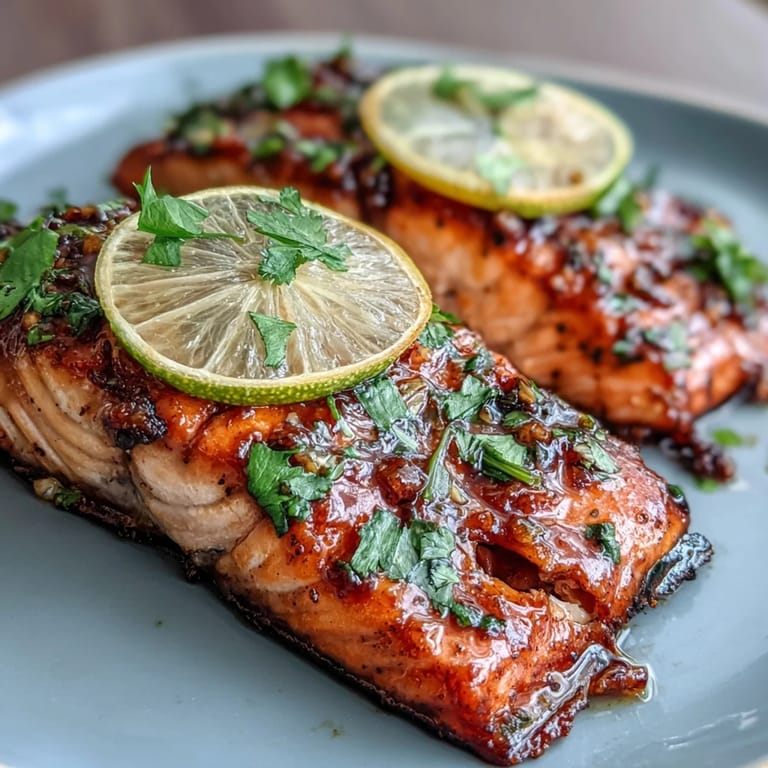
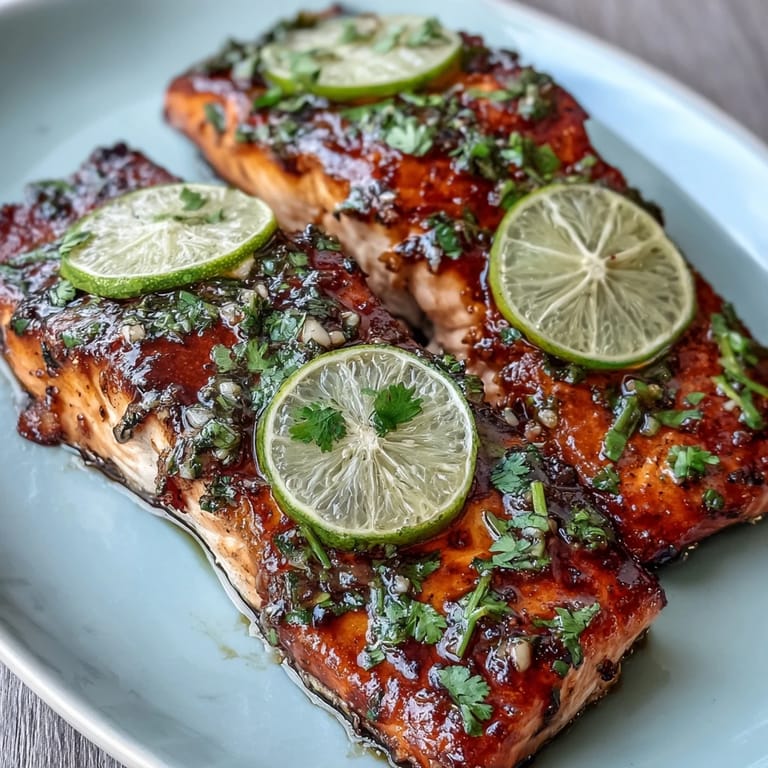
- Lime slices and fresh cilantro or parsley (for garnish): These aren't optional flourishes—the brightness of fresh herbs cuts through the richness and makes people feel like they're eating something special.
Tired of Takeout? 🥡
Get 10 meals you can make faster than delivery arrives. Seriously.
One email. No spam. Unsubscribe anytime.
Instructions
- Set your stage:
- Preheat to 400°F and line your baking dish with foil; this takes literally 90 seconds and saves you from scrubbing burnt honey off ceramic later. I learned this the hard way.
- Prepare the salmon:
- Pat each fillet completely dry with paper towels—moisture is the enemy of browning, and you want those edges to caramelize slightly. Arrange them on the foil without crowding; they'll cook more evenly if they're not touching.
- Make the magic glaze:
- Whisk the melted butter, honey, lime juice, minced garlic, salt, and pepper in a small bowl until it looks glossy and uniform. The butter and honey will want to separate slightly, so keep whisking for about 30 seconds until it looks creamy.
- Coat generously:
- Spoon or brush the glaze over each salmon fillet, making sure you get the sides and ends. You'll feel like you're being generous, which is exactly right—this glaze is what makes the dish sing.
- Add lime crowns:
- Top each fillet with a couple of lime slices; they'll soften during baking and add subtle flavor while they look gorgeous.
- Bake until silky:
- Pop the whole thing in the oven for 15 to 20 minutes—start checking at 15 by gently pressing the thickest part with a fork; if it flakes easily and the center looks opaque rather than translucent, you're done. Overcooking salmon turns it into a disappointing dry situation, so watch it.
- Finish and serve:
- Pull it from the oven, shower it with fresh cilantro or parsley, and get it to the table while the glaze is still warm. The warmth matters; cold salmon tastes sadder somehow.
 Save to Pinterest
 Three months later, my neighbor texted me a photo of her making this salmon for a friend who'd just moved to town. There's something about dishes that feel impressive but relaxed—they do the emotional work of hospitality without demanding hours of your life. This one does that beautifully.
A Word on Variations
I've tested this with lemon instead of lime when I didn't have fresh limes, and it's equally lovely—slightly earthier, less tropical. A small pinch of cayenne pepper (maybe 1/8 teaspoon) adds a whisper of heat that nobody can quite identify but everyone notices. Some nights I swap cilantro for dill, which pairs differently with the lime but somehow feels more calming.
What to Serve Alongside
This salmon is flexible and forgiving about its company. I usually pair it with something that contrasts the richness—steamed broccoli, a bright green salad with lemon vinaigrette, or fluffy white rice that catches all those glaze drippings. Roasted asparagus works too, as does quinoa if you want something with a bit more texture to stand up to the butter and honey.
Storage and Reheating
Leftovers last about two days in the fridge, though honestly they rarely make it that long in my house. When you do reheat, do it gently—a 325°F oven for about 8 minutes, covered loosely with foil, keeps the salmon tender rather than rubbery. Cold salmon makes excellent additions to grain bowls the next day if you're in the mood for something different.
- Store leftovers in an airtight container to prevent them from picking up other flavors from the fridge.
- If you're meal-prepping, assemble the glaze the night before but apply it just before baking to keep the salmon from getting waterlogged.
- This dish is naturally gluten-free and plays nicely with pescatarian diets, so it's an easy crowd-pleaser for mixed dinner tables.
 Save to Pinterest
 This recipe proves that elegant doesn't have to mean complicated. It's the kind of dish that makes you feel like you're showing up for the people at your table, and that's what good cooking really is.
Common Recipe Questions
- → How do I prevent the salmon from drying out?
Ensure not to overbake the salmon; cook until it flakes easily and reaches an internal temperature of 145°F (63°C). Brushing the fillets generously with the butter glaze helps keep them moist.
- → Can I substitute lime with another citrus?
Yes, lemon works well as a substitute, providing a slightly different but equally fresh and bright flavor.
- → Is it necessary to remove the salmon skin before cooking?
Either is fine; skin-on helps retain moisture and can crisp up nicely, but skinless fillets work well too depending on preference.
- → What sides complement this salmon dish?
Steamed vegetables, rice, quinoa, or a crisp green salad pair beautifully, balancing the rich glaze with fresh or mild flavors.
- → Can I prepare this dish dairy-free?
Yes, replace the butter with a plant-based alternative to keep the glaze creamy without dairy ingredients.
- → What is the recommended cooking temperature and time?
Bake at 400°F (200°C) for 15-20 minutes, or until the salmon flakes easily and is opaque in the center.