 Save to Pinterest
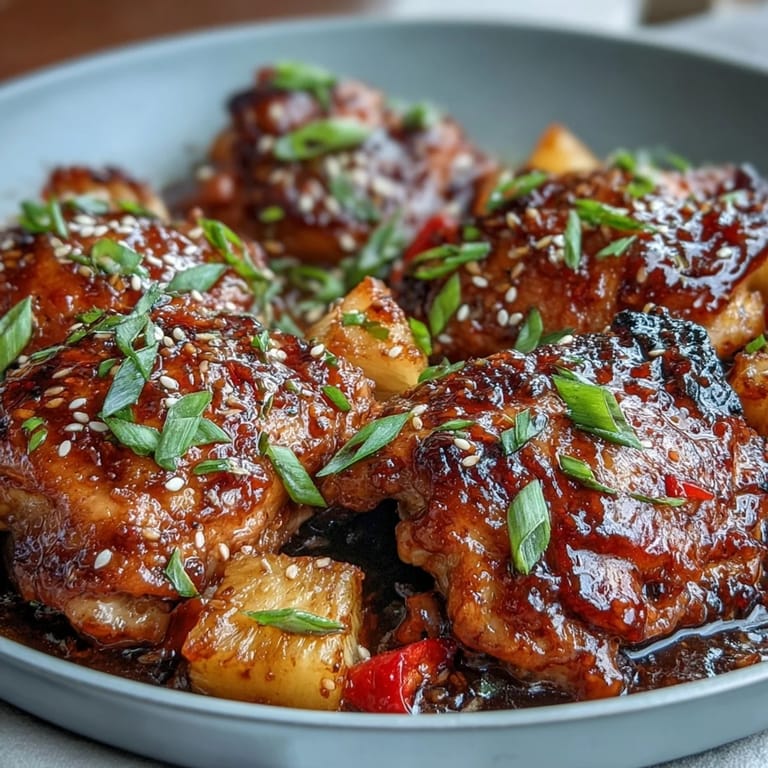
 There's something about the sizzle of chicken hitting hot oil that makes you stand at attention in the kitchen, especially when you know what's coming next. A few years back, I was experimenting with leftover pineapple and a jar of honey, wondering if sweet and savory could actually work in the same pan without feeling confused. Turns out, when you add garlic and a whisper of heat, magic happens. This sticky honey garlic chicken became my go-to when I needed something that looked fancy but felt effortless, the kind of dish that makes people ask for the recipe before they even finish eating.
I made this for my sister during a surprise dinner party, and she stood at the stove watching the pineapple caramelize, asking if we could make it every week. The kitchen smelled like toasted garlic and honey, and somehow that simple moment of her leaning over my shoulder made me realize food like this isn't about perfection, it's about creating something warm and a little bit special for the people you're feeding.
Ingredients
- Boneless, skinless chicken thighs: They're more forgiving than breasts and stay moist even if you're not watching the clock obsessively, plus they absorb the sauce beautifully.
- Honey: This is your sweetness anchor, so don't skip it or substitute with something too thin, or your sauce won't have that signature sticky quality.
- Low-sodium soy sauce: The umami backbone that keeps this from tasting like dessert, and low-sodium gives you control over saltiness.
- Rice vinegar: A touch of brightness that cuts through the richness and prevents the dish from feeling heavy.
- Fresh garlic and ginger: Minced garlic releases its oils faster than sliced, and fresh ginger adds a warmth that powdered just can't replicate.
- Fresh pineapple chunks: If you're using canned, drain it well or your sauce will become watery and lose that sticky glaze.
- Bell peppers: They caramelize slightly in the skillet and add color, sweetness, and a subtle char that contrasts with the glaze.
- Vegetable oil: A high-heat oil is essential for getting that golden sear on the chicken without the oil smoking up your kitchen.
- Green onions and sesame seeds: These are your finishing touches that add freshness and a nutty crunch when everything else is soft and glossy.
Tired of Takeout? 🥡
Get 10 meals you can make faster than delivery arrives. Seriously.
One email. No spam. Unsubscribe anytime.
Instructions
- Prep your chicken:
- Pat those thighs dry with paper towels, because moisture is the enemy of browning. A light dust of cornstarch helps them get golden and crispy on the outside without toughening the inside.
- Build your sauce:
- Whisk everything together in a bowl and taste it straight, letting the flavors sit on your tongue for a second. You'll notice the honey sweetness, the salty soy, the tang of vinegar, and that ginger warmth coming through.
- Sear the chicken:
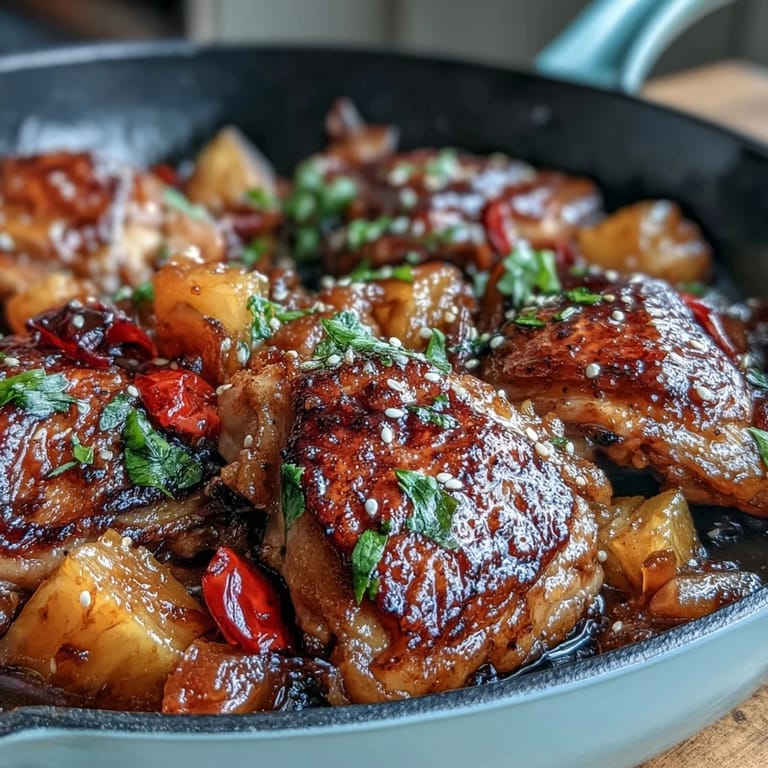
- Medium-high heat, oil shimmering but not smoking, and listen for that satisfying sizzle. Three to four minutes per side gets you a golden crust that seals in the juices, even if the inside still needs a few minutes to finish cooking.
- Sauté the vegetables:
- Once the chicken comes out, the pan is still hot and the oil is flavored, so the peppers and pineapple caramelize quickly. You're not trying to cook them through, just kiss them with color and warmth.
- Bring it together:
- Return the chicken, pour the sauce over everything, and let the cover trap steam so the chicken finishes gently while the sauce thickens around it. Give it a turn halfway through so the glaze coats every surface evenly.
- Final glaze:
- Uncover and cook a few minutes more if you want that sauce even stickier and more concentrated. The longer it simmers, the more it clings to the chicken like a glossy coat.
 Save to Pinterest
 One evening, my nephew tasted this and asked if pineapple was supposed to be sweet, because he'd never thought about fruit as part of dinner. Watching him discover that flavors don't have to stay in their assigned lanes made me remember why cooking for people matters, why a one-pan meal with a little tropical flair can shift someone's perspective.
Why Thighs Over Breasts
Chicken thighs have more fat and connective tissue, which sounds less appealing until you realize it means they stay tender even when you're juggling multiple steps in the kitchen. Breasts will work if that's what you have, but cook them for about 15 minutes total instead of 22, and watch them like a hawk so they don't dry out while the sauce is doing its thing. The thighs forgive a few extra minutes of simmering, which gives you breathing room to get everything else plated.
The Sauce Balance That Changes Everything
The ratio of honey to soy sauce to vinegar is what keeps this from tasting one-dimensional, and it took me three attempts to get it right. Too much honey and it's dessert, too much soy and it's salty, too much vinegar and it's sharp. But when they're balanced, they create this layered sweetness that builds as you eat, with the garlic and ginger adding depth underneath.
From Skillet to Table
This dish is best served immediately over jasmine rice or quinoa so the hot rice soaks up some of that glossy sauce. If you're meal prepping, let it cool before storing, and when you reheat, add a splash of water or broth to loosen the sauce back up. The leftovers actually taste even better the next day, as the flavors marry together and the chicken absorbs even more of that sticky coating.
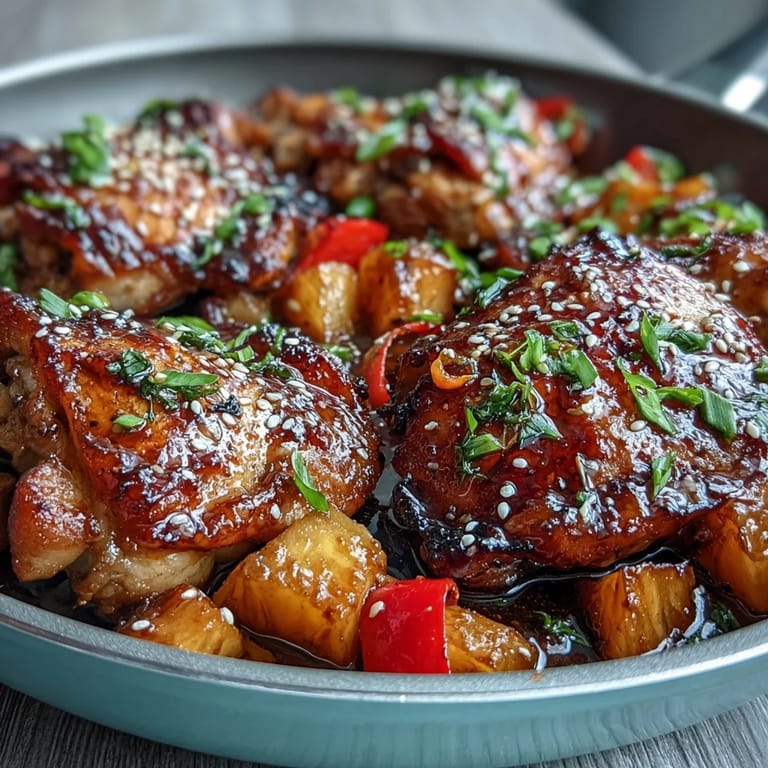
- Serve with steamed jasmine rice or quinoa to catch every drop of sauce.
- A crisp white wine or light beer cuts through the sweetness and feels refreshing alongside the tropical notes.
- Garnish generously right before serving so the green onions and sesame seeds stay bright and don't wilt into the warm glaze.
 Save to Pinterest
 This is the kind of recipe that gets better each time you make it, as you learn the timing and confidence your own hand. It's proof that great food doesn't require complexity, just a few honest ingredients and the willingness to let them talk to each other on the stove.
Common Recipe Questions
- → What cut of chicken works best for this dish?
Boneless, skinless chicken thighs are ideal for their tenderness and ability to stay juicy when cooked with the glaze.
- → Can I substitute fresh pineapple with canned pineapple?
Yes, use canned pineapple chunks drained well to maintain the dish's sweetness without excess moisture.
- → How can I adjust the spice level?
Add or omit sriracha or chili garlic sauce in the glaze to control the heat according to your preference.
- → What side dishes pair well with this skillet meal?
Steamed jasmine rice or quinoa complement the sweet and savory flavors perfectly, soaking up the sticky glaze.
- → Is it possible to make this gluten-free?
Use tamari in place of soy sauce to keep the sauce gluten-free without compromising flavor.