 Save to Pinterest
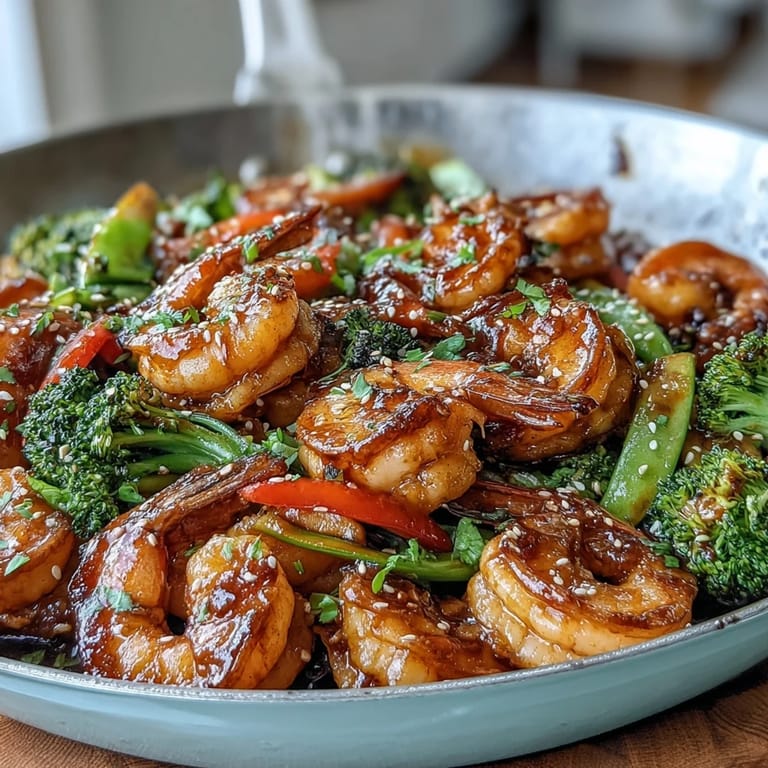
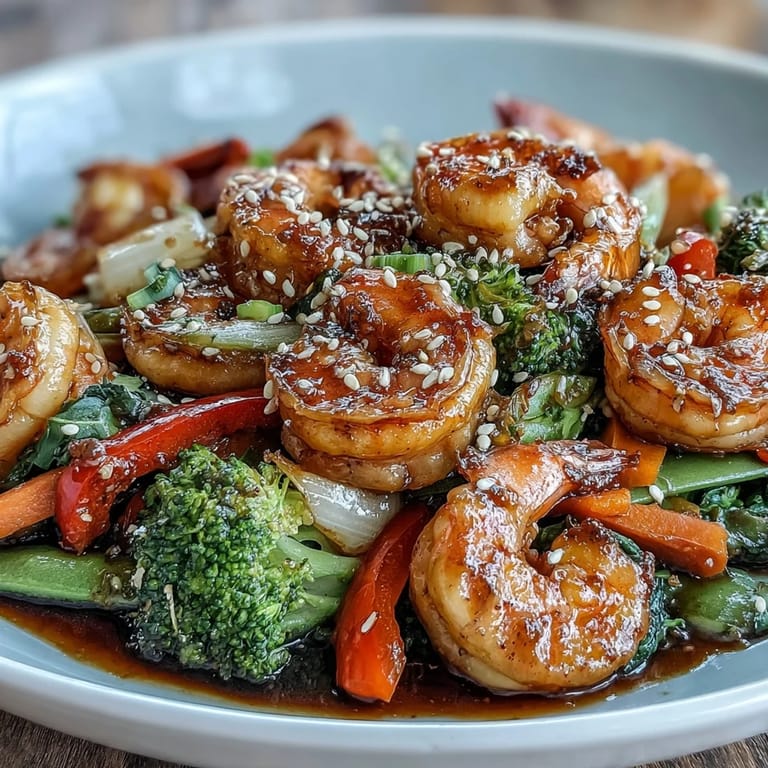
 There's this moment when a wok gets properly hot, and the sound shifts from a gentle sizzle to something almost aggressive—that's when I know a stir-fry is about to come together. My neighbor mentioned she'd been ordering takeout three nights a week, and something about that nudged me into finally mastering shrimp stir-fry at home. Turns out, once you taste it fresh from your own pan, with vegetables still snapping between your teeth and shrimp that haven't spent an hour sitting in a container, you stop wanting the delivery option entirely.
I made this for my sister on a random Tuesday when she was stressed about a presentation, and watching her face light up at that first forkful felt like I'd actually solved something for her. The whole thing took less time than she'd have spent waiting for delivery, and somehow that mattered more than the food itself—though honestly, the food was stellar too.
Ingredients
- Large shrimp (1 lb, peeled and deveined): This is the star, and size matters—large ones stay juicy and cook through in under three minutes, while smaller ones can turn rubbery before you blink.
- Red and yellow bell peppers: The color is half the appeal, but they also bring sweetness that balances the salty-savory sauce beautifully.
- Broccoli florets: Cut them small so they cook evenly and develop little charred edges if your pan gets hot enough.
- Carrot, julienned: Thin slices mean they soften without disappearing, and they add a subtle sweetness that builds as they cook.
- Sugar snap peas: These are non-negotiable for the crisp texture—they're the thing that makes you feel like you're eating something fresh and alive.
- Green onions: A handful raw, a handful as garnish later; they're the quiet backbone of clean flavor.
- Low-sodium soy sauce (3 tbsp): This is your umami foundation—don't skip it, and don't use the low-quality stuff that tastes like salt water.
- Oyster sauce (1 tbsp, optional): I always use it because it adds a depth that soy sauce alone can't quite reach, but if you're vegetarian or avoiding it, the dish still works.
- Sesame oil (2 tsp): This is a finishing element more than a cooking oil—it brings nuttiness that makes people ask what your secret ingredient is.
- Honey or brown sugar (2 tbsp): Just enough to round out the sharp edges without making it sweet; honey feels more elegant to me.
- Rice vinegar (1 tbsp): This is the brightness that keeps the whole thing from feeling heavy.
- Cornstarch (2 tsp): Whisked into the sauce, it's what transforms loose liquid into something glossy and clinging.
- Vegetable oil (2 tbsp total): Split between cooking the shrimp and the vegetables; peanut oil if you have it, for a slightly richer flavor.
- Garlic and ginger: Fresh ginger especially—frozen doesn't have the same snap, and bottled minced garlic tastes like regret by comparison.
- Sesame seeds and cilantro: The finishing touches that make people think you spent hours on this.
Tired of Takeout? 🥡
Get 10 meals you can make faster than delivery arrives. Seriously.
One email. No spam. Unsubscribe anytime.
Instructions
- Build your sauce while everything else waits:
- Whisk soy sauce, oyster sauce, sesame oil, honey, rice vinegar, cornstarch, and water into a small bowl—this takes two minutes, and having it ready means you won't be scrambling later when the pan is hot and your hands are busy.
- Dry the shrimp like they're about to go on stage:
- Pat them thoroughly with paper towels and season with just salt and pepper; any moisture clinging to them will steam instead of sear.
- Give the shrimp their moment alone:
- Heat 1 tablespoon oil in your wok or skillet over medium-high heat until it shimmers, then add shrimp and let them sit for 2-3 minutes, stirring occasionally, until they're pink and cooked through. This is not the time to crowd them or move them around constantly—they need space to develop color.
- Wake up the aromatics:
- Add the remaining oil, then garlic and ginger, and stir for about 30 seconds until your kitchen smells like an actual Asian restaurant. You'll know it's right when the smell suddenly intensifies.
- Let the vegetables get a little color:
- Add peppers, broccoli, carrot, and snap peas, then stir-fry for 3-5 minutes until they're crisp-tender—meaning they still have snap when you bite them but aren't raw anymore. The edges of the peppers should start looking slightly caramelized.
- Bring everyone back together:
- Return the shrimp to the pan along with the green onions, then pour in your sauce and stir everything constantly for 2-3 minutes while the cornstarch does its job and the sauce thickens into something glossy and clinging.
- Finish with the flourish:
- Taste it, adjust if needed (more soy sauce for saltiness, more vinegar for brightness, more honey if it's too sharp), then sprinkle with sesame seeds and cilantro and serve immediately over rice, noodles, or nothing at all.
 Save to Pinterest
 My partner, who claims he doesn't cook, watched me make this once and then started showing up with groceries, asking if we could do stir-fry night on Fridays. There's something about a meal that comes together this fast and tastes this good that makes people feel capable in the kitchen, and I'm here for it.
The Wok or Skillet Question
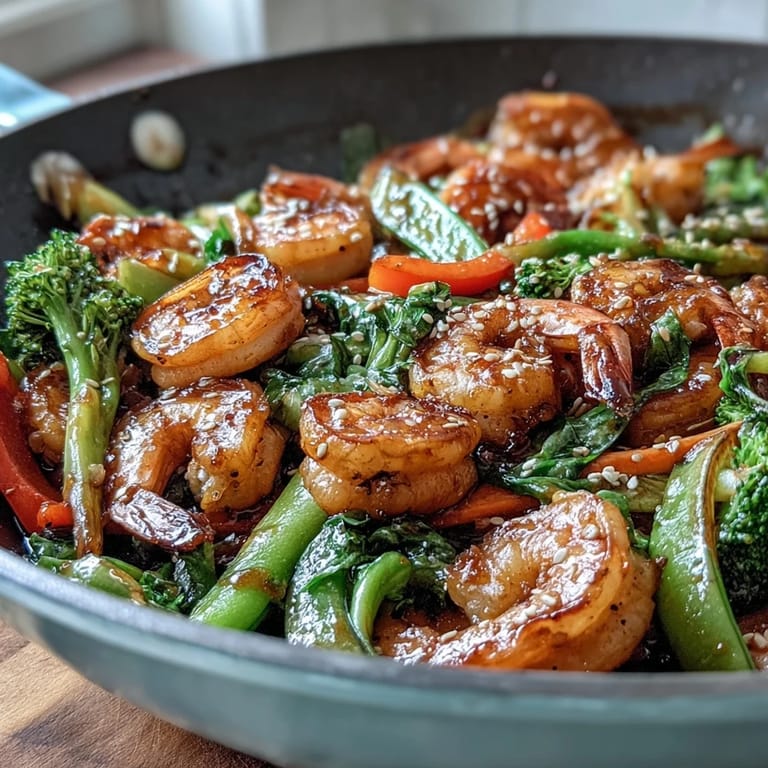
A traditional wok is genuinely better because of its shape—the heat concentrates at the bottom, the sides are cooler, and you can push things up and away while you work. But I've made this in a regular large skillet dozens of times, and it works just fine as long as you don't crowd the pan and you let the heat do its job. The only real difference is that a skillet forces you to be slightly more careful about not overcooking things, which honestly isn't the worst discipline to develop.
Customizing Around Allergies and Preferences
The beauty of stir-fry is that it's fundamentally flexible—swap shrimp for chicken or tofu without changing a single thing about the technique. For gluten-free, use tamari instead of soy sauce and double-check your oyster sauce, which sometimes hides wheat in places you wouldn't expect. If someone at your table wants spice, put red pepper flakes or fresh sliced chili on the side so people can add their own heat without committing the whole batch to fire.
The Small Details That Actually Matter
Mise en place sounds fancy but it's really just having everything cut and measured before you start cooking, which takes maybe ten minutes and prevents that moment where your pan is screaming hot and you're still trying to peel garlic. Fresh ginger tastes completely different from powdered ginger—don't substitute unless you absolutely have to. The sauce is what makes people believe you're a better cook than you actually are, so don't skip it or try to improvise it at the last minute.
- Taste the sauce before it goes into the pan—it should be bold enough to stand up to the vegetables, not timid.
- Keep everything moving with a wooden spoon or chopsticks; stir-fry is supposed to be active and alive, not passive.
- Serve immediately because the vegetables start to soften and lose their snap about three minutes after finishing, and that snap is everything.
 Save to Pinterest
 This recipe doesn't ask for much—just attention while you're cooking and good ingredients going in—and somehow that restraint is what makes it work every single time. Make it once and it becomes the thing people text you about, asking when you're making it again.
Common Recipe Questions
- → What vegetables work best in this stir-fry?
Bell peppers, broccoli, carrots, sugar snap peas, and green onions provide a balance of crispness and flavor, enhancing the texture and nutrition.
- → How can I adjust the sauce for more heat?
Add red pepper flakes or fresh chili slices while sautéing the garlic and ginger to introduce a subtle spicy kick.
- → Can I substitute the shrimp for other proteins?
Yes, chicken or tofu are excellent alternatives that absorb the sauce well and maintain the dish's overall flavor profile.
- → What cooking oils are best for stir-frying?
Vegetable oils with high smoke points like canola or peanut oil work well to achieve quick, even cooking without burning.
- → How do I make a gluten-free version of this dish?
Replace soy sauce with tamari and ensure any oyster sauce used is gluten-free or substituted with a vegetarian alternative.