 Save to Pinterest
 There's something deeply satisfying about the moment you realize that three pantry staples—peanut butter, soy sauce, and chili crisp—can transform humble instant ramen into something that tastes like you've been cooking all day. I discovered this one evening when my roommate came home complaining about being starving with zero energy, and I had exactly ten minutes before we both needed to leave again. What emerged from that small window of time tasted so good that we've made it at least twice a week ever since.
I made this for my partner after they had a terrible day at work, and watching their face when they tasted it—that immediate shift from exhausted to genuinely delighted—reminded me that the best meals aren't always the complicated ones. Sometimes it's just about someone taking ten minutes to say "I'm thinking about you" through something warm and flavorful.
Ingredients
- Instant ramen noodles (2 packs): Discard those flavor packets entirely; they'll only fight with the sauce you're building. The plain noodles are your blank canvas.
- Creamy peanut butter (3 tablespoons): Use the smooth kind, not the chunky, because you need it to whisk into a silky sauce without lumps.
- Soy sauce (2 tablespoons): This is the backbone—it adds salt and umami depth that makes everything taste intentional.
- Chili crisp (1 tablespoon): This stuff is magic; the oil carries the flavor through the whole dish, not just heat.
- Rice vinegar (1 tablespoon): A tiny bit of acidity wakes everything up and prevents the sauce from feeling one-note.
- Honey or maple syrup (1 tablespoon): Just enough sweetness to balance the spice and salt, creating complexity.
- Toasted sesame oil (2 teaspoons): The nutty aroma makes your kitchen smell like something special is happening.
- Minced garlic (1 clove): Raw garlic in a warm sauce mellows into something almost sweet if you mince it fine enough.
- Hot water (3–4 tablespoons): Reserve some noodle cooking water first; it has starch that helps the sauce cling to noodles instead of pooling at the bottom.
Tired of Takeout? 🥡
Get 10 meals you can make faster than delivery arrives. Seriously.
One email. No spam. Unsubscribe anytime.
Instructions
- Boil the noodles:
- Fill a pot with enough water to cover the ramen generously and bring it to a rolling boil. Slide in the noodles and cook exactly as the package says, usually around 3 minutes. As they soften, you'll smell the toastiness of the wheat, which is your signal that they're building flavor.
- Save the liquid, drain the noodles:
- Before you pour everything into a colander, grab a measuring cup and scoop out about 2 to 3 tablespoons of that starchy cooking water. This is your secret weapon for making the sauce flow smoothly instead of seizing up.
- Build the sauce in a bowl:
- Scoop the peanut butter into a medium mixing bowl and add the soy sauce, chili crisp, rice vinegar, honey, sesame oil, and garlic all at once. Using a whisk (or even a fork works), start mixing everything together in slow, deliberate strokes, watching as the peanut butter gradually incorporates and the color deepens to amber.
- Thin it to the right consistency:
- Add your reserved noodle water one tablespoon at a time, whisking between each addition, until the sauce looks pourable but still clings when you lift a spoon. The texture should remind you of thick salad dressing, not soup.
- Combine noodles and sauce:
- Pour the warm drained noodles into the bowl with the sauce and toss with urgency, making sure every strand gets coated. You'll notice the noodles will soften slightly from the warmth and moisture, becoming even more tender.
- Plate and finish:
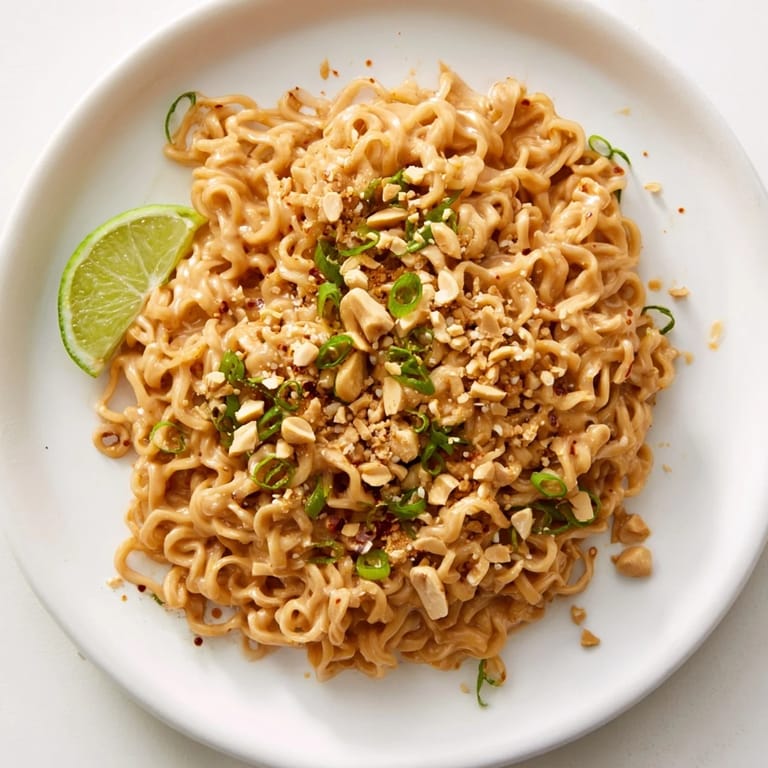
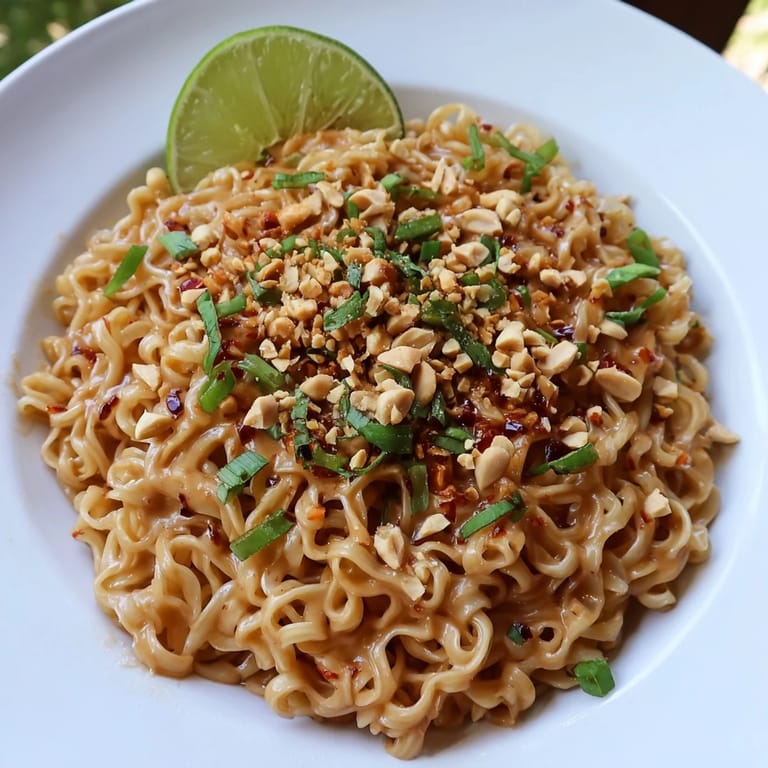
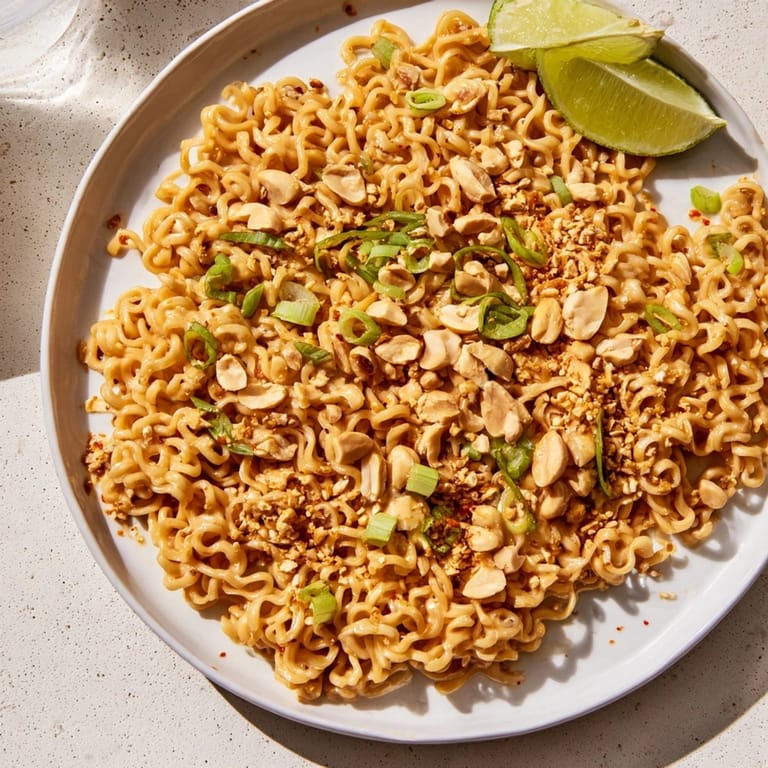
- Divide the noodles between two bowls, then shower them with whatever toppings you have—sliced scallions, crushed peanuts, sesame seeds, cilantro, and a lime wedge on the side. Serve right away while everything is warm and the toppings still have their texture.
 Save to Pinterest
 There's a moment right after you toss the noodles with that warm sauce when the smell hits you—roasted peanuts, sesame, a whisper of chili heat—and you realize you've just made restaurant-quality food in your own kitchen for less than two dollars. That's when it stopped being just a quick dinner fix and became something I actually crave.
Make It a Complete Meal
This dish is delicious as written, but it hungers for a little protein if you're eating it as your main course. A soft-boiled egg perched on top adds richness and a silky yolk that mingles with the sauce when you break into it. Pan-seared tofu brings a slightly crispy exterior that contrasts beautifully with the tender noodles, and grilled chicken strips make it feel more substantial without overwhelming the delicate balance of flavors you've already built.
Playing with Heat and Flavor
The magic of this recipe is that it's entirely customizable to whatever your mood demands that day. If you're sensitive to spice, use less chili crisp and taste as you go—you can always add more, but you can't remove it. If you want deeper heat, try swapping the chili crisp for something smoked or using a spicier variety, and you'll get an entirely different personality while the structure stays the same. Some nights I add a tiny splash of fish sauce because I'm feeling adventurous, and other nights I stick to the original because it's perfect as is.
Storage and Make-Ahead Tips
This sauce keeps in the refrigerator for about a week in an airtight container, which means you can make a double batch on Sunday and assemble quick lunches throughout the week. Just reheat it gently in a bowl with a little extra water to loosen it up, and cook fresh noodles whenever you need them. The noodles themselves are best eaten right after cooking, but if you're meal prepping, you can store cooked noodles separately and combine them fresh each day.
- Always whisk the chilled sauce smooth again before using, as the oils can separate slightly during storage.
- Add a little sesame oil when reheating to restore that toasted aroma that might have faded.
- Keep lime wedges fresh and ready to squeeze—they brighten everything up and are one of the few things better the moment you add them.
 Save to Pinterest
 This recipe lives in that rare, beautiful space where it's so simple that you'll never feel intimidated making it, but so genuinely delicious that you'll actually want to eat it again and again. That's the kind of cooking that sustains life in the best way.