 Save to Pinterest
 My grandmother's kitchen always smelled like sausage and cornmeal on cold afternoons, but it wasn't until I moved away that I truly understood what I was missing. Years later, standing in my own kitchen on a gray November day, I found myself recreating that exact smell—not from memory alone, but from watching her hands work, from the way she'd let the dumplings steam without peeking. This Black-Eyed Peas and Sausage Dumplings dish became my bridge back to those moments, a way of saying thank you to the woman who taught me that comfort food is really just love in a bowl.
I made this for my friend Marcus on a Tuesday when he'd had the kind of week that breaks you a little. He showed up at my door looking hollowed out, and three hours later, he was on his third bowl, tears streaming down his face—though whether from the optional cayenne or from finally feeling seen, I still don't know. What I do know is that he texted me the next morning asking for the recipe, which meant everything.
Ingredients
- Smoked sausage (12 oz): This is your flavor foundation—don't skimp or swap it out for fresh sausage, because you need that deep, smoky backbone that makes the broth taste like it's been simmering for hours when it hasn't.
- Black-eyed peas (2 cans): Drain and rinse them well, which sounds like a small step but actually prevents the stew from turning into paste while it simmers.
- Olive oil (2 tablespoons): Medium heat is your friend here; too hot and the sausage seizes up instead of browning.
- Yellow cornmeal (1/2 cup): This is what separates these dumplings from ordinary ones—it adds texture and a subtle corn sweetness that shouldn't be skipped.
- Buttermilk (3/4 cup): Room temperature buttermilk mixes more gently into the dumpling batter, keeping them tender instead of dense.
- Fresh aromatics (onion, garlic, celery, carrot, bell pepper): The vegetable combo is traditional Southern flavor, and it matters that you don't rush the sauté—five to seven minutes lets them release their sweetness into the broth.
Tired of Takeout? 🥡
Get 10 meals you can make faster than delivery arrives. Seriously.
One email. No spam. Unsubscribe anytime.
Instructions
- Brown the sausage first:
- Heat oil in your pot over medium heat, then add sliced sausage and let it sit undisturbed for a couple minutes before stirring. You want a light crust to form, which means the broth will taste deeper and more complex.
- Build the flavor base with vegetables:
- Once sausage is golden, add onions, garlic, celery, carrot, and pepper all at once. The sizzle should be steady and fragrant—if it's quiet, your heat is too low, and if it's aggressive, turn it down before things burn.
- Simmer the stew:
- Pour in broth and add black-eyed peas along with thyme, paprika, black pepper, and bay leaf. Bring it to a rolling boil first (you'll see the surface really move), then drop the heat and let it bubble gently for twenty-five minutes while you handle the dumplings.
- Mix dumpling dough carefully:
- Whisk flour, cornmeal, baking powder, baking soda, and salt together in a bowl. Pour in melted butter and buttermilk, then stir just until combined—stop as soon as you don't see flour streaks, because overmixing creates tough, heavy dumplings.
- Taste before adding dumplings:
- Remove the bay leaf and take a spoonful of broth. Does it need salt? Does it need more heat? Make adjustments now, because you won't taste it again once the dumplings are in.
- Top with dumplings and steam:
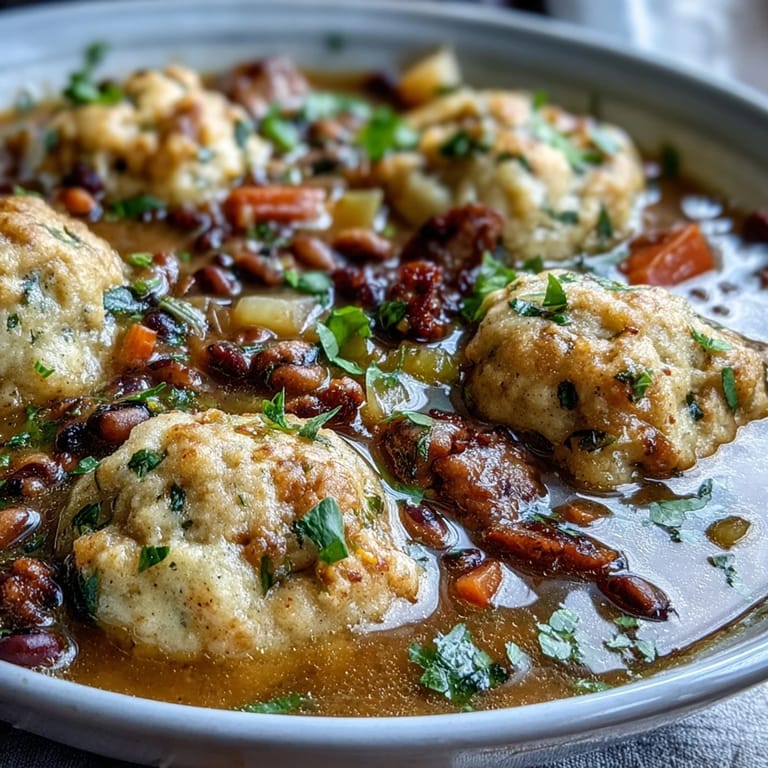
- Drop spoonfuls of batter (about the size of a walnut) onto the simmering surface. Cover the pot completely, lower the heat, and do not lift that lid—the steam has to build inside to puff the dumplings, which takes twenty to twenty-five minutes.
- Serve with ceremony:
- Let it rest for a minute after opening the lid, then ladle into bowls so each person gets stew, peas, and dumplings together.
 Save to Pinterest
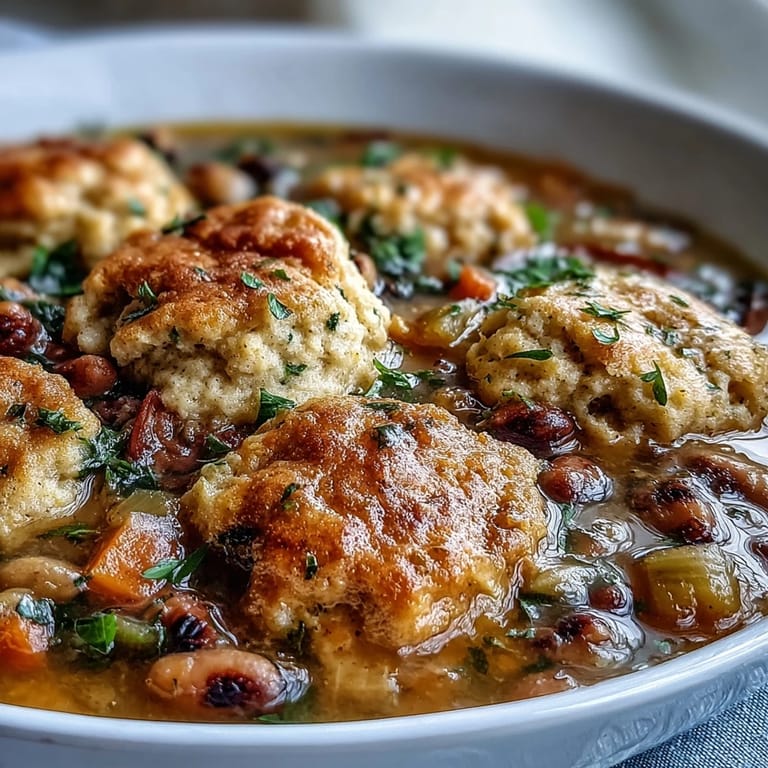
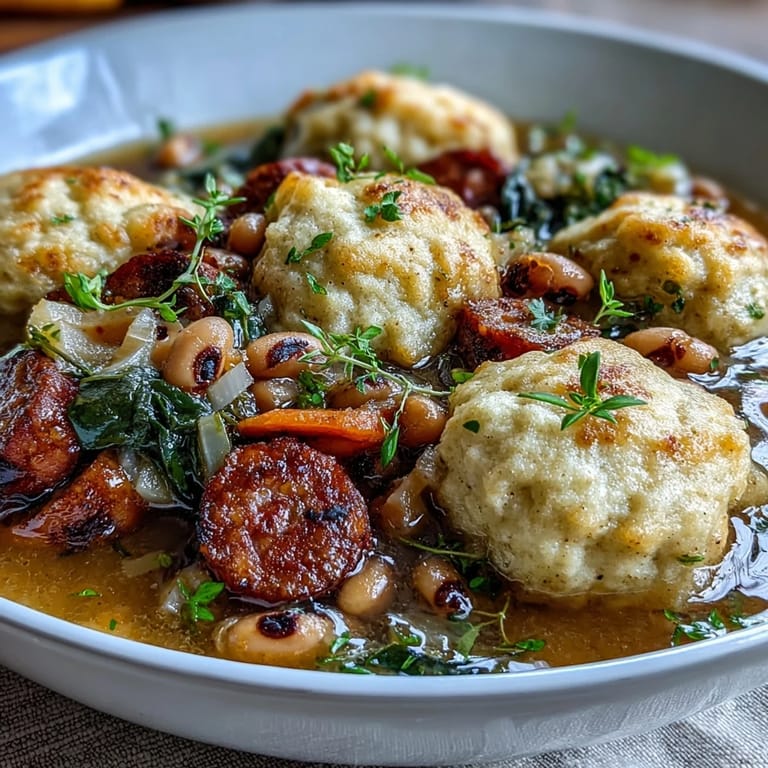
 There's a moment, right when you lift that lid and see the dumplings puffed up and golden on top, when you understand why people pass recipes down through generations. It's not just about feeding people—it's about that small act of magic happening in a pot, the way steam and flour and butter become something wonderful.
Choosing Your Sausage
Smoked sausage is the traditional choice, but you have options depending on what your market carries and what you're craving. Andouille brings a Creole kick and more spice, while kielbasa offers a milder, slightly garlicky note that some people prefer. The key is that you want something already cooked and smoky—fresh sausage will make the broth cloudy and less refined. I've also heard good reports about smoked bratwurst in a pinch, though it's less traditional.
Adjusting Heat and Spice
The recipe includes cayenne as optional, which is how I first learned it, but the older women in my family always added it without question. If you like heat, don't be shy—start with a quarter teaspoon and taste before adding more. Some people finish the bowl with hot sauce drizzled on top, which is entirely valid and adds brightness to the richness of the dumplings.
Beyond the Basic Recipe
Once you've made this a few times and it becomes automatic, you can start experimenting. I've added diced tomatoes, swapped in different vegetables depending on season, and even tried it with okra stirred in at the end (though the traditionalists in my life firmly told me that was a bridge too far). The bones of the recipe are strong enough to hold variations without falling apart.
- Make it ahead: prepare the stew base through step three and refrigerate it, then rewarm and add dumplings when you're ready to eat.
- For a vegetarian version: omit sausage, use vegetable broth, and increase smoked paprika to two teaspoons for depth that mimics the meat.
- Garnish generously: fresh parsley, a drizzle of hot sauce, or even crispy sage can brighten the finished bowl.
 Save to Pinterest
 This dish has taught me that the best meals aren't complicated—they're just made with attention and a little bit of heart. Serve it hot, in shallow bowls, to anyone who needs warming up.
Common Recipe Questions
- → What type of sausage works best?
Smoked sausage varieties like andouille or kielbasa provide the best flavor depth. Their smoky profile enhances the Southern character of the stew and infuses the broth with rich, savory notes.
- → Can I make this vegetarian?
Yes, simply omit the sausage and substitute vegetable broth for chicken broth. Increase the smoked paprika to 1 teaspoon to maintain that smoky depth of flavor typically provided by the meat.
- → Why shouldn't I lift the lid while dumplings cook?
Keeping the lid sealed traps the steam, which is essential for properly cooking the dumplings. Lifting the lid releases the heat and moisture, resulting in dense, undercooked dumplings instead of light, fluffy ones.
- → How do I store leftovers?
Store in an airtight container in the refrigerator for up to 3 days. The dumplings will absorb more liquid over time, so you may need to add a splash of broth when reheating on the stovetop.
- → Can I use dried black-eyed peas instead of canned?
Yes, soak 1 cup dried peas overnight, then cook in boiling water for 45-60 minutes until tender before adding to the stew. This adds about an hour to your prep time but offers excellent texture.
- → What can I serve alongside this dish?
A crisp green salad with vinaigrette balances the richness perfectly. For a true Southern spread, add collard greens or cornbread. A light white wine like Sauvignon Blanc complements the savory flavors beautifully.