 Save to Pinterest
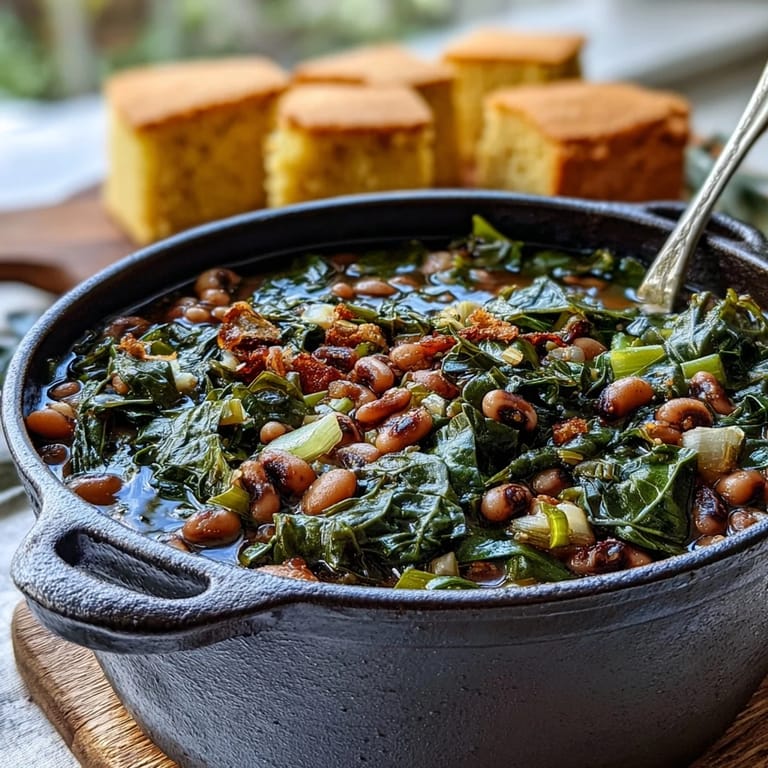
 My grandmother used to say that black-eyed peas and collard greens weren't just food—they were insurance for the year ahead. Growing up, I'd watch her stir that pot on New Year's Eve, the kitchen filling with the smell of smoked paprika and simmering greens, and I understood it wasn't superstition so much as love made edible. The first time I made this dish alone, I nearly skipped soaking the peas and paid for it with an extra hour of cooking time, but that mistake taught me patience in a way no recipe could. Now, whenever I make it, I'm transported back to her kitchen, wooden spoon in hand, waiting for that exact moment when everything comes together.
I served this at a potluck once when I was nervous about whether anyone would actually eat it, and I watched a friend go back for seconds, then thirds, and finally just sit there with a bowl on her lap like it was the most comforting thing she'd ever tasted. That's when I realized this dish does something special—it doesn't just fill you up, it settles something in you that didn't know it needed settling.
Ingredients
- Black-eyed peas: Use dried peas if you have the time; they develop a creamier texture than canned, though canned work beautifully when you're short on hours.
- Collard greens: Buy them with the stems still attached and take the time to remove them—they're tough and woody, and removing them makes the final dish silky rather than chewy.
- Onion, garlic, celery, and carrot: This aromatic base is where all the flavor lives, so don't rush chopping it fine—those pieces dissolve into the broth and become part of the soul of the dish.
- Smoked paprika and thyme: These aren't just seasonings; they're the backbone that makes this taste like something that's been simmering for generations.
- Apple cider vinegar: This addition at the end is subtle but essential—it brightens everything and cuts through the richness so the dish doesn't feel heavy.
- Vegetable or chicken broth: Quality matters here because it's the liquid that carries all the flavor, so use something you'd actually drink on its own.
- Ham hock or smoked turkey: Optional but transformative; if you use it, the rendered fat and smoke infuse the entire pot with a richness that vegetarian versions need other techniques to achieve.
Tired of Takeout? 🥡
Get 10 meals you can make faster than delivery arrives. Seriously.
One email. No spam. Unsubscribe anytime.
Instructions
- Soak your peas the night before:
- If using dried peas, cover them generously with cold water and let them sit overnight in the fridge. This isn't just tradition; it reduces cooking time and helps them cook more evenly.
- Build your flavor base:
- Heat a splash of oil in your Dutch oven over medium heat and sauté the onion, celery, and carrot for about five minutes until they start to soften and turn translucent. You want them tender but not brown—this is about coaxing out sweetness, not caramelizing.
- Add garlic and meat:
- Stir in the minced garlic and cook for just a minute until it becomes fragrant, then add your ham hock or smoked turkey if using and let it cook for two minutes. The timing here matters because garlic can turn bitter if you're not paying attention.
- Toast your spices:
- Add the black-eyed peas, bay leaf, smoked paprika, thyme, and red pepper flakes to the pot and stir everything together so the spices coat the vegetables and peas. This moment of toasting releases the essential oils and makes the whole dish taste more intentional.
- Simmer with patience:
- Pour in your broth and bring it to a boil, then reduce the heat to a gentle simmer, cover the pot, and let it go for forty-five minutes if using dried peas or twenty minutes if using canned. You'll know it's working because the kitchen will smell increasingly wonderful.
- Add the greens and finish:
- After the peas have had their time, add your chopped collard greens and simmer uncovered for another thirty minutes, stirring occasionally. The greens will wilt down and become tender, and the broth will deepen in color and flavor.
- Final touches:
- Stir in the apple cider vinegar, remove the bay leaf and ham hock, shred any meat clinging to the bone and return it to the pot, then taste and season with salt and pepper. This is your moment to make it yours—add more vinegar if you want brightness, more pepper if you want heat.
 Save to Pinterest
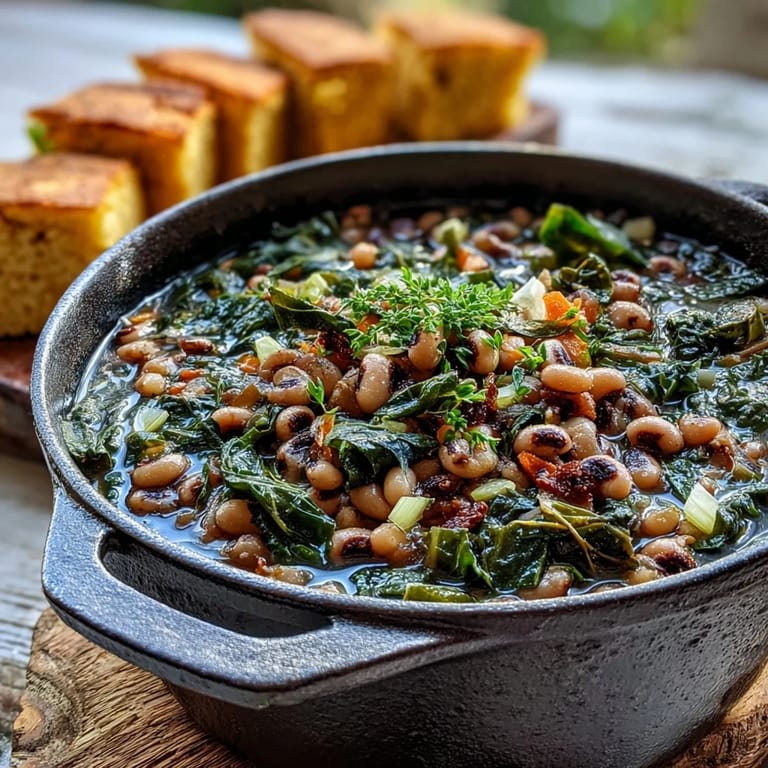
 There's a moment late in the cooking when you lift the lid and the steam rises and hits you with this smell that's warm and savory and slightly sweet, and you know you've made something right. That's the moment you'll understand why this dish has lasted through generations—it's not fancy or complicated, it's just deeply, quietly nourishing.
Why This Dish Matters
Black-eyed peas and collard greens carry weight beyond the plate—they're about luck, togetherness, and the kind of food that doesn't apologize for being simple. Every ingredient in this pot was chosen because it contributes something real: the peas for their earthiness, the greens for their slight bitterness that balances the richness, the aromatics for their foundational sweetness. When you cook this dish, you're participating in something that's been feeding families for centuries.
Making It Your Own
This recipe is forgiving enough to bend to what you have on hand. Don't have collard greens? Kale or mustard greens will work, though they'll cook faster and taste slightly different—that's not a failure, that's an adaptation. Want more heat? Add hot sauce at the table or increase the red pepper flakes during cooking. Prefer vegetarian? The dish loses the smoky depth of ham but gains a cleaner, brighter quality when you rely on the paprika and thyme instead.
Serving and Storage
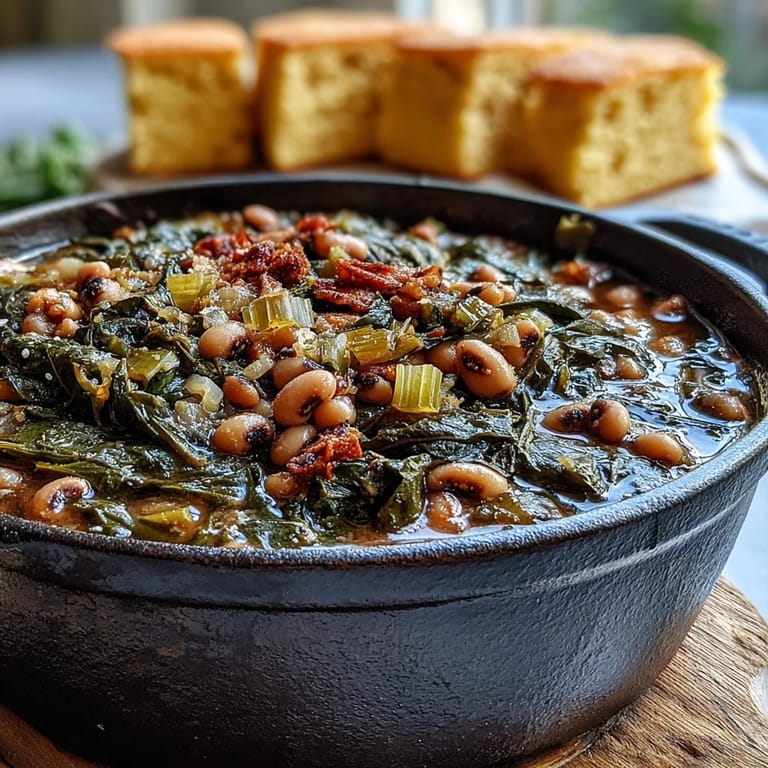
Serve this piping hot with cornbread wedges on the side and hot sauce within reach for anyone who wants it. Iced tea or a crisp white wine cuts through the richness beautifully if you're thinking about drinks. This dish improves overnight as flavors meld and deepen, making it one of the best recipes to cook ahead of time—store it in the refrigerator for up to four days and gently reheat it on the stove, adding a splash of broth if it's thickened too much.
- Freeze leftovers for up to three months in airtight containers or freezer bags, and thaw overnight before reheating.
- Make a double batch if you're feeding a crowd or want ready-made meals waiting in your freezer.
- Remember that this dish tastes even better the next day when the flavors have had time to become friends with each other.
 Save to Pinterest
 This is the kind of dish that brings people back to the table, that makes them feel seen and cared for without you having to say a word. Cook it with intention, taste as you go, and trust that it will come together beautifully.
Common Recipe Questions
- → Can I use canned black-eyed peas instead of dried?
Yes, canned black-eyed peas work perfectly. Use three 15-ounce cans, drained and rinsed. Reduce the initial simmering time to 20 minutes since canned peas are already tender.
- → What can I substitute for collard greens?
Kale, mustard greens, or turnip greens make excellent substitutes. Each brings a slightly different flavor profile—kale is milder, while mustard and turnip greens add more peppery bite to the dish.
- → How do I store and reheat leftovers?
Store in an airtight container in the refrigerator for up to 5 days. The flavors deepen and improve overnight. Reheat gently on the stovetop over low heat, adding a splash of broth or water if needed.
- → Is this dish traditionally served for New Year's?
Absolutely. Black-eyed peas represent coins and collard greens symbolize folded money, making this combination a beloved Southern tradition for New Year's Day. It's believed to bring prosperity and good fortune.
- → Can I make this in a slow cooker?
Yes. Sauté the aromatics first, then transfer everything to your slow cooker. Cook on low for 6-8 hours or on high for 3-4 hours. Add the collard greens during the last hour of cooking.
- → What makes the greens tender instead of tough?
Long, slow simmering breaks down the tough fibers in collard greens. Cooking them uncovered for the final 30 minutes allows some liquid to evaporate, concentrating flavors while the greens become silky and tender.