 Save to Pinterest
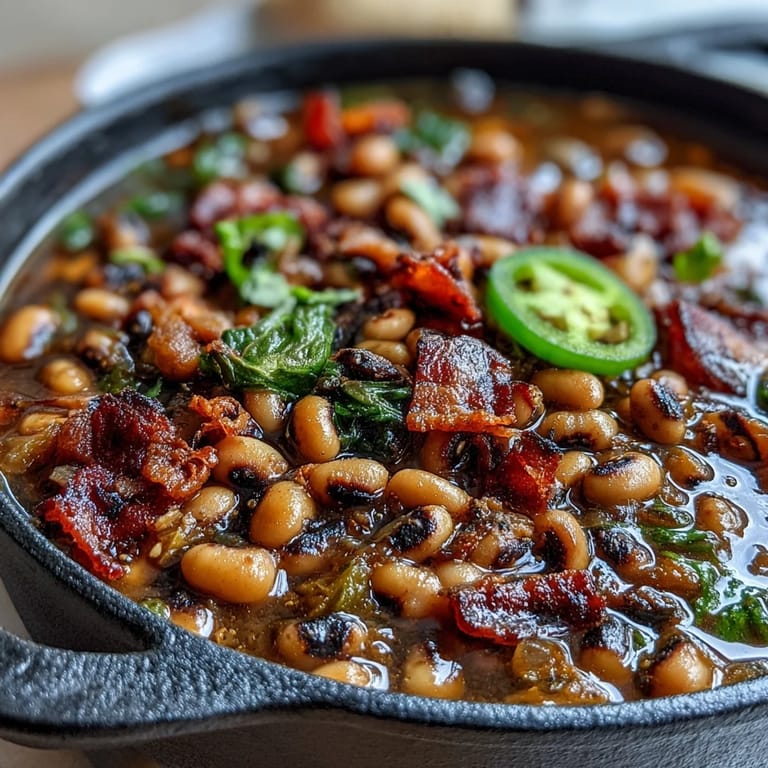
 My uncle wouldn't stop talking about his Texas black-eyed peas during a humid July afternoon—the kind where you're stuck in a kitchen that feels like a sauna, but somehow that's exactly where you want to be. He described the smell of bacon fat hitting hot cast iron, how the jalapeños would soften and sweet, and the way Rotel tomatoes gave everything this unbeatable smoky-spicy backbone. I was skeptical until the first spoonful, when creamy peas and tender aromatics made me understand why he'd been going on about it for twenty years. Now I make it whenever I need to feed people and feel like I'm honoring something real and unpretentious.
The first time I made this for a small gathering, I worried the flavor would be one-dimensional—just beans, you know? But watching people go back for thirds, scraping bowls clean and asking for the recipe, I realized this dish has this quiet confidence. It doesn't need fancy techniques or exotic ingredients to win people over. There's something about food that tastes like home that makes everyone feel welcomed and understood.
Ingredients
- Dried black-eyed peas (1 pound): Rinsing and sorting removes debris and any small stones hiding in the mix—a step that seems tedious until you catch one in your teeth.
- Thick-cut bacon (8 ounces): Thick-cut is the move here because it renders enough fat to build your flavor base and gives you actual bacon pieces throughout, not wisps that disappear.
- Large yellow onion: Yellow onions mellow beautifully as they cook in bacon fat, turning sweet and almost caramelized without the work of actual caramelization.
- Fresh garlic (4 cloves minced): Don't skip the mincing step—whole cloves will harden and overpower if cooked too long.
- Jalapeños (2, seeded and diced): Leaving some seeds in gives heat without derailing the whole pot; remove them all if you're cooking for sensitive palates.
- Rotel diced tomatoes with green chilies (2 cans): This is the secret weapon—the green chilies and tomato base create a flavor depth that feels handcrafted but comes from a can.
- Low-sodium chicken broth (6 cups) and water (2 cups): The ratio keeps things savory without making the pot oversalted; you'll taste everything clearly.
- Chili powder (2 teaspoons): Ground chili powder (not chili pepper flakes) dissolves into the liquid and becomes part of the background warmth.
- Smoked paprika (1 teaspoon): This gives you that campfire, slow-smoked quality without actually having to smoke anything.
- Cumin (1 teaspoon): Cumin ties the whole thing to Texan spice traditions and adds earthiness that grounds all the brightness.
- Black pepper, salt, and bay leaves: Bay leaves go in to work and come out intact—they're flavor architects, not ingredients meant to stick around.
- Fresh cilantro and green onions (optional): These are the finishing notes that wake everything up and add color when the pot's been bubbling away for hours.
Tired of Takeout? 🥡
Get 10 meals you can make faster than delivery arrives. Seriously.
One email. No spam. Unsubscribe anytime.
Instructions
- Render the bacon until it snaps:
- Dice your bacon and drop it into a cold pot, then turn heat to medium. This lets the fat come out slowly instead of splattering everywhere. When the edges are dark brown and the pieces are brittle, you're done—usually six to eight minutes.
- Sauté the vegetables in that golden fat:
- Lift out the bacon with a slotted spoon and leave the rendered fat behind. Add onion and jalapeños right away while the pot is still hot. You'll hear them hit the fat with a sizzle, and in four to five minutes they'll turn translucent and soft.
- Bloom the garlic briefly:
- Stir in minced garlic for just one minute—long enough to fill your kitchen with that unmistakable smell, short enough that it stays tender instead of turning bitter.
- Combine everything for the long simmer:
- Add the rinsed peas back to the pot along with bacon, both cans of Rotel tomatoes with their liquid, broth, water, and all spices. Stir until everything's submerged and the liquid looks almost muddy with flavor.
- Bring to a boil, then drop the heat way down:
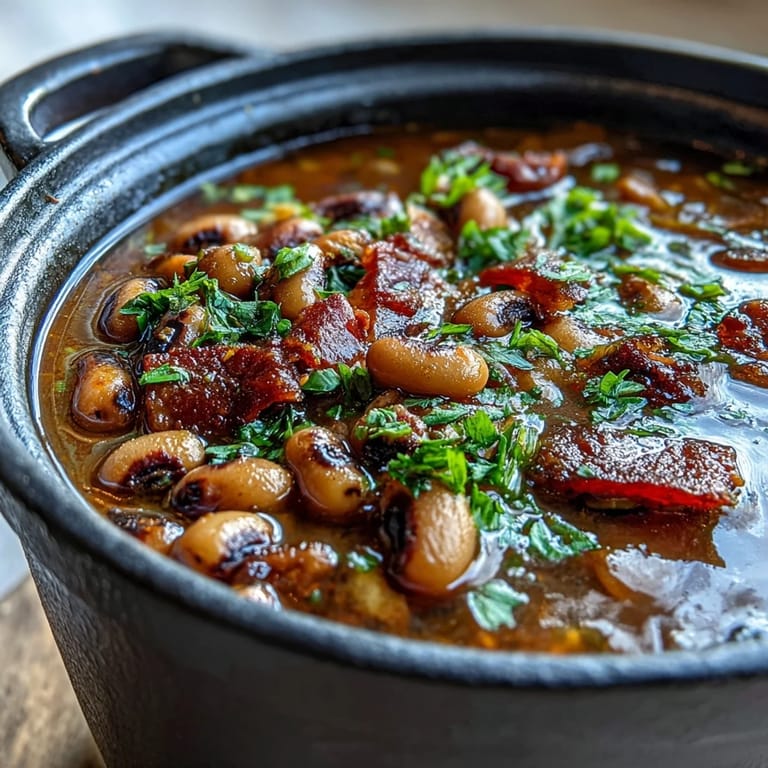
- You'll see big rolling bubbles across the surface. Once that happens, cover the pot, turn heat to low, and let it bubble gently for an hour. This slow cooking lets the peas become creamy inside while staying whole.
- Check tenderness and let it thicken:
- After an hour, bite into a pea. It should be soft with almost no resistance. If it still feels chalky, keep simmering. Uncover the pot for the last twenty to thirty minutes so some liquid can reduce and the whole thing becomes thicker and more cohesive.
- Fish out the bay leaves and taste:
- Bay leaves are non-negotiable to remove. Taste the pot now—you might need a little more salt, a pinch more chili powder, or a squeeze of something acidic if it feels too heavy.
- Serve while it's still steaming:
- Ladle into bowls and scatter cilantro and green onions over the top if you have them. The heat brings out all the spice and herbaceousness.
 Save to Pinterest
 One winter evening, a neighbor came over and ate three bowls straight, barely pausing to breathe. She asked if I used some special technique or ingredient, and I almost laughed—it's just bacon, time, and honest flavors. That's when I understood that sometimes the most comforting food isn't about being clever; it's about letting good ingredients do what they're meant to do.
Why Texans Know What They're Doing
Black-eyed peas aren't trendy in Texas—they're tradition, and there's a reason. They're sturdy, affordable, and they take flavor beautifully without needing you to overthink it. Bacon fat is the foundation of this whole dish, and Texans understand that fat isn't the enemy; it's where all the flavor lives. When you cook these peas the right way, you're not just making dinner—you're participating in something that's been feeding families through heat, hardship, and celebration for generations.
Timing and Flexibility
The beauty of this recipe is that it doesn't demand precision. If you're running late, you can simmer the peas for longer without ruining them—they'll just get creamier and thicker. If you're cooking ahead, this dish actually improves overnight as flavors meld and deepen. Reheat gently on the stovetop with a splash of water if it's gotten too thick, and it tastes even better the second day.
Variations and Customizations
This recipe can pivot depending on what you have or what you're craving. Without bacon, smoked paprika and a teaspoon of liquid smoke recreate that depth, and vegetable broth steps in seamlessly. Want more fire? Add an extra jalapeño or a pinch of cayenne pepper, stirred in near the end so the heat stays vibrant. Some people stir in a can of corn in the last ten minutes, others serve it over rice or with cornbread, and all of those paths are right.
- For vegetarian versions, liquid smoke or smoked paprika replaces bacon's depth without skipping a beat.
- Leftovers keep in the fridge for four days and actually taste better as flavors settle and marry together.
- If the pot gets too thick after sitting, thin it with chicken broth or water and bring it back to life on a low simmer.
 Save to Pinterest
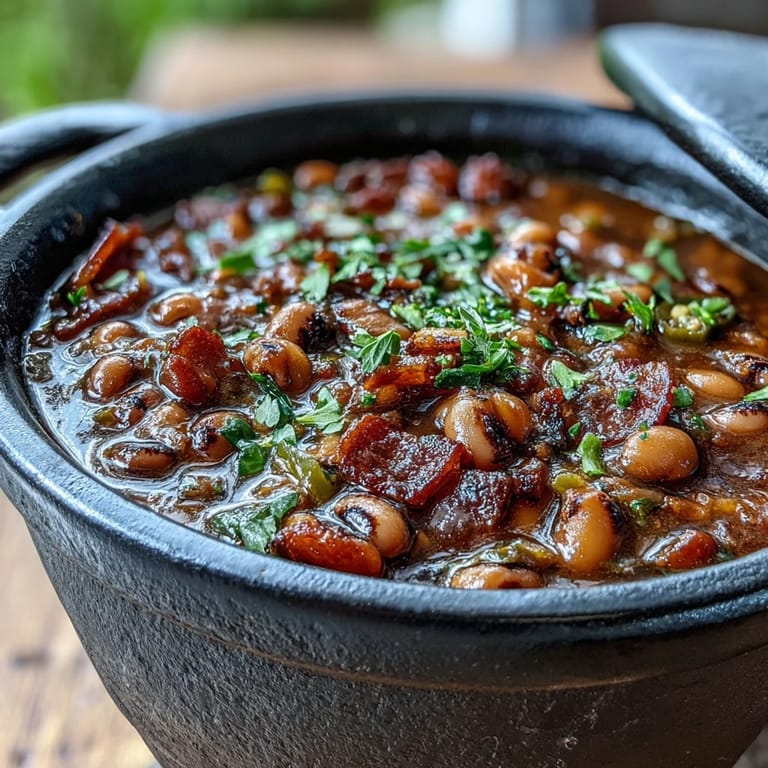
 This pot of black-eyed peas is the kind of food that turns an ordinary evening into something that feels gathered and cared for. Make it once, and you'll know why so many people keep coming back to it.
Common Recipe Questions
- → Do I need to soak black-eyed peas before cooking?
No soaking required for this preparation. The dried peas cook directly in the liquid, simmering for about 1 hour until tender. This method helps them absorb all the smoky bacon and spice flavors.
- → Can I make this vegetarian?
Absolutely. Simply omit the bacon and use vegetable broth instead of chicken broth. Add extra smoked paprika or a few drops of liquid smoke to maintain that depth of flavor.
- → How spicy are these black-eyed peas?
Mild to medium heat level. Two seeded jalapeños provide gentle warmth without overwhelming the dish. Leave some seeds in the peppers or add a pinch of cayenne if you prefer more spice.
- → What should I serve with Texas black-eyed peas?
Traditional Southern sides work beautifully here. Serve with homemade cornbread, over steamed white rice, or alongside collard greens for a complete Texan feast.
- → How long do leftovers keep?
These peas actually improve in flavor over time. Store in an airtight container in the refrigerator for up to 4 days. The flavors continue to develop and the broth thickens nicely.
- → Can I freeze this dish?
Yes, freeze portions in airtight containers for up to 3 months. Thaw overnight in the refrigerator and reheat gently on the stovetop, adding a splash of broth if needed.