 Save to Pinterest
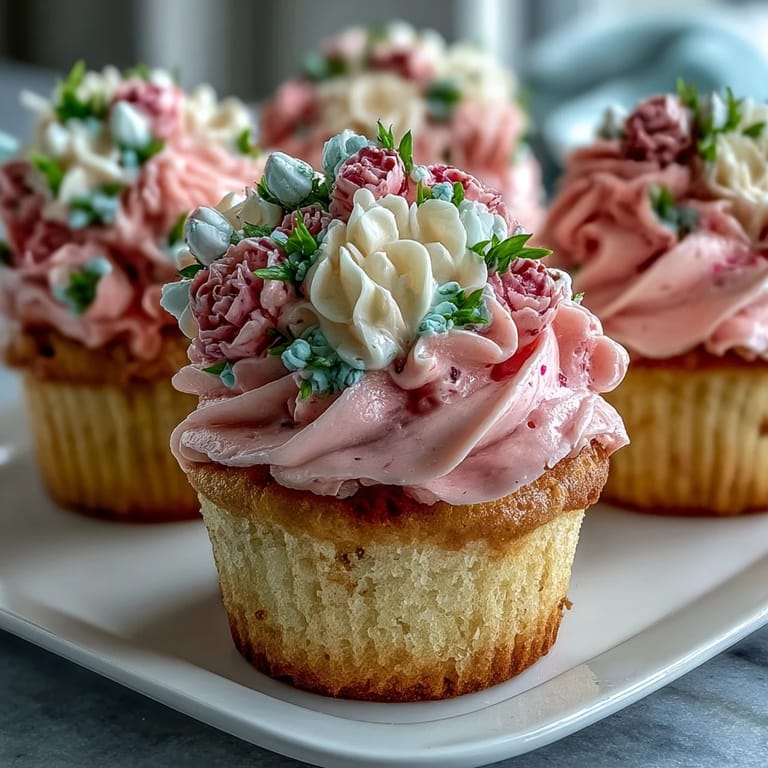
 My sister called me three weeks before her baby shower in an absolute panic—she'd seen these impossibly delicate floral cupcakes on Pinterest and suddenly nothing else would do. I'd never piped a flower in my life, but watching her face light up when I suggested we tackle them together made me determined to figure it out. What started as a nervous experiment in my kitchen turned into something magical: soft vanilla cupcakes crowned with pastel buttercream blooms that looked like they belonged in a botanical garden. These days, whenever I see pastels and buttercream, I'm transported back to that afternoon of laughter, frosting mishaps, and the moment she gasped when the first rose actually looked like a rose.
I'll never forget the moment my mom tasted one of these at the baby shower—she closed her eyes like she was experiencing something profound, then asked for the recipe before she'd even swallowed. Later that week, she made them for a neighborhood book club and called to report that one of the attendees cried (actually cried!) because they reminded her of her grandmother's garden. That's when I realized these cupcakes tap into something deeper than just being pretty—they're edible nostalgia.
Ingredients
- All-purpose flour (1 1/4 cups): The foundation that keeps these light rather than dense; sifting it twice prevents overmixing.
- Granulated sugar (1 cup): Creates structure and moisture; don't be tempted to reduce it or your cupcakes will be dry.
- Unsalted butter (1/2 cup for cupcakes): Room temperature is non-negotiable here—cold butter won't cream properly and your batter will be grainy.
- Large eggs (2, room temperature): Cold eggs break the emulsion; set them out while you preheat the oven.
- Whole milk (1/2 cup): Adds richness and tenderness; whole milk really does make a difference versus skim.
- Vanilla extract (1 1/2 tsp): Use pure vanilla, not imitation—it transforms the flavor from pleasant to memorable.
- Baking powder (1 1/2 tsp): The gentle lift that keeps cupcakes tender; use fresh powder that hasn't been sitting open for a year.
- Salt (1/4 tsp): Amplifies vanilla and balances sweetness in ways people won't consciously detect but absolutely taste.
- Unsalted butter (1 cup for frosting): This quantity seems generous, but it's what creates that cloud-like texture and keeps the frosting from separating.
- Powdered sugar (3 1/2 cups, sifted): Sifting prevents lumps that would show in your piped flowers and affects the final texture dramatically.
- Whole milk (2-3 tbsp for frosting): Start with less and add gradually; you can always add more but you can't take it out.
- Vanilla extract (2 tsp for frosting): Echoes the cupcake flavor and prevents the buttercream from tasting one-dimensionally sweet.
- Food coloring gels (pink, yellow, lavender, green): Gel colors don't thin your buttercream like liquid colors do; they're worth hunting down in the baking aisle.
Tired of Takeout? 🥡
Get 10 meals you can make faster than delivery arrives. Seriously.
One email. No spam. Unsubscribe anytime.
Instructions
- Set your stage:
- Preheat the oven to 350°F and line your muffin tin with liners—this takes two minutes but prevents chaos later. Gather everything before you start so you're not hunting for vanilla while butter deflates.
- Build the dry foundation:
- Whisk flour, baking powder, and salt together in a bowl; this distributes the leavening evenly and catches any lumps. Set it aside—you'll use this in two additions for smoother mixing.
- Cream the butter and sugar:
- Beat softened butter and sugar for 2-3 minutes until it's pale, fluffy, and doubled in volume; this incorporates air that keeps cupcakes tender. Stop and scrape the bowl halfway through to ensure everything's incorporated evenly.
- Add the eggs one at a time:
- After each egg, beat well so it emulsifies into the butter mixture rather than sitting in puddles. This matters more than you'd think for achieving a smooth, stable batter.
- Alternate wet and dry layers:
- Add half the flour mixture and mix until just combined, then pour in the milk, then add the remaining flour—this sequence prevents overmixing and keeps gluten development minimal. Mix until you see no streaks of flour but don't beat it like you're angry at the batter.
- Fill the liners:
- Divide batter evenly so each cupcake bakes at the same rate; filling each about 2/3 full leaves room for a gentle dome. I use a small ice cream scoop to keep portions consistent.
- Bake with intention:
- 18-20 minutes is your window; they're done when a toothpick comes out clean and the centers spring back when touched. Don't open the oven door before 18 minutes or you'll collapse those air pockets you worked so hard to create.
- Cool completely:
- This is where patience pays off—frosting warm cupcakes will melt into puddles. A wire rack lets air circulate underneath so they cool evenly.
- Cream the buttercream butter:
- Beat butter alone for a minute until it's pale and smooth; this aerates it so your final frosting isn't dense. It feels like an extra step but it's the difference between fluffy and greasy.
- Add powdered sugar gradually:
- Sifted sugar goes in slowly while you beat, preventing clouds of sugar dust and ensuring smooth incorporation. If you dump it all in at once, you'll be beating for five minutes just to combine.
- Adjust consistency with milk:
- Start with 2 tablespoons and add more by the teaspoon if needed; consistency should be spreadable but still hold shape when piped. Too thick and you'll struggle with your piping bag; too thin and flowers collapse.
- Tint with restraint:
- Divide buttercream into small bowls and add food coloring gel one tiny dab at a time, mixing between additions—colors intensify as you mix. Pastel means barely-there color, not frosting that looks like Easter exploded.
- Pipe with patience:
- Fill piping bags with fitted flower tips, hold the bag perpendicular to the cupcake, and let muscle memory develop over the first few. Watch YouTube videos if you're nervous—seeing someone else pipe flowers removes so much mystery.
- Set the flowers:
- A quick chill in the fridge firms up buttercream so piped details hold their shape. Ten minutes is usually enough.
 Save to Pinterest
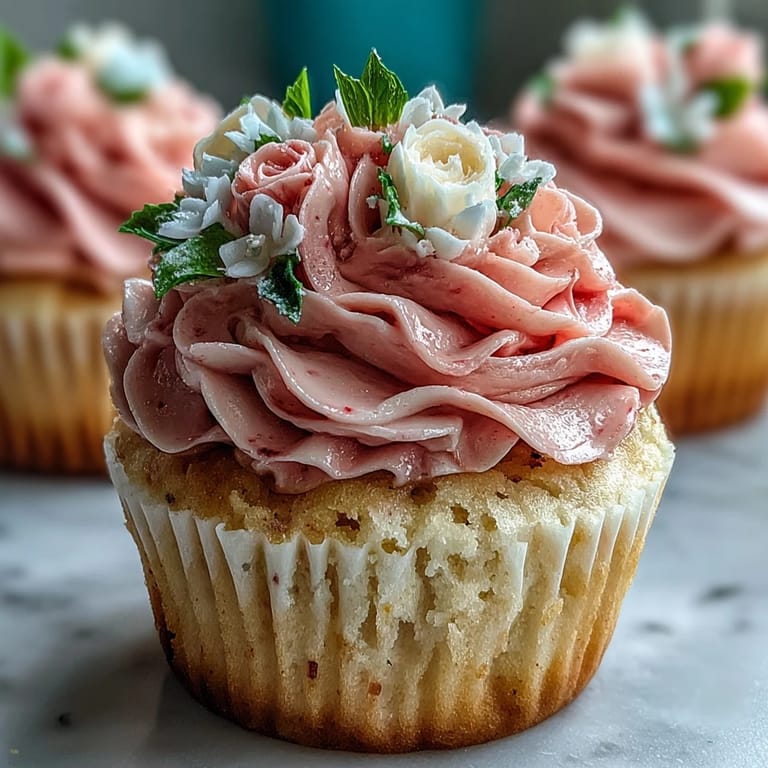
 There's something about presenting a cupcake adorned with a hand-piped flower that transforms the entire moment—suddenly it's not just dessert, it's a tiny edible work of art that someone made specifically for the person eating it. I've watched friends hesitate before taking a bite, not wanting to disturb the rose or blossoms on top, then break into smiles after they taste how tender and flavorful they are underneath all that pretty frosting.
The Vanilla Question
Pure vanilla extract is the secret weapon here, and I learned this the hard way by once substituting imitation in a batch for a friend's engagement party. The difference was subtle but undeniable—the imitation version tasted faintly chemical and one-note, while real vanilla adds warmth and complexity that makes people say the cupcakes taste fancy without being able to pinpoint why. It costs a few dollars more per bottle but transforms every component of this recipe, from the cake itself to the buttercream frosting.
Pastels and Piping Tips
The piping part stressed me out until a friend who decorates wedding cakes casually mentioned that piped flowers are basically just muscle memory—your hand learns the motion and suddenly what looked impossible becomes muscle memory. I started practicing on parchment paper while watching television, no pressure, and within an evening my roses went from sad squiggles to actual recognizable flowers.
Storage and Keep-Ahead Magic
These cupcakes actually improve on day two when the vanilla flavor deepens and the crumb settles into that perfect tender texture.
- Baked cupcakes (unfrosted) stay fresh for three days in an airtight container at room temperature.
- Frosted cupcakes keep for two days unrefrigerated if your kitchen isn't sweltering, or up to four days in the refrigerator—let them come to room temperature before serving so the buttercream softens.
- You can bake cupcakes up to three days ahead and frost them the day of your event for maximum freshness and minimal stress.
 Save to Pinterest
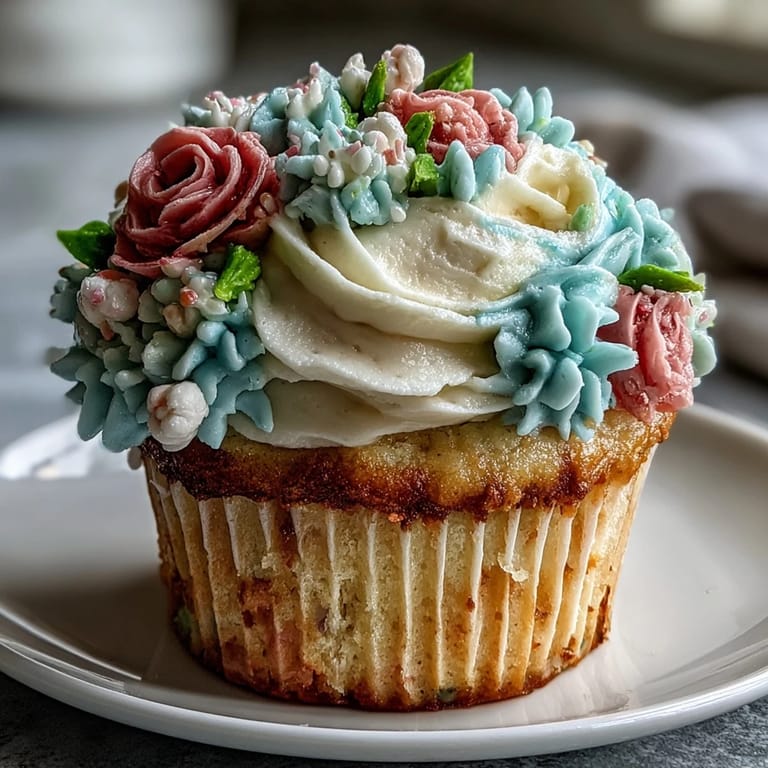
 These cupcakes have a way of becoming part of bigger stories—first baby showers, spring celebrations, moments when people want to feel a little more special. Make them for someone you love and watch how a simple cupcake becomes a memory.
Common Recipe Questions
- → What ingredients create the pastel buttercream?
The buttercream combines unsalted butter, powdered sugar, vanilla extract, a bit of whole milk, and gentle food coloring gels to achieve soft pastel hues.
- → How do I ensure the cupcakes have a moist texture?
Use room temperature eggs and butter, and carefully alternate adding dry flour mixture with milk to maintain a smooth batter without overmixing.
- → Can I make these cupcakes dairy-free?
Yes, substitute plant-based butter and milk alternatives to create a dairy-free version with similar texture and flavor.
- → What piping tips are best for floral designs?
Assorted flower piping tips such as rose and leaf shapes help create realistic floral patterns on the buttercream.
- → How should I store the decorated cupcakes?
Keep them chilled briefly after decorating to set the buttercream, then store in an airtight container at cool room temperature or refrigerate if needed.