 Save to Pinterest
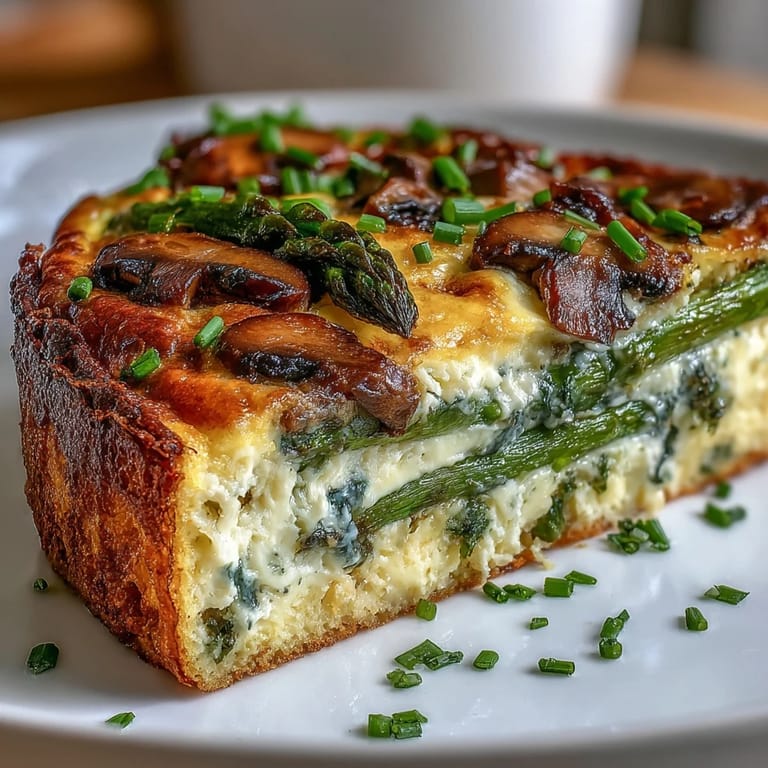
 There's something about spring mornings that makes me want to bake something substantial, something that straddles the line between breakfast and dinner. This frittata emerged from a weekend when I had leftover sourdough and a farmers market haul of asparagus I couldn't resist. The first time I layered that bread into a pan and topped it with eggs, I realized I'd accidentally invented the perfect excuse to use good cheese and call it brunch.
I made this for a friend who showed up at my door claiming she'd never had a frittata before, which felt like a culinary emergency. Watching her face when she took that first bite—the way her eyes registered the contrast between crispy bread and silky eggs—made me understand why I keep coming back to this recipe. She asked for it again the next week, and now it's become our standing Sunday thing when she visits.
Ingredients
- Sourdough bread: Six slices with crusts removed create the foundation, and removing the crusts lets the bread layer lie flat without creating awkward bumps. Brush generously with melted butter so each piece catches heat and crisps up instead of staying soft.
- Unsalted butter: Two tablespoons melted for the crust, allowing the bread to brown and crisp without burning.
- Asparagus: One cup trimmed and cut into one-inch pieces, giving you tender bites throughout rather than unwieldy stalks.
- Cremini or button mushrooms: One cup sliced, contributing earthy depth and releasing their moisture into the pan as they cook.
- Shallot: One small shallot finely chopped, adding sweetness and a whisper of complexity that regular onion can't quite manage.
- Olive oil: Two tablespoons for sautéing vegetables, keeping them from sticking while allowing proper browning.
- Large eggs: Eight eggs form the custard that binds everything together into something simultaneously sturdy and tender.
- Whole milk and heavy cream: One third cup milk and one quarter cup cream create richness without making the frittata heavy or rubbery.
- Gruyère and Parmesan cheese: One half cup Gruyère and one quarter cup Parmesan combined provide nutty depth and help the eggs set properly.
- Fresh chives: Two tablespoons chopped, offering a bright onion note that wakes up every bite.
- Salt and black pepper: One half teaspoon salt and one quarter teaspoon pepper for seasoning, though taste before baking since cheese adds saltiness.
Tired of Takeout? 🥡
Get 10 meals you can make faster than delivery arrives. Seriously.
One email. No spam. Unsubscribe anytime.
Instructions
- Heat your oven and prepare the pan:
- Preheat to 375°F and grease a nine inch springform pan or deep pie dish, understanding that the springform makes unmolding elegant while a pie dish is sturdier. This temperature bakes the frittata through without browning the top too aggressively.
- Build your bread crust:
- Arrange sourdough slices to line the bottom and sides, overlapping them slightly so gaps don't become weak spots where egg leaks through. Brush every piece with melted butter, then bake for eight to ten minutes until the bread feels crisp and golden at the edges.
- Sauté your vegetables:
- Heat olive oil over medium heat and cook the shallot for a minute or two until it becomes fragrant and translucent, then add mushrooms and cook for about four minutes until they release their moisture and begin to brown. Add asparagus for two to three more minutes until it brightens and becomes just tender.
- Whisk the egg custard:
- Combine eggs, milk, cream, both cheeses, chives, salt, and pepper in a bowl, whisking until completely smooth and the cheese begins to dissolve into the liquid. This step ensures even distribution of flavor throughout every slice.
- Assemble before baking:
- Spread the sautéed vegetables over your pre-baked crust in an even layer, then pour the egg mixture over everything, allowing it to settle into the gaps. The vegetables should stay suspended throughout rather than sinking.
- Bake until puffed and golden:
- Bake for twenty five to thirty minutes, watching for the moment when the top puffs up and turns golden and the center looks barely set when you gently jiggle the pan. It will continue cooking slightly as it cools, so don't overbake or you'll lose the silky texture.
- Rest and serve:
- Let it cool for five minutes so the structure sets completely, then slice and serve warm or at room temperature depending on your mood and the season.
 Save to Pinterest
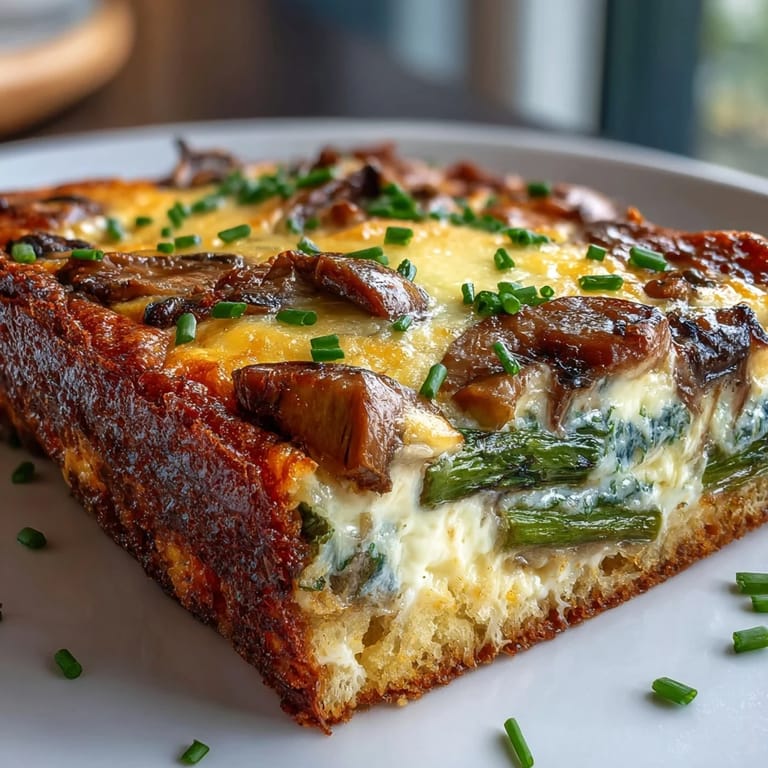
 This dish has a way of transforming ordinary Thursday nights into something that feels intentional and nourishing. There's an honesty to serving this—no pretense, just good vegetables, good cheese, and eggs that somehow became greater than themselves.
Timing and Temperature Matter More Than You'd Think
Getting comfortable with your oven's personality changes everything with baked eggs. Mine runs about fifteen degrees hotter than the dial suggests, so I've learned to check at the lower end of the baking window rather than assuming the time is gospel. The frittata will continue cooking as it rests, and that five minute window between oven and table is crucial—rushing it means a slightly loose center, which honestly isn't terrible but isn't ideal either.
Why Spring Vegetables Actually Taste Better This Way
Cooking asparagus and mushrooms together creates a kind of flavor amplification that you don't get when they're simply tossed on a plate. The mushrooms release their umami as they brown, and that essence gets trapped by the eggs, making the asparagus taste more like itself somehow. It's the difference between vegetables you eat because they're healthy and vegetables you eat because they're delicious.
Making It Your Own
The structure here is flexible enough to accommodate whatever you've got in the vegetable drawer or whatever you're craving. I've made versions with leeks and thyme, with roasted red peppers and goat cheese, even with caramelized onions and fresh sage. The sourdough crust stays, the eggs stay, but everything between can shift with the season or your mood.
- Roast your vegetables first if they're sturdy enough to benefit, creating deeper flavors that shine through the creamy custard.
- Consider fresh herbs like tarragon or dill stirred in with the chives, tasting each version to understand what resonates with you.
- Leftover frittata slices make extraordinary sandwiches the next day, tucked between fresh bread with arugula and a smear of good mustard.
 Save to Pinterest
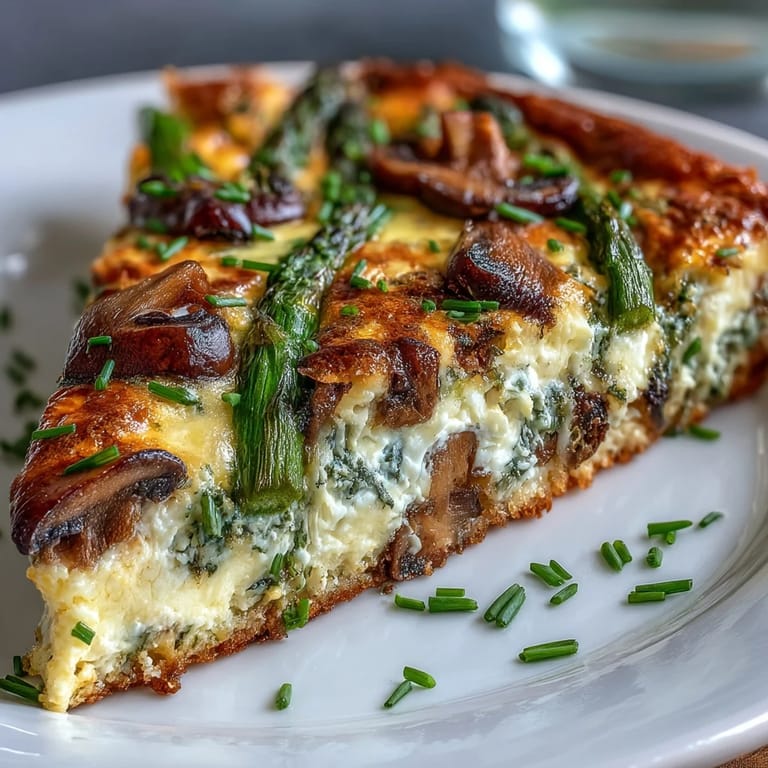
 This frittata has become my answer to the question of what to cook when you want something that feels special but doesn't demand special effort. It's generous enough to feed people you care about and humble enough to feel honest.
Common Recipe Questions
- → How do I achieve a crisp sourdough base?
Brush sourdough slices with melted butter and bake for 8–10 minutes before adding the filling to ensure a crisp crust.
- → Can I substitute the cheeses in the dish?
Gruyère and Parmesan add rich flavor, but similar hard cheeses like Asiago or sharp Cheddar can be used as alternatives.
- → What’s the best way to prepare the vegetables?
Sauté shallots, mushrooms, and asparagus in olive oil until tender but still vibrant, about 7–9 minutes total.
- → How do I know when the frittata is done?
The top should be puffed and golden, and the center just set without jiggle, typically after 25–30 minutes baking.
- → Can this dish be made dairy-free?
Yes, substitute plant-based milk and vegan cheeses to maintain the creamy texture without dairy.