 Save to Pinterest
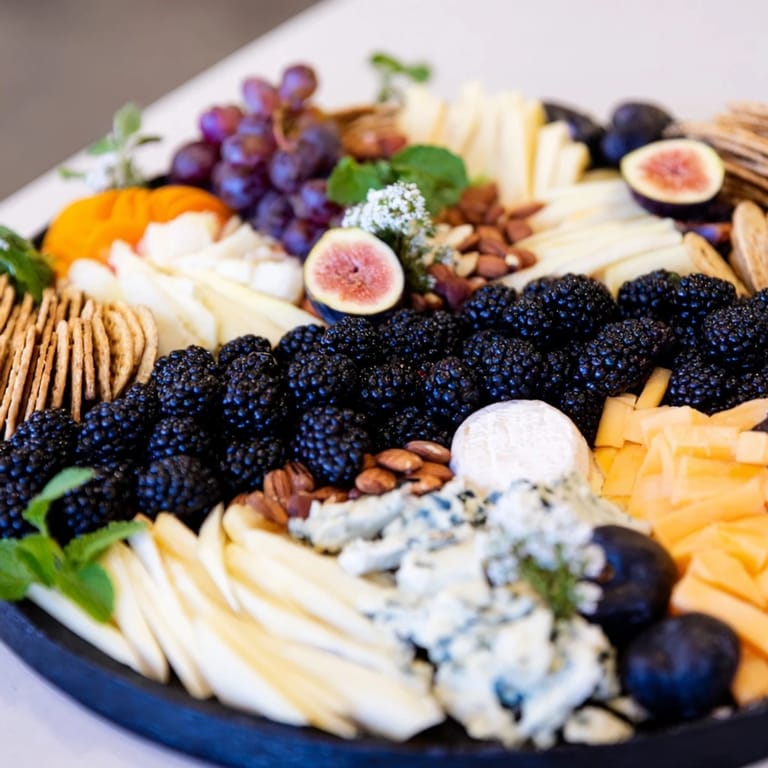
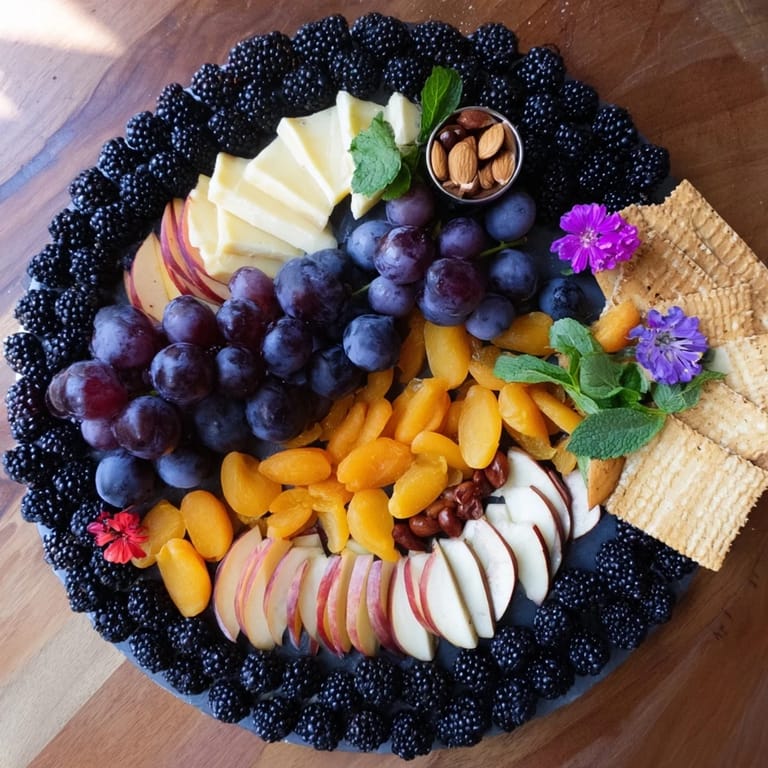
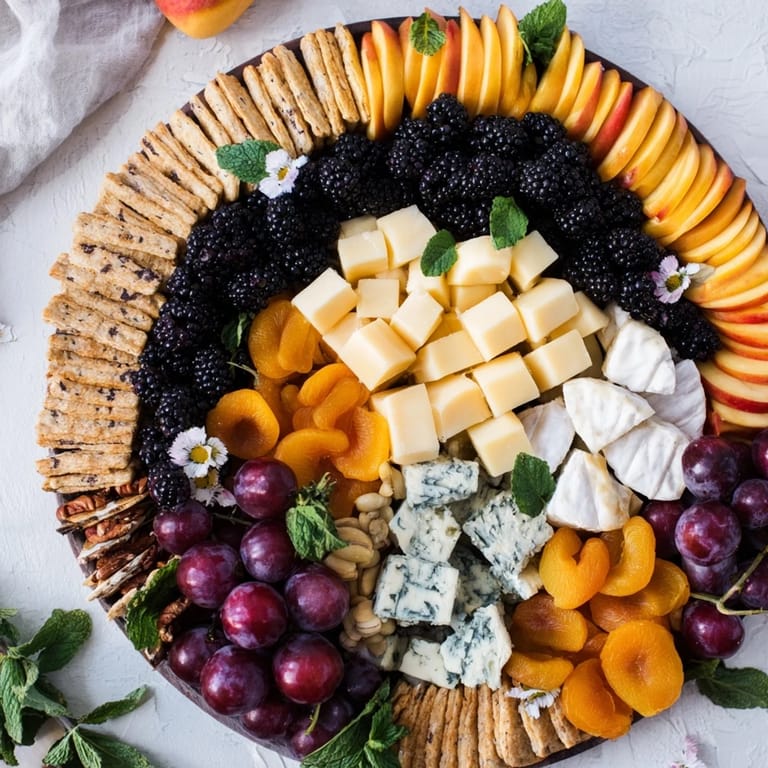
 There's something about the moment when a cheese board transforms into a conversation piece. I'd been staring at half a dozen wheels of cheese one afternoon, wondering how to make something that felt less like a casual snack and more like actual art, when the idea hit me: what if I used the contrast itself as the design? The blackberries did the heavy lifting, creating this perfect curved line that somehow made everything feel intentional and almost meditative to put together.
I remember setting this out for a dinner party and watching my friend pause mid-conversation, just taking in the board before reaching for anything. She said it was the first time she'd thought about a cheese board as something purposeful rather than just stuff on a platter. That moment stuck with me because it felt like the arrangement had somehow changed how people experienced the food.
Ingredients
- Fresh blackberries (150 g): These create your dividing line and should be arranged right before serving so they stay plump and glossy; they're the visual anchor of the entire board.
- Goat cheese (100 g, sliced): Its creamy tang belongs on the light side where it complements delicate fruits like pear and plays against the crunchy rice crackers.
- Young Manchego or white cheddar (100 g, cubed): This brings a mild, slightly nutty flavor without overwhelming the brighter elements around it.
- Pear (1 small, thinly sliced): Slice it close to serving time so it doesn't brown; it's the light side's secret for pairing with rich cheeses.
- White grapes (50 g): These refresh the palate and their translucent quality adds visual lightness to their side of the board.
- Raw almonds (30 g): Leave them whole for texture and for guests to crack if they want that extra interactive moment.
- Rice crackers or light-colored crackers (30 g): Choose ones that feel crisp and can hold up to soft cheeses without crumbling.
- Aged blue cheese (100 g, sliced): The flavor is bold and mineral-forward, so this is your anchor for the dark side's story of deep, complex tastes.
- Aged Gouda or sharp cheddar (100 g, cubed): These golden-brown cheeses bring caramel and slight funk that pairs beautifully with darker fruits and roasted nuts.
- Black plum (1 small, thinly sliced): Its deep purple-black color bleeds naturally into the dark side's palette and its tartness brightens rich cheese.
- Red or black grapes (50 g): Their concentrated sweetness works with the intensity of aged cheeses rather than against it.
- Roasted hazelnuts (30 g): These bring an earthy depth that complements dark cheese in a way raw nuts couldn't quite manage.
- Dark rye crisps or seeded crackers (30 g): Choose ones with visible seeds for texture and visual interest that matches the dark side's richness.
- Fresh mint leaves and edible flowers: These are your final flourish—mint adds brightness and flowers break up the visual weight at the last moment.
Tired of Takeout? 🥡
Get 10 meals you can make faster than delivery arrives. Seriously.
One email. No spam. Unsubscribe anytime.
Instructions
- Set your stage:
- Place your large round board on a clean work surface where you have room to move around it. A round board works best because it naturally suggests the yin-yang flow, but if you're using what you have, the principle still holds.
- Create the dividing line:
- Arrange your blackberries in a gentle curve across the center of the board, as if you're drawing with your fingers. Take a breath here—this curve is the visual soul of the whole thing, so let it flow naturally rather than forcing it perfectly straight.
- Build the light side:
- Starting from one side of the blackberry curve, arrange your goat cheese slices first since they anchor the flavor story. Add pear slices, white grapes, almonds, and crackers in pockets around the board, leaving a little breathing room between each element so the eye can follow the color progression.
- Build the dark side:
- Mirror your approach on the opposite side: blue cheese slices, plum slices, dark grapes, hazelnuts, and dark crackers, each element placed with intention. The asymmetry of sizes actually makes this more interesting than if everything matched perfectly.
- Final touches:
- Scatter mint leaves across the board and tuck edible flowers into gaps, especially where they create contrast. Step back and look at the whole thing before anyone else does—this is your moment to feel proud of what your hands just made.
- Serve with presence:
- Bring this to the table and let people see it before they taste it, because half the joy is in that pause before the first bite.
 Save to Pinterest
 The best part about this board is watching how people navigate it. Some go straight for one side, others bounce back and forth between light and dark, discovering how the flavors actually balance each other. It's become the kind of thing I make when I want the food itself to be part of the conversation.
Why This Board Works
The yin-yang idea isn't just visual—it's a framework for thinking about balance in flavor. Light cheeses pair with delicate fruits and nuts, dark cheeses with concentrated sweetness and earthiness. When you build it this way, you're not just arranging; you're creating paths for people to taste the intentionality. It's the same reason restaurants spend time plating food, except here you're doing it with ingredients that naturally tell their own story.
Seasonal Swaps That Keep It Fresh
The beauty of this format is that it begs for improvisation. In summer, swap the pear for sliced peaches on the light side and add burrata for a touch of indulgence. Come autumn, introduce figs or sliced apple instead, and maybe add a honeycomb drizzle to the light side for subtle floral notes. Winter is when the blue cheese really shines, especially paired with dried apricots or candied citrus peel on the dark side. Spring calls for fresh berries on both sides and maybe some creamy burrata as a neutral bridge between the two halves.
Pairing and Presentation Tips
This board pairs beautifully with a crisp white wine like Sauvignon Blanc or Pinot Grigio that bridges both sides without competing. If wine isn't your thing, sparkling water with fresh lemon does the job just as well. The real magic happens when you give people time to look before they eat—let the board sit on the table for a moment so the visual composition actually registers before hunger takes over.
- Serve the board at room temperature so the cheese flavors shine without being muted by cold.
- If you're making this more than an hour ahead, keep the nuts separate in a small bowl and add them right before service so they stay crisp.
- Don't be afraid to leave small gaps and pockets of space—empty board is part of the design, not a failure to fill it completely.
 Save to Pinterest
 Building this board becomes its own kind of meditation. You end up thinking about balance, color, flavor, texture—all the things that make eating an actual experience rather than just fuel.
Common Recipe Questions
- → What cheeses are included on the light side?
Fresh goat cheese (chevre) and young Manchego or white cheddar provide mild, creamy flavors.
- → How are the fruits arranged on the board?
Pear slices and white grapes complement the light cheeses, while black plum slices and red grapes balance the dark side.
- → Can the nuts be substituted?
Yes, raw almonds and roasted hazelnuts can be swapped for other nuts depending on preference or dietary needs.
- → What is the purpose of the blackberry line?
The fresh blackberries form a curved dividing line, inspired by yin-yang, separating the contrasting flavors and colors.
- → Are there recommendations for serving accompaniments?
Rice crackers and dark rye crisps add texture and pair well with the cheeses and fruits on their respective sides.
- → What garnishes enhance the board’s presentation?
Fresh mint leaves and optional edible flowers add visual contrast and a hint of freshness.