 Save to Pinterest
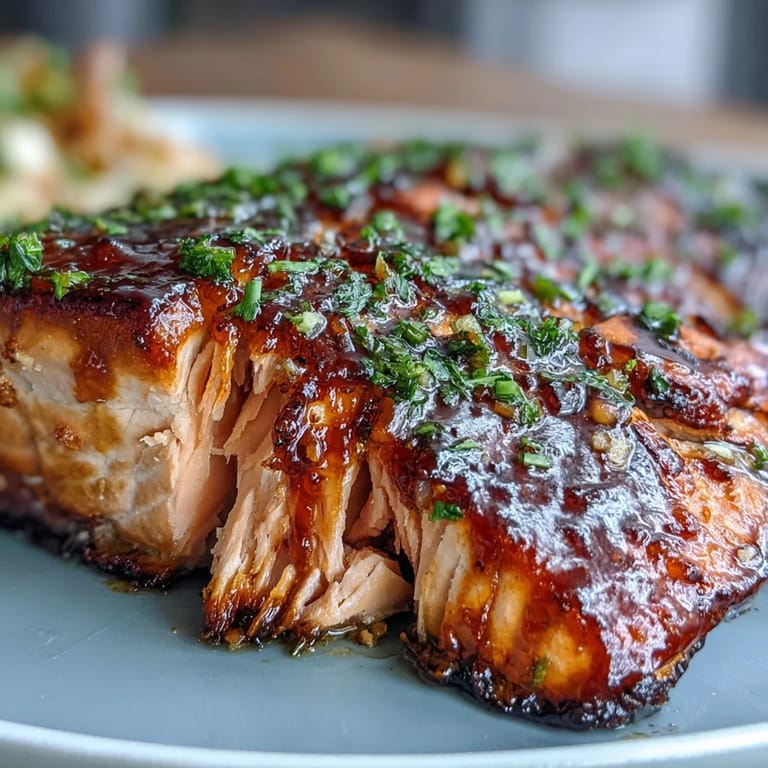
 My coworker wouldn't stop raving about the salmon at Texas Roadhouse, and one Tuesday I finally understood why. I decided to reverse-engineer it at home, figuring if I could nail that perfect balance of sweet, savory, and tangy, I'd never need to order it again. The first attempt was too salty, the second too sweet, but by the third try, something magical happened—the kitchen smelled like a steakhouse, and when I pulled that salmon from the oven, it glistened like it belonged on their menu. Now this is the dish I make when I want to impress without spending an hour in the kitchen.
Last summer I made this for my dad's birthday dinner, and he actually put his phone down mid-meal to compliment the salmon. My mom asked for the recipe, my brother asked for seconds, and suddenly I was the person who made "that salmon" at every family gathering. It's become my go-to when I want to feel confident cooking for people I care about.
Ingredients
- 4 salmon fillets (about 6 oz each): Use fresh if possible, but thawed works beautifully—the marinade masks any slight dryness and infuses flavor deep into the flesh.
- 2 tablespoons olive oil: Helps the marinade cling to the salmon and prevents sticking; avocado oil works too if you want a higher smoke point.
- 2 tablespoons honey: Creates that signature sweet note and helps the top caramelize; maple syrup is a worthy substitute and adds earthiness.
- 3 tablespoons soy sauce: The umami backbone that makes everyone ask what your secret ingredient is—use tamari or coconut aminos if you're avoiding gluten.
- 1 tablespoon Dijon mustard: Adds sharp tanginess and acts as an emulsifier; yellow mustard is milder but works if that's what you have.
- 3 cloves garlic, minced: Mince it fresh rather than using jarred—the difference in brightness is noticeable and worth the thirty seconds.
- 1 teaspoon paprika: Smoked paprika deepens the flavor and adds color; regular paprika is gentler if you prefer subtlety.
- 1 teaspoon salt and 1 teaspoon black pepper: Season generously—the marinade needs backbone to stand up to the rich salmon.
- 2 tablespoons lemon juice: Adds brightness and prevents the dish from feeling too heavy; lime juice creates a completely different personality.
- 2 tablespoons fresh parsley for garnish: This isn't just decoration—it adds a fresh, grassy counterpoint to the sweet-salty marinade.
Tired of Takeout? 🥡
Get 10 meals you can make faster than delivery arrives. Seriously.
One email. No spam. Unsubscribe anytime.
Instructions
- Get your oven ready and prep the dish:
- Preheat to 375°F and lightly grease your baking dish with oil—this prevents the salmon skin from sticking and keeps cleanup minimal. I usually do this while gathering my other ingredients so nothing feels rushed.
- Build the magic marinade:
- Whisk together the olive oil, honey, soy sauce, Dijon mustard, minced garlic, paprika, salt, pepper, and lemon juice in a bowl until the honey dissolves and everything looks glossy. Take a second to smell it—that's when you know the flavors are balanced.
- Let the salmon meet its marinade:
- Place the fillets in the baking dish and pour the marinade over them evenly, making sure each piece gets coated. Let them sit at room temperature for 10 to 15 minutes—this isn't long enough to fully cure the fish, but it's enough for the flavors to start penetrating the surface.
- Bake until golden and flaky:
- Transfer the dish to your preheated oven and bake for 20 to 25 minutes, depending on the thickness of your fillets. The salmon is done when the flesh flakes easily with a fork and the marinade has reduced and started to caramelize around the edges.
- Finish and serve:
- Remove from the oven and sprinkle with fresh parsley—it adds color and a fresh herbal note that brightens everything. Serve immediately while the salmon is still warm and the skin is slightly crispy.
 Save to Pinterest
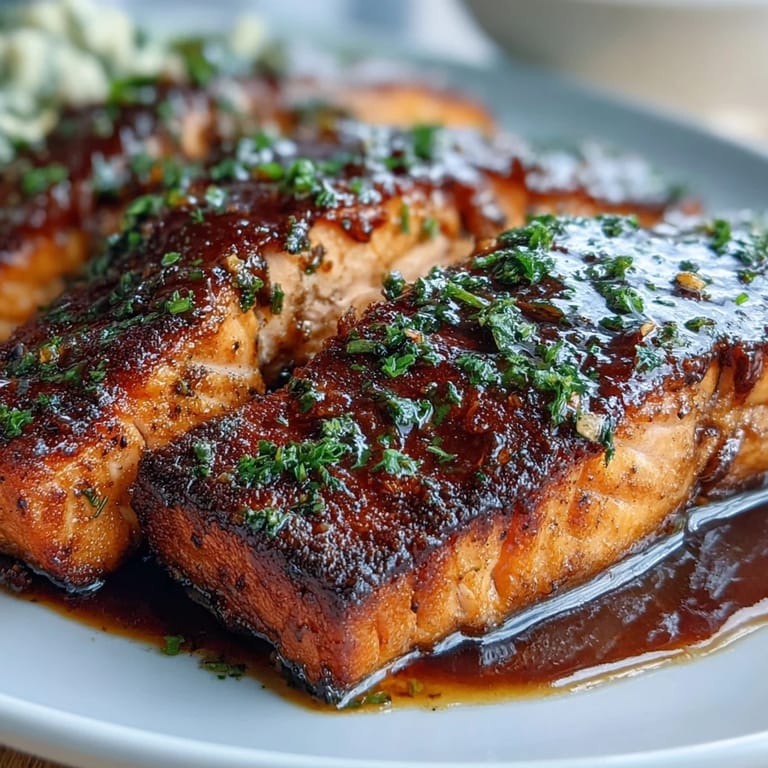
 There's something quietly satisfying about pulling a beautiful piece of salmon from the oven, the marinade glossy and caramelized, knowing you made it in under an hour. It feels fancy enough to celebrate a good week, but easy enough that it doesn't feel like work.
The Secret to Moist Salmon
The key is not overbaking, and the marinade helps tremendously because it keeps the fish from drying out. I learned this the hard way after baking salmon for 30 minutes and ending up with something that flaked a little too easily, if you know what I mean. Now I set a timer for 22 minutes and check at that point—the residual heat finishes the cooking after it comes out of the oven. The marinade also creates a protective layer on top, trapping moisture inside while the outside develops that gorgeous caramelized crust.
Flavor Swaps That Actually Work
I've treated this recipe like a canvas, and some experiments have become regular rotations in my kitchen. Swapping lemon for lime gives it a brighter, more tropical feel that pairs beautifully with cilantro instead of parsley. Maple syrup instead of honey leans into smokier, more autumnal flavors, especially if you use smoked paprika. Even the soy sauce can become tamari or coconut aminos without losing the umami depth—I barely notice the difference, and several of my friends appreciate the gluten-free option.
What to Serve Alongside It
The beauty of this salmon is that it's substantial enough to be the star, but flexible enough to work with almost anything. Roasted asparagus or green beans pick up the savory notes, while steamed broccoli adds color and earthiness. Rice soaks up the marinade beautifully, or you could go for something lighter like a simple salad with lemon vinaigrette. My favorite pairing is roasted baby potatoes tossed with butter and fresh herbs—it feels restaurant-quality without requiring a separate stove.
- If you broil for the last 2 to 3 minutes, watch carefully because the top can char quickly.
- Leftovers stay moist in the fridge for 3 days and make incredible salmon salad or grain bowls.
- Double the marinade and you'll have enough to drizzle on roasted vegetables or use as a dipping sauce for bread.
 Save to Pinterest
 This salmon has become the dish I return to whenever I want to feel like I have my life together in the kitchen. It's proof that restaurant-quality food doesn't require complicated techniques or a dozen obscure ingredients.