 Save to Pinterest
 I discovered this recipe during a late-night cooking session when I was determined to elevate a basic vodka pasta into something with real personality. The trick wasn't just the vodka—it was the chili crisp layered underneath, creating this smoky warmth that lingers on your palate. Adding tender chicken made it feel less like a side dish and more like the showstopper it deserved to be. What started as an experiment became the dish I make whenever I want to impress without spending hours in the kitchen.
I'll never forget the look on my partner's face when they tasted this for the first time—they assumed I'd ordered it from somewhere. There's something about the way the cream mingles with the tomato and spice that makes people pause mid-bite and ask for the recipe. It became our go-to for when friends drop by unexpectedly, because it feels indulgent but also honest, like you actually know what you're doing in the kitchen.
Ingredients
- Boneless, skinless chicken breasts (350 g): Cutting them into bite-sized pieces ensures they cook evenly and absorb the sauce better than larger chunks would.
- Rigatoni or penne pasta (350 g): The tube shape catches the creamy sauce and holds onto those spicy bits in a way that long noodles simply can't.
- Unsalted butter and heavy cream: These are your base for silkiness—don't skip the butter step, it adds a richness that plain cream can't deliver alone.
- Chili crisp (1 tsp plus more for serving): This is the secret weapon that makes people ask what makes it taste different from regular vodka pasta.
- Vodka (60 ml): The alcohol cooks off but leaves behind a subtle warmth that ties everything together.
- Tomato paste (2 tbsp): A small amount goes a long way—it adds umami depth without making the sauce taste tomato-forward.
- Fresh garlic and onion: These aromatics are non-negotiable, and mincing them fine ensures they dissolve into the sauce rather than staying chunky.
- Parmesan cheese (50 g): Freshly grated makes all the difference in how smoothly it incorporates into the warm sauce.
- Smoked paprika (optional): A pinch of this adds a whisper of smoke that reminds people why they love this dish.
Tired of Takeout? 🥡
Get 10 meals you can make faster than delivery arrives. Seriously.
One email. No spam. Unsubscribe anytime.
Instructions
- Get your pasta water started:
- Bring a large pot of generously salted water to a rolling boil—this is your only chance to season the pasta itself. Drop the rigatoni in and cook until it's tender but still has a slight bite to it, usually a minute or two before the package says it's done.
- Sear the chicken until it's golden:
- While the pasta does its thing, season your chicken pieces with salt and pepper on both sides. Heat olive oil in a large skillet over medium-high heat until it shimmers, then add the chicken in a single layer—resist the urge to stir constantly, let each piece get a golden crust before moving it around, about 4 to 5 minutes total.
- Build the flavor foundation:
- In the same skillet (keeping all those golden bits), melt butter over medium heat and add your finely chopped onion. Stir occasionally until it turns translucent and soft, then add the minced garlic and let it become fragrant—this takes just a minute, don't let it brown.
- Toast the tomato paste:
- Stir in the tomato paste, chili crisp, and red pepper flakes, mixing constantly for about 2 minutes until the paste darkens slightly and the chili crisp releases its oils. You'll notice the aroma shift to something deeper and more complex.
- Deglaze with vodka:
- Pour in the vodka slowly, scraping the bottom of the pan with your spoon to lift up all those browned bits—they're pure flavor. Let it bubble gently for 1 to 2 minutes so the raw alcohol taste mellows out.
- Create the silky sauce:
- Lower the heat to medium-low and pour in the heavy cream, stirring gently as it combines with the tomato base. Add the smoked paprika if you're using it, and let everything simmer softly for 2 to 3 minutes until the sauce is smooth and just slightly thickened—it should coat the back of a spoon.
- Bring it together:
- Return the chicken to the skillet and stir in the freshly grated Parmesan, watching as it melts into the sauce and adds an incredible richness. Taste and adjust the salt and pepper—remember that the pasta water and reserved cheese will add more saltiness, so go easy.
- Combine pasta with sauce:
- Drain your pasta (but save that pasta water first), then add it directly to the skillet with the sauce. Toss gently, adding reserved pasta water a splash at a time until the sauce coats every piece and flows like silk.
- Finish and serve:
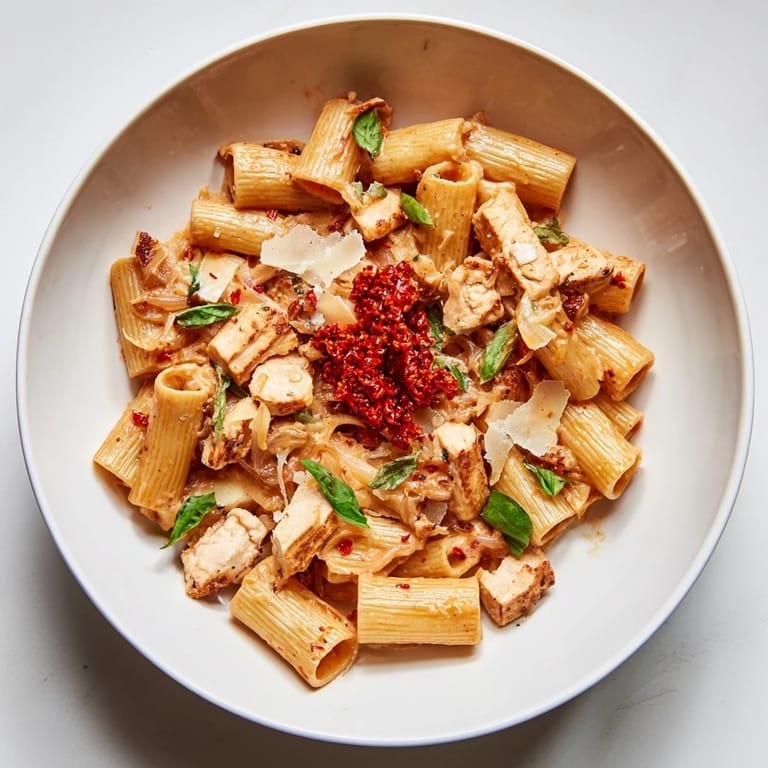
- Transfer to plates and top generously with extra Parmesan, another drizzle of chili crisp, and fresh basil torn by hand just before serving.
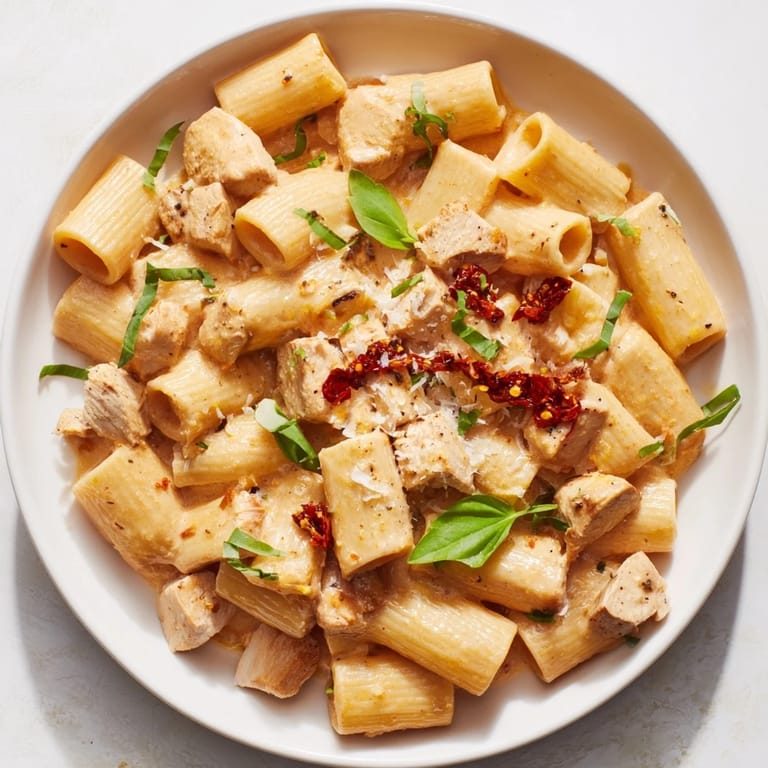 Save to Pinterest
 There was one evening when a friend arrived without warning, and instead of ordering takeout, I threw this together in the time it took them to pour a glass of wine. The meal became a moment where cooking felt less like an obligation and more like a gift—not because it was complicated, but because it tasted like I'd spent all afternoon thinking about what would make them happy.
Why the Chili Crisp Changes Everything
Most vodka pasta recipes rely on red pepper flakes alone, which gives heat but no texture. Chili crisp brings both the spice and those crispy bits suspended in oil that add complexity to every bite. The first time I made this swap, I couldn't put my finger on why it tasted so much better until I realized it was that textural contrast—little crunchy pockets that bloom when they hit the warm sauce. It's the difference between a dish that tastes good and one that feels memorable.
The Alcohol Question
People worry about the vodka, assuming it'll taste boozy or strong, but the truth is gentler than that. The point isn't to get drunk on pasta—it's that vodka has a unique ability to extract and carry flavors that water or broth can't quite reach. When you simmer it for a couple of minutes, the harsh alcohol evaporates and leaves behind this subtle warmth that makes you wonder what the secret ingredient is. If you're still concerned, let it bubble for a full 3 minutes before adding the cream.
Making It Yours
The beauty of this dish is how forgiving it is with variations. Some nights I add a pinch of nutmeg for warmth, other times I throw in a splash of white wine instead of vodka when I'm out of it. The foundation is strong enough that it holds up to experimentation without falling apart.
- For vegetarian versions, roasted mushrooms or crispy cauliflower absorb the sauce just as well as chicken and create their own kind of heartiness.
- If you can't find chili crisp, a combination of crushed red pepper flakes and a drizzle of quality olive oil works in a pinch.
- Leftover pasta actually tastes better the next day as the flavors deepen, so don't hesitate to make extra.
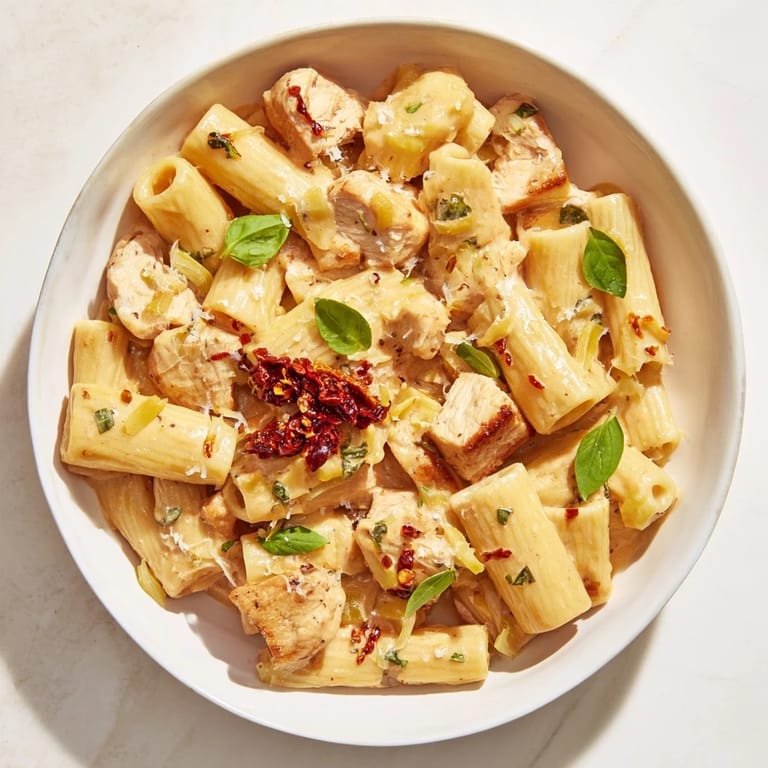 Save to Pinterest
 This recipe has become one of those dishes I return to again and again, not because it's complicated, but because it delivers real satisfaction with minimal stress. It's the kind of meal that reminds you why you love cooking in the first place.
Common Recipe Questions
- → How do I achieve the creamy sauce consistency?
Simmer the sauce gently after adding heavy cream, stirring until it thickens slightly. Use reserved pasta water to adjust the sauce's texture for a silky finish.
- → Can I substitute the chicken with a vegetarian option?
Yes, sautéed mushrooms or roasted cauliflower work well as alternatives, adding texture and depth without changing the creamy base.
- → What type of pasta is best for this dish?
Rigatoni or penne pasta are ideal as their hollow shapes hold the creamy sauce well, ensuring each bite is flavorful.
- → How spicy is the dish, and can I adjust it?
The heat comes from chili crisp and red pepper flakes. Adjust the amounts to suit your preference, starting with less and adding more as desired.
- → Does the vodka flavor remain strong after cooking?
Most alcohol cooks off during simmering, leaving a subtle depth and brightness without overpowering the dish.
- → What garnishes complement this pasta?
Fresh basil leaves, extra Parmesan cheese, and a sprinkle of chili crisp enhance both flavor and presentation.