 Save to Pinterest
 There's something magical about serving food that looks like it belongs in a snow globe. I discovered this little trick at a dinner party where someone had arranged cheese so cleverly that guests actually paused before eating, just to admire it. That moment—when food stops being just sustenance and becomes a small edible sculpture—has stayed with me. Now whenever I want to impress without fussing for hours, I reach for two cheeses and ten minutes.
I made this for a holiday gathering last winter, and my neighbor—who usually just lurks in the corner with a drink—spent ten minutes studying the platter before asking how I'd made it. When I told her the whole thing was basically just cheese and knife skills, she laughed and said she'd been intimidated by its elegance. That's the real magic of this dish: it feels fancy without demanding anything from you.
Ingredients
- Brie cheese, well chilled (400 g): Cold Brie cuts cleanly into wedges without crumbling or smearing; room temperature cheese will frustrate you, so chill it for at least an hour beforehand.
- Parmesan cheese, finely grated (40 g): The finer the grate, the more it looks like actual snow clinging to the peaks; pre-grated works but freshly grated tastes brighter and clings better.
- Fresh thyme sprigs (optional): A handful of green adds visual contrast and a whisper of earthiness that doesn't overpower the creamy cheese.
Tired of Takeout? 🥡
Get 10 meals you can make faster than delivery arrives. Seriously.
One email. No spam. Unsubscribe anytime.
Instructions
- Chill and steady your hand:
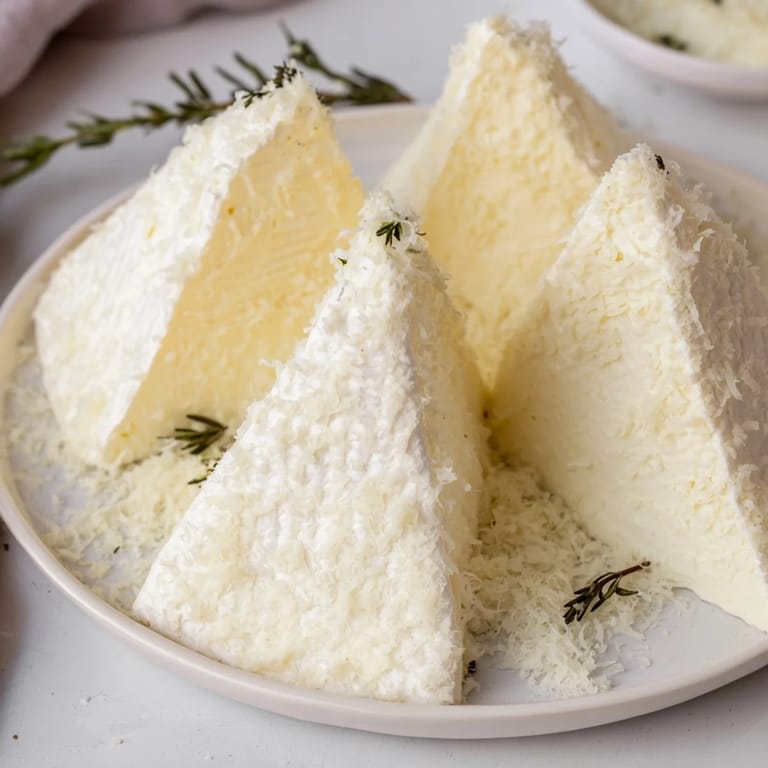
- Remove the Brie from the fridge and let your knife be sharp—a dull blade will crush the cheese instead of slicing it. You want clean triangular wedges, each about the size of your thumb, with the pointed end facing up like an actual peak.
- Build your range:
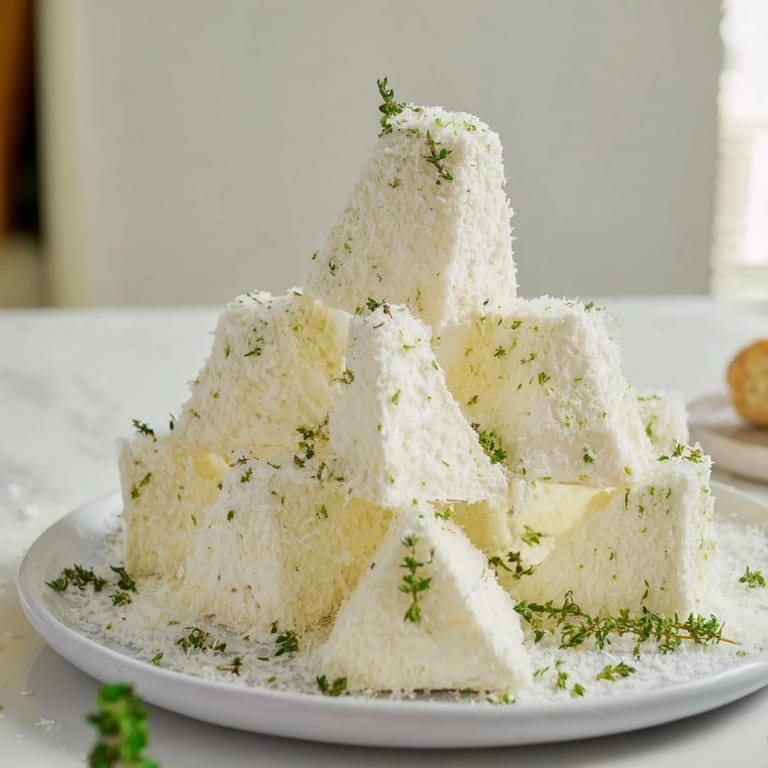
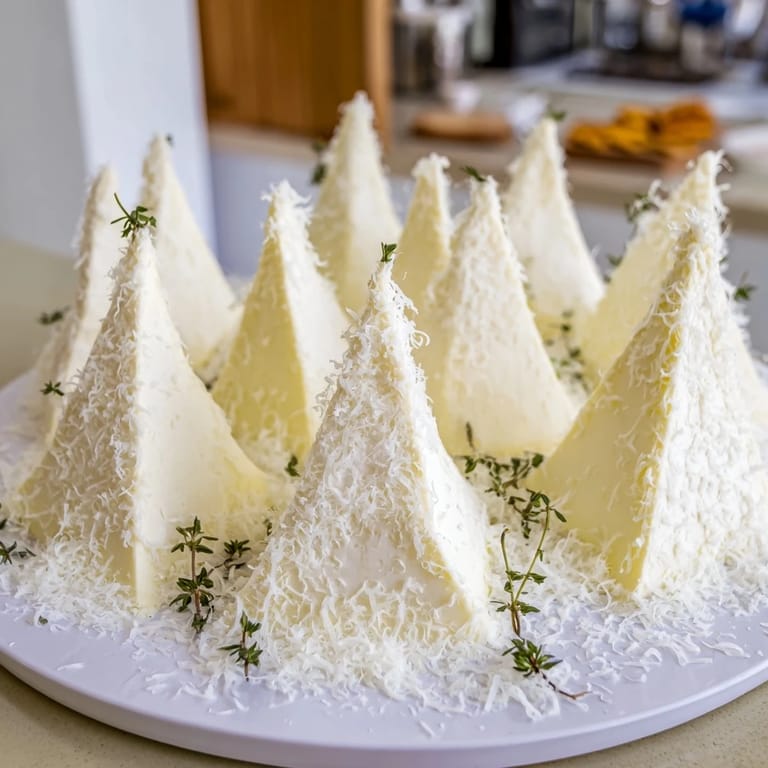
- Stand each wedge upright on your serving platter with the point facing skyward, arranging them in a gentle line or loose cluster that suggests a mountain ridge.
- Snow the summits:
- Dust the tops and sides of each wedge generously with grated Parmesan until they look dusted with fresh powder; the grater holes should disappear under white.
- Add a touch of green:
- Tuck a few sprigs of thyme around the base or between wedges, like evergreens nestled in a snowy valley.
- Bring to the table:
- Serve immediately alongside crackers or thin baguette slices, so guests can enjoy the cheese at its creamiest while the presentation still feels intentional.
 Save to Pinterest
 I served this once at a casual dinner where someone was nervous about trying new foods, and watching them take the first bite—then immediately reach for another wedge—reminded me why I cook at all. It wasn't about impressing; it was about creating a tiny moment of joy with something simple and honest.
The Cheese Choice Matters
Brie is perfect because its soft, buttery paste contrasts beautifully with the hard, salty Parmesan, but don't feel locked into this pairing. I've used Camembert for earthier notes, and once I tested a triple-cream cheese that was so decadent guests thought I'd spent hours. The rule is simple: use a soft, pale cheese that holds its shape when cold and a hard cheese that grates fine.
Timing and Temperature
This is a no-heat dish, which sounds lazy but is actually liberating—you're working with the natural textures and flavors of exceptional cheese. The only real work is respecting temperature: cold cheese for clean cuts, and serving the finished platter immediately so the Brie stays creamy and the Parmesan dust clings like actual snow before gravity takes over.
A Dish for Any Occasion
What started as a way to make entertaining less stressful has become one of my most-requested dishes. It's elegant enough for a formal tasting, casual enough for a weeknight gathering, and forgiving enough that even if your wedges aren't perfectly uniform, the overall effect still works. The beauty of simplicity is that there's nowhere to hide, so the quality of your ingredients and the steadiness of your knife hand become everything.
- If you want deeper flavor, toast your Parmesan in a dry skillet for a minute, then let it cool completely before dusting.
- Prep the platter up to three hours ahead and keep it chilled, but don't dust with Parmesan until just before serving.
- Serve with wines that won't overpower the delicate cheese—a crisp Chardonnay or something sparkling is perfect.
 Save to Pinterest
 Sometimes the best dishes are the ones that look like you've done something complicated when really you've just paid attention to texture, temperature, and the honest flavors of excellent cheese. This is that dish.
Common Recipe Questions
- → What type of cheese is best for the base?
Use well-chilled Brie cheese for clean, sharp wedges that hold their shape well on the platter.
- → How do you create the snowy effect on the cheese?
Generously dust finely grated Parmesan over the Brie wedges to imitate a fresh snow layer.
- → Can the Parmesan be toasted?
Yes, gently toasting the Parmesan in a dry pan before cooling enhances the flavor before dusting.
- → What garnishes complement this appetizer?
Fresh thyme sprigs provide a touch of greenery and aromatic freshness without overpowering the cheese.
- → What are suitable accompaniments to serve it with?
Serve alongside crackers or thin slices of baguette for a balanced texture and taste experience.