 Save to Pinterest
 My first encounter with seaweed salad happened on a humid summer evening at a small Japanese restaurant tucked between two office buildings. The plate arrived glistening with sesame seeds, and I was skeptical until the first bite hit my tongue—that perfect balance of salty, tangy, and nutty all at once made me realize I'd been missing something essential. Years later, I discovered I could recreate that exact moment in my own kitchen, and now it's become my go-to when I want something that feels both indulgent and impossibly light.
I made this for my roommate on a Tuesday night when she came home exhausted from a terrible day at work. She took one bite, closed her eyes, and suddenly the mood in our tiny kitchen shifted—that's the power of a well-made salad. Now whenever she's had a rough time, she'll text me a seaweed emoji, and I know exactly what she needs.
Ingredients
- Dried mixed seaweed (30 g): Look for packages labeled wakame, hijiki, or arame at any Asian market or online—they rehydrate beautifully and bring that authentic oceanic flavor you can't fake with anything else.
- Cucumber (1 small, thinly sliced): The water content keeps things crisp and refreshing, so don't skip the slicing step even though it feels tedious.
- Carrot (1 small, julienned): A vegetable peeler works wonders here and saves you from knife fatigue while creating those delicate strands that catch the dressing perfectly.
- Scallions (2, thinly sliced): They add a whisper of onion sharpness that keeps the salad from tasting one-dimensional.
- Ponzu sauce (3 tbsp): This citrus-based condiment is the backbone of everything, so grab a good quality brand or make your own if you're feeling ambitious.
- Rice vinegar (1 tbsp): The acidity here is crucial—it brightens every single element without overpowering the delicate seaweed.
- Soy sauce or tamari (1 tbsp): Use tamari if gluten matters to you, and taste your dressing before serving since soy sauces vary wildly in saltiness.
- Toasted sesame oil (1 tbsp): This stuff is liquid gold, but a little goes a long way—never skip the toasting step on the label because the flavor difference is night and day.
- Fresh ginger (1 tsp, grated): Microplane it right before mixing so you get maximum zing without those chunky bits.
- Sugar or maple syrup (1 tsp): Just enough sweetness to round out the salty-sour profile and make your brain happy.
- Chili flakes (1 tsp, optional): Add heat if you want, but honestly the salad sings without it too.
- Toasted sesame seeds (2 tbsp) and red chili (1 tbsp, optional) for garnish: These finish the dish with visual appeal and textural contrast that makes eating it feel like an event.
Tired of Takeout? 🥡
Get 10 meals you can make faster than delivery arrives. Seriously.
One email. No spam. Unsubscribe anytime.
Instructions
- Rehydrate the seaweed:
- Pour cold water over your dried seaweed and watch it transform from brittle paper into tender ribbons within 10 minutes. The sound of it softening is oddly satisfying, and always—always drain it well and give it a gentle squeeze to release excess water, otherwise your salad becomes a soggy disaster.
- Combine the vegetables:
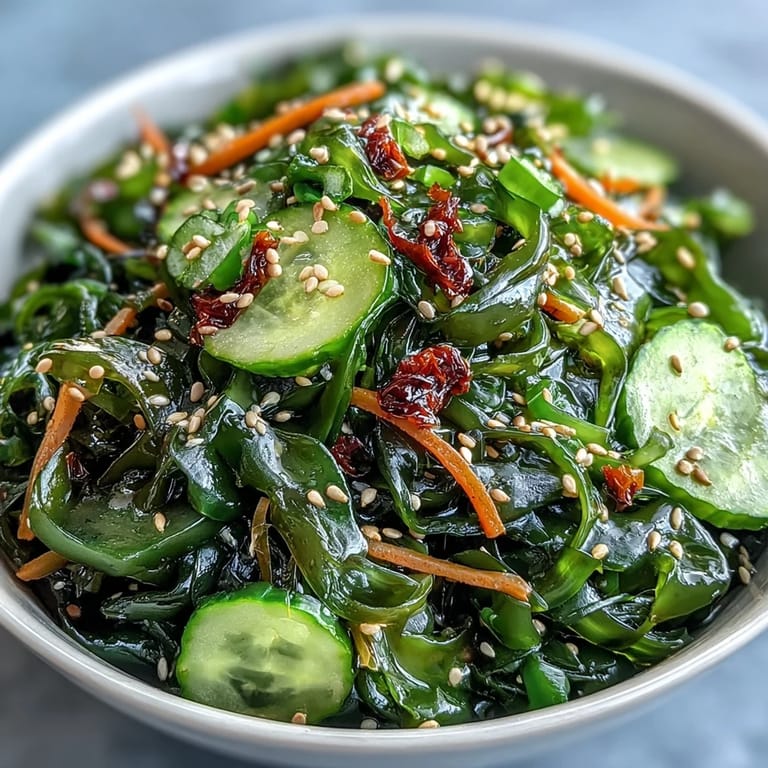
- Toss your rehydrated seaweed with the sliced cucumber, julienned carrot, and scallions in a large bowl, taking a moment to appreciate how the colors look together. This is the moment to taste a raw piece of seaweed and remember you're making something genuinely special.
- Build the dressing:
- In a separate small bowl, whisk the ponzu, rice vinegar, soy sauce, sesame oil, ginger, sugar, and chili flakes until everything dissolves and the mixture smells bright and alive. Don't rush this step—the whisking helps emulsify the oils and vinegars into something cohesive rather than separated.
- Dress and toss:
- Pour that golden dressing over the seaweed and vegetables and toss gently—this isn't a salad that needs aggressive mixing, just enough to coat everything evenly. The seaweed is delicate, so treat it with respect.
- Plate and garnish:
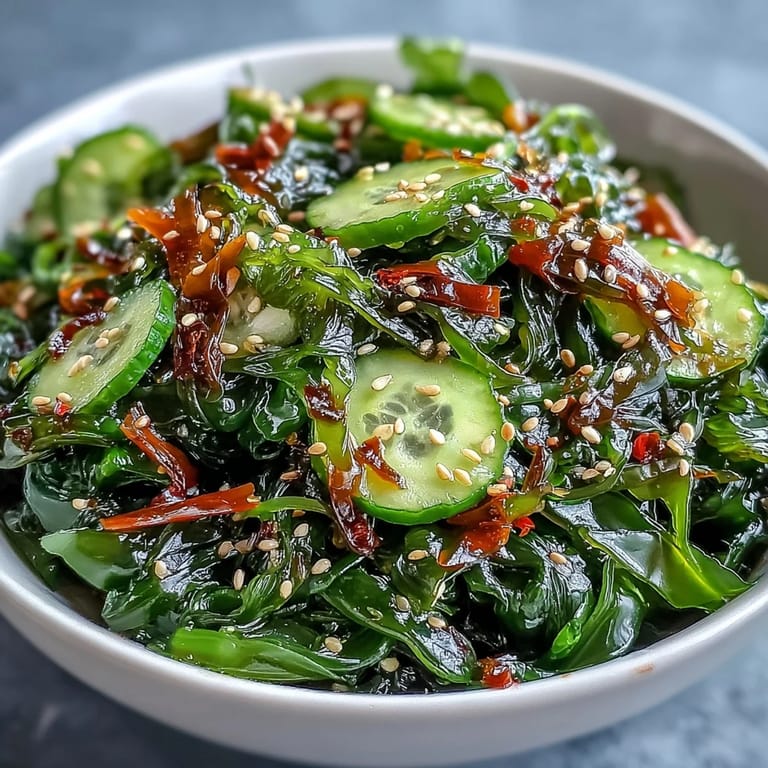
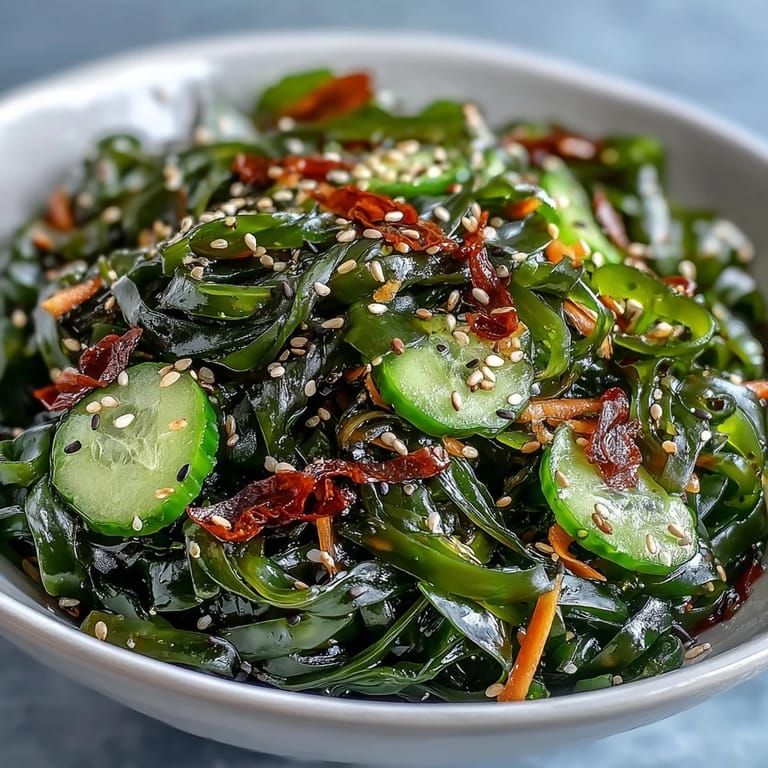
- Transfer to a serving platter or individual bowls and shower everything with toasted sesame seeds and thin slices of red chili if you're feeling fancy. The presentation matters more than you'd think with this one.
- Chill and serve:
- You can eat it immediately at room temperature or pop it in the fridge for up to 30 minutes if you like it colder. Longer than that and the seaweed starts to weep.
 Save to Pinterest
 There's something almost meditative about making this salad—the quiet efficiency of it, the way each ingredient plays its part without drama or complication. It reminds me why I love cooking at all: sometimes the most memorable meals don't require hours or fancy techniques, just respect for simple ingredients and the confidence to let them shine.
The Dressing Philosophy
The genius of this salad lives entirely in the dressing balance, and once you understand the ratio, you'll start creating variations without thinking. The ponzu provides the citrus backbone, the soy sauce adds saltiness and depth, the sesame oil contributes nuttiness, and the rice vinegar keeps everything bright and snappy. I've learned through many kitchen experiments that sesame oil should never be your primary fat—use it as a flavor accent, not the whole story, or you'll end up with something that tastes one-dimensional and heavy.
Customization and Variations
The foundation of this salad is forgiving enough that you can play with it based on what's in your fridge or what your mood demands. I've added everything from thinly shaved radishes for extra crunch to blanched edamame for protein, and I've stretched it into a main course by piling it on top of chilled buckwheat noodles or alongside grilled tofu. Once you own the base recipe, the variations become second nature.
Serving and Pairing Suggestions
This salad works beautifully as a light starter, a side dish next to grilled fish or tofu, or even as part of a larger Japanese-inspired dinner spread. I've found it pairs especially well with anything involving soy, ginger, or sesame, which means almost any Asian dinner benefits from its presence. The flavor is bold enough to stand alone but humble enough to play supporting role.
- Serve it chilled or at room temperature depending on the weather and your mood, but never hot.
- Make the dressing ahead and store it separately so you can dress the salad fresh when serving.
- Always taste and adjust the seasoning just before eating because flavors fade and strengthen unpredictably as time passes.
 Save to Pinterest
 This seaweed salad has become my small reminder that the best meals don't need to be complicated to be unforgettable. Make it once and you'll understand why.
Common Recipe Questions
- → What type of seaweed works best?
Dried mixed seaweed such as wakame, hijiki, or arame rehydrates well and brings diverse textures and flavors to the dish.
- → How long should seaweed soak before use?
Soak dried seaweed in cold water for about 10 minutes until fully rehydrated and tender, then drain thoroughly.
- → Can the dressing be adjusted for spice levels?
Yes, chili flakes and sliced red chili can be added or omitted depending on your preferred heat intensity.
- → Is there a gluten-free option for the sauce?
Use tamari instead of soy sauce and ensure the ponzu sauce is gluten-free to accommodate dietary needs.
- → What are good accompaniments for this dish?
This vibrant salad pairs well with grilled fish, tofu, or can be enjoyed on its own as a refreshing side.