 Save to Pinterest
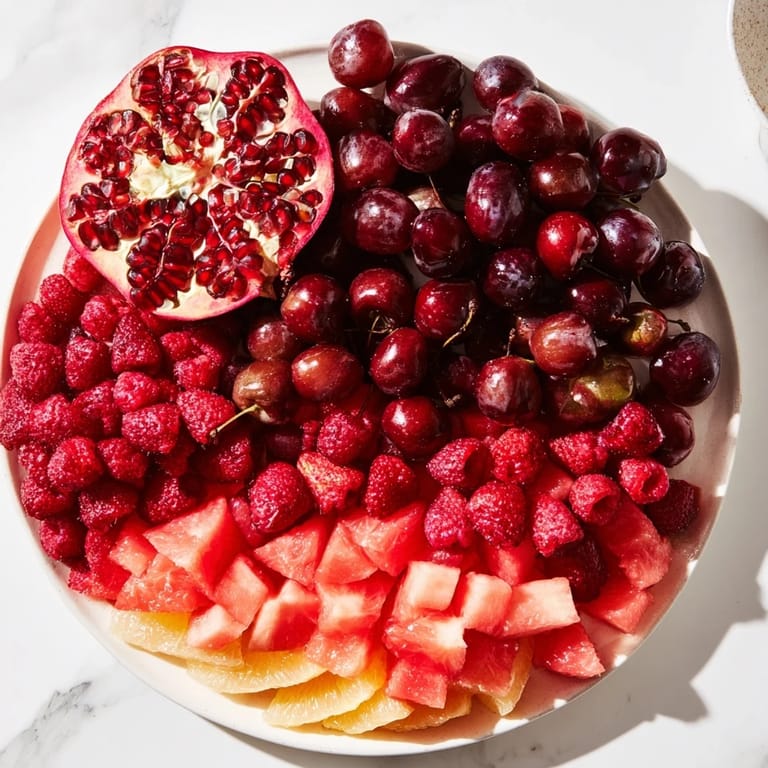
 I discovered the magic of arranging fruits by color when a dinner guest mentioned she ate with her eyes first. That comment stuck with me through several kitchen experiments until one evening, while halving a pomegranate, I noticed how its jewel-toned seeds seemed to glow against everything around it. What if I built the entire platter around that moment—letting one fruit guide the whole composition? The Pomegranate Pivot was born from that single observation, and now I can't imagine serving fruit any other way.
Last spring, I made this for a small garden party, and something unexpected happened—people lingered longer at the platter than anywhere else. A friend's daughter kept asking why the colors looked like a sunset, and suddenly everyone was talking about transitions and gradients instead of just eating fruit. That single platter became the conversation, the centerpiece, and honestly, the whole point of the gathering.
Ingredients
- 1 large pomegranate, halved: This is your anchor, your visual hero. I learned to choose pomegranates that feel heavy for their size, which means they're bursting with juice and seeds.
- 1 cup dark cherries, pitted: The deepest red layer starts the gradient. Fresh cherries have a subtlety that frozen ones can't match, even though pitting takes patience.
- 1 cup red grapes: Their natural shine catches light beautifully, and they're forgiving if you prep them hours ahead.
- 1 cup strawberries, hulled: Pick berries that are vibrant red, not pale pink, to anchor the color transition convincingly.
- 1 cup raspberries: Handle these gently—they bruise if you even look at them sideways, but their delicate color is irreplaceable in the gradient.
- 1 cup watermelon, cubed: The pale pink watermelon bridges the transition beautifully, and its sweetness adds contrast to tartness elsewhere.
- 1 cup pink grapefruit segments: These bring both color and a gentle citrus note that wakes up the palate.
- 1 cup dragon fruit, cubed: The pale pink interior with those tiny black seeds creates an almost ethereal layer, though the flavor is subtle.
- 1 cup apple slices, pink or blush varieties: These fade into the outer edge almost dreamlike, connecting the platter to the plate beneath it.
- 1 cup pear slices: Pale and creamy, pears are the whisper at the end of the color story.
- Fresh mint leaves and edible rose petals (optional): These aren't decoration—they're punctuation marks that make the whole arrangement feel intentional.
Tired of Takeout? 🥡
Get 10 meals you can make faster than delivery arrives. Seriously.
One email. No spam. Unsubscribe anytime.
Instructions
- Create Your Center Stage:
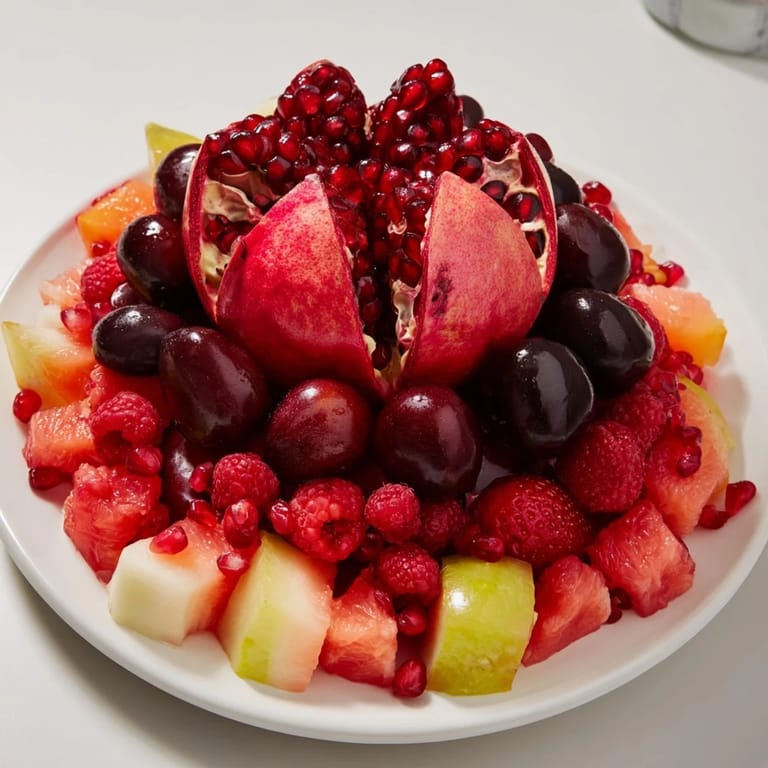
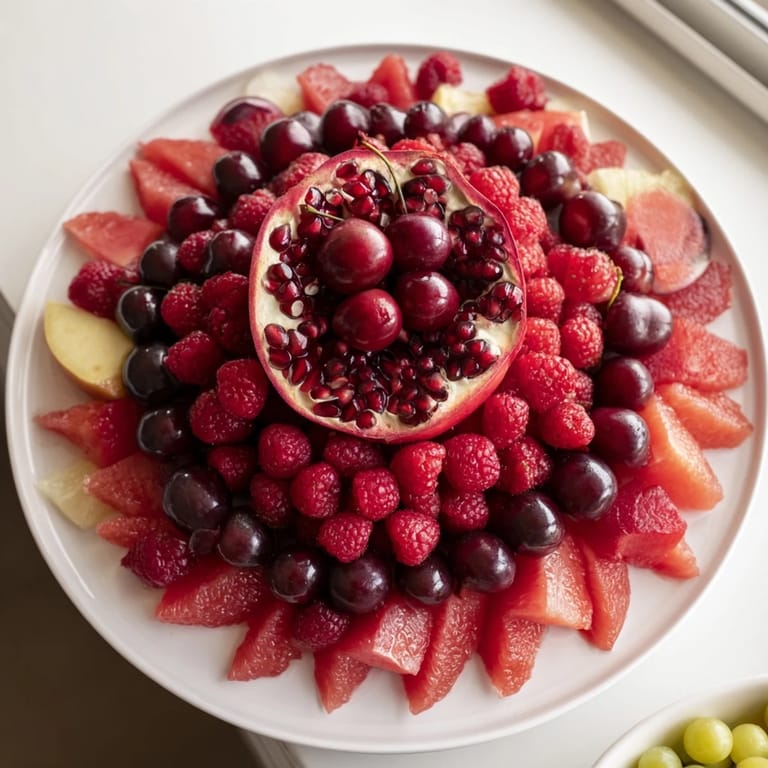
- Place the halved pomegranate, cut side up, in the very center of your largest serving platter. This is the anchor, the reason everything else exists, so give it space to breathe and command attention.
- Lay Down the Deep Reds:
- Arrange the cherries, red grapes, and strawberries in a crescent moon around the pomegranate. Let them almost touch it—you're creating a frame, not floating islands.
- Build the Gradient:
- Nestle the raspberries, watermelon cubes, and grapefruit segments in the next layer outward. Watch how the color shifts as you move your hand across the platter—you're guiding the eye like a painter.
- Fade to Pale:
- Layer the dragon fruit, apple slices, and pear slices at the outer edge, where they seem to dissolve into the background. This is where the journey ends gently.
- Add the Finishing Touches:
- Scatter mint leaves and rose petals across the arrangement if using them. They should feel like happy accidents, not a rigid pattern.
- Serve or Chill:
- Bring this to the table immediately so everyone sees it in its full glory, or cover it loosely and refrigerate if you need breathing room before guests arrive.
 Save to Pinterest
 What moves me most about this platter is that it asks people to slow down and actually see their food before eating it. In a world of rushing and multitasking, watching someone pause to take in the colors—really take them in—feels like a small victory.
The Color Story Behind the Arrangement
Color in food isn't just visual—it whispers about flavor, ripeness, and care. When I started thinking about fruit platters differently, I realized that moving from dark red to pale pink isn't random; it mirrors how many fruits ripen, from deep intensity to delicate sweetness. This gradient became my language for saying, "I thought about this," without speaking a word.
Timing and Prep Strategy
The beauty of this platter is that it demands almost no cooking, but it does demand some thoughtfulness. I learned to pit cherries and hull strawberries the morning of serving, then arrange everything within an hour of presentation. This keeps fruits at their crispest and colors at their most vivid, and it means you're not frantically cutting things while guests are arriving.
Adapting This to Your Season
Every season offers different fruits, and I've learned to think of this platter as a template rather than a strict recipe. In summer, swap in peaches and red currants; in late summer, add fresh figs and blackberries; in fall, try pomegranate arils themselves as a deep red layer, or add cranberries if you can find them fresh. The principle stays the same—move from deep to pale—even as the cast of characters changes.
- Spring might bring fresh strawberries, light raspberries, and pale blush apples in their prime.
- Summer is your moment for stone fruits like peaches, plums, and cherries at their absolute peak.
- Fall invites pomegranate arils, persimmons, and any lingering berries alongside those last apples.
 Save to Pinterest
 This platter has taught me that sometimes the most impressive thing you can do for guests is simply pay attention—to color, to ripeness, to the small details that show someone was thinking. Serve it chilled, watch people's faces, and let the fruit speak.
Common Recipe Questions
- → What fruits complement the pomegranate centerpiece?
Deep red fruits such as cherries, red grapes, and strawberries, layered with pink and pale fruits like raspberries, watermelon, dragon fruit, and apple slices complement the pomegranate beautifully.
- → How can I maintain the vibrant colors of the fruit platter?
Arrange fruits in overlapping layers with smooth color transitions, and drizzle lime juice lightly on apple and pear slices to prevent browning.
- → Can I substitute any fruits in this platter?
Yes, seasonal fruits like red currants, pomegranate seeds, lychees, or peaches work well as alternatives to keep the visual appeal and flavor balance.
- → What garnishes enhance this fruit arrangement?
Fresh mint leaves and edible rose petals add extra color, aroma, and elegance without overpowering the fruit flavors.
- → What equipment is needed to prepare this display?
A large serving platter, sharp paring knife, cutting board, and small bowls for organizing fruits before arranging are recommended for efficient preparation.