 Save to Pinterest
 There's something magical about watching a spread come together on the table—when suddenly all those separate elements turn into something that makes people lean in and say yes to this first. The Moroccan Tent arrived in my kitchen on a night I was hosting friends and running late, so I grabbed whatever was bright and colorful, arranged it like I'd seen in a market once, and the tent shape just happened. Everyone asked for the name before they asked for the recipe.
I made this for a dinner where someone mentioned they didn't eat cooked food, and instead of panicking I realized this platter was already half-raw vegetables and fresh dips. It became the dish everyone talked about after—not because it was fancy, but because it met people where they actually were.
Ingredients
- Cucumber: Slice it lengthwise so it catches the light and people can see the seeds—that's what makes it feel fresh and alive on the platter.
- Red and yellow bell peppers: These are your color anchors; strip them thick enough that they don't flop but thin enough to bend slightly around a dip.
- Carrots: Cut them into sticks you'd actually want to hold; rough, raw carrot has a sweetness that mellows the spiced dips beautifully.
- Cherry tomatoes: Halve them so the cut side faces up and glistens; they're tiny flavor pops between bites.
- Red onion: Slice paper-thin; it adds a sharp note that keeps everything from feeling too creamy.
- Radishes: Thin slices add a peppery crunch I didn't expect to crave, but now I always include them.
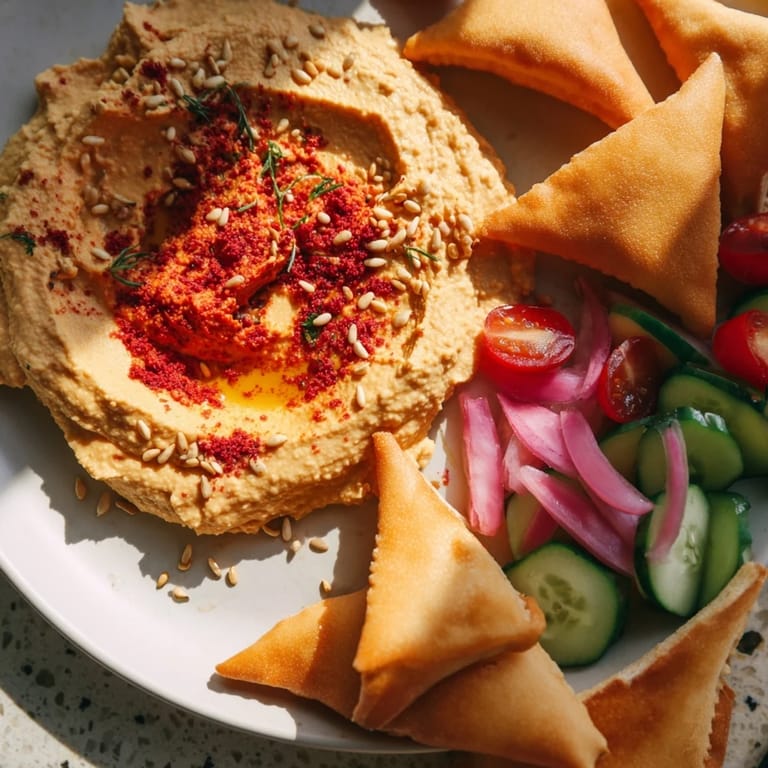
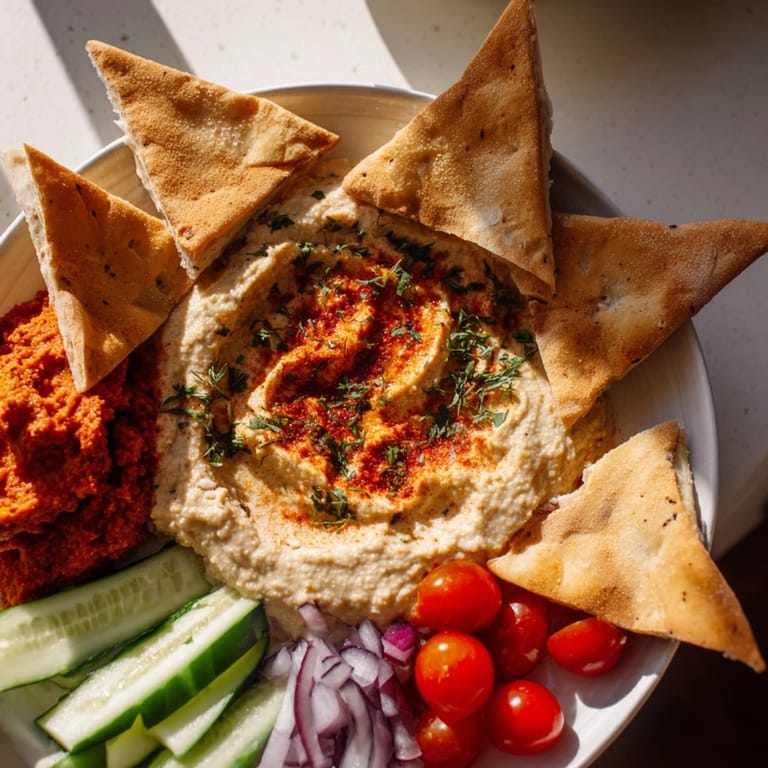
- Pita or msemen: Warm them slightly so they're pliable; cold bread is dense but warm bread fans out like sails.
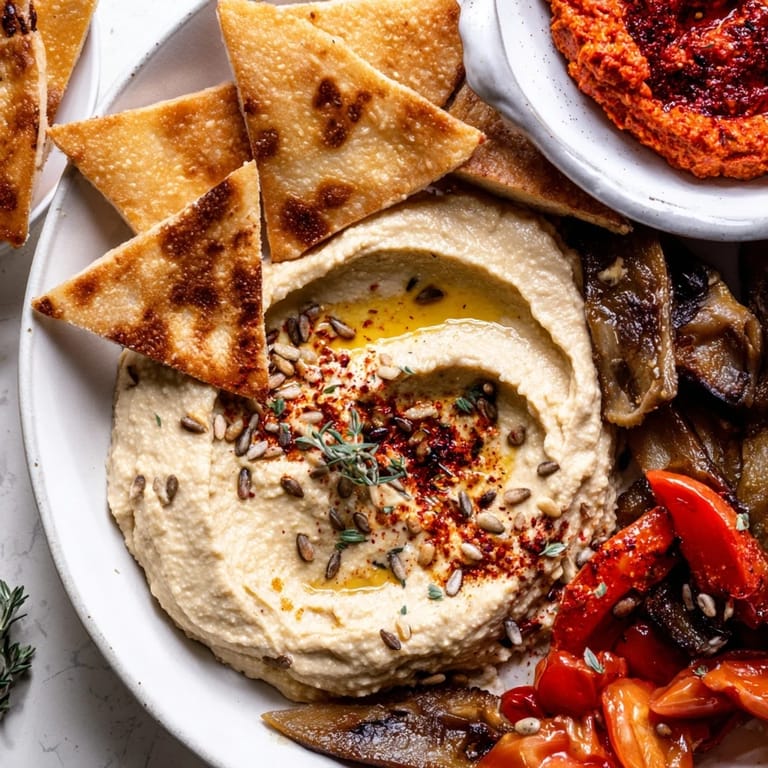
- Hummus: Store-bought is fine here—this isn't where your effort should go.
- Muhammara: The red pepper dip that tastes like it's been simmering for hours but isn't asking much of you.
- Baba ganoush: Smoky and creamy; it grounds the brighter flavors.
- Olives: Both colors if you have them; pit them so guests don't bite down on something hard mid-bite.
- Fresh cilantro or parsley: Chop it right before serving so it stays vibrant green and peppery.
- Sesame seeds: Toast them first in a dry pan until they smell nutty; the heat wakes them up.
- Cumin and smoked paprika: These dust the dips and tell people this is Moroccan before they taste anything.
Tired of Takeout? 🥡
Get 10 meals you can make faster than delivery arrives. Seriously.
One email. No spam. Unsubscribe anytime.
Instructions
- Slice and prep everything:
- Start here while your knife is sharp and your hands are patient. Line up each vegetable like you're building a color palette, and don't rush the cuts—uneven pieces catch light differently and it shows.
- Build the tent canopy:
- Take your large platter and start arranging vegetables in pointed triangular groupings, like you're creating a geometric pattern. Alternate colors as you go so red sits next to yellow sits next to orange; this is where the platter earns its name and its moment.
- Warm the bread:
- Heat your pita or msemen in a dry skillet for 2-3 minutes until it's just warm enough to be flexible. Cut into triangles and fan them out at the base of your vegetable canopy like the poles of the tent.
- Spoon and dust the dips:
- Pour hummus, muhammara, and baba ganoush into small bowls and arrange them at the center base. Sprinkle each with a pinch of cumin and paprika, then finish with sesame seeds—this is your signal to guests that flavor lives here.
- Final garnish and serve:
- Scatter olives across the platter and rain cilantro or parsley over everything. Step back and look at it before anyone eats; that's the moment that matters.
 Save to Pinterest
 I watched someone pick up a carrot stick, dip it through three different dips in one motion, and close their eyes while eating it—not because it was transcendent, but because they got to decide exactly what they wanted in that moment. That's when I realized this platter isn't about the food being restaurant-perfect; it's about the permission it gives people to eat the way they actually want to.
The Tent Shape and Why It Matters
The pointed, tent-like arrangement isn't just decorative—it serves a real purpose. When vegetables are organized in triangular groupings that point upward, they naturally draw the eye toward the dips in the center, and they create little pockets where different flavors and colors meet. The shape also makes it easy for people standing around the platter to find the vegetables they want without reaching too far or creating an awkward gap in the arrangement.
Making It Your Own
The beauty of this platter is that nothing here is sacred. If you have snap peas instead of cucumber, use them. If someone tells you they don't eat raw onion, skip it and add more radishes. I've swapped in roasted chickpeas for crunch, added marinated feta cubes for richness, and blanched green beans when the carrots looked tired at the market. The framework stays the same, but the vegetables are whatever your kitchen has that morning.
Timing and Temperature
This platter lives best at room temperature, which means you can build it earlier in the day and not worry about reheating anything last minute. The vegetables stay crisp, the dips stay smooth, and you stay calm. If your kitchen is warm, keep everything in the fridge until 10 minutes before guests arrive so nothing gets soft or weeping. Warm bread matters most, so wrap it in a towel right after toasting and keep it that way—cold, stiff bread defeats the whole point of building a tent you can actually eat.
- Prep all vegetables the morning of, store them in separate containers, and assemble the platter just before serving.
- If you're making the dips from scratch, do that a day ahead so the flavors settle and deepen.
- The bread can be warmed five minutes before everyone sits down; timing isn't everything, but warm bread is non-negotiable.
 Save to Pinterest
 This platter has become the appetizer I reach for when I want people to slow down and choose what they actually want to eat, not what I decided they should have. It's never failed me yet.
Common Recipe Questions
- → What vegetables work best for this platter?
Fresh, crisp vegetables like cucumbers, bell peppers, carrots, cherry tomatoes, radishes, and red onions provide vibrant colors and satisfying textures.
- → Can I use different flatbreads instead of pita or msemen?
Yes, alternatives such as naan or lavash can be warmed and sliced into triangles to complement the platter.
- → How do the spiced dips enhance the flavors?
The trio of hummus, muhammara, and baba ganoush offers creamy, smoky, and tangy notes balanced with cumin, smoked paprika, and sesame, creating complex layers of taste.
- → Is this platter suitable for vegetarian or vegan diets?
Yes, it’s vegetarian, and with dairy-free dips and flatbreads, it can easily be adapted to vegan preferences.
- → What is the best way to present the vegetables for a festive look?
Arrange the vegetable slices in pointed, triangular clusters alternating colors to mimic a tent canopy, creating an eye-catching centerpiece.
- → Can this platter be prepared ahead of time?
Vegetables can be prepped in advance and dips prepared ahead, but warming flatbreads just before serving preserves their texture.