 Save to Pinterest
 I made this salad on a sunny afternoon when someone mentioned Jennifer Aniston swears by grain bowls, and I thought, why not see what the fuss was about? The first time I tossed it together, I was struck by how the lemon dressing woke up every single ingredient, making something that should have felt heavy feel impossibly light instead. There's something about the way the warm quinoa absorbs the olive oil and garlic, then cools into something you actually want to eat cold, that just works. It became my go-to when I wanted something that felt restaurant-quality but took barely longer than a coffee break to throw together.
I brought this to a potluck once without thinking much about it, and three different people asked for the recipe—one of them still makes it weekly, apparently. That moment made me realize it's not fancy or complicated, but there's something about the Mediterranean flavors that makes people pause mid-bite and ask what's in it.
Ingredients
- Quinoa or bulgur, 1 cup uncooked: Both work beautifully, though quinoa feels slightly more elegant and has a nuttier bite; bulgur is earthier and absorbs dressing faster.
- Water, 2 cups: The plain truth—use filtered if your tap water tastes off, since it becomes part of every grain.
- Chickpeas, 1 can (15 oz) drained and rinsed: Rinsing them removes the starchy liquid that muffles their flavor, so don't skip this step even when you're rushed.
- Cucumber, 1 large diced: English cucumbers have fewer seeds and thinner skin, so they disappear into the salad more gracefully than the waxy supermarket kind.
- Red onion, 1/2 small finely chopped: This is where most people hold back—the red onion's sharp bite is exactly what keeps the whole thing from being too soft.
- Feta cheese, 3/4 cup crumbled: Quality matters here more than anywhere else; tangy, salty feta is the backbone that ties everything together.
- Fresh parsley, 1/2 cup chopped: The herb that doesn't whisper—it announces itself, bright and slightly peppery, which keeps the whole bowl feeling alive.
- Fresh mint, 1/4 cup chopped: Add this just before serving if you can; mint bruises quickly and tastes like wet grass if it sits in the dressing too long.
- Pistachios or slivered almonds, 1/3 cup toasted and roughly chopped: Toasting them takes five minutes and transforms them from bland to the part you find yourself reaching for; don't skip it.
- Extra virgin olive oil, 3 tbsp: This is not the place to use the cheap stuff—a good oil is half the dressing's personality.
- Lemon juice, 2 tbsp freshly squeezed: Bottled juice tastes like plastic next to fresh; one lemon takes 30 seconds to juice and changes everything.
- Garlic, 1 clove minced: Raw garlic can feel sharp on its own, but suspended in olive oil with lemon, it becomes savory and refined.
- Sea salt and black pepper, 1/2 tsp and 1/4 tsp: Start conservative; you can always add more, but you can't take it back.
Tired of Takeout? 🥡
Get 10 meals you can make faster than delivery arrives. Seriously.
One email. No spam. Unsubscribe anytime.
Instructions
- Prepare the grain:
- Rinse your quinoa or bulgur under cold water until the water runs mostly clear—this removes any bitterness that's hiding in there. Bring 2 cups of water to a boil, stir in the grain, then lower the heat and cover it; let it simmer undisturbed for about 12 minutes if it's quinoa, 15 if it's bulgur, until all the liquid is absorbed and the grains are tender.
- Cool everything down:
- Spread the cooked grain on a plate or a wide bowl if you're impatient; the more surface area, the faster it cools. You want it at room temperature before you mix it with everything else, otherwise the heat will wilt your herbs and make the feta weep.
- Build the bowl:
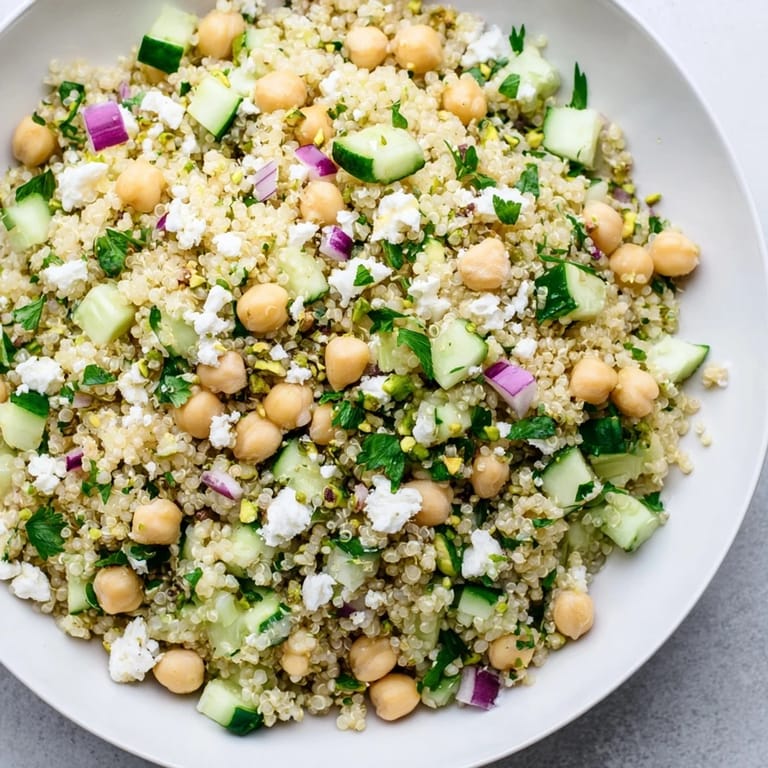
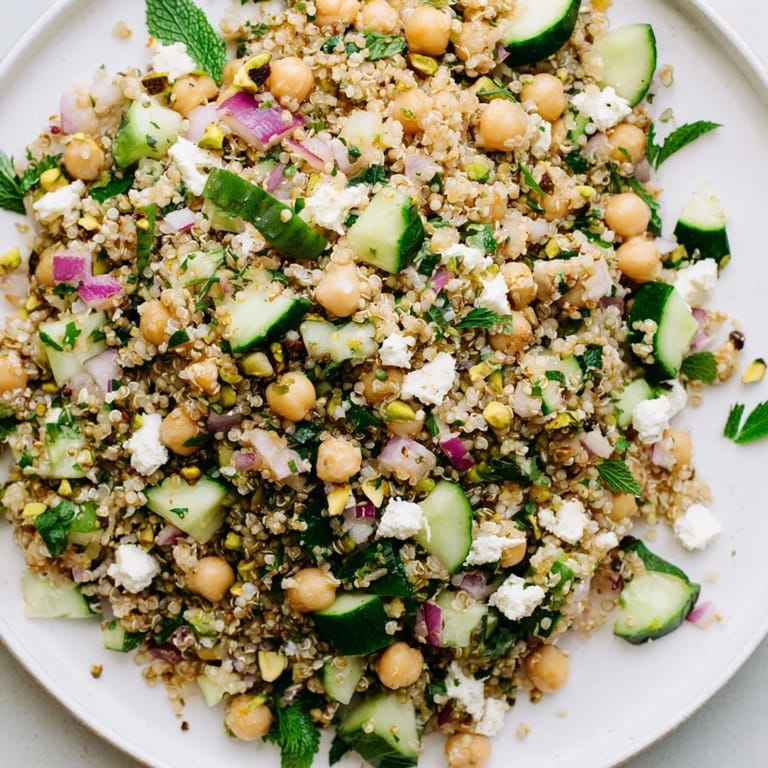
- In your largest bowl, combine the cooled grain, rinsed chickpeas, diced cucumber, red onion, crumbled feta, parsley, mint, and toasted nuts. Toss it gently a few times to distribute everything evenly, but don't go overboard or you'll break up the feta into sandy bits.
- Make the dressing:
- In a smaller bowl, whisk together the olive oil, fresh lemon juice, minced garlic, salt, and pepper until it looks emulsified and tastes bright. Taste it straight from the spoon—it should make your mouth water, not pucker.
- Bring it all together:
- Pour the dressing over the salad and toss everything gently until every piece is kissed with olive oil and lemon. Give it a taste and adjust the salt or lemon if something feels off.
- Serve and enjoy:
- You can eat it immediately at room temperature, or chill it for an hour and serve it cold; both versions have their own appeal.
 Save to Pinterest
 There's a memory of making this for someone I was trying to impress, and instead of overthinking it, I just focused on the simplicity of it—good ingredients, good technique, nothing pretentious. They came back for seconds without asking what was in it, which felt like the highest compliment a salad could get.
Why This Salad Feels Special
What makes this salad different is that it doesn't apologize for being vegetarian or apologize for being simple. The chickpeas give you substance and protein, the quinoa or bulgur gives you the feeling of a real meal, and the herbs and lemon make sure nothing tastes like you're eating out of obligation. I've served it to people who claim they don't like salad, and they've been quiet long enough that I knew something was working.
Customizing It to Your Taste
The skeleton of this salad is solid, but the fun part is playing with what goes inside. Some seasons I'll add diced avocado if I have one that's just ripe, other times I'll throw in some sun-dried tomatoes if I'm feeling like something more intense. You could add grilled chicken or fish if you want it to feel like dinner, or keep it vegetarian and feel virtuous. The dressing is flexible too—you could swap the lemon for lime and suddenly it tastes like a whole different country.
Make It Your Own
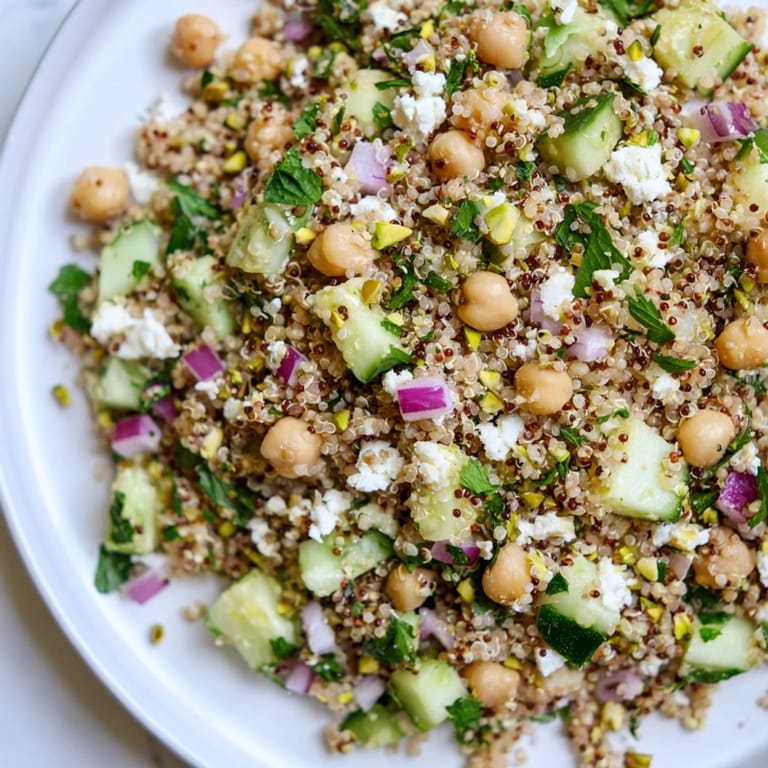
I've made this salad dozens of times now, and it still feels fresh because I keep changing small things based on what's in my kitchen or what I'm craving. One week it's walnuts instead of pistachios, another week I'll use dill instead of mint just to see what happens. The formula is flexible enough that you can't really mess it up.
- If dairy isn't your thing, cashew cream or tahini mixed with lemon water works beautifully in place of feta.
- Keep the nuts toasted in an airtight container and add them right before eating to preserve the crunch.
- Leftover salad tastes even better the next day once all the flavors have had time to get acquainted.
 Save to Pinterest
 This salad has quietly become the thing I make when I want to feel good about what I'm eating without feeling like I'm being punished for it. It's honest food that doesn't demand much but gives back everything.
Common Recipe Questions
- → Can I substitute quinoa with bulgur?
Yes, bulgur works well as an alternative to quinoa, providing a slightly nutty flavor and similar texture after cooking.
- → How should I store the salad after preparing?
Store the salad in an airtight container in the refrigerator. It stays fresh for up to 2 days and flavors meld nicely.
- → What nuts can I use for the toasted garnish?
Pistachios or slivered almonds add a delightful crunch, but walnuts or pecans are excellent alternatives.
- → Is it possible to make this dish vegan-friendly?
Omit the feta cheese or replace it with a plant-based alternative to keep it vegan while maintaining creaminess.
- → What herbs bring out the best flavors here?
Fresh parsley and mint provide bright, aromatic notes that complement the other ingredients wonderfully.
- → Can the salad be served warm?
While best served chilled or at room temperature, serving it slightly warm won't compromise its refreshing qualities.