 Save to Pinterest
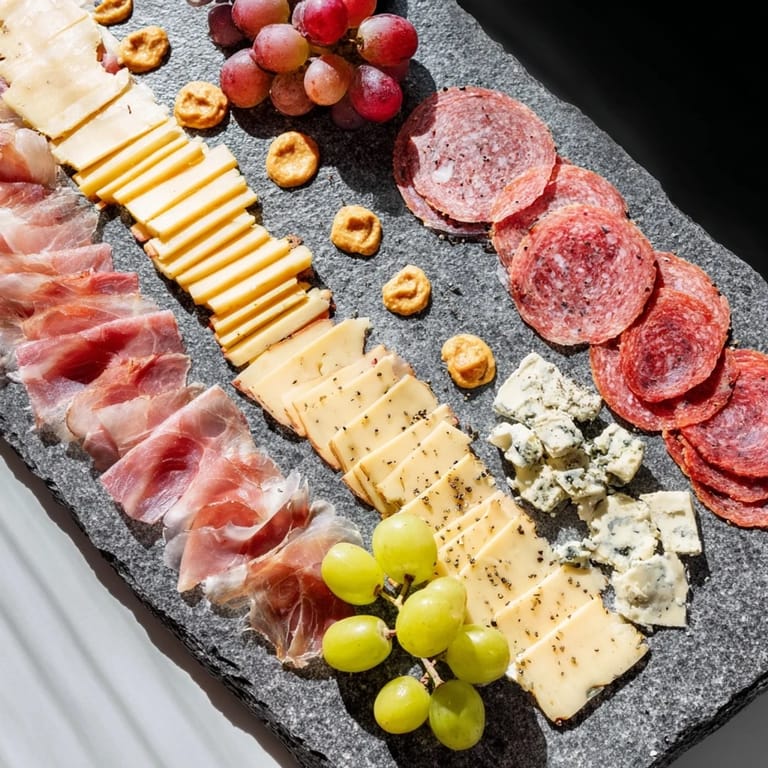
 There's something about laying out a charcuterie board that makes me feel like I'm curating an art installation instead of just putting food on a plate. A few years back, I showed up to a dinner party with a jumble of meats and cheeses scattered across a regular white platter, and a friend—the type who notices everything—leaned in and whispered, "Why not give this some architecture?" That comment stuck with me. Now when I arrange cured meats and aged cheeses in deliberate lines on a slab of slate, it transforms from casual snacking into something that commands attention the moment it hits the table.
I learned the power of this platter format when hosting a small group on a cold November evening. One guest—a photographer—arrived early and spent a solid five minutes just photographing the slate from different angles before anyone touched a thing. That moment of them seeing it as something worth capturing made me realize that presentation isn't vanity; it's part of the hospitality itself. The board stayed almost completely untouched for the first hour, which told me everything about how the visual appeal was doing the work.
Ingredients
- Smoked prosciutto: Its delicate, papery texture is what makes it sing on a slate—buy it sliced thin and let it curl slightly as it sits.
- Soppressata: This Italian cured salami has just enough fat and spice to anchor the board without overwhelming other flavors.
- Coppa: The most tender of the cured meats here, with a beautiful marbling that catches light.
- Mortadella: Its subtle garlic and peppercorn notes add complexity—slice it thick enough to hold its shape but thin enough to feel delicate.
- Aged cheddar: Look for something with a crystalline texture that suggests real aging; it's worth the extra cost because it tastes like butter and salt together.
- Manchego: Spanish and creamy, it bridges the gap between sharp and approachable—the cheese people who claim not to like cheese usually love this one.
- Gruyère: Its nuttiness keeps everything from feeling one-dimensional, and it's firm enough to slice without crumbling.
- Blue cheese: Use this sparingly—it should punctuate, not dominate, the board.
- Seedless red grapes: Their sweetness and slight tartness reset your palate between bites of meat and cheese.
- Cornichons: These tiny pickles are the ace up your sleeve; their acidity cuts through richness better than anything else.
- Whole grain mustard: A quality version with visible seeds adds texture and prevents the board from feeling too precious.
- Mixed olives: Choose a mix because the briny, funky notes play beautifully against the salty cured meats.
- Freshly cracked black pepper: This final garnish isn't decorative—it wakes up everything underneath it.
Tired of Takeout? 🥡
Get 10 meals you can make faster than delivery arrives. Seriously.
One email. No spam. Unsubscribe anytime.
Instructions
- Start with your canvas:
- Place your stone or slate slab on the table where it will live for the evening—moving it around after everything's arranged is a recipe for chaos. If you have time, chill the slate in the fridge for 20 minutes beforehand; cold stone keeps everything fresher longer.
- Build the meat lines:
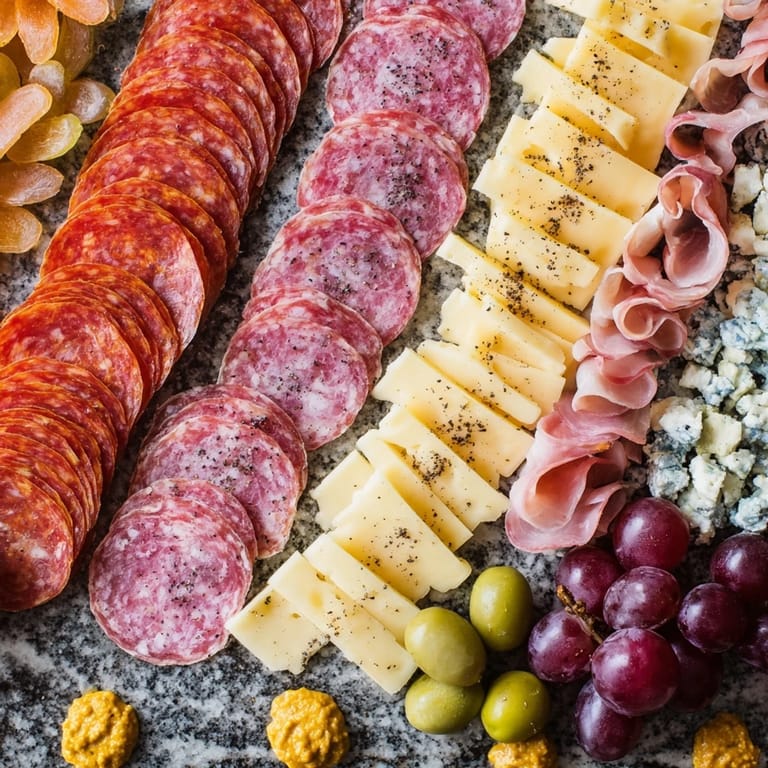
- On one half or one side of the slate, arrange each type of cured meat in its own parallel line, alternating which meat starts on the left so your eye doesn't get bored. The key is leaving enough space between lines so someone can actually extract a single piece without disturbing its neighbors.
- Create the cheese architecture:
- Mirror the meat arrangement on the other side with your sliced cheeses, keeping each variety in its own neat row. If you're using crumbled blue cheese, pile it gently into a small, intentional heap rather than scattering it.
- Fill the negative space:
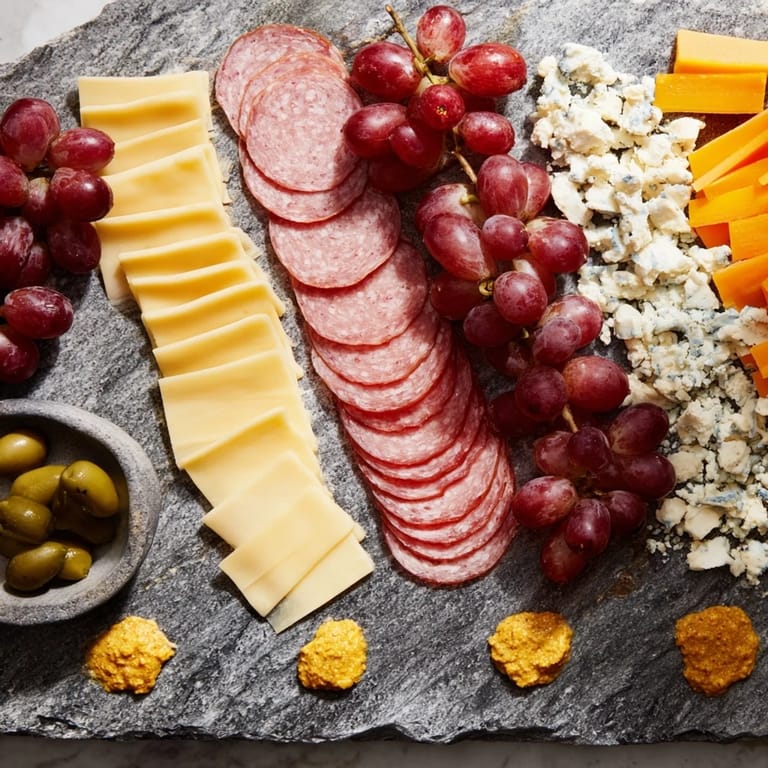
- Cluster small bunches of grapes, scattered cornichons, and your mixed olives in the gaps between meats and cheeses, letting them breathe rather than cramming every inch. This breathing room is what makes the whole thing feel modern instead of crowded.
- Add the mustard:
- Either pipe small, even dollops of whole grain mustard in a thin line, or place it in a tiny ramekin at one corner where people will find it naturally. The line approach looks more intentional; the ramekin approach is more practical.
- Finish and serve:
- Give everything a light, final sprinkle of freshly cracked black pepper—just enough so you can see it but not so much that it looks aggressive. Bring the slate to the table and watch people pause before they dig in.
 Save to Pinterest
 What surprised me most about this board was how it changed the entire rhythm of a gathering. People didn't just eat from it—they moved around it, discussed it, debated which cheese was which. It became a reason to linger, to talk, to notice flavors instead of just consuming. That's when I realized this wasn't really about food at all.
The Geometry of Appetite
There's something deeply satisfying about eating something that looks this considered. In our world of casual, deconstructed food, this board goes the opposite direction—it says someone thought about every angle, every visual moment. The slate isn't just a serving vehicle; it's making a statement about intention. When you eat something arranged this deliberately, you can't help but eat more slowly, more thoughtfully, and honestly, more happily.
Pairing and Company
I've learned that this board practically begs for wine—a crisp Sauvignon Blanc will cut through the richness like a knife, while a bold Cabernet Sauvignon will echo the deeper notes in aged cheddar and soppressata. But beyond wine, this board belongs in front of people who are actually talking to each other, not scrolling. It's an appetizer that works best when it's also a conversation starter, when guests arrive a little early and spend time just looking at it.
Variations and Flexibility
If you're feeding vegetarians or just want to shift the energy, swap the meats for marinated artichoke hearts, roasted almonds, and candied walnuts—the structure stays exactly the same, and honestly, the board gets a completely different personality. I've also played with adding a line of whipped ricotta, or substituting some of the olives for roasted chickpeas when I'm feeling experimental. The real lesson here is that once you understand the visual principle—straight lines, clear separation, intentional breathing room—you can swap almost any high-quality ingredient and it will work.
- Chill your slate in the fridge beforehand to keep everything fresher throughout the evening.
- Arrange components in parallel lines for that clean, modern aesthetic that makes the difference.
- Taste each cheese and meat first so you can describe them confidently when guests ask questions.
 Save to Pinterest
 This board taught me that sometimes the simplest dishes—the ones that require no cooking, no technique, just good taste and thoughtfulness—can be the ones people remember. It sits on the table like art, tastes like a celebration, and proves that you don't need a recipe or skill to make something memorable.
Common Recipe Questions
- → What types of meats are featured on the slate?
The slate includes smoked prosciutto, soppressata, coppa, and mortadella arranged in straight lines.
- → Which cheeses are used for this platter?
Aged cheddar, Manchego, Gruyère, and blue cheese complement the meats with sharp and creamy textures.
- → How should the ingredients be arranged?
Cold meats align in parallel lines on one side, cheeses mirror similarly opposite, with grapes, olives, and cornichons filling spaces between.
- → Can this platter be adapted for vegetarians?
Yes, omit the meats and substitute with marinated artichoke hearts and roasted nuts for variety.
- → Are there any allergen considerations?
The platter contains dairy and may include nuts if varied; some meats might have gluten—always check labels carefully.
- → What beverages pair well with this presentation?
Crisp dry whites like Sauvignon Blanc or bold reds such as Cabernet Sauvignon complement the flavors elegantly.