 Save to Pinterest
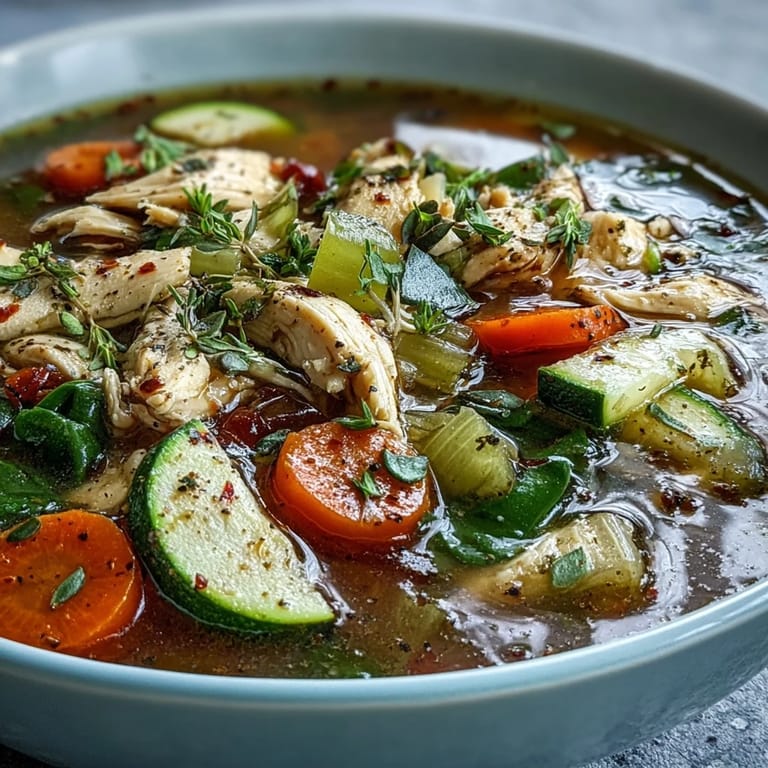
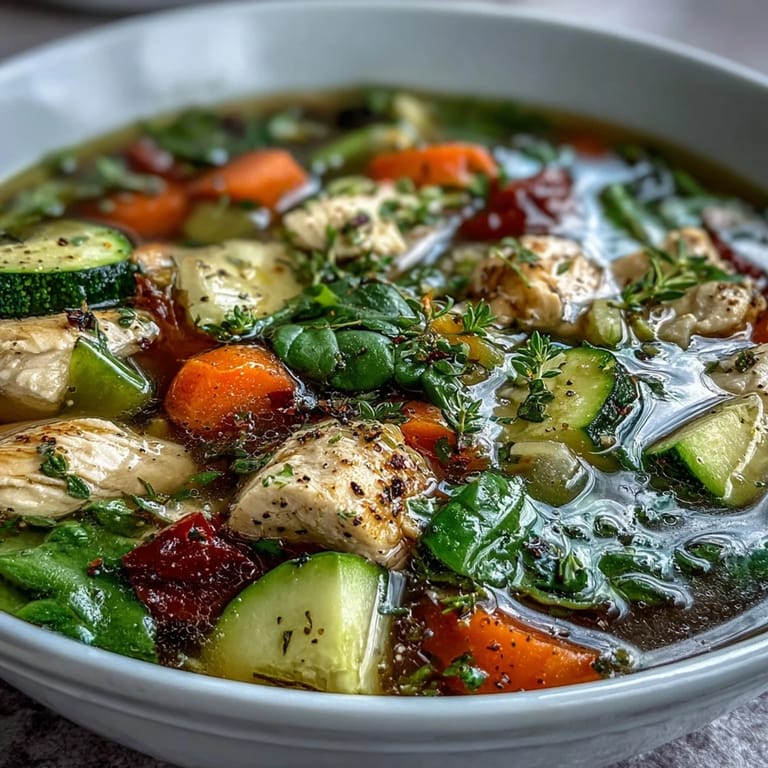
 The sound of onions sizzling in a big pot always reminds me that something comforting is on its way. Making this high protein chicken and vegetable soup became a little ritual on busy weeks when I wanted dinner to feel intentional, not just thrown together. Sometimes, I’d chop veggies while chatting on the phone or watching the rain outside, letting anticipation build as the colors piled up on the board. This is the kind of recipe that welcomes you with warmth before you even start cooking. Even with minimal fuss, it fills the kitchen with the promise of a soothing meal that hugs you from the inside out.
One blustery spring evening, I made this soup for friends who had just finished a long hike. We piled into my kitchen—muddy boots by the door, laughter echoing—and the simple act of stirring together chicken and vegetables turned into its own kind of gathering. Someone kept sneaking tastes with the ladle, declaring it “ready” a little too early, and by the time we sat down, even the steam rising from our bowls felt earned. It’s one of those moments that made the soup taste a bit better than usual, maybe because we’d all contributed in our own small, messy ways.
Ingredients
- Boneless, skinless chicken breasts: Lean protein that stays tender if you don’t overcook; I always cut them into bite-size pieces first for even cooking.
- Low-sodium chicken broth: Using a good broth makes the difference between bland and blissful soup, and the low-sodium version lets you control the salt.
- Carrots: These add a subtle sweetness and hold their shape nicely in the broth.
- Celery: Essential for that classic “soup base” flavor; slice thinly so it cooks evenly.
- Zucchini: Quick to soften, zucchini soaks up flavors—don’t skip it if you want a balanced texture.
- Green beans: Cut them short for easy spoonfuls and just-tender bites.
- Onion: Always sautéed first, it gives the broth a foundational depth.
- Garlic: I use fresh cloves for a more pronounced aroma; mince finely so it melts into the soup.
- Fresh spinach: Always stir this in last, since it wilts in just a minute or two and keeps its fresh green color.
- Dried thyme: This herb quietly boosts the chicken’s flavor.
- Dried parsley: Brings a brightness that balances all the veggies without overpowering them.
- Black pepper: Gives just enough kick without being obvious.
- Salt: Add gradually and taste as you go—especially if your broth is already seasoned.
Tired of Takeout? 🥡
Get 10 meals you can make faster than delivery arrives. Seriously.
One email. No spam. Unsubscribe anytime.
Instructions
- Sauté the aromatics:
- Heat your large pot over medium, add a splash of your broth, then toss in onion and garlic—stir until the kitchen smells irresistibly savory and the onion starts to soften.
- Cook the chicken:
- Add diced chicken, stirring occasionally, just until the pieces lose their pink color but aren’t browned—this keeps them juicy in the finished soup.
- Add the vegetables and herbs:
- Stir in carrots, celery, zucchini, green beans, thyme, parsley, salt, and pepper, coating everything with the lingering aroma from the pan.
- Pour in the broth:
- Add the rest of your chicken broth, give it all a big stir, and turn up the heat until the liquid bubbles to a boil.
- Simmer gently:
- Lower the heat and let the soup bubble gently, uncovered, for about 20-25 minutes until the vegetables are tender and the chicken is cooked through—taste the broth every now and then if you’d like.
- Add the spinach:
- Scatter in the chopped spinach and stir; it wilts fast in just a couple of minutes, turning a lovely green as it blends in.
- Do a final taste and serve:
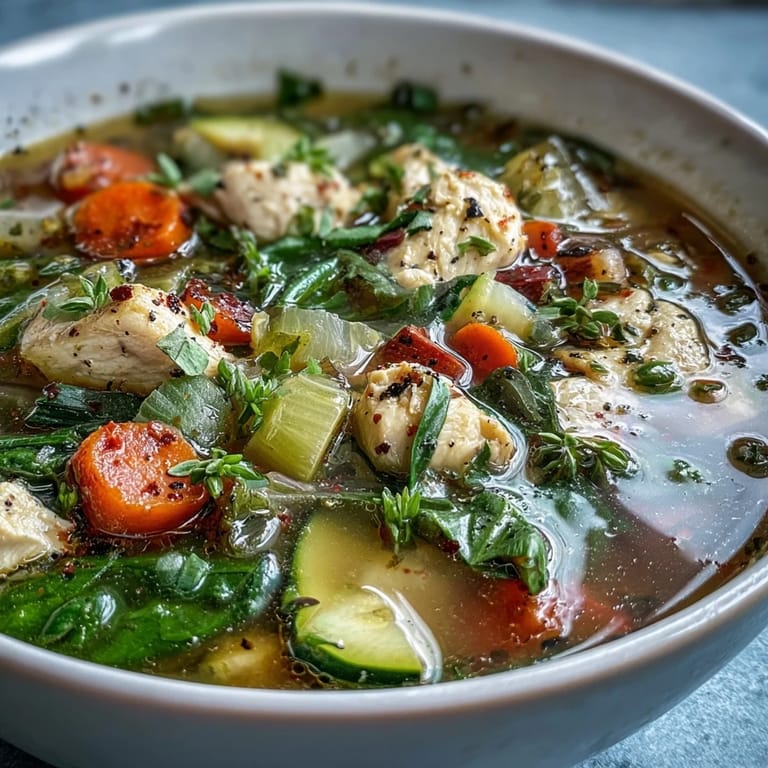
- Scoop up a spoonful to check for seasoning, adjust if needed, and then ladle the soup piping hot into your favorite bowls.
 Save to Pinterest
  Save to Pinterest
 The first time I made this soup on a random weekday, I ended up eating it straight from the pot, leaning against the counter as the steam fogged my glasses. I hadn’t expected that something so simple could taste so restorative, especially after a long, tired day.
Swapping and Substituting
There have been moments when I was missing green beans or had an extra handful of kale, and each swap brought its own little surprise. Chickpeas work surprisingly well if you’re looking to skip the chicken, though I’d add a bit more seasoning to make sure the flavor stays bold. Soup is forgiving by nature—just keep the proportions similar and let your taste be your guide.
Making It Ahead
I find this soup gets even better after a night in the fridge, since the flavors have more time to mingle. If you know you’ll be reheating, hold the spinach to add just before eating so it stays bright and fresh, not limp. Freezing portions works too, but add a splash of fresh broth when you reheat for best results.
Keeping the Soup Exciting
Sometimes I toss in a squeeze of lemon or a sprinkle of fresh parsley just before serving to shake things up. Adding a dash of hot sauce at the table lets everyone find their own level of warmth. No two batches have ever tasted exactly the same, and that’s half the fun.
- If doubling, use your biggest pot so vegetables don’t steam instead of simmering.
- A squeeze of citrus right before serving can liven up the flavors.
- Taste throughout the cooking process—you’ll know when it’s just right.
 Save to Pinterest
  Save to Pinterest
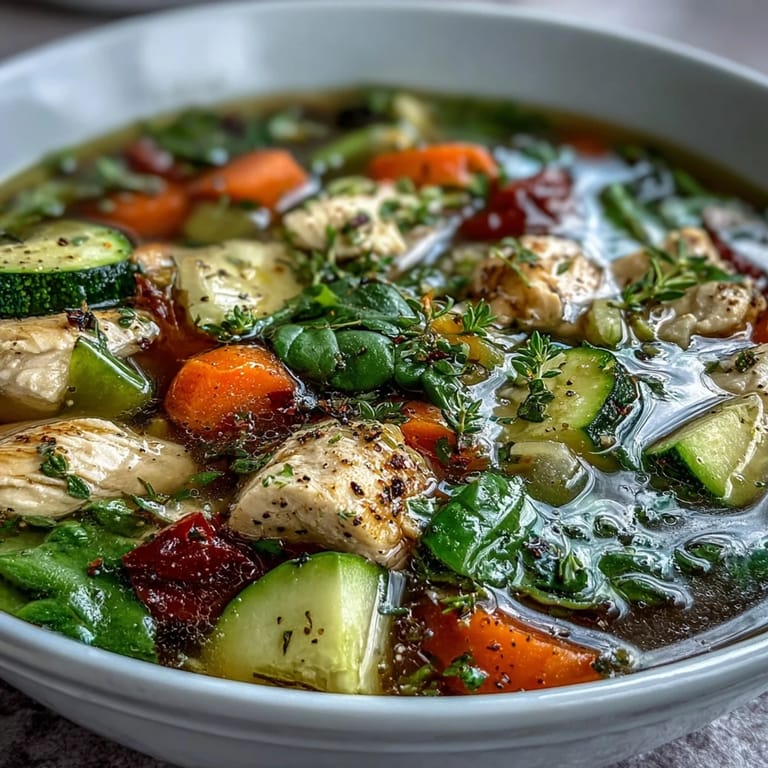
 This soup is as much about the little moments in the kitchen as it is about the bowl at the end. I hope it finds its way onto your table and offers you the warm satisfaction it’s given me.
Common Recipe Questions
- → How can I boost the flavor without extra calories?
Add a splash of lemon juice, extra herbs like fresh parsley or thyme, and a pinch of black pepper. A quick sauté of onion and garlic at the start builds savory depth without adding fat.
- → What are good protein swaps for chicken?
Use poached turkey breast, cubed firm tofu, or canned chickpeas for a vegetarian-forward protein option. Adjust simmer time for each substitute to avoid overcooking.
- → How long does the pot keep in the fridge?
Store in an airtight container for up to 3–4 days. Reheat gently over low heat to preserve texture, and add a splash of broth if it has thickened.
- → Can I make this ahead or freeze it?
Yes. Cool completely, then freeze in portions for up to 3 months. Thaw overnight in the fridge and reheat slowly; add fresh spinach or greens just before serving.
- → Any tips for keeping vegetables tender but not mushy?
Cut vegetables into uniform pieces and add longer-cooking ones (carrots, celery) first. Add quicker-cooking items like zucchini and spinach toward the end to retain texture.
- → How do I keep sodium low without losing taste?
Use low-sodium broth and boost flavor with aromatics (onion, garlic), herbs, fresh lemon, and a small amount of soy-free umami ingredients like mushrooms or a splash of fish sauce if suitable.