 Save to Pinterest
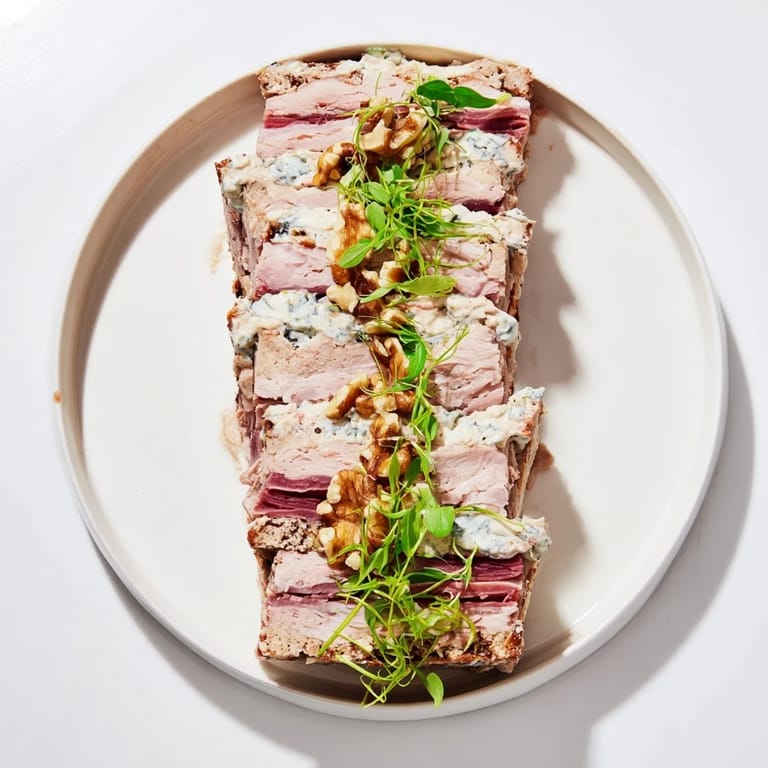
 The Grand Canyon Rim came to life one winter afternoon when I was flipping through a coffee table book of landscape photography. I got transfixed by a shot of the canyon at sunset, all those rust and amber layers stacked impossibly high, and thought: what if I could eat that? The idea of layered meats with a blue cheese river flowing through the middle felt absurd at first, but once I started sketching it out in my kitchen, I couldn't stop. Hours later, I had this elegant, architectural terrine that looked like geological time on a plate.
I made this for a dinner party where everyone arrived exhausted from the day, ready to just eat something simple. When I pulled it out and sliced through those layers, watching the blue cheese seam reveal itself with each knife stroke, the whole table went quiet. Someone said it looked like a geological map, and suddenly everyone wanted to know the story. That's when I realized food doesn't have to be complicated to feel profound.
Ingredients
- Beef sirloin, thinly sliced (300 g): The backbone of your terrine, lean enough to stay elegant but with enough structure to hold the layers without falling apart.
- Turkey breast, thinly sliced (250 g): Adds a lighter, milder note that keeps the terrine from becoming too heavy or one-note.
- Smoked ham, thinly sliced (200 g): This is your flavor anchor, bringing smokiness and saltiness that ties everything together.
- Pork loin, thinly sliced (200 g): Provides a subtle sweetness and silky texture that contrasts beautifully with the stronger meats.
- Blue cheese, crumbled (150 g): The star of the show, sharp and demanding in the best way, so don't skimp or substitute without intention.
- Cream cheese, softened (100 g): Smooths out the blue cheese without muting its personality, creating that river texture.
- Heavy cream (30 ml for mousse, 60 ml for binding): The secret to silky layers and a mousse that spreads without breaking.
- Fresh chives, finely chopped (1 tbsp): A whisper of onion flavor that lifts the whole terrine, so chop them just before using.
- Fresh parsley, finely chopped (1 tbsp): Brightness that cuts through the richness without announcing itself.
- Eggs (4 large): Your binding agent, whisked smooth with cream and milk to create a gentle custard that sets the layers.
- Whole milk (120 ml): Keeps the binding layer tender, not rubbery.
- Salt and black pepper: Don't shortchange these; season generously as you go because once it's chilled, you can't taste-adjust as easily.
Tired of Takeout? 🥡
Get 10 meals you can make faster than delivery arrives. Seriously.
One email. No spam. Unsubscribe anytime.
Instructions
- Set up your stage:
- Preheat the oven to 160°C. Line your loaf pan with plastic wrap, letting it hang over the edges like you're wrapping a gift. This will be your lifeline when you try to unmold later.
- Make the binding custard:
- Whisk together the eggs, milk, heavy cream, salt, and pepper until it's completely smooth. You want no egg white streaks hiding in there.
- Create the blue cheese river:
- Blend the blue cheese, cream cheese, and heavy cream until it's cloud-smooth and glossy. Fold in the chives and parsley gently so they stay visible as green flecks. Taste it and adjust pepper because this is your flavor accent.
- Begin the canyon walls:
- Start laying beef slices along one long side of the pan, overlapping them slightly like roof shingles. Think of one side as the sunrise cliff and the other as the sunset cliff.
- Build the slope:
- Layer turkey, then ham, then pork, angling them so they slope downward toward the center. Brush lightly with binding custard between every 2 or 3 layers to glue them together without making it wet.
- Pour the river:
- About halfway up the pan, spoon that blue cheese mixture in a river down the center. Don't overthink it; let it nestle into the meat layers naturally.
- Complete the canyon:
- Continue layering meats around and over the blue cheese, maintaining that slope. Finish with a cap of meat on top, then fold the plastic wrap over to seal everything in.
- Bathe it gently:
- Cover the pan tightly with foil. Set it in a roasting dish and pour hot water halfway up the sides. This bain-marie keeps everything moist and tender as it sets.
- Bake and cool:
- Bake for 1 hour 15 minutes until the custard is just set but still jiggles slightly when you shake the pan. Let it cool to room temperature before refrigerating at least 4 hours, preferably overnight.
- Unmold with confidence:
- Run a warm knife around the edges and flip onto a serving platter in one decisive motion. Slice thickly with a hot, wet knife to reveal those glorious layers.
 Save to Pinterest
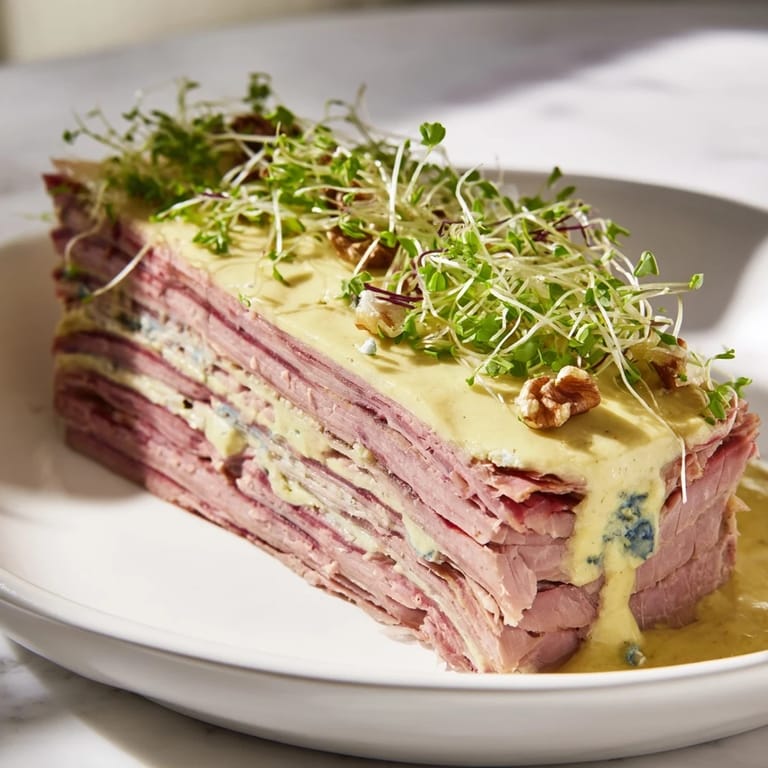
 The first time I unmolded this, I was terrified it would collapse or look nothing like the vision in my head. When I flipped it and saw those perfect striped layers with the blue cheese seam running through like a vein of turquoise, I actually stood there staring at it for a full minute. It's the kind of moment where cooking stops being about hunger and becomes about making something you're genuinely proud to serve.
Why the Layers Matter
Each meat brings its own voice to the terrine: beef for structure, turkey for mildness, ham for smoke, pork for sweetness. They shouldn't blend together into one homogeneous flavor. When someone cuts into this dish, they should taste each layer distinctly, the way your eye picks out each striation of the actual Grand Canyon. The blue cheese isn't a garnish; it's the storyleller, cutting through and reorienting your palate with every slice.
Serving and Pairing
This terrine feels fancy, but it's actually forgiving to serve. Slice it thick so the layers hold together, then let the platter sit at room temperature for 10 minutes before presenting. The cold butter-smooth slices warm up just enough to release their flavors. Serve alongside toasted brioche for richness, or crusty bread if you want contrast.
Wine and Sides
A crisp white wine cuts through the blue cheese and richness like nobody's business, though a light red also works beautifully. A simple green salad dressed with lemon vinaigrette keeps your palate fresh between bites, reminding you that even the most architectural dish benefits from a little green simplicity. This isn't a dish that needs a fussy side; it stands alone as the main event.
- Chill your serving platter in the freezer for 15 minutes before unmolding so the slices stay firm and beautiful.
- If the blue cheese river cracks when you slice, you'll know it got too cold; next time, let the terrine sit out 20 minutes before serving.
- Leftover slices taste even better the next day as the flavors meld, so don't hesitate to make this ahead for a party.
 Save to Pinterest
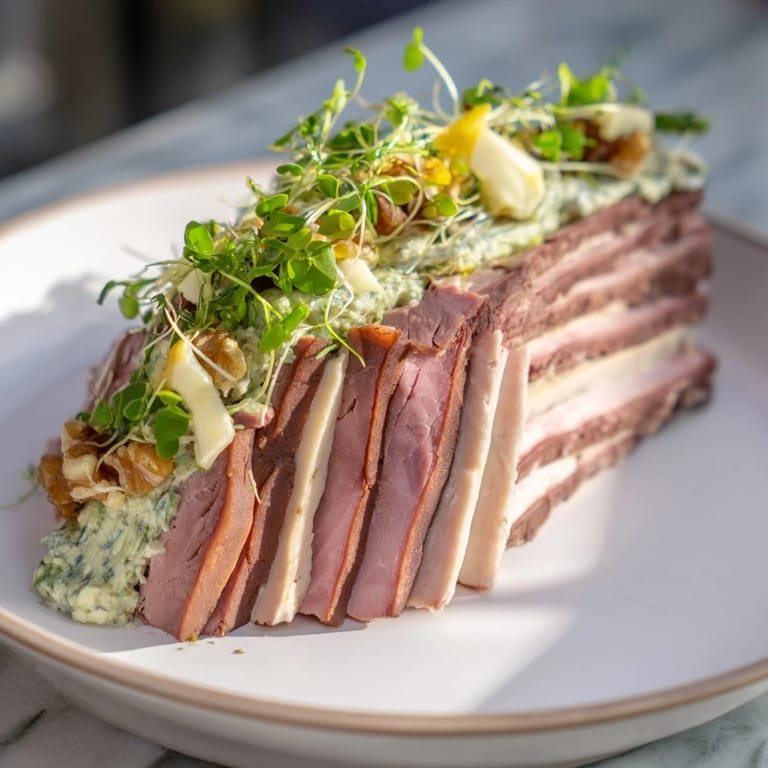
 This terrine is proof that food can be art without losing its soul. It impresses because it's genuinely delicious and visually stunning, not because it's fussy or pretentious.
Common Recipe Questions
- → What meats are used in this layered terrine?
Thinly sliced beef sirloin, turkey breast, smoked ham, and pork loin create the terrine's distinctive layers.
- → How is the blue cheese mousse prepared?
The mousse blends blue cheese, cream cheese, heavy cream, fresh chives, parsley, and black pepper for a smooth, flavorful filling.
- → What cooking method ensures even baking?
Using a bain-marie (water bath) during baking gently cooks the terrine, preserving moisture and texture.
- → How long should the terrine chill before serving?
Chilling for at least 4 hours, preferably overnight, allows the layers to set firmly and flavors to meld.
- → Can the garnish be customized?
Yes, microgreens, edible flowers, and toasted walnut pieces add freshness and crunch but can be adjusted to taste.
- → Are there alternatives to blue cheese in the mousse?
A herbed goat cheese can be used instead for a milder, yet still creamy and flavorful, mousse variation.