 Save to Pinterest
 I discovered Korean BBQ nachos by accident at a food truck pop-up, watching a chef layer crispy chips with bulgogi-style beef and melted cheese like they were composing edible art. The first bite was a revelation—that spicy-sweet gochujang kick hitting against cool cucumber and creamy melted mozzarella, all anchored by the satisfying crunch of tortilla. I spent three months trying to recreate it in my own kitchen, burning the beef twice and once getting way too heavy-handed with the gochujang before landing on this version. What emerged is a dish that somehow feels both casual and impressive, playful yet deeply flavorful. Now it's my go-to when I want something that looks like I spent hours cooking but barely takes 45 minutes.
I made this for a game night with friends who were skeptical about the Korean-nachos combination, and within five minutes the platter was half gone. One friend kept saying she couldn't eat just one chip, and I realized that's exactly what I was going for—food that demands to be devoured straight from the pan, standing up, probably talking with your mouth full. That's when I knew the recipe had worked.
Ingredients
- Flank steak or sirloin, thinly sliced: Thin slicing is everything here—it ensures the beef cooks through quickly and marinates deeply in that spicy gochujang mixture. I ask the butcher to slice it for me, which saves time and ensures even thickness.
- Gochujang (Korean chili paste): This is the soul of the dish, bringing umami depth and just enough heat without overpowering. Don't skip it or substitute with regular hot sauce—the fermented complexity matters.
- Soy sauce and sesame oil: These two create the savory backbone that makes the beef taste like restaurant-quality Korean BBQ.
- Brown sugar: A subtle sweetness that balances the spice and helps the marinade caramelize beautifully when the beef hits the hot skillet.
- Fresh garlic and ginger: Minced fine, these brighten the entire marinade and keep it from tasting flat or one-dimensional.
- Tortilla chips: Quality matters more than you'd think—flimsy chips will get soggy the moment cheese touches them. I look for thicker, sturdier brands that hold up to baking.
- Mozzarella and Korean cheese blend: Two cheeses create better texture and flavor than one alone. Korean cheese (usually a mozzarella-cheddar blend) adds a slightly different melt that creates pockets of golden richness.
- Red onion, carrot, cucumber, and scallions: These fresh vegetables add brightness and prevent the whole dish from feeling too heavy. The crispness is essential.
- Toasted sesame seeds: Buy them already toasted—they add nutty flavor and visual appeal in one small gesture.
- Kimchi: A spoonful of good kimchi adds fermented funk that ties everything back to Korean traditions.
- Fresh herbs and sriracha mayo: Cilantro or shiso leaves give aromatic lift, and a drizzle of spicy mayo ties all the flavors together with a creamy finish.
Tired of Takeout? 🥡
Get 10 meals you can make faster than delivery arrives. Seriously.
One email. No spam. Unsubscribe anytime.
Instructions
- Make the marinade and coat your beef:
- Whisk together gochujang, soy sauce, brown sugar, sesame oil, minced garlic, grated ginger, rice vinegar, and black pepper in a bowl. The mixture should smell intensely savory and slightly sweet. Add your thinly sliced beef and toss until every piece glistens with marinade—20 minutes is the minimum, but I often let it sit longer while I prep vegetables.
- Sear the beef until caramelized:
- Heat your skillet over medium-high heat until it's hot enough that a drop of water sizzles immediately. Working in batches so you don't crowd the pan, lay the beef flat and let it sear undisturbed for 2-3 minutes—this is where the flavor develops. You'll hear a satisfying sizzle and see the edges turn deeply brown before you flip.
- Layer your chip foundation:
- While the beef is cooking, preheat your oven to 200°C (400°F) and line a baking tray with parchment paper. Spread your tortilla chips in a single, slightly overlapping layer—don't be stingy here, but also leave no huge empty patches.
- Build the cheesy base:
- Sprinkle half your combined cheeses over the chips, distributing them evenly so each chip gets a chance at melted cheese. This first layer sets everything in place.
- Top with beef and remaining cheese:
- Once your beef is cooked through and caramelized, scatter it across the chips. Then add the remaining cheese on top—it will melt down and bind everything together.
- Bake until the cheese turns golden:
- Slide the tray into your hot oven for 6-8 minutes. You're watching for the cheese to bubble at the edges and turn a light golden brown. Pull it out too early and the cheese is just warm; pull it out too late and some chips start to burn.
- Add fresh toppings and serve immediately:
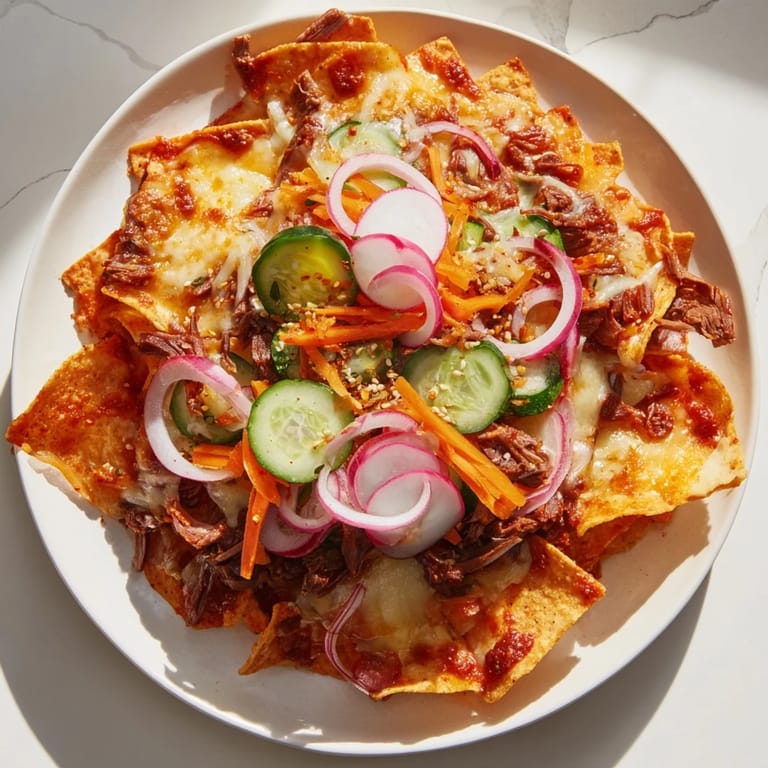
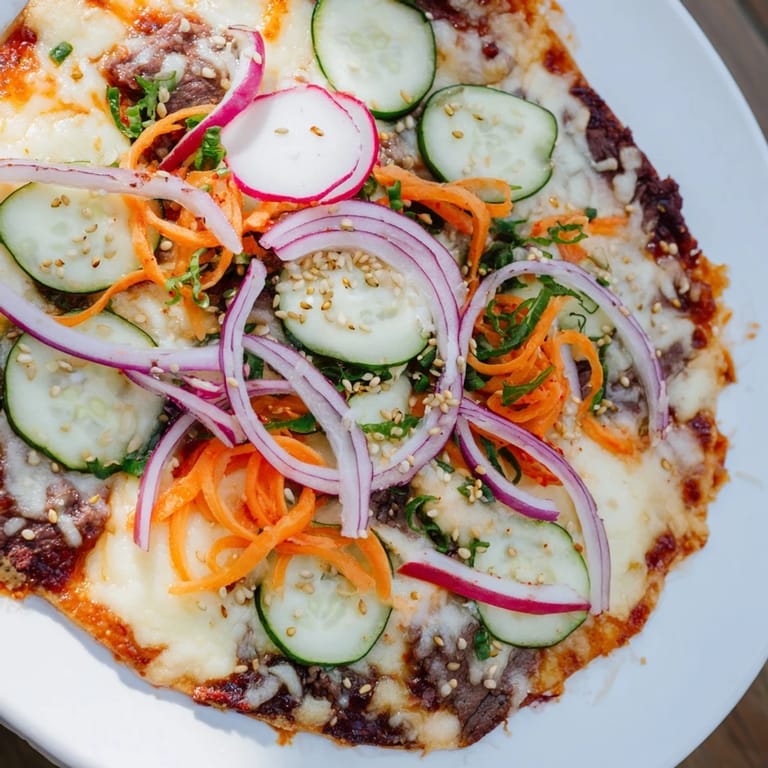
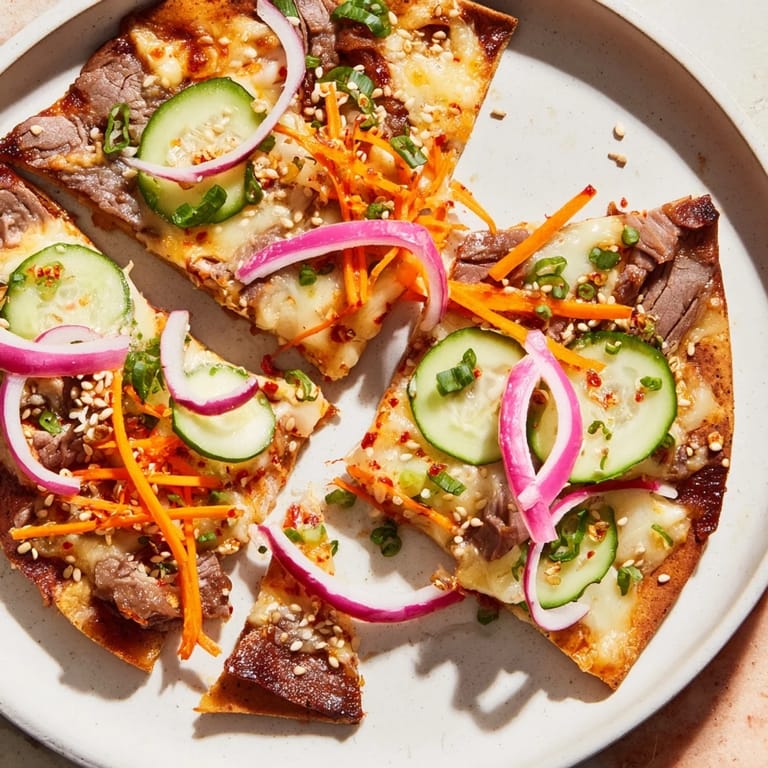
- Remove the hot tray and immediately scatter red onion, carrot, cucumber slices, scallions, sesame seeds, and any red chili across the top. The vegetables stay crisp and cool against the hot melted cheese. Top with chopped kimchi, fresh herbs, and a drizzle of sriracha mayo if you're using it, then serve straight from the pan with lime wedges on the side.
 Save to Pinterest
 The best moment with this dish comes when someone who thinks they don't like spicy food tastes it anyway and realizes the gochujang isn't actually that hot—it's just deeply, richly flavorful in a way they didn't expect. That moment of pleasant surprise is why I keep making it.
Why This Works as a Hybrid Dish
Korean BBQ and nachos seem like they shouldn't belong together, but they're actually perfect partners. Both are built on the same principle: take a satisfying base (meat for Korean BBQ, chips for nachos) and pile on bold flavors, contrasting textures, and fresh elements that keep it feeling light despite all the richness. The Korean marinade brings umami depth and controlled heat, while the nacho format keeps things casual and shareable. It's the kind of fusion that works because both cuisines are already about flavor-stacking and textural contrast.
Making It Your Own
This recipe is forgiving in the best way. Swap the beef for grilled chicken if you want something lighter, or use pressed and marinated tofu if you're cooking for vegetarians—marinate it the same way and sear it just as carefully. You can add avocado slices, pickled radish, or pickled jalapeños for extra brightness and tang. Some nights I add a fried egg on top for richness, and other times I keep it austere and let the core flavors shine. The only thing I'd never compromise on is using a good quality tortilla chip that won't turn to mush.
Serving and Pairing Ideas
Serve this straight from the baking tray while everything is still warm and the cheese is still bubbling—transfer it to a serving platter only if you're feeling fancy. Cold soju is the traditional Korean pairing, but a crisp lager or even light pilsner works beautifully. I've also served it with a very cold, slightly sweet riesling that cuts through the richness without competing with the spice.
- Make individual portions on smaller trays if you're serving a crowd and want people to grab fresh ones as they cool down.
- Have sriracha mayo, gochujang mayo, or even a simple lime crema on the side so people can add more spice if they want it.
- Prepare all your fresh toppings ahead of time in small bowls, and don't add them to the hot chips until you're ready to serve.
 Save to Pinterest
 This is comfort food that doesn't apologize for being bold and flavorful, served in a way that invites people to eat with their hands and talk with their mouths full. That's the whole point.
Common Recipe Questions
- → What cut of beef works best for marinating?
Flank steak or sirloin thinly sliced is ideal for quick marination and tender texture when seared.
- → Can I substitute the beef with other proteins?
Yes, grilled chicken, tofu, or marinated mushrooms make great alternatives while maintaining rich flavors.
- → What cheeses are recommended for melting?
A blend of shredded mozzarella and Korean-style cheeses like mozzarella-cheddar creates a creamy, melty topping.
- → How do the fresh vegetables contribute to the dish?
Julienned carrot, thinly sliced cucumber, red onion, and scallions add crisp texture and refreshing contrasts.
- → What optional toppings enhance the flavor?
Chopped kimchi, fresh cilantro or shiso, sriracha or gochujang mayo, and lime wedges provide bursts of tang and spice.
- → Is this dish suitable for vegetarians?
Using marinated mushrooms or jackfruit with vegetarian chips creates a flavorful plant-based version.