 Save to Pinterest
 My neighbor showed up one evening with a bag of chips and this bewildered expression, asking if I could help her figure out what was wrong with her onion dip. Turns out she'd rushed the caramelization and ended up with pale, stringy onions that tasted more sharp than sweet. That's when I realized how many people skip the crucial patience part of this recipe, treating caramelized onions like a 10-minute task when they really deserve a slow, unrushed 30 minutes on the stove. Once I walked her through it again, watching those golden layers develop, she understood the magic.
I made this for a potluck once where someone specifically requested a vegetarian dip, and I watched this usually quiet coworker demolish half the bowl while telling stories about his grandmother's cooking. He said it reminded him of bistro food from a trip to France, which kind of floored me because I was just mixing yogurt and onions in my kitchen. Sometimes a simple dish connects people to memories you'll never fully know about, and that's when you realize food is doing something beyond just tasting good.
Ingredients
- Large yellow onions (2, thinly sliced): Yellow onions have more natural sugars than white or red varieties, which is exactly why they caramelize into that deep amber sweetness—don't substitute with sweet onions or you'll oversimplify the flavor.
- Unsalted butter (1 tbsp): The butter adds richness that pure oil can't achieve, and it helps those onions develop a more complex golden-brown color.
- Olive oil (1 tbsp): This keeps the butter from burning at lower temperatures and adds a subtle grassy note that balances the sweetness.
- Salt and sugar (1/2 tsp each, sugar optional): Salt draws moisture from the onions and speeds caramelization, while a pinch of sugar accelerates browning if you're impatient (though patience still wins).
- Plain Greek yogurt (2 cups, whole or 2%): Go with full-fat if you can—the creaminess is worth it, and the tanginess prevents the dip from tasting one-dimensional.
- Mayonnaise (1/2 cup): This isn't just filler; it's the ingredient that makes the texture luxurious and gives the dip staying power on a chip.
- Worcestershire sauce (1 tsp): One teaspoon feels small, but it's doing heavy lifting by adding umami depth and a whisper of something you can't quite place.
- Garlic powder and onion powder (1 tsp and 1/2 tsp): These concentrate flavors without making the dip watery like fresh garlic or onion would, and they fill in gaps you didn't know existed.
- Freshly ground black pepper (1/4 tsp): Fresh grinding makes a real difference here—pre-ground loses its snap and won't give you those little flavor bursts.
- Fresh chives (1 tbsp plus garnish): They add a gentle onion note that echoes the caramelized base without overpowering it, and the bright green looks intentional.
- Fresh lemon juice (1 tbsp): This lifts everything and keeps the dip from feeling too heavy; it's the reason people can eat it without feeling sluggish afterward.
Tired of Takeout? 🥡
Get 10 meals you can make faster than delivery arrives. Seriously.
One email. No spam. Unsubscribe anytime.
Instructions
- Melt your butter and oil, then add the onions:
- Pour the butter and olive oil into a large skillet over medium heat and let them get acquainted for a minute. Add your thinly sliced onions, the salt, and sugar if you're using it, stirring everything to coat.
- Let the magic happen slowly:
- This is where most people fail—they crank the heat or stop stirring and wonder why their onions taste sharp. Keep the heat at medium, stir every few minutes, and watch as they gradually transform from bright white to pale gold to deep caramel, which takes 25 to 30 minutes. The kitchen will smell incredible and you'll understand why French bistros obsess over this step.
- Watch for the deep color, not the clock:
- You're looking for a rich mahogany-brown color, not just any brown. If the edges start to look black, turn the heat down immediately. When they finally look like they've been slow-cooked for hours, taste a piece—they should taste sweet, jammy, and nothing like raw onion.
- Cool those onions down:
- Spread them on a plate or let them sit in the skillet for 10 or 15 minutes so they're room temperature by the time you fold them in. This prevents them from warming up your yogurt mixture and affecting the texture.
- Mix your creamy base:
- In a separate bowl, combine the Greek yogurt, mayonnaise, Worcestershire sauce, garlic powder, onion powder, black pepper, chives, and lemon juice. Stir until everything is evenly distributed and you don't see any streaks of unmixed powder.
- Fold in the cooled onions gently:
- Chop the caramelized onions into smaller pieces first so they're distributed throughout rather than sitting in chunks. Use a spatula to fold them into the yogurt mixture carefully, trying not to overmix—you want the dip to stay creamy, not become dense.
- Taste, adjust, then refrigerate:
- Take a bite and ask yourself if you want more salt, more lemon, or more Worcestershire. Trust your palate here because flavors can taste different once they've been chilled, and you want to be happy with it before serving. Cover and refrigerate for at least an hour so the flavors settle and get to know each other.
- Garnish and serve with fanfare:
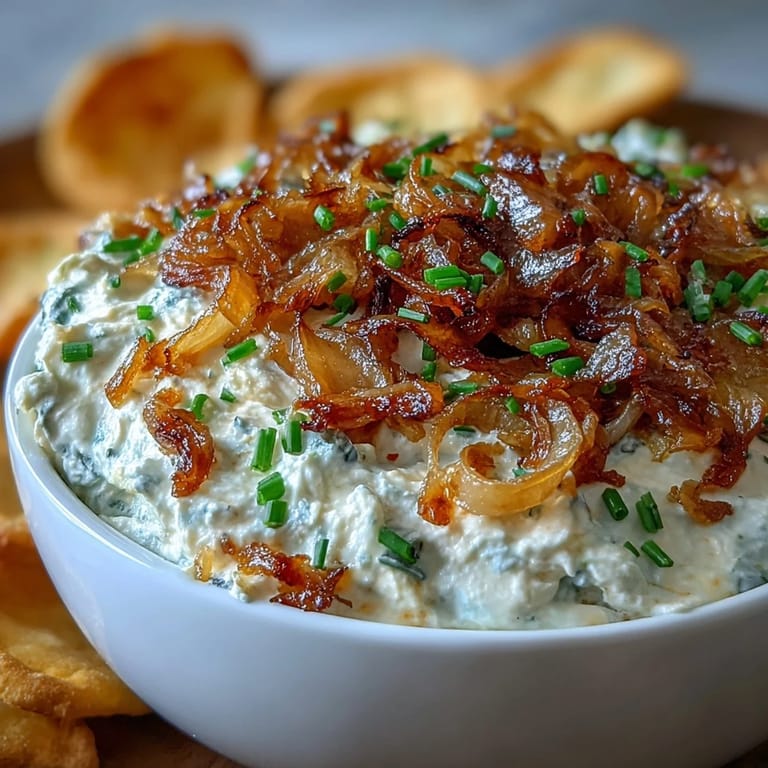
- Just before serving, sprinkle fresh chives on top and set it out with potato chips, crackers, or vegetable sticks. Watch people come back for second and third servings and try not to look smug.
 Save to Pinterest
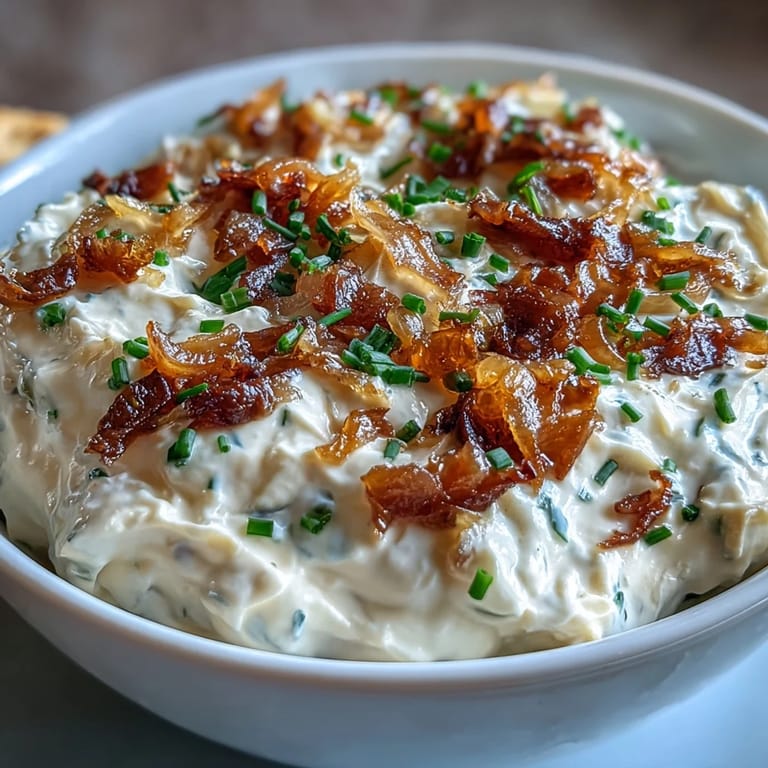
 There's something about serving this dip that makes even casual gatherings feel a little fancier than they are. A friend once said it tasted like someone actually cared about the snack situation, and I realized that's exactly what slow-cooked onions do—they signal that you took time for something small, and people feel that.
The Caramelization Patience Game
Caramelization isn't about heat, it's about time and stirring. When you rush it with high temperatures, you're essentially burning the onions and creating bitter, burnt-tasting results instead of that magical sweet development you're after. I used to think a hotter skillet meant faster caramelization until I compared batches side by side—medium heat with patience absolutely wins. The onions on high heat were done in 15 minutes but tasted harsh and thin, while the medium-heat batch took 30 minutes and tasted like liquid gold. Keep that heat moderate, stir occasionally so nothing sticks, and enjoy watching the transformation happen.
Greek Yogurt versus Sour Cream versus Mayo
Using Greek yogurt as your base instead of all sour cream or all mayo is what makes this dip feel modern and lighter while still delivering creaminess. Sour cream alone would be too sharp and would break down the onion flavors, while mayo alone would be heavy and one-dimensional. The combination gives you tang from the yogurt, richness from the mayo, and they work together to create something that tastes intentional. You could swap in some of these if you're out of something, but the Greek yogurt is really the backbone that makes this recipe sing.
Flavor Depth and Why These Seasonings Matter
The garlic powder and onion powder might seem redundant when you already have caramelized onions, but they're actually creating background depth that makes people say the dip tastes familiar even though they can't place what it is. The Worcestershire sauce is the secret weapon—it adds umami and a subtle savory complexity that transforms the dip from tasting like just yogurt and onions into something restaurant-quality. Fresh lemon juice is the final touch that prevents the whole thing from feeling heavy, and chives add a fresh note that echoes back to the onion theme.
- Taste constantly while assembling, because Greek yogurt brands vary in tanginess and you might need to adjust the lemon juice accordingly.
- Fresh chives make an enormous difference in the final presentation, so don't skip them as a garnish even if they seem optional.
- This dip tastes even better the next day, so consider making it ahead and letting it meld overnight if you have the time.
 Save to Pinterest
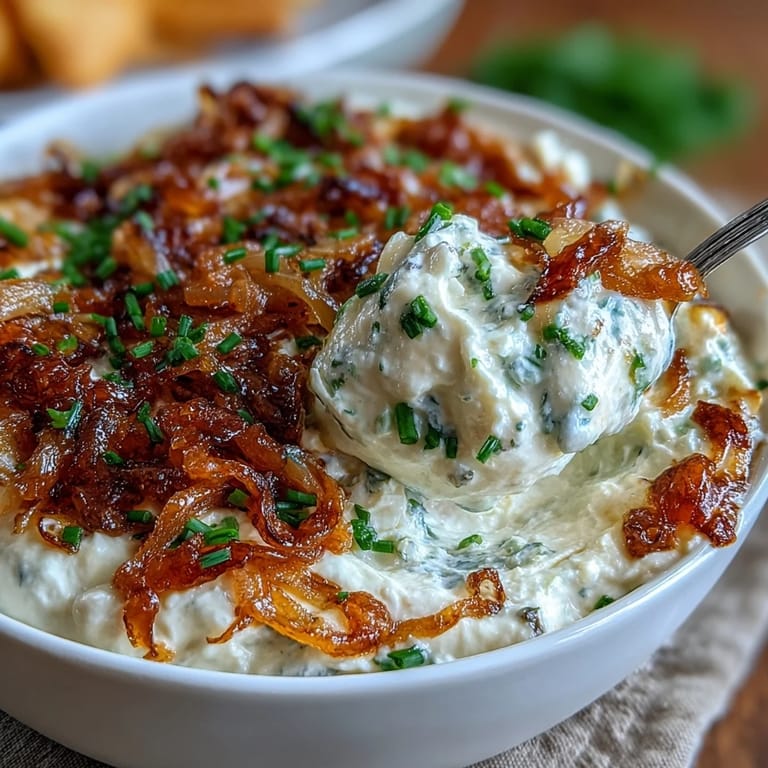
 This dip has become the reason people ask me to bring something to gatherings, and honestly, I'll never get tired of that. It's simple enough to feel casual but tastes like you spent all afternoon thinking about your guests.
Common Recipe Questions
- → How do I caramelize onions properly?
Use medium heat with butter and oil, stirring frequently to avoid burning. Cook onions slowly for 25–30 minutes until deeply golden and sweet.
- → Can I use low-fat yogurt in this dip?
Yes, low-fat Greek yogurt works well and creates a lighter texture without sacrificing flavor.
- → What can I use instead of mayonnaise?
For a lighter option, reduce mayonnaise or substitute with Greek yogurt or a plant-based alternative.
- → How should I store the dip?
Keep refrigerated in a covered container for up to 3 days to maintain freshness and flavor.
- → Can I add herbs to customize the flavor?
Absolutely, fresh chives are used here but substituting scallions or parsley can add different aromatic notes.
- → Is this dip suitable for gluten-free diets?
Yes, all ingredients are naturally gluten-free, making it safe for gluten-sensitive individuals.