 Save to Pinterest
 One August afternoon, my friend showed up at my door with a bag of fresh vegetables and a craving for something cold. We stood in my kitchen, sweat dripping down our faces, and she said, "Make something with noodles that won't heat up the apartment." That's when I started playing with tahini and sesame oil, whisking together a sauce that smelled like toasted comfort. The first bowl we made together was a revelation—silky, tangy, with that perfect sesame nuttiness. Now whenever the heat makes cooking feel impossible, these noodles are my answer.
I made a huge batch of these for a picnic last summer, and someone asked if I'd bought them from a restaurant. That moment of realizing something I'd thrown together in my kitchen could hold its own against takeout—I still think about it. The noodles sat in a cooler, and even after a few hours, they stayed silky and tangy, somehow tasting even better as the flavors deepened.
Ingredients
- Wheat noodles or spaghetti (350g): Any long, thin noodle works here—I've used fresh ramen, dried spaghetti, even rice noodles on nights when that's what I had in the pantry.
- Sesame oil for tossing (1 tbsp): This is your secret to keeping noodles from clumping; regular oil won't give you that same fragrant, silky finish.
- Tahini or Chinese sesame paste (4 tbsp): Tahini is easier to find, but if you can track down Chinese sesame paste, the flavor is rounder and more intense.
- Smooth peanut butter (2 tbsp): This adds body to the sauce; it's not about tasting like peanuts, it's about that emulsified richness.
- Low-sodium soy sauce (3 tbsp): Low-sodium lets you taste the sesame instead of drowning in salt, and it gives you room to adjust seasoning at the end.
- Rice vinegar (2 tbsp): The brightness that cuts through the richness; white vinegar works in a pinch, but rice vinegar won't slap you awake quite as sharply.
- Honey (1 tbsp): A tiny touch of sweetness that rounds out all the savory and tangy notes without making anything taste dessert-like.
- Toasted sesame oil (1 tbsp): Use the dark, fragrant kind—it's completely different from regular sesame oil and worth keeping on hand.
- Garlic and ginger (2 cloves garlic, 1 tbsp ginger): Grate them finely so they disappear into the sauce and perfume every bite without sharp pieces.
- Chili oil (1–2 tsp, optional): Add heat only if you want it; the sauce is plenty satisfying without it, but it does add a warming finish.
- Cold water (3–5 tbsp): Start with less and whisk in more; the sauce should pour smoothly but coat the noodles like silk.
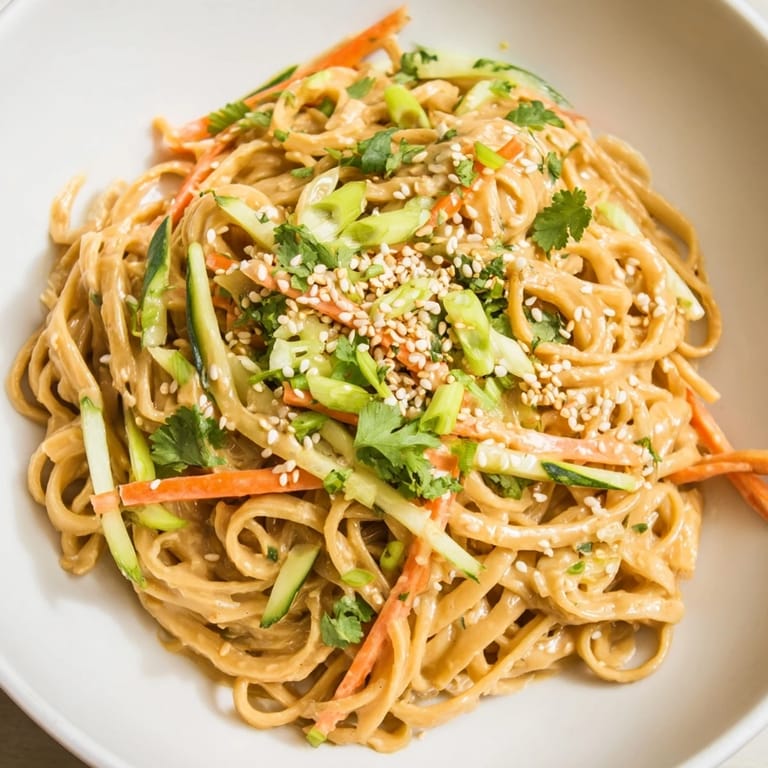
- Cucumber, carrots, spring onions: Julienne them thin so they stay crisp and add textural contrast to every bite.
- Sesame seeds, cilantro, peanuts, lime: These aren't garnishes—they're the texture and brightness that transform noodles into something alive.
Tired of Takeout? 🥡
Get 10 meals you can make faster than delivery arrives. Seriously.
One email. No spam. Unsubscribe anytime.
Instructions
- Boil and cool the noodles:
- Cook according to package timing, then drain and immediately rinse under cold running water, stirring gently with your fingers until they're completely cool and no longer steaming. Toss with sesame oil right away so each strand slides separately instead of clumping.
- Build the sauce:
- In a bowl, whisk tahini and peanut butter together first—they can be stubborn, so take a moment to break them down. Then add soy sauce, vinegar, honey, toasted sesame oil, garlic, and ginger, whisking until it's smooth and glossy.
- Adjust to silky perfection:
- Add cold water a tablespoon at a time, whisking between each addition until the sauce flows like silk but still clings to a noodle. Too thick and it coats unevenly; too thin and it just pools at the bottom.
- Bring it all together:
- Add the cooled noodles to the sauce and toss with both hands for a full minute, making sure every strand gets that silky coating. Don't rush this step—the noodles need time to absorb the flavor.
- Plate and crown:
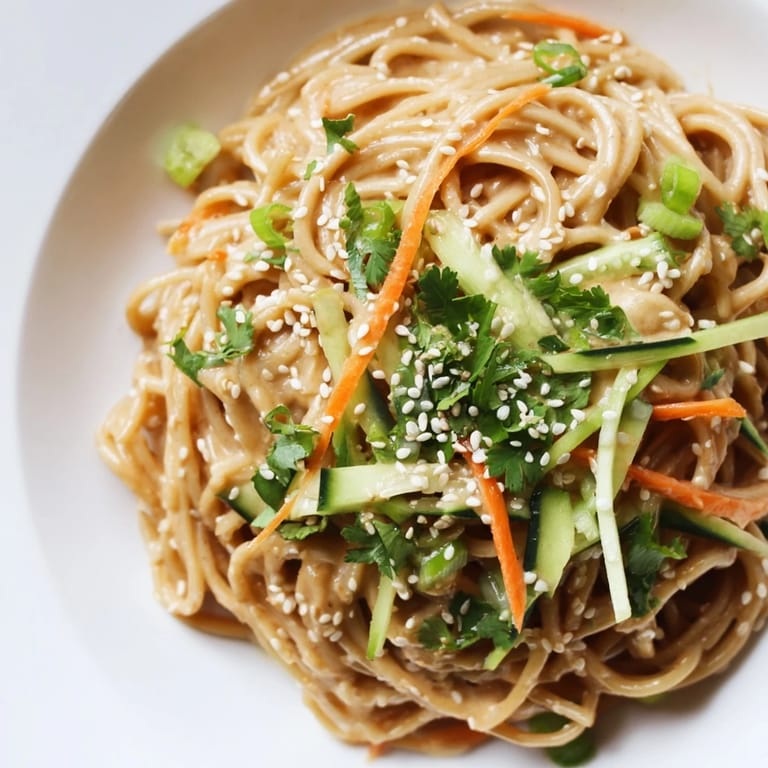
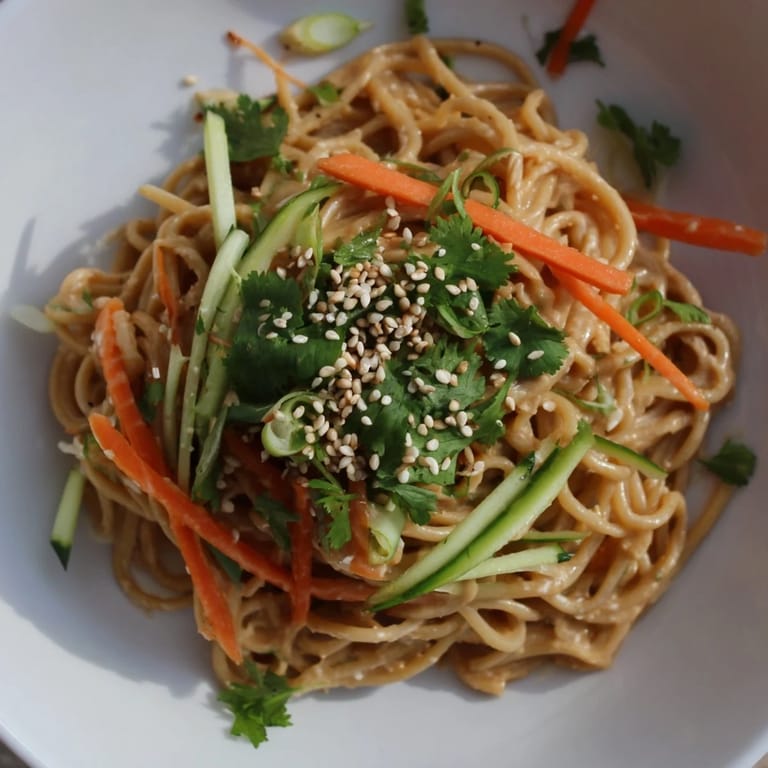
- Divide noodles into bowls and top with cucumber, carrots, and spring onions arranged in loose clusters so you get different textures in every bite. Scatter sesame seeds and cilantro on top, add a handful of peanuts if you like, and serve with lime wedges so people can squeeze in brightness to taste.
 Save to Pinterest
 A colleague brought leftovers to work and ate them while on a Zoom call, and I watched three people lean over asking where the food came from. She just smiled and kept eating, savoring it like it was something precious. That's when I understood that this recipe isn't just efficient—it's the kind of thing that makes people feel cared for.
Sauce Secrets That Actually Matter
The sauce is where this recipe lives or dies, and it's nothing fancy—just tahini, peanut butter, and aromatics whisked together with patience. I learned the hard way that mixing tahini straight into soy sauce creates little bitter clumps, so now I always whisk the oils and pastes together first, letting them become one creamy thing before anything else joins. That small shift changed everything about how smooth and welcoming the final sauce tastes. The sesame oil is not a supporting player; it's essential depth, so don't skip it or substitute.
Make-Ahead Magic
This is one of those rare recipes that actually improves overnight—the noodles continue drinking the sauce, and flavors deepen in a way that's almost suspicious. I've made it the morning of a picnic, packed it in a container, and arrived with something better than what I left the kitchen with. The vegetables stay crisp, the noodles never get mushy, and the sauce never breaks or separates. Just store everything in an airtight container in the fridge, and add the fresh cilantro and lime right before eating.
Variations and Celebrations
These noodles are a canvas—I've added shredded chicken on nights when I wanted more protein, swirled in a poached egg for richness, and once layered everything with crispy tofu because a houseguest was vegan. The core is bulletproof, so you can play with toppings without worry. Cucumber can become bell pepper, cilantro can become mint or basil, and the sauce can be thinned for a poured version or kept thick for a toss.
- Add shredded rotisserie chicken, crispy tofu, or even cooked shrimp for a protein-forward meal.
- Swap cilantro for fresh mint or Thai basil if that's what's calling to you.
- Thinly slice radishes or add a handful of shredded cabbage for extra crunch and bitterness to balance the richness.
 Save to Pinterest
 These noodles have become my answer to summer heat, to unexpected guests, and to nights when I want something that tastes like care without exhausting myself in the kitchen. There's something honest about them.
Common Recipe Questions
- → How do I prevent the noodles from sticking together?
After cooking, rinse noodles under cold water and toss with sesame oil to keep them separate and glossy.
- → Can I adjust the sauce thickness?
Gradually adding cold water to the sauce helps achieve the desired creamy yet pourable consistency.
- → What vegetables work best for this dish?
Julienned cucumber, carrots, and sliced spring onions provide freshness and crunch that complement the sesame sauce.
- → Are there protein options to add?
Try adding shredded cooked chicken, tofu, or shrimp to boost protein while maintaining flavor balance.
- → Can this be made gluten-free?
Use gluten-free noodles and tamari in place of soy sauce to accommodate gluten sensitivities.