 Save to Pinterest
 There's something almost meditative about watching onions transform in a hot pan, their sharp bite mellowing into something sweet and golden. I discovered French onion soup not in Paris, but in my grandmother's kitchen on a grey November afternoon when she pulled a bubbling pot from the oven and set it on the counter with the kind of satisfaction that comes from slow, patient cooking. The aroma alone made the wait worthwhile—caramelized onions, toasted bread, and melted cheese creating this harmony that somehow tasted like comfort itself. That day taught me that the best dishes aren't always complicated, just honest.
I made this soup for my partner during his first winter with me, and he sat at the table with a spoon halfway to his mouth, just staring at the bowl like he couldn't quite believe it was real. He kept saying "you made this?" between sips, and I realized then that sometimes the simplest gestures—a warm bowl of something that took time and attention—speak louder than anything else. Now whenever the temperature drops, he asks if we're having "that soup" again.
Ingredients
- 3 large yellow onions, thinly sliced: Yellow onions have the right balance of sweetness and savory depth when caramelized; don't rush the slicing, as even thickness helps them cook uniformly.
- 1 tablespoon unsalted butter and 1 tablespoon olive oil: The combination gives you butter's richness without the burning risk that comes from using it alone at higher heat.
- 2 cloves garlic, minced: Added near the end of caramelization so it doesn't turn bitter from sitting in the pan too long.
- 1 teaspoon sugar and 1/2 teaspoon salt: These trigger the Maillard reaction and draw moisture from the onions, accelerating caramelization without creating sourness.
- 1/4 teaspoon freshly ground black pepper: Freshly ground pepper has floral notes that pre-ground versions lose; this matters more than you'd think in a delicate soup.
- 2 tablespoons all-purpose flour: This is your thickener, creating body that makes the soup feel luxurious rather than watery.
- 1/2 cup dry white wine: The acidity cuts through richness and adds complexity; don't skip it or use cooking wine, which has added salt and preservatives.
- 1.2 liters beef or vegetable stock: Stock quality matters enormously here since there's nowhere for mediocrity to hide; homemade or high-quality store-bought makes all the difference.
- 2 sprigs fresh thyme and 1 bay leaf: These herbals add earthiness without overpowering; remove them before serving or they'll keep flavoring the soup indefinitely.
- 4 slices French baguette, about 1 inch thick: The bread is your foundation for the cheese topping, so use sturdy slices that won't disintegrate in the soup.
- 120 g Gruyère cheese, grated: Gruyère melts beautifully into thin threads and has a slightly nutty flavor that complements caramelized onions; avoid pre-shredded versions which contain anti-caking agents that prevent smooth melting.
Tired of Takeout? 🥡
Get 10 meals you can make faster than delivery arrives. Seriously.
One email. No spam. Unsubscribe anytime.
Instructions
- Melt your fats and start the onions:
- Combine butter and olive oil in a large pot over medium heat, letting them warm until the butter foams. Add your sliced onions all at once, stirring to coat them in the fat, and let them sit undisturbed for a few minutes so they begin to soften.
- Coax out the sweetness:
- Stir frequently for about 20 minutes until the onions turn translucent and begin releasing their moisture. About halfway through, sprinkle in the sugar and salt—these humble additions will deepen the caramelization by drawing out water and creating those deeply browned, almost mahogany-colored layers.
- Finish the caramelization:
- Continue cooking for another 15-20 minutes, scraping the bottom of the pot occasionally so nothing sticks or burns. You're waiting for the onions to transform into something almost jam-like, deeply golden and concentrated in flavor.
- Build flavor with aromatics:
- Add minced garlic and cook just until fragrant, about 1 minute—if you leave it longer it'll turn acrid and bitter. Sprinkle flour over the onions and stir constantly for 2 minutes, creating a light paste that will thicken your soup later.
- Deglaze with wine:
- Pour in the white wine while scraping the bottom of the pot with a wooden spoon, releasing all those caramelized bits that are now stuck to the surface. Those browned fragments hold incredible flavor, so don't skip this step.
- Build the broth:
- Pour in your stock slowly, stirring to dissolve the flour completely, then add the thyme sprigs and bay leaf. Bring everything to a simmer, then reduce heat to low and let it bubble gently for 20-25 minutes.
- Finish the soup:
- Remove and discard the thyme and bay leaf, then taste and adjust seasoning with pepper and additional salt if needed. The soup should taste rich and onion-forward, with a savory depth that wine and broth have created together.
- Toast the bread foundation:
- Arrange baguette slices on a baking sheet, brush both sides lightly with olive oil, and broil about 3-4 inches from the heat for 1-2 minutes per side until golden and crispy. Don't walk away—bread toasts fast under a broiler and can char in seconds.
- Assemble and finish:
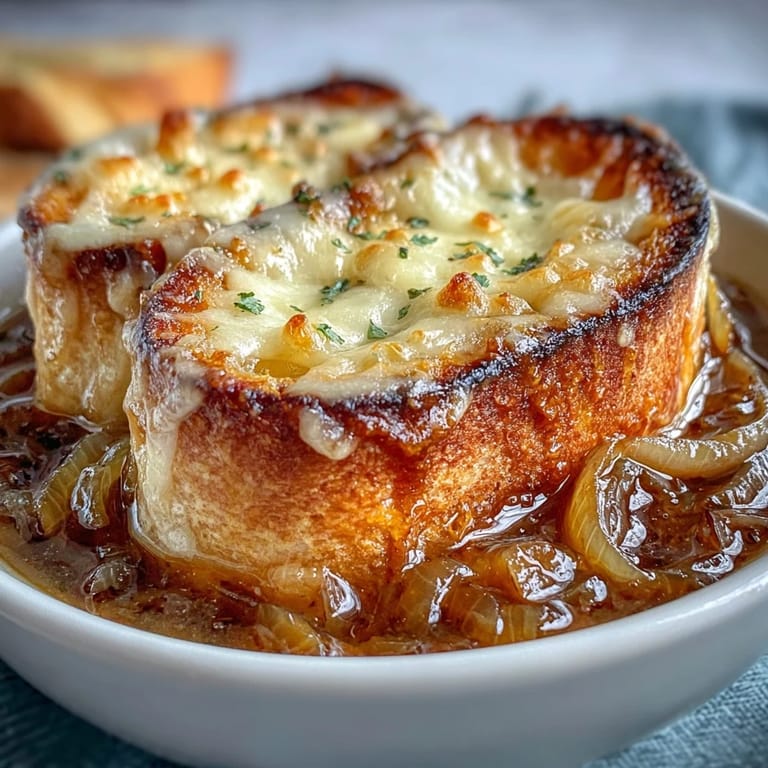
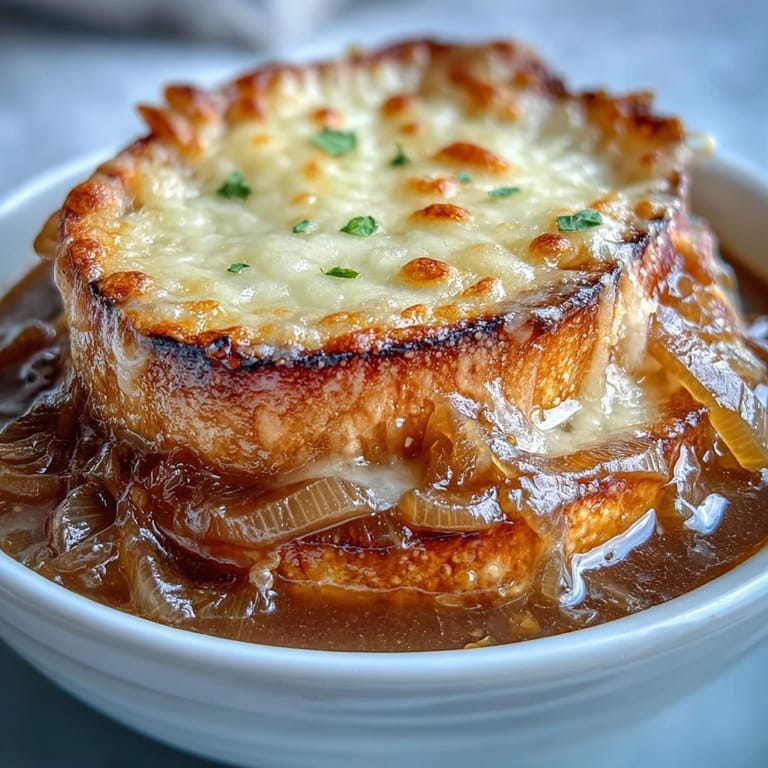
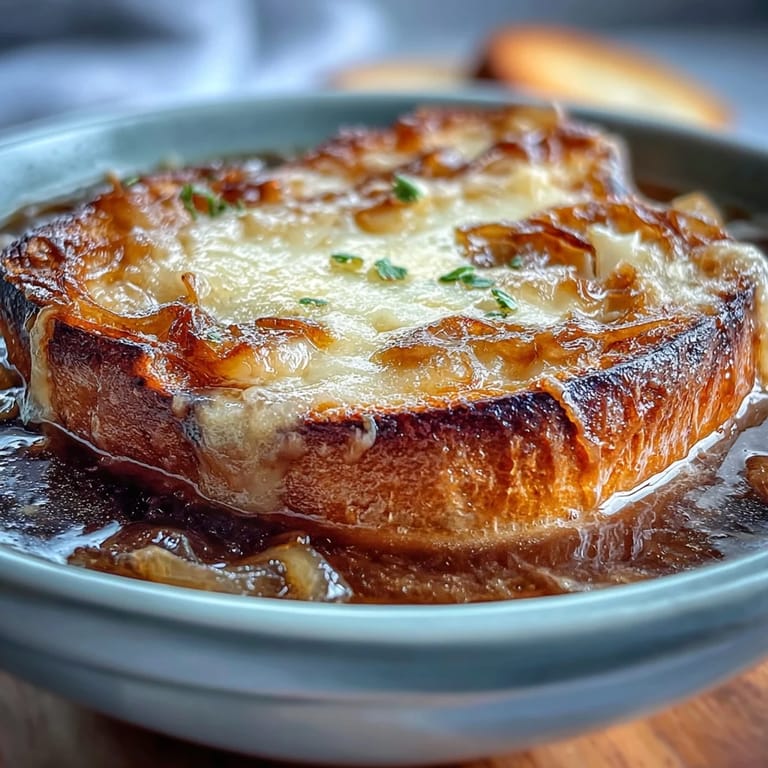
- Ladle hot soup into oven-safe bowls, then top each with a toasted bread slice and a generous handful of grated Gruyère cheese. Place the bowls on a baking sheet and broil for 2-3 minutes until the cheese is melted, bubbling, and golden brown on top.
 Save to Pinterest
 Years later, I realized that this soup taught me something beyond cooking: that transforming simple things through patience and attention creates something greater than the sum of its parts. Every time I make it now, I think about my grandmother's quiet certainty in that kitchen, and how she'd probably say something practical and wise about why this matters.
The Science of Caramelization
What's actually happening when you caramelize onions is chemistry at work—the sugars in the onions are breaking down and recombining into new compounds through the Maillard reaction, creating hundreds of new flavors and that deep brown color. This is why stirring matters and why time matters: the chemical reaction needs heat, moisture release, and repeated contact with the hot pan surface. I learned this lesson the hard way by trying to make quick caramelized onions with high heat, which just scorched them and tasted acrid instead of sweet.
Why Stock Quality Changes Everything
In soups with few ingredients, mediocre stock becomes immediately obvious because there's nowhere to hide it—the onions and herbs can't mask a thin, salty, one-note broth. I once made this with a store-brand beef bouillon cube because I was in a hurry, and the soup tasted metallic and flat, nothing like the version made with proper stock. Since then, I either make stock myself or choose brands that list actual bones and vegetables as ingredients, not salt and flavor compounds.
Cheese Choices and Variations
While Gruyère is traditional and melts beautifully into those perfect bubbly strings, you're not locked into it—Emmental brings a slightly sweeter nuttiness, Comté adds earthiness, and even aged Cheddar creates a different but equally delicious outcome. The key is choosing a cheese that melts smoothly and has some body to it; soft cheeses like mozzarella will slide off the bread or create an oily puddle rather than that gorgeous golden crust. I've experimented with all of these, and each brings something different to the table while honoring the soup's spirit.
- Add a splash of brandy or sherry with the wine for deeper, richer notes that feel almost luxurious.
- Make this vegetarian by using vegetable stock instead of beef, and the soup remains just as satisfying and flavorful.
- Toast your bread ahead of time if you're nervous about timing, then assemble and broil just before serving for maximum control.
 Save to Pinterest
 This soup reminds me that the best meals often come from restraint rather than complexity, and from giving yourself permission to slow down. Make this when you want to create something that tastes like it took more effort than it actually did, and watch the people you serve it to realize the difference between heating food and creating something with intention.
Common Recipe Questions
- → How do I get the onions properly caramelized?
Cook sliced onions over medium heat with butter and olive oil, stirring frequently. The process takes 35–40 minutes. Add sugar and salt halfway through to help browning. Patience is key—the onions should turn deep mahogany and develop a sweet, concentrated flavor.
- → Can I make this soup ahead of time?
Absolutely. The soup base actually improves after refrigerating overnight—flavors develop and deepen. Store the soup and toppings separately. When ready to serve, reheat the soup, toast the bread, and broil with cheese just before eating.
- → What cheese works best for topping?
Gruyère is traditional for its excellent melting properties and nutty flavor. Emmental or Comté make excellent French alternatives. For a different profile, try Swiss or provolone. Avoid pre-shredded cheese—freshly grated melts more smoothly.
- → Can I make this vegetarian?
Yes. Simply substitute vegetable stock for the beef stock. The caramelized onions provide so much depth that vegetable broth works beautifully. Use a high-quality stock with robust flavor for the best results.
- → Why add flour to the soup?
The flour helps create a slightly thicker, more velvety texture while also stabilizing the broth. Cooking it for 2 minutes after sprinkling removes the raw flour taste and ensures smooth incorporation into the liquid.
- → What type of onions should I use?
Yellow onions are ideal—they become sweet and mellow when cooked slowly. White onions work but are slightly sharper. Sweet onions can be used but may caramelize too quickly. Avoid red onions as they can discolor the final soup.