 Save to Pinterest
 My sister handed me a tub of cottage cheese and said, Trust me on this one. I was skeptical. Cottage cheese in a cheesecake sounded like a compromise I wasn't ready to make. But after one slice, I understood—it was creamy, rich, and somehow lighter than any traditional cheesecake I'd ever baked. The chocolate masked any tang, and the texture was so smooth no one could tell the difference.
I brought this to a potluck once, and my friend who usually avoids dessert had two slices. She kept asking what made it taste so light, and I just smiled. When I finally told her it was made with cottage cheese, she didn't believe me until I showed her the recipe. That moment made me realize how powerful a well-blended filling can be.
Ingredients
- Graham cracker crumbs: These form the base of your crust and add a slight sweetness that balances the cocoa, so pulse them finely for even texture.
- Coconut oil or melted butter: Coconut oil keeps it dairy-light, but butter adds a richer flavor if you're not concerned about that.
- Unsweetened cocoa powder (crust): This deepens the chocolate flavor right from the foundation and makes the crust feel more indulgent.
- Maple syrup (crust): Just a tablespoon binds everything together with a hint of natural sweetness.
- Low-fat cottage cheese: The star of the show, it must be blended until completely smooth or you'll end up with a grainy filling.
- Plain Greek yogurt: Adds tang and creaminess while boosting the protein even more.
- Eggs: These bind the filling and give it structure, so don't skip them or use substitutes unless you're experienced.
- Granulated sugar or sweetener: You can use regular sugar, coconut sugar, or a sugar substitute depending on your preference.
- Unsweetened cocoa powder (filling): This is what makes it a chocolate cheesecake, so use good quality cocoa for the best flavor.
- Vanilla extract: A little goes a long way in rounding out the chocolate and adding warmth.
- Cornstarch: Helps the filling set without being too dense or cracking on top.
- Dark chocolate chips (melted): These add richness and a glossy finish to the filling, so let them cool before mixing in.
- Greek yogurt (topping): Optional but lovely, it mimics sour cream without the extra fat.
- Honey or maple syrup (topping): Sweetens the yogurt topping just enough to complement the chocolate below.
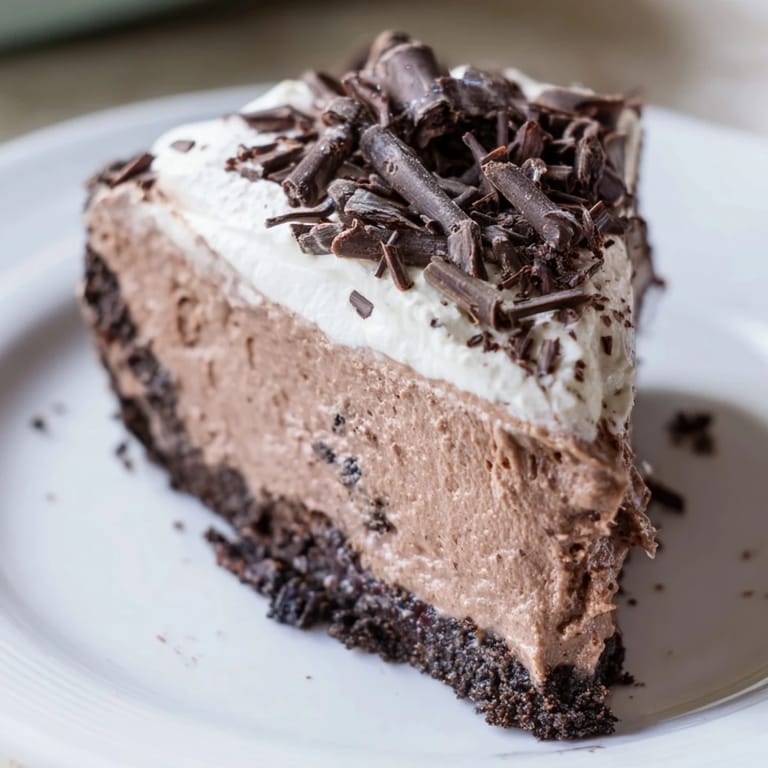
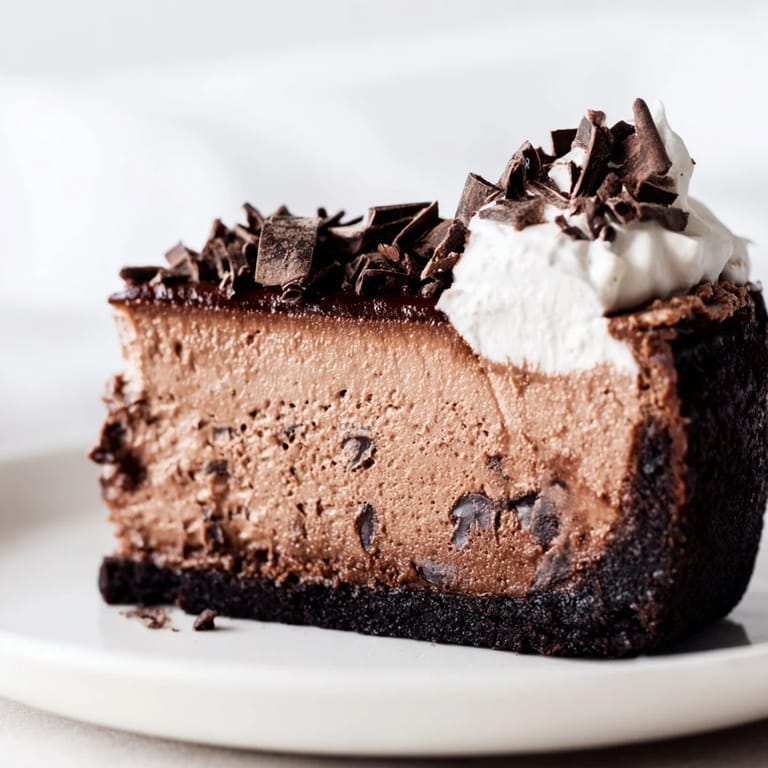
- Dark chocolate shavings: A simple garnish that makes it look bakery-worthy.
Tired of Takeout? 🥡
Get 10 meals you can make faster than delivery arrives. Seriously.
One email. No spam. Unsubscribe anytime.
Instructions
- Prep your pan:
- Preheat your oven to 170°C (340°F) and line the base of your springform pan with parchment paper. This prevents sticking and makes removal so much easier later.
- Make the crust:
- Combine graham cracker crumbs, cocoa powder, coconut oil, and maple syrup in a bowl until it feels like wet sand. Press it firmly into the bottom of the pan and bake for 8 minutes, then let it cool while you make the filling.
- Blend the filling:
- Add cottage cheese to your food processor or blender and blend for 1 to 2 minutes until it's completely smooth with no lumps. Then add Greek yogurt, eggs, sugar, cocoa powder, vanilla, cornstarch, and melted chocolate, blending until silky and uniform.
- Assemble and bake:
- Pour the filling over the cooled crust and smooth the top with a spatula. Bake for 35 to 40 minutes until the center is just set but still has a slight wobble when you gently shake the pan.
- Cool gradually:
- Turn off the oven, crack the door open, and let the cheesecake cool inside for 1 hour. This prevents cracking and helps it set evenly.
- Chill completely:
- Remove the cheesecake from the oven and refrigerate for at least 3 hours, or overnight if you can wait. The longer it chills, the firmer and more flavorful it becomes.
- Top and serve:
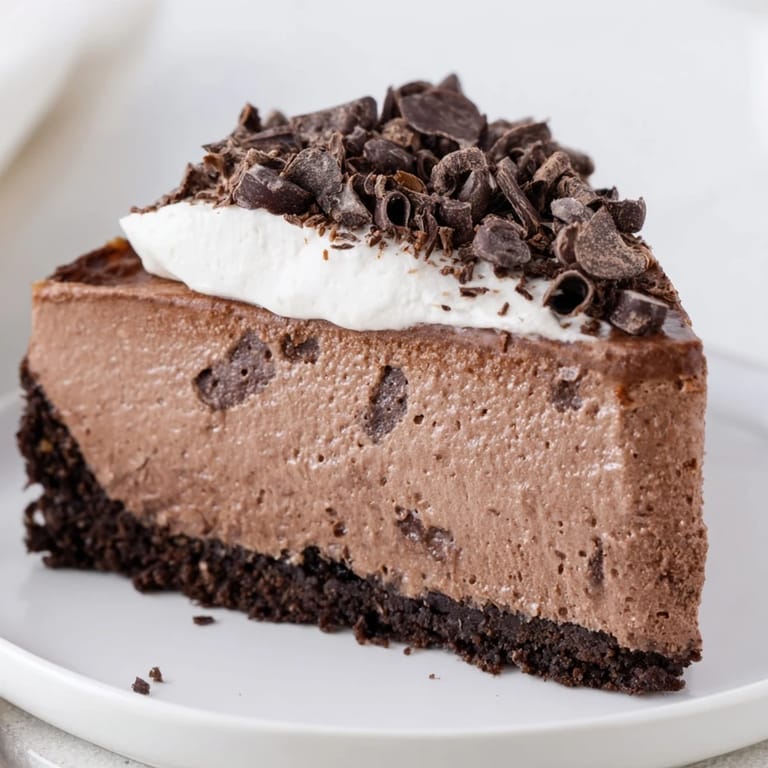
- Before serving, spread a thin layer of sweetened Greek yogurt on top if desired and finish with dark chocolate shavings. Slice with a warm, clean knife for neat edges.
 Save to Pinterest
 The first time I made this, I served it to my dad who claimed he could always tell when something was "healthy." He ate his slice in silence, then asked for another. When I told him it had cottage cheese and Greek yogurt, he just shrugged and said, Well, it tastes like the real thing to me. That's when I knew this recipe was a keeper.
How to Get a Smooth Filling
The secret to a silky cheesecake is in the blending. Cottage cheese has curds, and if you don't break them down completely, you'll end up with a grainy texture that's hard to hide. I blend mine for a full two minutes, scraping down the sides halfway through. It should look like thick cream before you add anything else. If your blender struggles, try adding the yogurt first to help it move.
Why the Gradual Cool Matters
Cheesecakes are sensitive to temperature swings. If you pull it straight from a hot oven into a cold kitchen, the surface can crack. Leaving it in the turned-off oven with the door cracked lets it come down slowly, which keeps the top smooth. I learned this after my first attempt came out looking like a dried riverbed. Now I never skip this step, and my cheesecakes come out looking as good as they taste.
Serving and Storage Tips
This cheesecake actually tastes better the next day, after the flavors have had time to settle and deepen. I like to make it the night before I need it. Store it covered in the fridge for up to five days, though it rarely lasts that long in my house. If you want to freeze it, wrap individual slices tightly in plastic wrap and then foil.
- Run your knife under hot water and wipe it clean between slices for perfect edges.
- Top with fresh raspberries or strawberries for a pop of color and tartness.
- If you want it even richer, drizzle with melted dark chocolate before serving.
 Save to Pinterest
 This cheesecake proves you don't have to choose between treating yourself and feeling good about what you eat. It's become my go-to whenever I want something sweet that won't weigh me down, and I hope it does the same for you.
Common Recipe Questions
- → Why use cottage cheese instead of cream cheese?
Cottage cheese provides a lighter alternative while delivering more protein and less fat than traditional cream cheese. When blended smooth, it creates a creamy texture while keeping calories lower and nutritional value higher.
- → How do I prevent my cheesecake from cracking?
Cool the cheesecake gradually by turning off the oven and cracking the door open for about an hour. This gentle temperature change prevents the center from contracting too quickly. Ensure you don't overbake—the center should be just set but still slightly wobbly when removed from the oven.
- → Can I make this cheesecake ahead of time?
Yes, this cheesecake actually improves when made a day ahead. After chilling for at least 3 hours, cover it with plastic wrap and refrigerate for up to 3 days. You can also freeze it for up to one month—thaw overnight in the refrigerator before serving.
- → What can I substitute for maple syrup?
You can use honey, agave nectar, or any liquid sweetener in equal amounts. For a non-liquid option, dissolve your preferred granulated sweetener in a small amount of water. Adjust the texture of the crust mixture as needed to ensure it holds together.
- → How important is blending the cottage cheese?
Blending cottage cheese until completely smooth is crucial for the final texture. Any lumps will result in a grainy cheesecake. Use a food processor or high-powered blender, and blend for 1–2 minutes until the consistency matches Greek yogurt before adding other filling ingredients.
- → Can I make this gluten-free?
Absolutely. Simply substitute gluten-free graham crackers in the crust. Verify that all other processed ingredients, including the cocoa powder and chocolate chips, are certified gluten-free if you have celiac disease or severe sensitivity.