 Save to Pinterest
 The first time I arranged a cheese platter for guests, I overthought every element—until my friend mentioned Celtic crosses and how the geometry could actually make the spread more memorable. That simple observation transformed what I was doing from "just putting cheese on a board" into something with real visual intention. The Celtic Cross Cheese Platter became my go-to when I wanted to impress without fussing, letting the natural colors and textures speak for themselves while I focused on opening wine and enjoying the evening.
I remember setting this platter down at a dinner party and watching people pause before digging in, almost reverencing it first. My host at the time—a woman with strong Irish heritage—teared up a little, saying it reminded her of something her grandmother would have made. That moment taught me that food arranged with intention carries more weight than any fancy technique ever could.
Ingredients
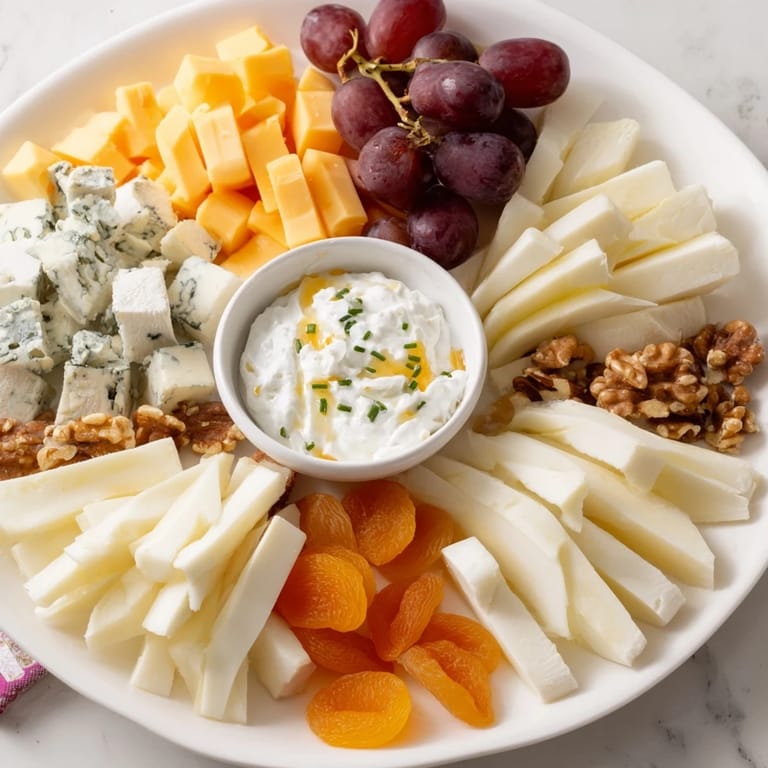
- Irish cheddar, cubed (100 g): The foundation cheese with a gentle bite and creamy texture that anchors one quadrant beautifully.
- Brie, sliced (100 g): Soft and luxurious, it melts slightly at room temperature and adds elegance to another quadrant.
- Blue cheese, crumbled (100 g): Bold and tangy, it commands respect; the honey drizzle softens its intensity perfectly.
- Manchego, sliced (100 g): Spanish and slightly nutty, it brings a different character to the fourth quadrant without competing for attention.
- Sour cream or Greek yogurt (150 g): The dip base should be tangy and cool, offsetting all the rich cheeses.
- Fresh chives, finely chopped (1 tbsp): Bright and subtle, they make the dip taste intentional rather than plain.
- Lemon juice (1 tsp): Just enough to wake up the dip without making it noticeably sour.
- Salt and black pepper, to taste: Season boldly here because the cheeses are mild enough to welcome the contrast.
- Seedless red grapes (80 g): They roll slightly as you arrange, but their color and burst of sweetness are irreplaceable.
- Dried apricots (80 g): Chewy and complex, they bridge sweet and savory in a way fresh fruit cannot.
- Walnuts (50 g): Toast them lightly if you have five minutes; it deepens their flavor and makes them less forgettable.
- Honey (50 g): The finest you have makes a real difference when drizzled directly onto the cheese.
- Rustic crackers (100 g): Choose ones with texture and substance so they don't disappear next to the cheeses.
- Baguette, sliced (1 small): Toasted lightly, it holds up better than soft bread and feels more intentional.
Tired of Takeout? 🥡
Get 10 meals you can make faster than delivery arrives. Seriously.
One email. No spam. Unsubscribe anytime.
Instructions
- Mix your dip with intention:
- Stir sour cream with chives, lemon juice, salt, and pepper until it tastes bright and balanced. This is your center point, so taste as you go and don't hold back on seasoning.
- Place the dip bowl as your anchor:
- Set it dead center on your round platter, then step back and visualize your four quadrants radiating outward like compass points.
- Arrange each cheese in its quadrant:
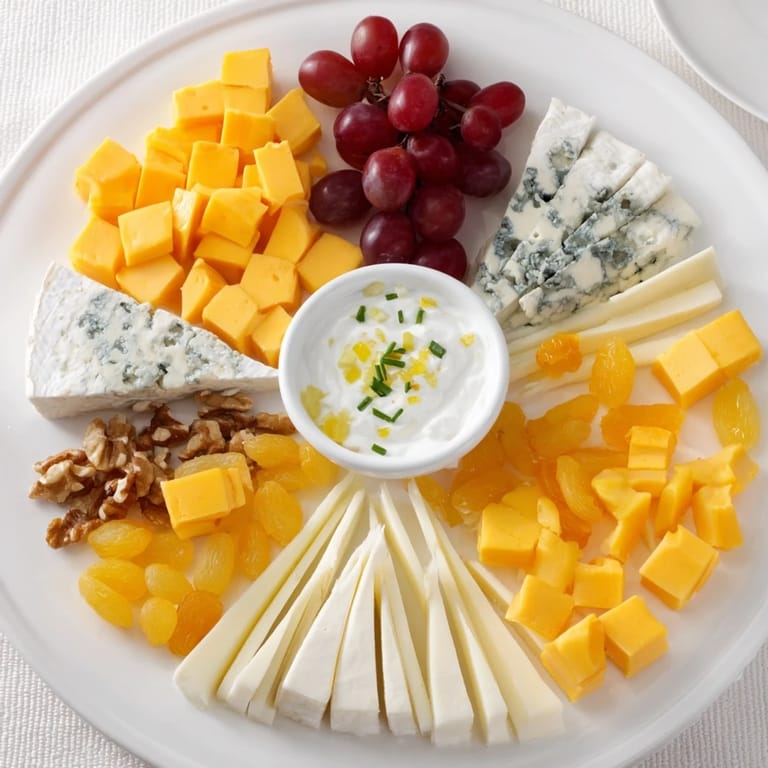
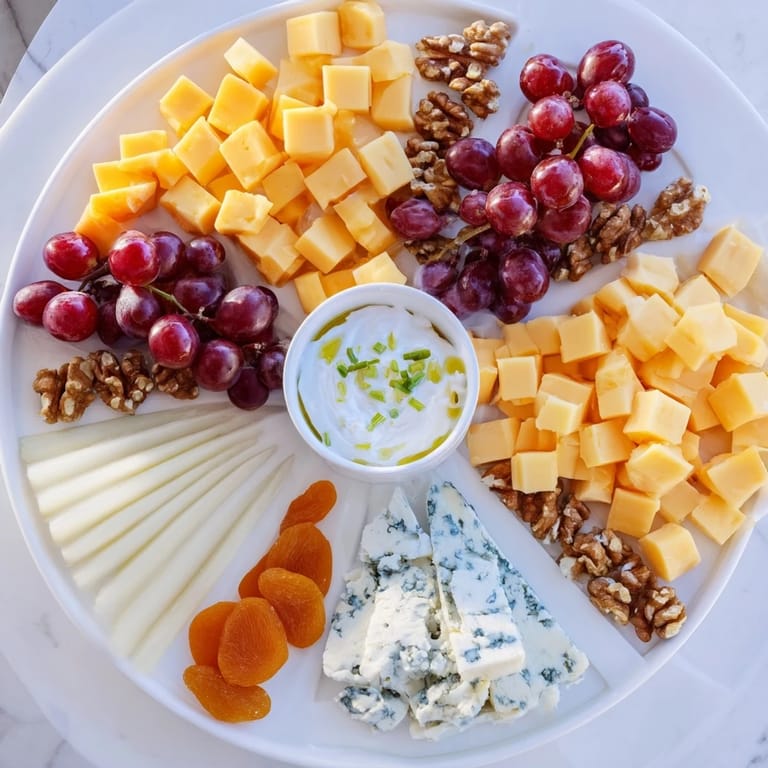
- Fan the Brie slices, cube the cheddar into neat clusters, crumble the blue cheese with a light hand, and lay the Manchego in slight overlaps. Each cheese deserves its own visual language.
- Fill the spaces between quadrants:
- Drop grapes into the gaps, tuck apricots where they catch light, and scatter walnuts to create little pockets of texture. Think about color distribution as you work.
- Drizzle honey over the blue cheese:
- Warm the honey slightly if it's thick, then let it pool and streak across the blue cheese quadrant in a way that looks effortless rather than planned.
- Arrange crackers and bread around the edge:
- Stand them up at angles or lay them in overlapping rows around the outer perimeter, leaving gaps for people's hands to find them easily.
- Bring everything to room temperature before serving:
- Cold cheeses taste flat and dense, so remove the platter from the fridge about 15 minutes before guests arrive if your kitchen isn't warm.
 Save to Pinterest
 There was an evening when a guest who usually picked at everything took a proper moment with the platter, made a small plate with intention, and actually sat and savored. No mindless grazing—just real presence with the food. That's when I understood this wasn't about complexity or chef-level skills; it was about creating a moment where people felt like their time and taste mattered.
Why This Shape Works
The Celtic cross isn't just pretty—it creates natural flow and makes the platter feel curated rather than scattered. Your eye knows where to look, and your hand knows where to reach. It also solves a practical problem: by dividing the space, you prevent the cheeses from touching in ways that muddle their individual flavors and personalities.
The Art of Cheese Selection
This platter works because the four cheeses represent different textures and intensities without competing directly. The cheddar is your everyday anchor, the Brie brings softness, the blue brings boldness, and the Manchego adds sophistication without complexity. You could swap these for other regional cheeses—a sharp Irish cheddar for a milder one, a Spanish Torta for the Brie—but the principle stays the same: variety within balance, so every cheese gets a moment.
Pairing and Serving Like You Mean It
A crisp Sauvignon Blanc or light Pinot Noir transforms this from "appetizer" into "opening act for something special." The wine refreshes your palate between cheeses and keeps the evening moving without heaviness. If you're serving this alongside other dishes, remember it's at its best when people can linger, taste thoughtfully, and let the flavors sink in rather than rush through to the main course.
- Pull the platter out 15 minutes before guests arrive so every element hits room temperature together.
- If you toast the baguette slices lightly, they hold cheese and dip better and taste more intentional.
- Have extra napkins and small cheese knives nearby; they make the difference between a beautiful platter and a sticky mess.
 Save to Pinterest
 This platter is proof that elegance doesn't require complexity, just intention. Gather good cheese, arrange it with care, and let your guests do the rest.
Common Recipe Questions
- → What cheeses are used in the platter?
The platter features Irish cheddar, Brie, Blue cheese, and Manchego arranged in separate quadrants.
- → How is the central dip prepared?
Mix sour cream or Greek yogurt with fresh chives, lemon juice, salt, and pepper, then spoon into a small bowl placed centrally.
- → What accompaniments complement the cheese?
Seedless red grapes, dried apricots, walnuts, and a light drizzle of honey enhance the flavor and texture variety.
- → How can the platter be served for best taste?
Serve each cheese at room temperature and arrange crackers and baguette slices around the edge for easy pairing.
- → Are there any allergen considerations?
The platter contains milk, gluten (from crackers and bread), and tree nuts (walnuts). Check ingredient labels for specific cheese details.
- → Can the platter be modified for extra flavor?
Adding sliced apple or pear or substituting cheeses with regional favorites provides additional flavor dimensions.