 Save to Pinterest
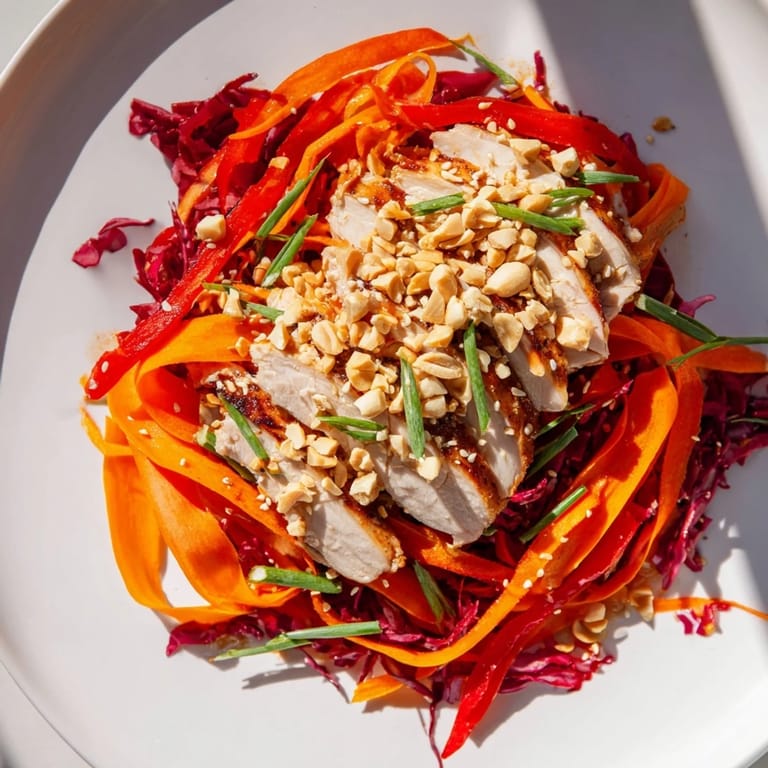
 There's something magical about the moment when a vegetable peeler becomes a tool for transformation—I discovered that watching my neighbor jazz up a simple bowl of shredded vegetables into what looked like edible art. That same afternoon, I found myself experimenting with ribboned carrots and tender chicken, inspired by the cheerful energy of someone who refuses to settle for boring salad. What started as Sunday meal prep turned into a weeknight staple that actually tastes like you put thought into it.
I made this for a friend who claimed they'd "never been a salad person," and watching them go back for thirds while barely talking was its own kind of victory. There's real confidence in a salad that holds its own as a main course, and this one doesn't apologize for taking up space on your plate.
Ingredients
- Chicken breasts: Two boneless, skinless breasts give you lean protein that cooks fast and stays tender when you don't overthink it.
- Soy sauce, sesame oil, ginger: This trio creates a quick marinade that actually flavors the chicken instead of just sitting on top.
- Carrots: Use a vegetable peeler and let muscle memory take over—the ribbons cook down slightly when warm chicken hits them, becoming almost silky.
- Red cabbage: The shredding takes two minutes, and it brings a slight sweetness and that satisfying crunch that doesn't get soggy.
- Red bell pepper: Slice it thin enough to taste in every bite, thick enough that it doesn't disappear.
- Scallions and cilantro: Fresh herbs here aren't optional—they're what make this feel alive instead of just "salad with chicken."
- White miso paste: The secret to the dressing's depth; it adds umami and creaminess without any dairy.
- Rice vinegar and lime juice: These keep the dressing bright and punchy so nothing gets heavy.
- Sesame seeds and peanuts: The crunch at the end is non-negotiable—toast everything yourself if you have five minutes.
Tired of Takeout? 🥡
Get 10 meals you can make faster than delivery arrives. Seriously.
One email. No spam. Unsubscribe anytime.
Instructions
- Get the chicken ready:
- Mix soy sauce, sesame oil, ginger, salt, and pepper in a bowl, then coat your chicken like you mean it. Ten minutes of marinating might seem short, but it's enough to season all the way through if you don't overthink it.
- Cook it golden:
- Medium heat on a grill pan or skillet lets the exterior develop a light char while the inside stays juicy. You'll know it's done when it resists when you poke it, and it smells like dinner is actually happening.
- Prep your vegetables while the chicken rests:
- A vegetable peeler makes this meditative—long, confident strokes turn carrots into ribbons. Shred the cabbage, slice the pepper, scatter the herbs.
- Make the dressing:
- Whisk miso, vinegar, soy, honey, ginger, sesame oil, neutral oil, lime juice, and garlic until it's smooth and creamy. Taste it straight from the whisk—it should make you close your eyes a little.
- Bring it all together:
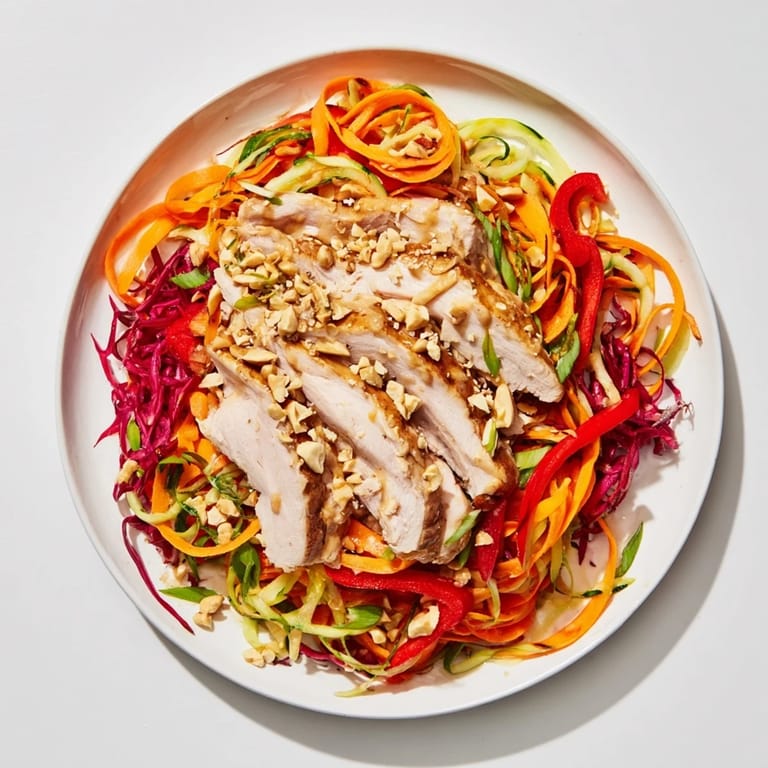
- Slice the rested chicken thin, add it to the bowl of vegetables, pour the dressing over everything, and toss gently so nothing bruises. The warm chicken will soften the cabbage just enough.
- Finish and serve:
- Sprinkle sesame seeds and peanuts on top right before serving so they stay crispy. Eat it immediately while everything's still got personality.
 Save to Pinterest
 The real magic happened when I realized this salad works for meal prep too—the dressing and toppings stay separate in the container, and assembly takes thirty seconds at lunch. It's one of those recipes that respects your time while tasting like you actually cooked.
The Ginger-Miso Swap
White miso is the quiet genius here—it adds saltiness and depth without any fishy flavor you'd get from fish sauce, and it creates a creamy base when whisked with oil. If you've never worked with miso in a dressing before, this is the perfect starter because the other flavors are bold enough that you can taste what it's actually doing instead of wondering if something's wrong.
Customizations That Actually Work
Grilled tofu or tempeh swap in seamlessly if you want to skip the chicken, and they bring a texture that soaks up the dressing beautifully. Edamame, cucumber, or even shredded daikon radish add layers without changing the personality of the salad, and I've even tossed in mandarin segments when I had them on hand.
Serving and Storage
This salad is best eaten fresh, but components keep separately for up to three days—store the dressing in its own container and toss just before eating. Leftover chicken slices are gold for lunch bowls the next day, and the dressing is genuinely good on other vegetables if you find yourself with extra.
- Toast your own sesame seeds in a dry pan if you have two minutes—the difference is real.
- If using regular soy sauce and you need gluten-free, swap it for tamari without changing anything else.
- A squeeze of fresh lime juice right before serving brightens everything without needing to remake the dressing.
 Save to Pinterest
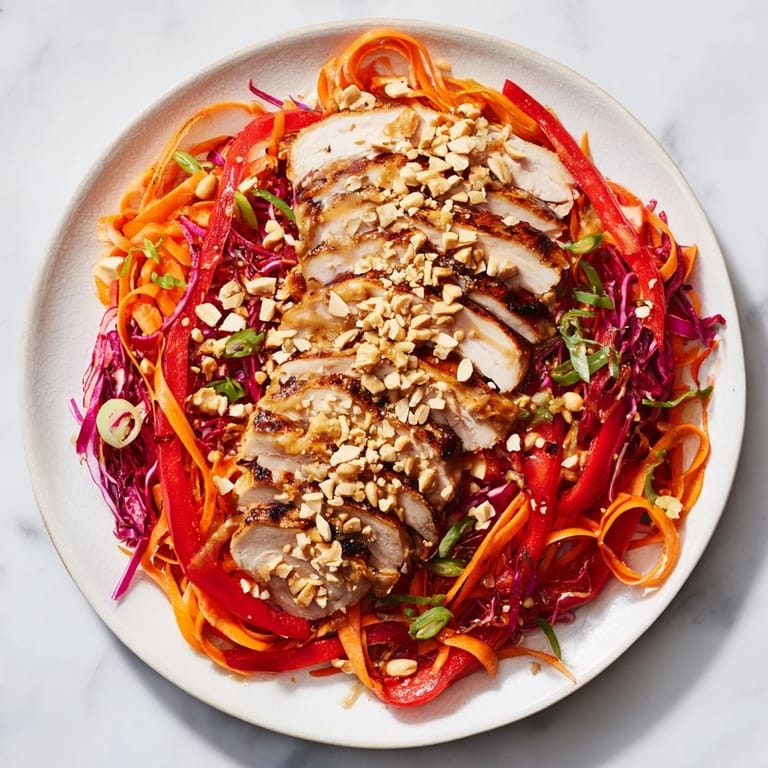
 This salad proves that simple ingredients, when treated with intention, become something worth talking about at dinner. Make it once and you'll find yourself making it again and again.
Common Recipe Questions
- → How should I prepare the carrot ribbons?
Use a vegetable peeler to shave peeled carrots into long, thin ribbons for a delicate texture that mixes well with the other ingredients.
- → What is the best way to cook the chicken for this dish?
Marinate the chicken briefly, then grill or sear it in a skillet over medium heat until cooked through. Let it rest before slicing thinly.
- → Can the dressing be made ahead of time?
Yes, the ginger-miso dressing keeps well refrigerated and can be whisked together a day before, allowing flavors to meld for a richer taste.
- → Are there good protein alternatives to chicken here?
Grilled tofu or tempeh work nicely as plant-based substitutes, absorbing the flavors of the dressing and complementing the crunch of the veggies.
- → What textures should I expect in this dish?
The dish balances tender, juicy chicken with crisp carrot ribbons, crunchy cabbage, and toasted nuts, creating a satisfying contrast in every bite.