 Save to Pinterest
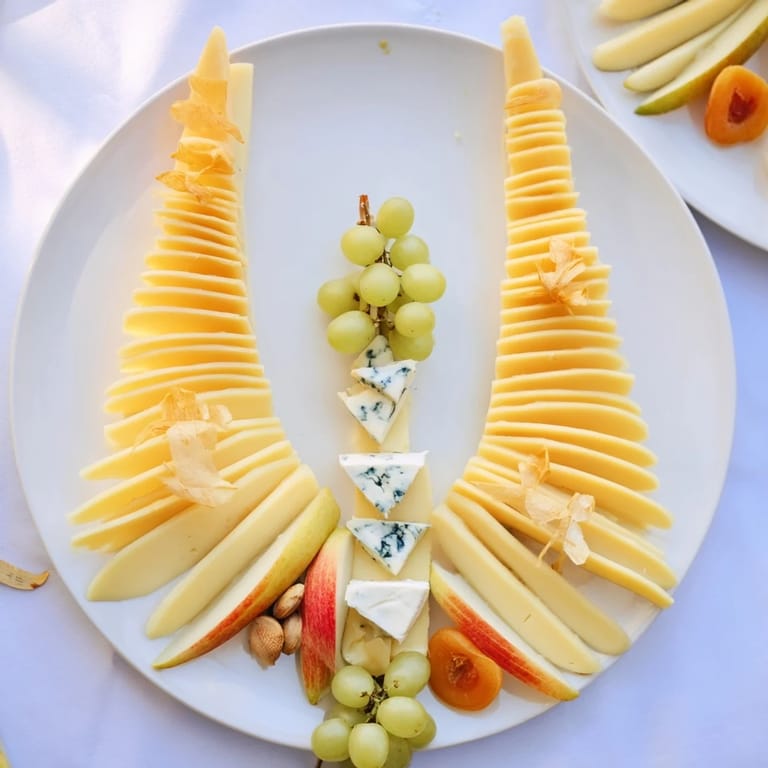
 I stumbled upon an Art Deco exhibition on a rainy afternoon and found myself mesmerized by the geometric precision of 1920s architecture. The sharp angles, the sweeping arches, the sense of bold elegance—it all stayed with me for days. That evening, I stood in my kitchen staring at a collection of cheeses and suddenly saw them differently: not as random ingredients, but as building blocks for something architectural. What started as a playful experiment became the Art Deco Arch, a platter that transforms simple cheese and fruit into edible geometry.
The first time I served this, my sister arrived early and caught me mid-arrangement, tweaking the blue cheese angles for the dozenth time. She laughed and said I was overthinking it, but when everyone gathered around the platter that evening, the whole room went quiet for a moment. I watched people hesitate before eating, as if breaking the pattern felt like vandalism. That's when I knew I'd created something that was as much about the moment as it was about the food.
Ingredients
- Aged cheddar, Gruyère, and Manchego: These three cheeses form the backbone of your arches—their firmness lets you slice them clean and stack them in crisp, overlapping layers that catch the light beautifully.
- Creamy brie: Soft and forgiving, brie anchors each arch with a pillowy base that feels luxurious when paired with a crisp cracker.
- Blue cheese: Its sharp, crystalline texture and bold color create a natural focal point at the top of each arch, like a crown jewel of flavor.
- Grapes, pear, and apple: These aren't just decoration—they refresh the palate between bites and add brightness that keeps the platter from feeling heavy.
- Roasted almonds and dried apricots: The almonds add a satisfying crunch and subtle earthiness, while apricots bring a whisper of sweetness that bridges cheese and fruit.
- Honeycomb or honey: A small drizzle near the brie transforms it into something almost dessert-like, a hidden indulgence your guests will search for again and again.
- Baguette slices and assorted crackers: Think of these as the foundation that lets your arrangement shine—they're the vehicle, not the star, so choose ones you genuinely like eating.
Tired of Takeout? 🥡
Get 10 meals you can make faster than delivery arrives. Seriously.
One email. No spam. Unsubscribe anytime.
Instructions
- Slice your cheeses with intention:
- Use a wire cheese slicer or a sharp knife to cut the cheddar, Gruyère, and Manchego into thin, uniform slices. You want them delicate enough to overlap cleanly but sturdy enough to hold their shape.
- Build your first arch:
- On a large platter, arrange your first set of thin slices in a fan formation, each slice slightly offset from the last, mimicking the sweep of an Art Deco arch. Imagine the curve of a skyscraper against a city skyline.
- Create the base:
- Slide a wedge of brie at the bottom center of your arch—this is your building's foundation, solid and grounding. The soft cheese should rest just so, inviting someone to pick it up and taste it first.
- Crown with blue cheese:
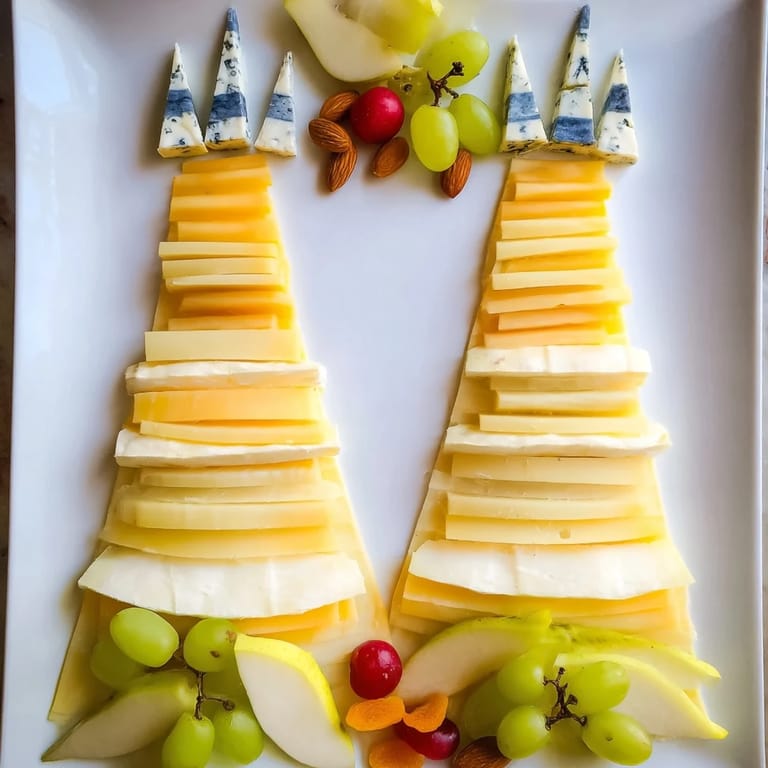
- Position small triangles of blue cheese at the apex of each arch, like the pointed tips of 1920s skyscrapers. Their sharp angles echo the geometry you're building.
- Build two more arches:
- Repeat this pattern two more times across your platter, creating a trio of architectural statements. Step back and look at the symmetry—it should feel balanced and intentional.
- Fill the spaces:
- Nestle bunches of grapes between and around your arches, and scatter thin slices of pear and apple where they catch the eye. These additions should feel placed, not random.
- Scatter the textures:
- Distribute roasted almonds and halved dried apricots around the platter in small clusters, as if you're adding texture and depth to a painting.
- Add the final touch:
- Drizzle a small amount of honey or place a pool of honeycomb near one of the brie bases—it's the accent that guests will discover and treasure. Arrange crackers and baguette slices along the edges, easy to grab and never crowding the center.
 Save to Pinterest
 There's something magical about watching people approach a cheese platter that's been arranged with care. At a dinner last spring, a friend leaned in and just studied the Art Deco arrangement for a long moment before saying, 'It's too beautiful to eat.' I told her that was exactly the point—beauty and taste deserve to coexist. She finally broke into the first arch, and I remember the pleasure on her face when the flavors hit.
The Architecture of Flavor
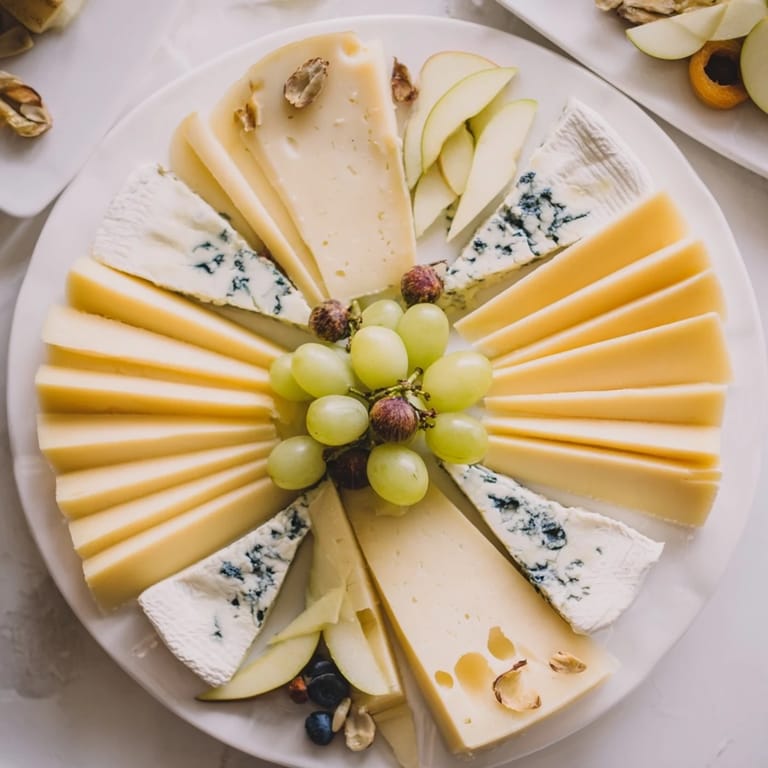
Every choice on this platter works together like a well-designed building. The firm cheeses provide structure and bold, complex flavors that anchor each bite. The soft brie offers a gentle contrast, luxurious and melt-on-your-tongue rich. The fruit cuts through with brightness and sweetness, resetting your palate so you can experience each new cheese like the first. The nuts and crackers add texture and keep things interesting. When someone builds a perfect bite combining all these elements, they're tasting what happens when geometry meets gastronomy.
Timing and Presentation
This platter performs best when it's fresh but not rushed. Slice your cheeses while your guests are arriving, build it all in one flowing motion, and bring it to the table while there's still a hint of cool on the firm cheeses. If you're making it ahead, keep it chilled and covered with a tea towel—don't let it sit uncovered in a warm room, or your carefully stacked arches will start to soften and slump. The magic is in the moment it's unveiled, when people see it for the first time and pause.
Making It Your Own
The beauty of this arrangement is that it adapts to what you have on hand or what you love to eat. Prefer aged Gouda or Comté to Gruyère? Swap them in without hesitation. Don't have honeycomb? A drizzle of hot honey does something entirely different but equally delicious. Want to go vegan? Plant-based cheeses hold their shape surprisingly well, and the whole platter becomes even more of a celebration. The Art Deco structure remains the same—it's your canvas to personalize.
- Try pairing this with a crisp Champagne or dry Riesling to echo that elegant 1920s feeling.
- If you're serving it at a large gathering, consider making two smaller platters instead of one massive one—they're easier to refill and harder to pick apart.
- Keep a small cheese knife at the platter's edge so guests can cut brie or blue cheese more precisely if they want.
 Save to Pinterest
 This platter is about slowing down and savoring, about turning cheese and fruit into something worth talking about. Serve it proudly.
Common Recipe Questions
- → How do I create the tiered cheese fans?
Slice aged cheddar, Gruyère, and Manchego thinly and overlap the slices slightly in a fan shape to mimic elegant arches on the platter.
- → What cheeses work best for this arrangement?
Aged cheddar, Gruyère, Manchego, creamy brie, and blue cheese offer contrasting textures and flavors suited for this display.
- → Can I substitute any ingredients for dietary preferences?
Plant-based cheeses can replace dairy varieties and honey can be omitted to suit vegan needs, while maintaining the overall balance.
- → What accompaniments enhance the platter's flavor profile?
Fresh grapes, sliced pear and apple provide freshness, while roasted almonds, dried apricots, and honeycomb add sweetness and crunch.
- → How should I serve and store the platter?
Arrange elements just before serving for freshness, or cover and chill up to one hour to maintain textures and flavors.