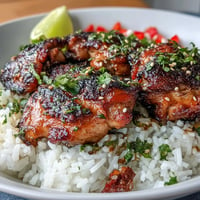
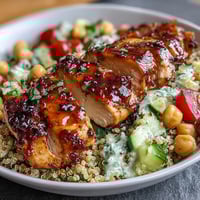
 Save to Pinterest
 Some Sundays hum with this low-key energy, where all I want is to put on some music and conquer my week before it begins. Prepping five days of high-protein meals might sound ambitious, but I find the rhythm of slicing vegetables and marinating proteins surprisingly grounding. As the aroma of garlic and paprika swirls around the kitchen, there's a distinct moment when meal prep no longer feels like a task—more like a tiny act of self-care disguised as efficiency. By the time my counter is lined with filled containers, I can't help but feel a little victorious. It's like building a buffer for every upcoming chaos.
One time I assembled these meal boxes while friends were visiting, and my kitchen became a full-on assembly line. Someone snuck extra lemon wedges into every container—another quietly added more cherry tomatoes 'for luck.' We laughed about our collective shortcuts, but by the end, everyone agreed it made eating healthy for a week look a whole lot more fun.
Ingredients
- Boneless, skinless chicken breast: I always go for the leanest cuts, pat them dry for browning, and slice evenly for quick, juicy cooking.
- Lean beef sirloin or flank steak: A beefy addition for variety; I slice it thinly across the grain to keep each bite tender.
- Olive oil: Besides flavor, it makes the marinade cling beautifully—I've learned not to skimp here.
- Low-sodium soy sauce: This adds savory depth without overwhelming saltiness, so my meals never taste flat by Friday.
- Lemon juice: This brings freshness to both proteins—plus, a squeeze over the finished boxes makes flavors pop.
- Garlic (minced): Don't rush the mincing—fine garlic turns every bite aromatic without being overpowering.
- Smoked paprika: The subtle smokiness somehow makes the kitchen smell like a tiny grill party, even in February.
- Black pepper: A generous twist wakes up both the marinades and roasted veggies.
- Dried oregano: An herb that lingers in the background, binding all the flavors together.
- Rice (brown or white): I've swapped between the two—brown for more fiber, white for fluffier results depending on the week's mood.
- Water: Fresh, cold water makes all the difference for fluffy rice—never skip the rinse.
- Bell peppers, zucchinis, broccoli, carrots, cherry tomatoes: Use what's best in season—roasting really brings out their flavors and sweetness.
- Baby spinach: This wilts in seconds and makes the boxes look extra vibrant and green.
- Fresh parsley and lemon wedges (optional): These are last-minute upgrades that make everything feel a little fresher and brighter.
Tired of Takeout? 🥡
Get 10 meals you can make faster than delivery arrives. Seriously.
One email. No spam. Unsubscribe anytime.
Instructions
- Mix up the marinade:
- Whisk together olive oil, soy sauce, lemon juice, garlic, smoked paprika, black pepper, and oregano until glossy and well-combined.
- Slice and soak:
- Cut chicken and beef into similar-sized strips and let them bathe in their separate marinade bowls, tossing to coat and letting rest for at least 15 minutes—overnight is even better.
- Get the rice going:
- Rinse rice until the water runs mostly clear, then simmer with water in a heavy-bottomed saucepan, lid on, until it's tender—fluff gently to avoid breaking the grains.
- Fire up the oven or grill:
- Preheat oven to 220°C (425°F) or set a grill pan on medium-high, and listen for that inviting sizzle once things hit the heat.
- Roast the veggies:
- Toss sliced bell peppers, zucchini, broccoli, carrots, and cherry tomatoes with a slick of olive oil, salt, and pepper, then spread in a single layer and roast until just browned and tender, flipping once halfway through.
- Cook the proteins:
- In batches, lay the marinated chicken and beef onto the hot pan or grill, cooking chicken until it's golden outside and no longer pink inside, and beef until your preferred doneness (about 2-3 minutes per side).
- Wilt the spinach:
- In the residual heat of a skillet, add spinach with a splash of water and stir until just bright and tender.
- Let everything cool:
- Give the freshly cooked ingredients a brief rest so steam doesn't turn your meal boxes soggy.
- Assemble the meal prep boxes:
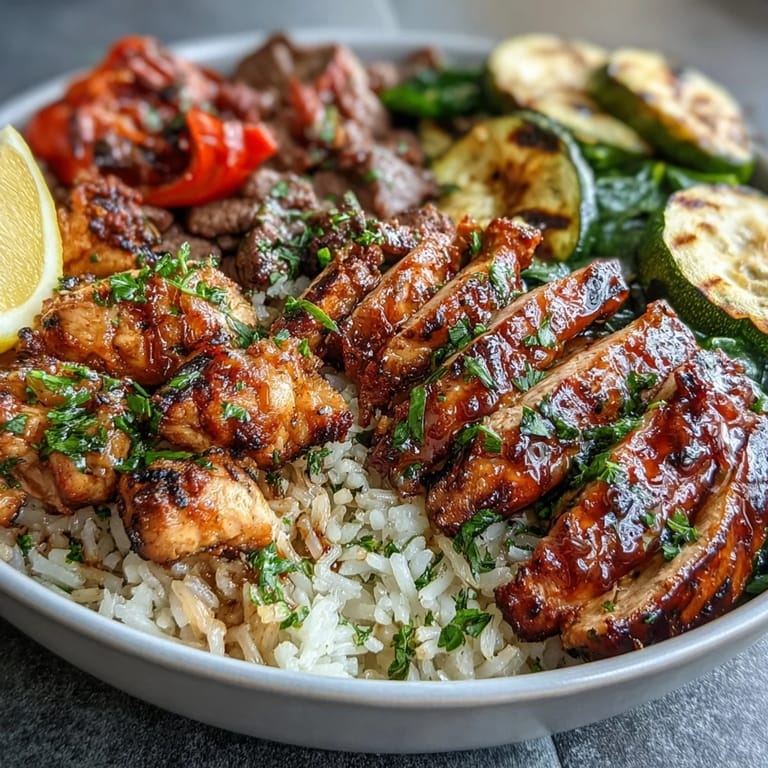
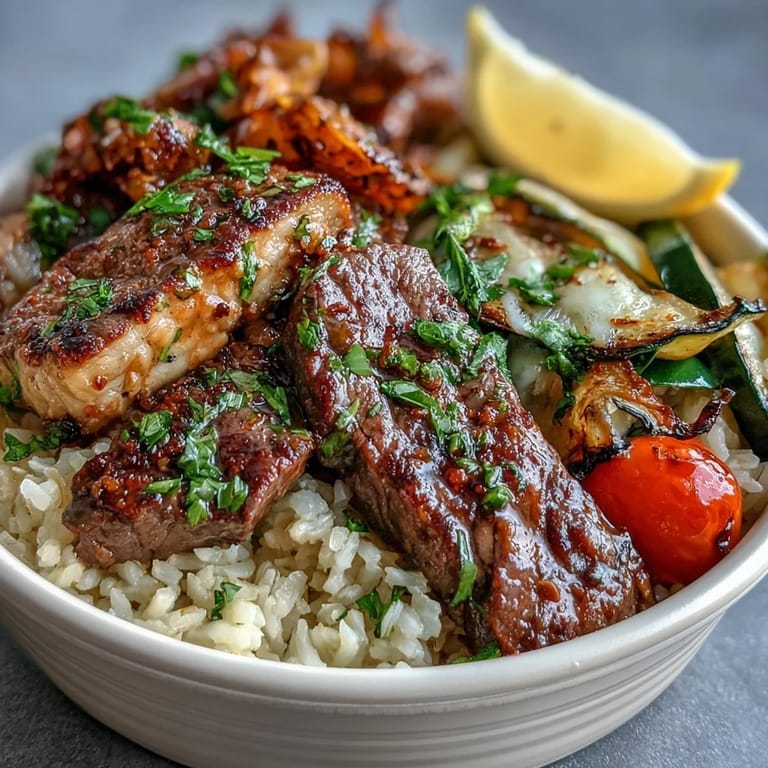
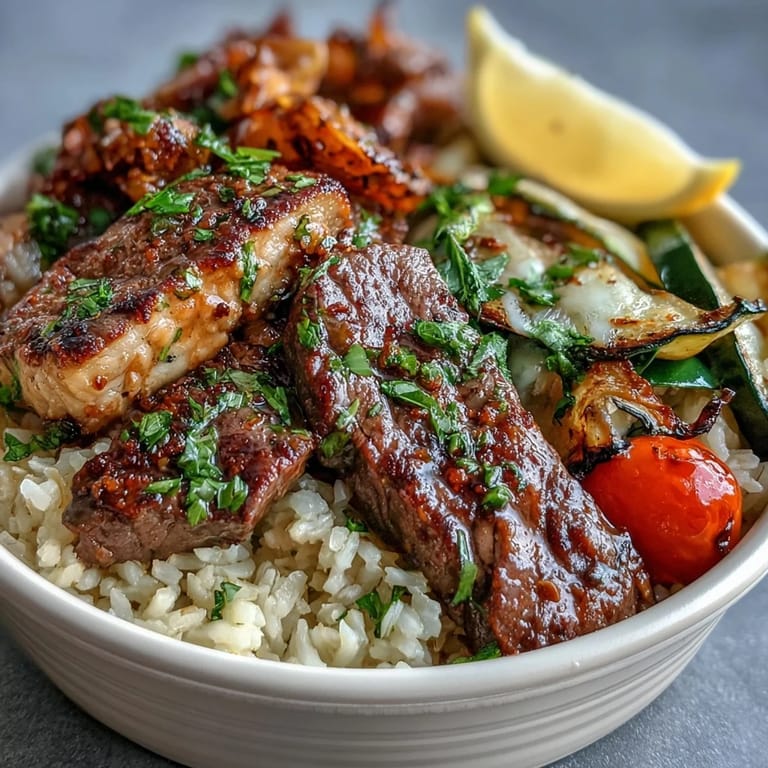
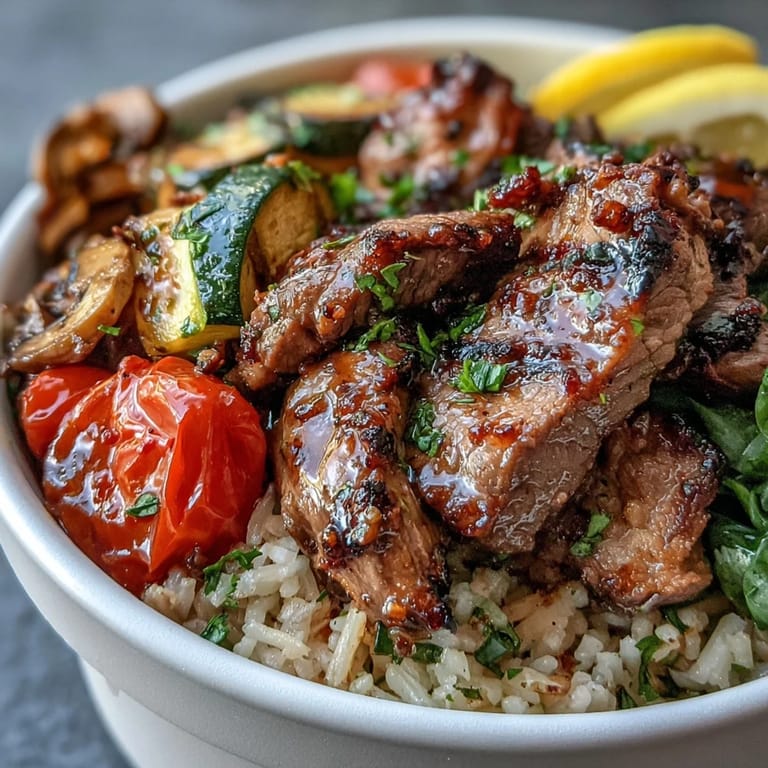
- Divide rice, chicken or beef, roasted veggies, and wilted spinach evenly among ten containers for perfectly portioned meals every time.
- Garnish and store:
- Top each box with chopped parsley and a lemon wedge if you like, then seal up tight and refrigerate—resist eating one straight away if you can.
 Save to Pinterest
  Save to Pinterest
 The first week I packed these up, I found myself pulling out a meal at work thinking, this is actually something to look forward to. A little slice of homemade care in the middle of a busy day can be wildly comforting, even without fanfare.
Make It Your Own Every Week
Sometimes I'll swap the beef for salmon, or use cauliflower rice when I'm feeling like a lighter carb day—every tweak has made meal prep strangely fun. The base recipe flexes with whatever the fridge hands you, making grocery day feel less like a chore and more like a game.
Packing and Storage Secrets
I always let everything cool to just barely warm before sealing up containers, which helps avoid dreaded condensation and limp veggies. The best containers are wide and shallow, so nothing gets squashed at the bottom of a tall box—something I wish I'd realized sooner.
Small Habits, Big Impact
Even when my week gets relentless, seeing these boxes lined up gives me a quick win and the sense that I've got things under control. Taking ten minutes on Sunday to set up this system genuinely saves me hours (and questionable snacking) later.
- A little squeeze of lemon right before eating perks up any leftovers.
- Keep garnishes separate until lunch so textures stay fresh.
- Label boxes with protein and date to make each choice easy when you're in a rush.
 Save to Pinterest
  Save to Pinterest
 Whatever your reasons for meal prepping, let these boxes be a gentle high five for future you. May your lunches be hearty, easy, and absolutely never bland.
Common Recipe Questions
- → How long should I marinate the proteins?
Marinate at least 15 minutes for surface flavor; 2–8 hours gives deeper flavor without breaking down texture. Overnight is fine for chicken and beef if covered and refrigerated.
- → What internal temperature should I cook the chicken and beef to?
Cook chicken to 75°C (165°F) for safety. For beef, sear to your preferred doneness—about 2–3 minutes per side for medium-rare on thin strips—use a thermometer if precise doneness is needed.
- → How can I keep roasted vegetables from getting soggy?
Cut vegetables uniformly, give them space on the baking sheet, roast at a high temperature (220°C/425°F) and turn once halfway so they caramelize rather than steam.
- → What are good grain swaps for lower carbs?
Use cooked quinoa for more fiber and protein, or cauliflower rice for a low-carb option. Adjust cooking times and moisture—cauliflower rice needs only a quick sauté or steam.
- → How should I reheat the prepared portions?
Reheat in the microwave covered for 1–2 minutes, stirring halfway for even heat. Alternatively, reheat proteins in a skillet and warm rice/veggies separately to preserve texture.
- → Any tips for seasoning variety across five days?
Divide portions and finish with different accents: fresh parsley and lemon on one day, a sprinkle of chili flakes and lime another, or a dollop of yogurt-based sauce for creaminess.