 Save to Pinterest
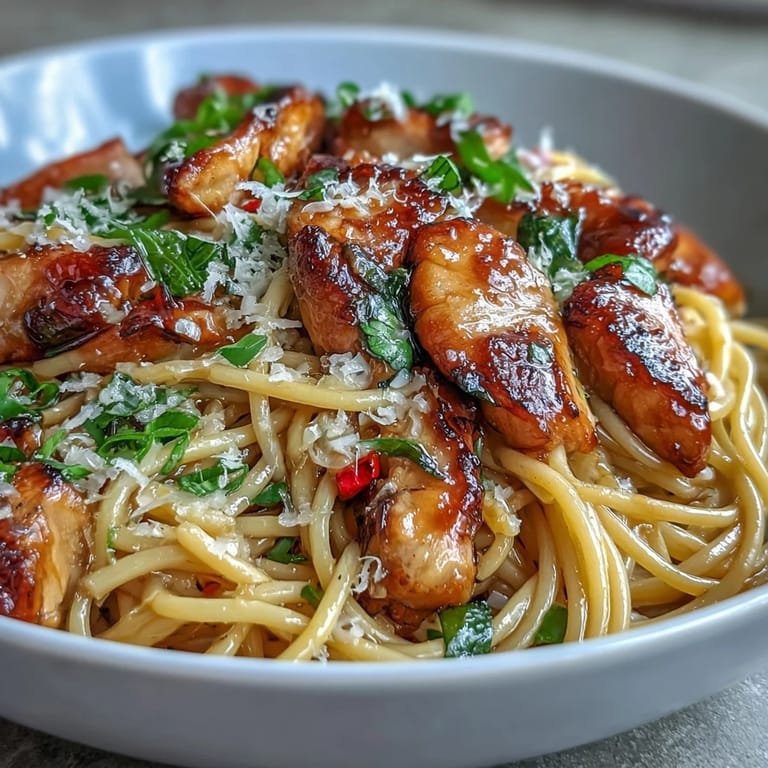
 There's something about the smell of garlic hitting hot oil that makes you forget you're cooking on a random Tuesday night. I threw this together when my partner mentioned craving something sweet and savory, and twenty minutes later we were devouring silky pasta coated in this glossy honey garlic sauce with perfectly seared chicken on top. The best part? It tastes like you spent hours fussing, but it's genuinely faster than ordering takeout.
I made this for my friend who's always skeptical about fusion dishes, and she went back for seconds before I even sat down. Watching her taste that first bite and realize the honey wasn't overpowering, just rounding out the salty-savory edge, felt like a small kitchen victory. She's made it four times since and keeps texting me photos of her versions.
Ingredients
- Boneless, skinless chicken breasts (2 breasts, about 1 lb): Pound them to even thickness so they cook uniformly without dry edges, and you'll get tender slices every time.
- Paprika (1 teaspoon): This adds a subtle warmth and color that makes the chicken look restaurant-quality.
- Kosher salt (1 teaspoon) and black pepper (½ teaspoon): Season generously before searing; the browning that happens is where the flavor lives.
- Extra virgin olive oil (2 tablespoons): Use something you'd actually taste on its own, because it matters when you're searing.
- Honey (⅓ cup): This is your sweetness anchor, and it also creates that gorgeous gloss when the sauce thickens.
- Soy sauce (¼ cup): The umami base that keeps this from being dessert; use low-sodium if you're watching salt intake.
- Garlic, minced (2 teaspoons): Fresh is non-negotiable here; jarred garlic gets a little sharp and metallic in this sauce.
- Apple cider vinegar (1 tablespoon): A touch of acid that brightens everything and prevents the sauce from tasting cloying.
- Garlic salt (½ teaspoon): Extra garlic punch without adding more fresh garlic and thinning the sauce.
- Red pepper flakes (½ teaspoon, optional): A whisper of heat that makes your brain sit up and pay attention to all the other flavors.
- Chicken broth (2 cups): Use low-sodium so you control the saltiness; this becomes your pasta cooking liquid.
- Heavy whipping cream (½ cup): Creates richness without being overwhelming; it emulsifies with the broth beautifully.
- Spaghetti, uncooked (8 ounces): The pasta cooks directly in the sauce, absorbing all that flavor instead of being tossed afterward.
- Cornstarch (1 tablespoon) mixed with water (2 tablespoons): This slurry thickens the sauce to coat the pasta and chicken without flour or excessive cream.
- Parmesan cheese, grated (¼ cup): Adds a salty, nutty finish that ties everything together.
Tired of Takeout? 🥡
Get 10 meals you can make faster than delivery arrives. Seriously.
One email. No spam. Unsubscribe anytime.
Instructions
- Season and sear the chicken:
- Pat your chicken dry, then dust both sides evenly with paprika, salt, and pepper. Heat olive oil in your large skillet until it shimmers and almost smokes, then lay the chicken down and don't touch it for a full five minutes—that's when the golden crust happens.
- Cook through gently:
- Flip once, lower the heat, and finish cooking for five to seven minutes until a meat thermometer reads 165°F. You want it just cooked through, not tough and stringy.
- Rest the chicken:
- Pull it onto a plate and tent loosely with foil to stay warm while you build the sauce in the same skillet, catching all those flavorful browned bits.
- Mix your sauce foundation:
- Whisk honey, soy sauce, minced garlic, vinegar, garlic salt, and red pepper flakes in a bowl until the honey dissolves and everything is smooth.
- Build the pasta base:
- Pour chicken broth and cream into the skillet, stirring to combine and scrape up any stuck bits from the bottom. Bring it to a gentle boil, then add your uncooked spaghetti, fanning it out so it mostly lies flat.
- Simmer the pasta:
- Reduce heat to medium-low, cover, and let it bubble quietly for ten to twelve minutes, stirring occasionally with tongs so nothing sticks. The pasta will absorb liquid and the sauce will thicken slightly.
- Thicken with the honey garlic sauce:
- Pour in your honey garlic mixture and stir constantly, then add the cornstarch slurry immediately. Simmer uncovered for two to three minutes, stirring often, until the sauce coats the pasta in a silky glaze.
- Finish and plate:
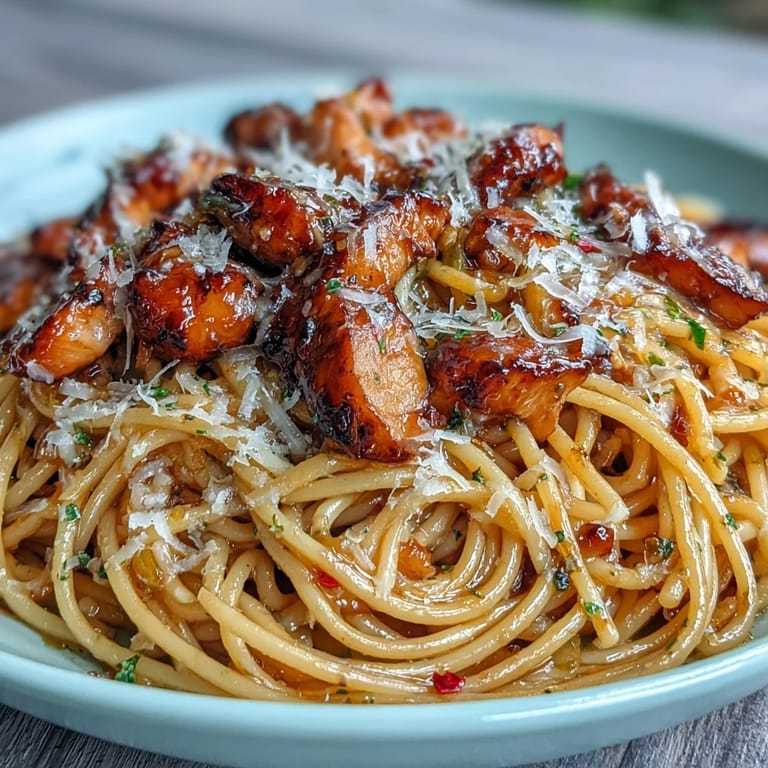
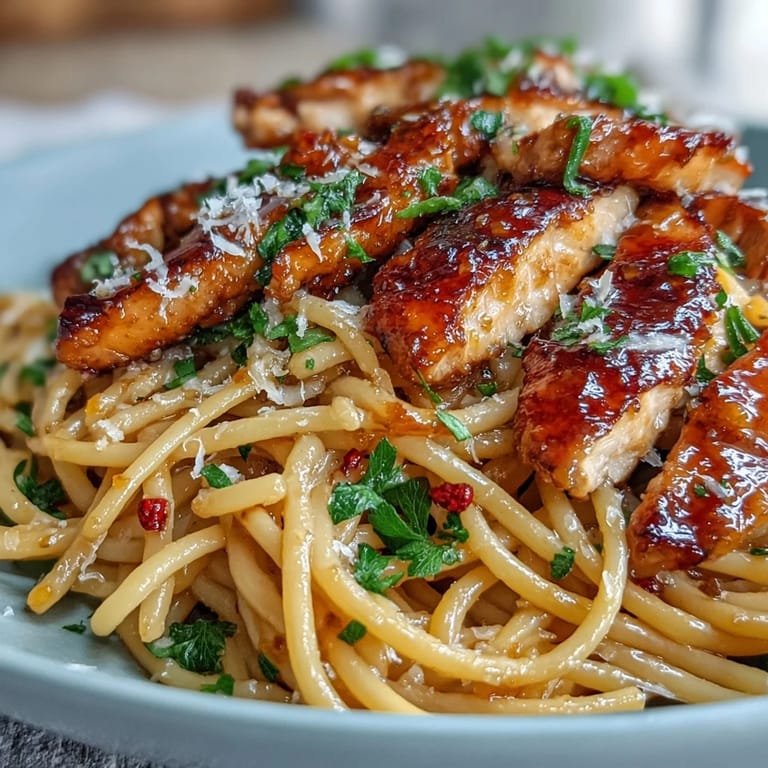
- Pull from heat, sprinkle Parmesan over everything, then slice your chicken and arrange it on top. Garnish with parsley and extra red pepper flakes if you want, then serve immediately while it's hot and glossy.
 Save to Pinterest
 This dish crossed from weeknight dinner into comfort-food territory the moment I realized my niece, who usually picks around anything saucy, asked for the recipe to make at her apartment. Now it's our thing—the one meal we cook together when she visits, and somehow it always tastes better when we're both in the kitchen making a small mess.
The Sear Matters More Than You Think
Most people rush the searing step because they're thinking about everything else on their plate. But those first five minutes of uninterrupted heat create a golden, flavorful crust that keeps the chicken from tasting bland once it's swimming in sauce. If your oil isn't hot enough to sizzle aggressively when the chicken hits the pan, wait another minute; cold oil just steams the outside instead of browning it.
Why Cooking Pasta in the Sauce Changes Everything
Boiling pasta separately and tossing it with sauce is fine, but cooking it directly in the broth-cream mixture means every strand gets infused with flavor from the inside out. The starch that leaches from the pasta also helps the sauce cling better, so you get fewer pools of liquid at the bottom of the bowl. It feels like a small thing until you taste how much better it is.
Customizing Without Losing the Magic
The beauty of this dish is how forgiving it is to small changes. Use half-and-half instead of heavy cream if you want it lighter, or swap fettuccine for the spaghetti without changing a single cooking time. If you're in a real hurry, rotisserie chicken from the grocery store works beautifully; just shred it and warm it gently in the finished sauce instead of searing.
- A splash of white wine can replace half the apple cider vinegar if you have it open.
- Lemon zest sprinkled on top just before serving adds brightness that cuts through the richness.
- If your household loves spice, don't be shy with the red pepper flakes—this sauce can handle more heat than the recipe suggests.
 Save to Pinterest
 This is the kind of dish that fills your kitchen with a smell so good that neighbors probably wonder what restaurant you're hiding. It's satisfying to cook, beautiful to serve, and honestly too delicious to save for special occasions.
Common Recipe Questions
- → Can I use different pasta shapes?
Fettuccine, linguine, or penne work well. Thinner shapes may cook faster, so adjust simmering time accordingly to prevent overcooking.
- → How spicy is this dish?
Mild warmth from red pepper flakes. Omit them entirely for no heat, or increase to 1 teaspoon for more kick.
- → Can I make this ahead?
Sauce thickens when refrigerated. Reheat with splash of cream or broth to restore consistency. Add fresh garnish before serving.
- → What substitutes work for heavy cream?
Half-and-half creates lighter sauce. Coconut milk adds tropical sweetness but alters flavor profile slightly.
- → Is the sauce supposed to be very thick?
It should coat pasta generously but still flow. If too thick, thin with warm broth. Too thin? Simmer 2-3 more minutes.
- → Can I use rotisserie chicken?
Absolutely. Shred 2-3 cups and stir in during final 2 minutes to heat through. Skip initial chicken cooking steps entirely.