 Save to Pinterest
 There's a moment in late summer when tomatoes hit their peak, and that's when my neighbor appeared at my door with a basket overflowing with heirloom varieties she'd grown herself. I had no grand plans for them, just a vague idea that roasting might coax out something special. What emerged from that oven was liquid gold—so concentrated in flavor it barely seemed possible that just tomatoes, onion, and garlic could taste like an Italian restaurant had taken up residence in my kitchen.
I made this for a friend going through a rough patch, and watching her pause mid-spoonful, close her eyes, and just breathe in the aroma reminded me that sometimes the most nourishing thing isn't the nutrition facts—it's knowing someone cared enough to spend an hour on your behalf. She asked for the recipe that same evening.
Ingredients
- Ripe tomatoes, 1.5 kg (3.3 lbs), halved: Ripeness is everything here; underripe tomatoes will taste thin and acidic, so choose ones that smell fragrant and yield slightly to pressure.
- Large yellow onion, 1, quartered: Yellow onions caramelize beautifully and add a natural sweetness that balances tomato acidity without needing extra sugar.
- Garlic cloves, 6, peeled: Roasting mellows garlic's sharpness into something creamy and almost sweet, so don't shy away from this amount.
- Extra-virgin olive oil, 2 tbsp: This isn't just for cooking; it's flavor, so choose one you actually enjoy tasting on its own.
- Kosher salt and freshly ground black pepper: Kosher salt dissolves more evenly than table salt, and fresh pepper makes a noticeable difference in the final brightness.
- Vegetable broth, 2 cups (480 ml), low sodium: Low sodium lets the roasted vegetables be the star; regular broth can overpower everything else.
- Fresh basil leaves, 1/2 cup (15 g), packed: Add this after blending so the heat doesn't destroy its delicate flavor; raw basil brings a perfumed lift to the finished soup.
- Unsalted butter, 1 tbsp (optional): A small knob of cold butter stirred in at the end creates an invisible silkiness that elevates the whole experience.
- Sugar, 1 tsp (optional): Just a pinch can round out overly acidic tomatoes, but taste first before automatically adding it.
- Heavy cream or crème fraîche for garnish (optional): A drizzle creates visual contrast and adds richness without making the soup heavy.
- Croutons or toasted bread (optional): Texture is important; the contrast of something crispy against silky soup makes the eating experience more interesting.
Tired of Takeout? 🥡
Get 10 meals you can make faster than delivery arrives. Seriously.
One email. No spam. Unsubscribe anytime.
Instructions
- Prep and heat your oven:
- Set the temperature to 220°C (425°F) and line a baking sheet with parchment paper so cleanup later won't feel like a punishment.
- Arrange the vegetables:
- Spread tomato halves cut-side up, onion quarters, and garlic cloves on the sheet, then drizzle with olive oil and season generously with salt and pepper. Toss everything so each piece gets coated, which ensures even caramelization.
- Roast until golden and soft:
- This takes 35–40 minutes; you'll know it's done when tomato edges are brown and slightly wrinkled, and the onion is so tender a fork slides through it. The kitchen will smell so good you might find yourself hovering by the oven.
- Build the soup base:
- Transfer the roasted vegetables and all their precious pan juices into a large pot, then add the vegetable broth and set it to medium heat. Let it come to a gentle simmer rather than a rolling boil, which preserves the delicate roasted flavors.
- Add finishing flavors:
- Stir in fresh basil, butter, and a teaspoon of sugar if your tomatoes taste sharp. Simmer for 5 minutes to let the basil infuse the broth without cooking away its brightness.
- Blend until silky:
- Using an immersion blender, puree the soup right in the pot, moving the wand around until the texture is completely smooth. If you prefer working in batches with a countertop blender, do that and return everything to the pot afterward.
- Taste and adjust:
- Salt and pepper might need tweaking now that everything is combined; a squeeze of lemon can also brighten things if the soup feels dull. For an even silkier texture, pour through a fine sieve, though this step is optional and more about preference.
- Serve with intention:
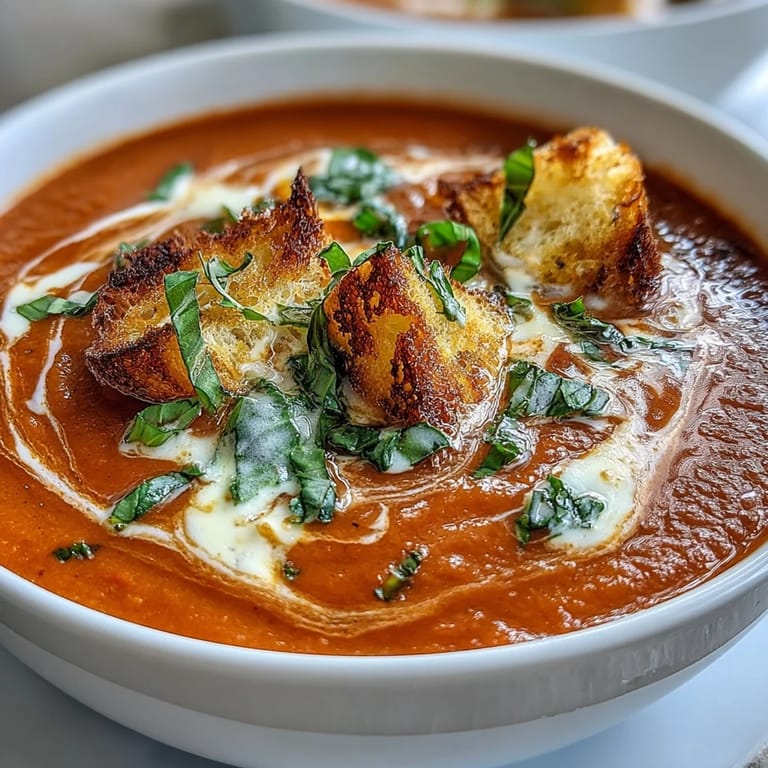
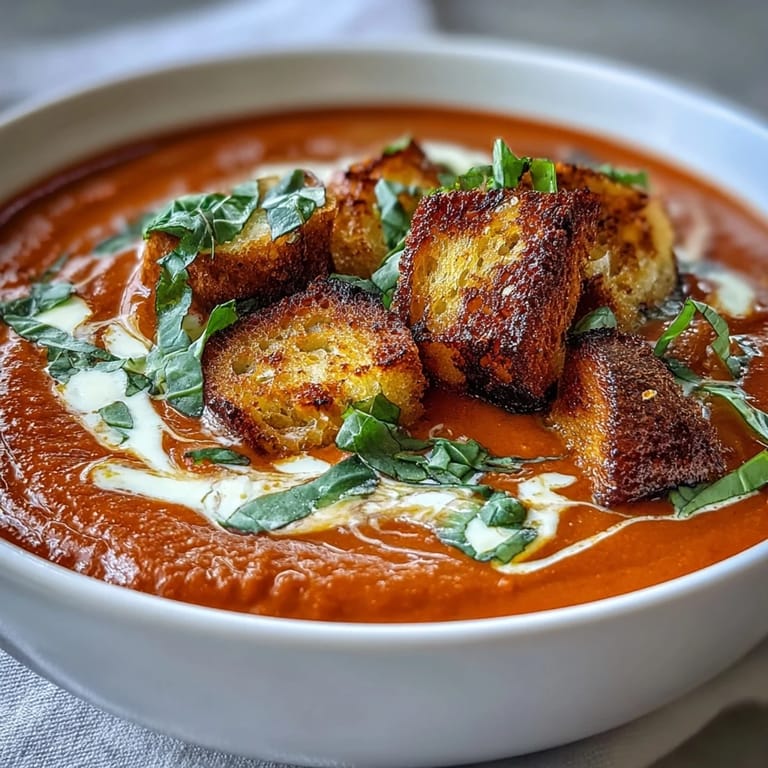
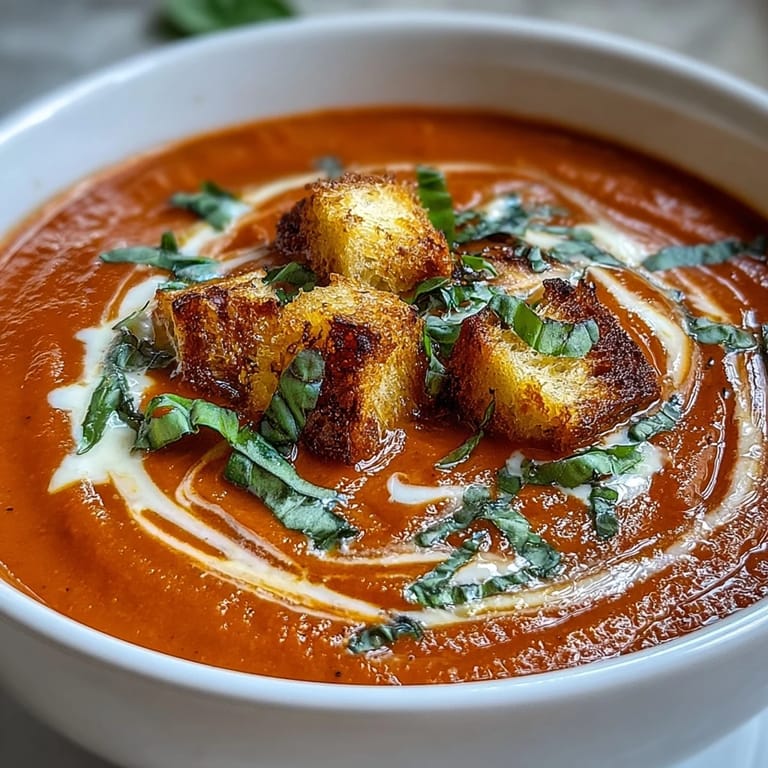
- Ladle into warm bowls, drizzle with cream if using, scatter fresh basil leaves across the top, and add croutons for crunch if you want them.
 Save to Pinterest
 Months later, I made this soup again on a cold February evening when I needed something that felt like comfort without the heaviness of cream-based soups. One bowl in and I remembered why summer's brightness, captured in that roasting pan, never truly leaves your kitchen.
Roasting as Alchemy
The magic of this soup lives entirely in the oven. When tomatoes roast, their natural sugars caramelize and concentrate, their acidity mellows, and their flavors deepen in ways that no amount of simmering can replicate. The high heat also slightly dehydrates them, which means what ends up in your pot is essentially tomato essence, not watered-down tomato flavor. This is why a simple roasted tomato soup tastes like it came from a restaurant and not a can.
Variations That Work
Once you understand the foundation, this soup becomes a canvas. A splash of balsamic vinegar adds depth without sweetness, while red pepper flakes can introduce gentle heat if you're not usually a spicy person. For a smokier version, add a teaspoon of tomato paste before blending, or if you want to push it further, a tiny pinch of smoked paprika does wonders. Some people add a handful of spinach at the very end, which wilts in the residual heat and adds a whisper of earthiness.
Pairing and Serving Wisdom
This soup wants bread—good bread, preferably toasted and maybe rubbed with garlic. A crisp white wine like Sauvignon Blanc or a Pinot Grigio cuts through the richness beautifully if you're serving this for dinner rather than lunch. Pair it with a simple salad and you have a meal that feels intentional and complete, not like you threw something together on a busy Tuesday.
- Make extra and freeze it in portions; it keeps for three months and tastes even better when you've forgotten you made it.
- If the soup separates slightly after a day or two, just stir it thoroughly or add a splash of broth to restore smoothness.
- Serve it hot or at room temperature depending on the season—there's something elegant about a chilled version on warm days.
 Save to Pinterest
 This soup taught me that sometimes the most sophisticated dishes are the ones that respect their ingredients enough to let them speak. Once you make it, you'll understand why people keep coming back for more.
Common Recipe Questions
- → Can I make this ahead of time?
Absolutely. This actually tastes better the next day as flavors meld together. Store in an airtight container in the refrigerator for up to 4 days. Reheat gently over medium-low heat, stirring occasionally.
- → What type of tomatoes work best?
Roma or plum tomatoes are ideal due to their meaty texture and lower water content, but any ripe tomatoes will deliver delicious results. Vine-ripened varieties offer the sweetest flavor profile.
- → How can I make this vegan?
Simply omit the butter and cream garnish, or substitute with coconut cream, cashew cream, or your favorite plant-based alternative. The roasted vegetables provide plenty of richness on their own.
- → Can I freeze this?
Yes, it freezes beautifully. Cool completely before transferring to freezer-safe containers, leaving some space for expansion. It will keep well for up to 3 months. Thaw overnight in the refrigerator before reheating.
- → What can I serve with this?
Crusty garlic bread, grilled cheese sandwiches, or a simple green salad with balsamic vinaigrette make excellent accompaniments. For a lighter option, serve with roasted vegetable bruschetta.
- → Why roast the tomatoes first?
Roasting concentrates the tomatoes' natural sugars and creates caramelized notes that you simply can't achieve through simmering alone. This step is what gives the dish its deep, complex flavor profile.