 Save to Pinterest
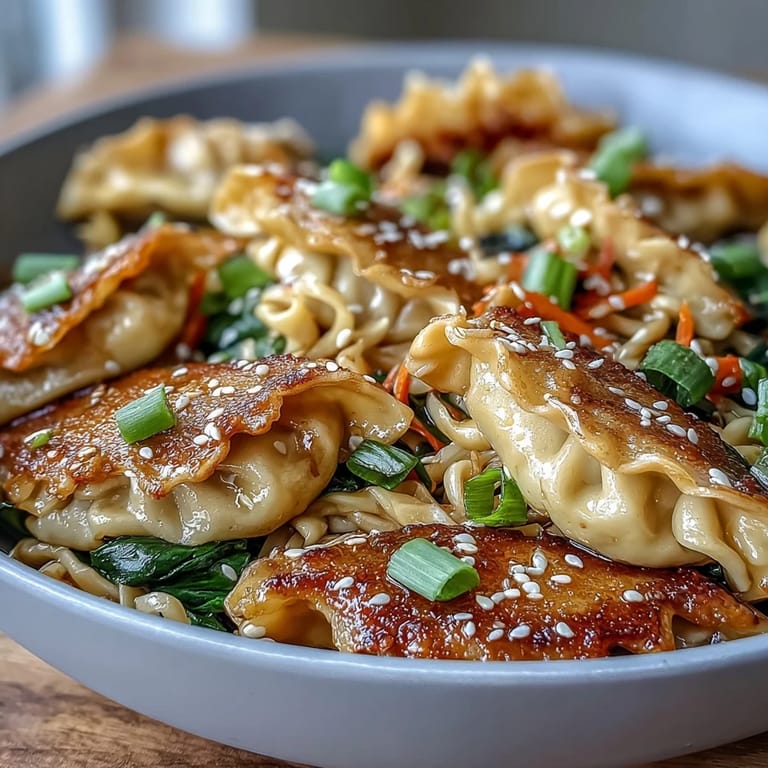
 There's something magical about throwing together a weeknight dinner that tastes like you've been cooking for hours when really it took barely half that time. I discovered potsticker noodle bowls on one of those evenings when my kitchen felt too small for my appetite but my time was even smaller. The beauty of this dish is how it comes together in one pan, each component adding its own voice to something that feels both intentional and wonderfully casual.
I made this for my partner on a Tuesday night when we both came home starving and slightly grumpy, and something shifted the moment the garlic hit the hot sesame oil. The smell alone seemed to reset the mood in our tiny kitchen, and by the time we sat down with these steaming bowls, we were actually talking and laughing instead of just eating in that exhausted silence. That's when I knew this recipe had legs.
Ingredients
- Frozen potstickers (16 oz): These are your shortcut to depth and texture; don't feel guilty about using them because they're genuinely delicious and they take the pressure off you to make everything from scratch.
- Lo mein or spaghetti noodles (8 oz): Lo mein feels more authentic here, but spaghetti works just fine and honestly tastes nearly identical once everything's tossed together.
- Sesame oil (1 tablespoon, plus more for tossing): This is the secret that makes everything taste like it came from a restaurant; use the good stuff because the flavor difference is noticeable.
- Garlic (2 cloves, minced): Fresh garlic matters more here than almost anywhere else; the heat brings out its sweetness and that becomes your flavor anchor.
- Shredded carrots and red cabbage (1 cup each): The shredding is already done if you buy them pre-cut, which is a kindness to your hands and your schedule.
- Baby spinach or bok choy (2 cups): The spinach wilts down so dramatically that two cups becomes almost nothing, so don't be shy; bok choy holds its shape better if you prefer texture.
- Green onions (3, sliced): These are pure brightness; they go in at the end and wake up everything that came before.
- Soy sauce, oyster sauce, rice vinegar, sugar, and black pepper: This combination is balanced and forgiving; you can adjust sweetness or saltiness to your preference without ruining anything.
Tired of Takeout? 🥡
Get 10 meals you can make faster than delivery arrives. Seriously.
One email. No spam. Unsubscribe anytime.
Instructions
- Start your potstickers:
- Follow the package directions and cook them in your large skillet, which is usually a quick pan-fry or steam depending on the brand. Once they're golden and cooked through, move them to a plate where they'll wait patiently for their comeback moment.
- Get your noodles going:
- Boil salted water and add noodles, cooking them until they're just shy of fully tender because they'll soften more when you toss everything together later. Drain them quickly and toss with a small drizzle of sesame oil so they don't fuse into one sad clump.
- Build your aromatics:
- Heat that tablespoon of sesame oil in your skillet over medium heat and add the garlic, letting it sit for just 30 seconds until the smell becomes almost aggressive in the best way. This is the moment your kitchen starts smelling like dinner instead of just ingredients.
- Soften your vegetables:
- Throw in the carrots and red cabbage and stir-fry for a couple of minutes until they're just starting to lose their raw crunch but still have personality. They should still have a little resistance when you bite them, not turn into mush.
- Wilt your greens:
- Add the spinach or bok choy and cook for just a minute or two, watching as it collapses under the heat and mingles with everything else. It happens faster than you think, so stay close.
- Make your sauce:
- Whisk together the soy sauce, oyster sauce if you're using it, rice vinegar, sugar, and pepper in a small bowl, tasting it as you go. This is your chance to adjust; if it needs more sweetness or salt, now's the time.
- Bring it together:
- Add the cooked noodles and sauce to the skillet and toss everything so the noodles get coated and the vegetables get tangled throughout. The heat will help the sauce cling to everything.
- Reintroduce your potstickers:
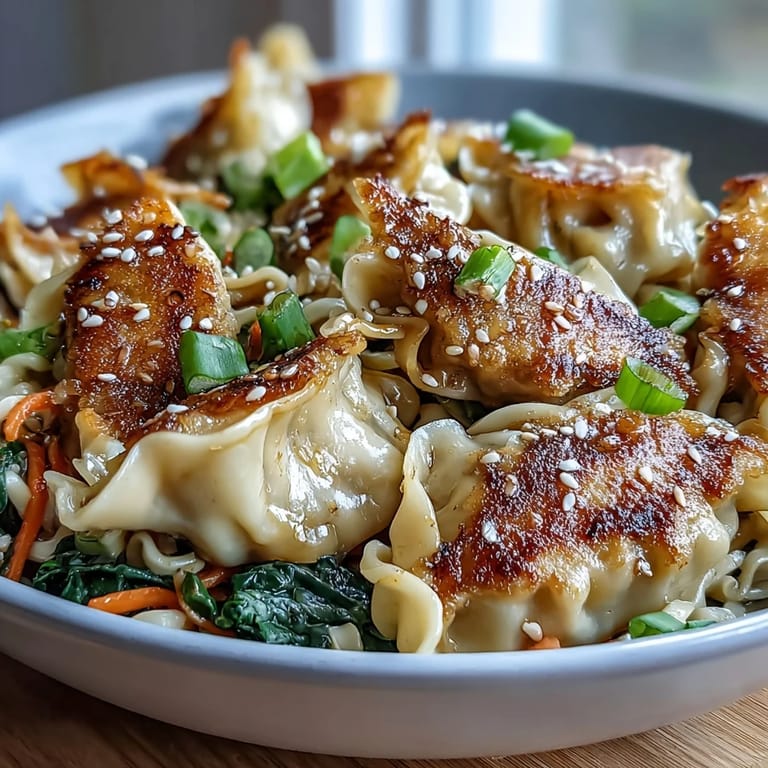
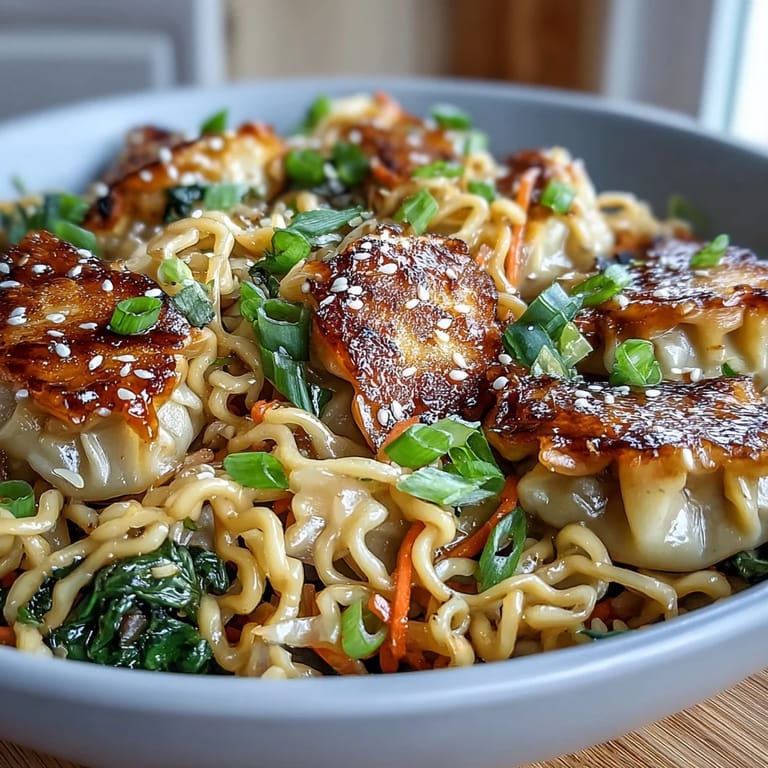
- Gently fold the potstickers back into the mix and toss until everything's heated through and feels like one unified dish. This is where the textures really start to matter; the soft noodles, the tender vegetables, the crispy outside of the potstickers.
- Finish and serve:
- Divide everything into bowls and top with sliced green onions and sesame seeds if you have them, which you probably should because they add a toasty depth that feels purposeful. Serve while it's still steaming.
 Save to Pinterest
 My mom tried this on a random Sunday and mentioned afterward that it reminded her of the noodle shops we'd visit when she was younger, which felt like the highest compliment possible. It's funny how food can connect you to memories you didn't even know you were carrying, and suddenly a simple weeknight dinner becomes a small moment of time travel.
Why This Works as a One-Pan Dinner
The genius of this dish is its efficiency without sacrificing flavor or texture. You're using the same skillet for potstickers and vegetables, which means less cleanup but also means the flavors from the potstickers linger in the pan and season everything that comes after. It's cooking math working in your favor; the fond left behind from the potstickers becomes part of your sauce.
How to Customize It Without Overthinking
This bowl wants you to play with it, honestly. If you have bell peppers in your crisper drawer, slice them and throw them in with the carrots. Snap peas add a nice crunch if you want to compete with the potsticker texture. Mushrooms bring umami if you're feeling earthy. The core formula stays intact; you're just adding more vegetables and the sauce stretches to accommodate them without complaint.
Timing and Make-Ahead Strategy
The whole thing takes 30 minutes from start to finish, which is genuinely honest timing and not me rounding down. You can prep your vegetables an hour or two ahead if you're thinking strategically about your evening, which gives you more breathing room when you actually start cooking. The leftovers last about two days in the refrigerator, though they taste best within the first 24 hours when the noodles haven't absorbed all the liquid and become too soft.
- If you're making this for a crowd, double the batch and use a larger skillet so everything fits without overcrowding.
- Rice noodles and tamari swap in beautifully if you're navigating gluten restrictions and want to keep everything tasting exactly right.
- Vegetarian oyster sauce exists and works perfectly if you want to keep this plant-based or just prefer it; the flavor difference is minimal.
 Save to Pinterest
 This is the kind of dinner that works on its own but also feels generous when you're feeding other people. It's unpretentious enough that you won't stress about making it, but thoughtful enough that it never feels like you took a shortcut.
Common Recipe Questions
- → Can I use fresh potstickers instead of frozen?
Yes, fresh potstickers work well. Just adjust the cooking time according to the package instructions, as fresh dumplings typically cook faster than frozen ones.
- → What noodles work best for this dish?
Lo mein noodles are ideal, but spaghetti, linguine, or rice noodles all work beautifully. Just cook until al dente and toss with sesame oil to prevent sticking.
- → How can I make this vegetarian?
Use vegetable potstickers, swap oyster sauce for vegetarian mushroom sauce, and ensure your noodles don't contain egg. The result is just as delicious and satisfying.
- → Can I prepare this ahead for meal prep?
Leftovers keep well in the refrigerator for up to 2 days. Store components separately if possible, and reheat gently with a splash of water to refresh the noodles.
- → What vegetables can I add or substitute?
Bell peppers, snap peas, mushrooms, broccoli, or snow peas all work wonderfully. Feel free to use whatever vegetables you have on hand for a customizable bowl.
- → Is this dish spicy?
The base dish is not spicy. Add chili garlic sauce, red pepper flakes, or sriracha if you prefer some heat. The garlicky sauce provides plenty of flavor without the spice.