 Save to Pinterest
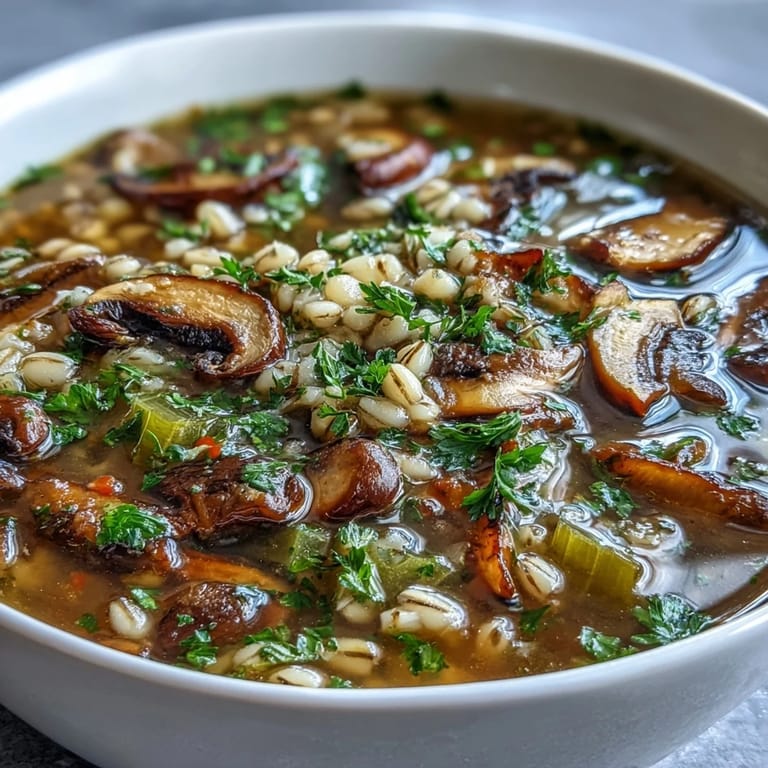
 There's something about the smell of dried mushrooms hitting hot water that stops me mid-morning—earthy, almost ancient, like opening a book that's been sitting in a cellar. My grandmother used to make this soup on raw afternoons when the kitchen felt like the warmest room in the house, and somehow it became the soup I reach for when I need something that tastes like home but doesn't require hours of fussing. The barley gets tender and creamy, the mushrooms turn silky, and by the time it's done simmering, your whole place smells like a proper deli in the best possible way.
I made this for my dad when he was recovering from a cold, and he sat at the kitchen counter just breathing in the steam before he even took a spoonful—that's when I knew it was the right call. He asked for seconds, then a third bowl a few days later, and suddenly it became the soup he requests instead of the one his coworkers bring from their favorite deli.
Ingredients
- Dried shiitake mushrooms (1 oz / 28 g): These are the soul of the soup, packed with umami that fresh mushrooms alone just can't deliver—soak them properly to extract every bit of flavor into the broth.
- White mushrooms, sliced (8 oz / 225 g): Fresh mushrooms add body and texture; don't skip them because the combination of dried and fresh creates that restaurant-quality depth.
- Pearl barley, rinsed (3/4 cup / 130 g): Rinsing removes excess starch and keeps the soup from turning gluey, plus it absorbs the broth flavors as it cooks.
- Olive oil (2 tbsp): Use a decent quality oil since it's one of the few fat components here—it should taste good on its own.
- Onion, diced (1 medium): The foundation that everything else builds on; don't rush the sauté step.
- Carrots, diced (2 medium): They add natural sweetness that balances the earthiness of the mushrooms.
- Celery stalks, diced (2): This is what makes it taste like it came from somewhere intentional, not just thrown together.
- Garlic cloves, minced (3): Add it after the softer vegetables so it doesn't burn and turn bitter.
- Low-sodium vegetable broth (8 cups / 2 L): Low-sodium matters here because you're seasoning as you go and the mushroom liquid is already concentrated.
- Bay leaves (2), dried thyme (1 tsp), dried parsley (1 tsp): These aromatics work quietly in the background, building layers of flavor without announcing themselves.
- Salt and freshly ground black pepper, to taste: Taste it before you finish—the mushroom soaking liquid adds salt, so you might need less than you'd expect.
- Fresh parsley, chopped (2 tbsp), optional: A handful on top brings brightness and a little visual pop.
Tired of Takeout? 🥡
Get 10 meals you can make faster than delivery arrives. Seriously.
One email. No spam. Unsubscribe anytime.
Instructions
- Wake up the dried mushrooms:
- Pour boiling water over the shiitake mushrooms and let them sit for 20 minutes—you'll watch them plump up and soften. Strain them through cheesecloth or a fine sieve to catch any grit, because that soaking liquid is liquid gold for your broth.
- Build your base:
- Heat olive oil in your pot and sauté the onion, carrots, and celery for about 5 minutes until they start to soften and smell incredible. They should have a bit of give when you poke them but still hold their shape.
- Toast the garlic:
- Add minced garlic and cook for just one minute—you want fragrant, not burned, which happens faster than you'd think. Your nose will tell you when it's right.
- Add the mushrooms:
- Stir in the fresh sliced mushrooms and your rehydrated shiitake pieces, cooking for about 5 minutes until you see liquid starting to pool at the bottom of the pot. That's the mushrooms releasing their moisture and flavor into the soup.
- Bring it all together:
- Pour in the barley, the reserved mushroom soaking liquid, and your vegetable broth. Add the bay leaves, thyme, and parsley, then season with salt and pepper—but go light, you can always add more.
- Let time do the work:
- Bring everything to a boil, then turn the heat down low, cover, and simmer for 50 to 60 minutes, stirring occasionally. The barley will go from chewy to tender, and the broth will deepen in color and flavor.
- Final taste and serve:
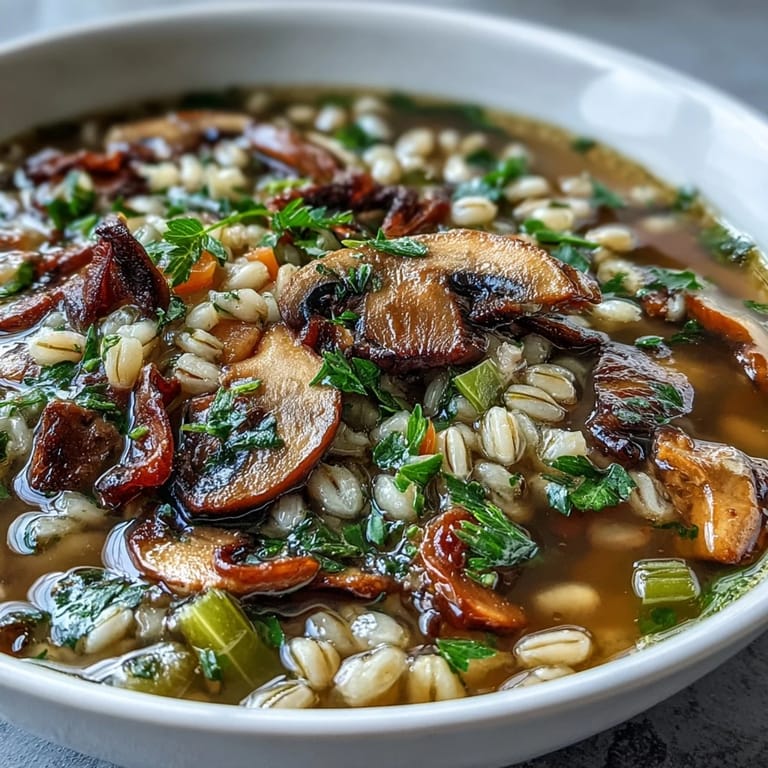
- Remove the bay leaves and taste—adjust salt and pepper if needed. Ladle into bowls and top with fresh parsley if you have it.
 Save to Pinterest
 My coworker told me she makes double batches and freezes half, then on nights when she's exhausted, she just pulls it out and remembers that she's capable of taking care of herself. That's the quiet power of a good soup.
Why Dried Mushrooms Are Worth the Soak
The first time I used fresh shiitake mushrooms instead of dried ones, the soup felt flat—like I'd missed something crucial. Dried mushrooms concentrate their flavor because all the water is gone, which means when you rehydrate them, you're getting pure umami in every bite. The soaking liquid itself becomes part of the broth, doubling down on that savory depth that makes this soup taste like it's been simmering for hours instead of just one.
Timing and Temperature Matter
I learned the hard way that if you don't actually bring the soup to a boil before lowering the heat, the barley takes forever to soften and everything tastes slightly underdeveloped. A proper boil followed by a gentle simmer means the barley reaches that creamy tenderness around 50 minutes, not 90. Keep a lid on the pot so you're not constantly adding broth to replace what's evaporating—that changes the flavor balance as you go.
Serving and Storing for Maximum Comfort
This soup gets better after a day or two in the fridge because all those flavors have time to mingle and settle—make it on a Sunday and you'll have a better version of it by Wednesday. The barley will have absorbed more broth, so the texture becomes almost creamy even though there's no cream in sight, and the mushroom flavor deepens. Here's what works best for keeping it fresh and ready:
- Store it in an airtight container for up to four days in the refrigerator, or freeze for up to three months if you want to save it longer.
- When reheating, warm it gently over medium heat and add a splash of broth or water to loosen it up if needed.
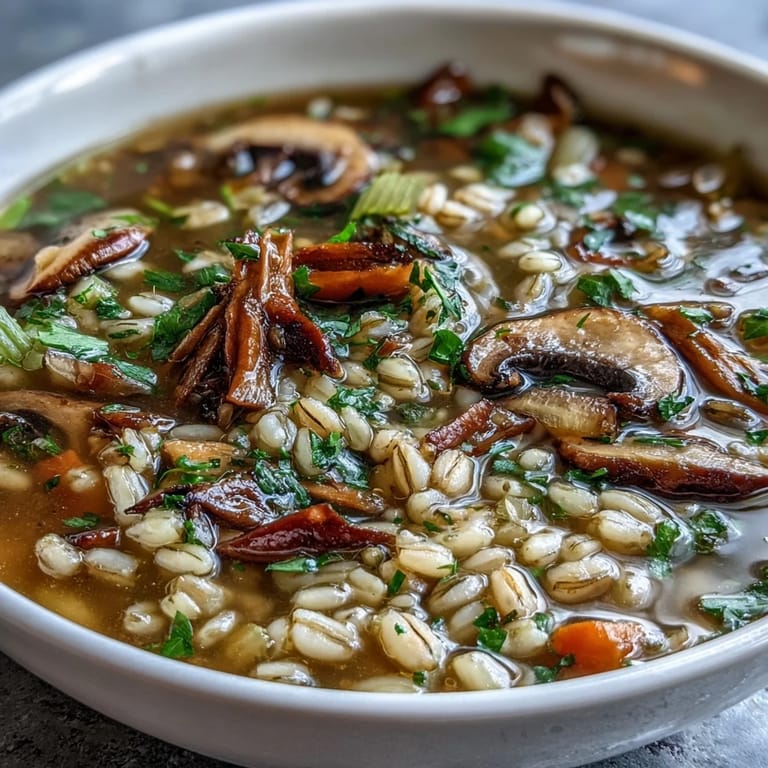
- Serve with thick slices of rye bread or a crusty roll to push the soup around the bowl and catch every drop.
 Save to Pinterest
 This is the kind of soup that doesn't need to be fancy to be exactly what you needed. Make it when you need comfort, make it when you want to feed someone, make it just because your kitchen deserves to smell this good.
Common Recipe Questions
- → Can I make this soup ahead of time?
Absolutely. This soup actually tastes better the next day as flavors meld together. Store in the refrigerator for up to 4 days. The barley will continue absorbing liquid, so add extra broth when reheating to reach desired consistency.
- → Can I use quick-cooking barley instead of pearl barley?
Yes, but adjust cooking time. Quick barley typically needs 10-15 minutes to become tender. Add it during the last 15 minutes of simmering to prevent it from becoming mushy.
- → Is there a substitute for dried shiitake mushrooms?
Dried porcini mushrooms work beautifully as an alternative. If you don't have dried mushrooms, simply increase fresh mushrooms to 12 ounces and add an extra cup of broth. The flavor will be slightly less intense but still delicious.
- → Can I freeze this soup?
Yes, freeze for up to 3 months in airtight containers. Note that barley will become very soft after freezing and reheating. Some cooks prefer to freeze the soup without barley, adding freshly cooked barley when reheating.
- → How do I make this soup gluten-free?
Substitute pearl barley with an equal amount of rinsed quinoa, brown rice, or buckwheat groats. Adjust cooking time according to your grain choice—quinoa needs about 15 minutes, while brown rice requires 45 minutes.