 Save to Pinterest
 My neighbor knocked on my door one Tuesday evening holding a jar of maple syrup and a bottle of soy sauce, insisting I try her grandmother's glaze on salmon. I was skeptical at first because sweet and salty seemed too simple to be memorable. But twenty minutes later, I was scraping the pan with a spoon, stunned by how something so easy could taste this balanced. That night changed how I thought about weeknight dinners entirely.
I made this for my sister after she had her second baby, and she texted me three days later asking for the recipe again because she'd already made it twice. She said it was the first meal that didn't feel like a chore to put together. Watching her enjoy something I shared reminded me why I love cooking for people, especially when life gets overwhelming and a good meal can feel like a small rescue.
Ingredients
- Salmon fillets: Skin on helps the fish hold together during cooking, but skinless works just as well if you prefer a cleaner presentation.
- Pure maple syrup: The real stuff brings a deeper, warmer sweetness than pancake syrup ever could, and it caramelizes beautifully in the pan.
- Low sodium soy sauce: This keeps the glaze from turning too salty, giving you control over the seasoning without overpowering the maple.
- Rice vinegar: A gentle tang that cuts through the richness and brightens the whole glaze without making it sharp.
- Fresh lime juice: Adds a lively citrus note that wakes up your palate and keeps the glaze from feeling one dimensional.
- Sesame oil: Just a teaspoon brings a toasted, nutty warmth that ties everything together.
- Garlic and ginger: Freshly minced and grated, these two create the aromatic backbone that makes the kitchen smell incredible.
- Jasmine or basmati rice: Fluffy and fragrant, either variety soaks up the glaze and complements the salmon without competing.
- Broccoli, snap peas, and bell pepper: Quick cooking vegetables that stay crisp and colorful, adding texture and nutrition to every forkful.
- Toasted sesame seeds and green onions: Simple garnishes that add a nutty crunch and a pop of freshness right before serving.
Tired of Takeout? 🥡
Get 10 meals you can make faster than delivery arrives. Seriously.
One email. No spam. Unsubscribe anytime.
Instructions
- Cook the Rice:
- Rinse the rice until the water runs clear, then combine it with water in a medium saucepan. Bring to a boil, reduce to a gentle simmer, cover, and let it steam for 12 minutes before removing from heat and resting for 5 minutes.
- Make the Glaze:
- Whisk together maple syrup, soy sauce, rice vinegar, lime juice, sesame oil, minced garlic, and grated ginger in a small bowl until smooth. The smell alone will make you want to drizzle it on everything.
- Season the Salmon:
- Pat the salmon fillets dry with a paper towel and season both sides lightly with salt and black pepper. Dry fish sears better and helps the glaze stick.
- Sear the Salmon:
- Heat vegetable oil in a large nonstick skillet over medium high heat and place the salmon skin side down if applicable. Let it cook undisturbed for 3 minutes until the skin crisps or the flesh develops a golden crust.
- Glaze and Finish:
- Flip the fillets gently, then pour the maple soy glaze over the top. Continue cooking for 3 to 4 minutes, spooning the glaze over the fish as it thickens into a glossy coating.
- Prepare the Vegetables:
- While the salmon finishes, steam or quickly saute the broccoli, snap peas, and bell pepper until they are tender but still have a satisfying snap. Season lightly with salt.
- Assemble and Serve:
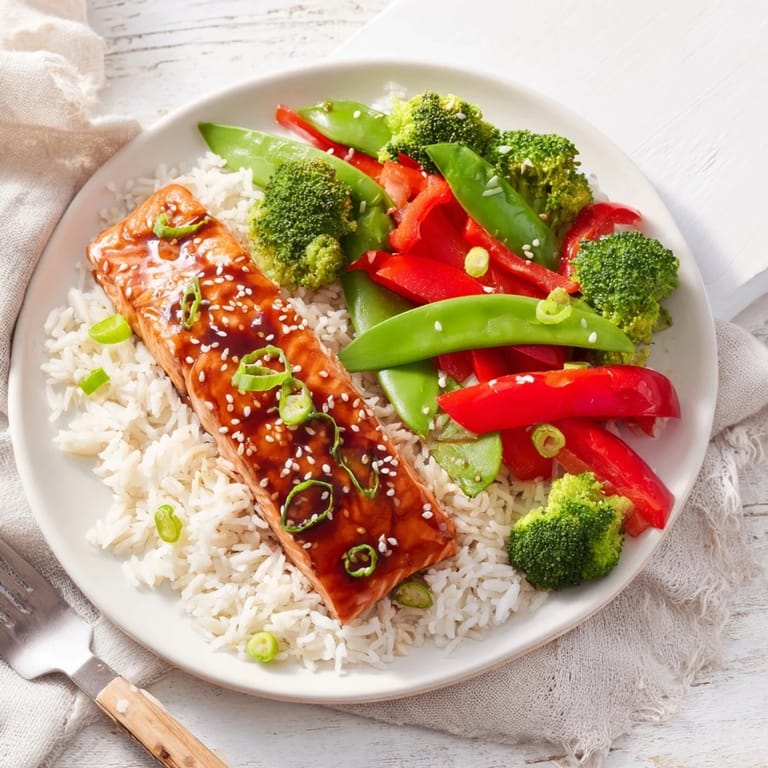
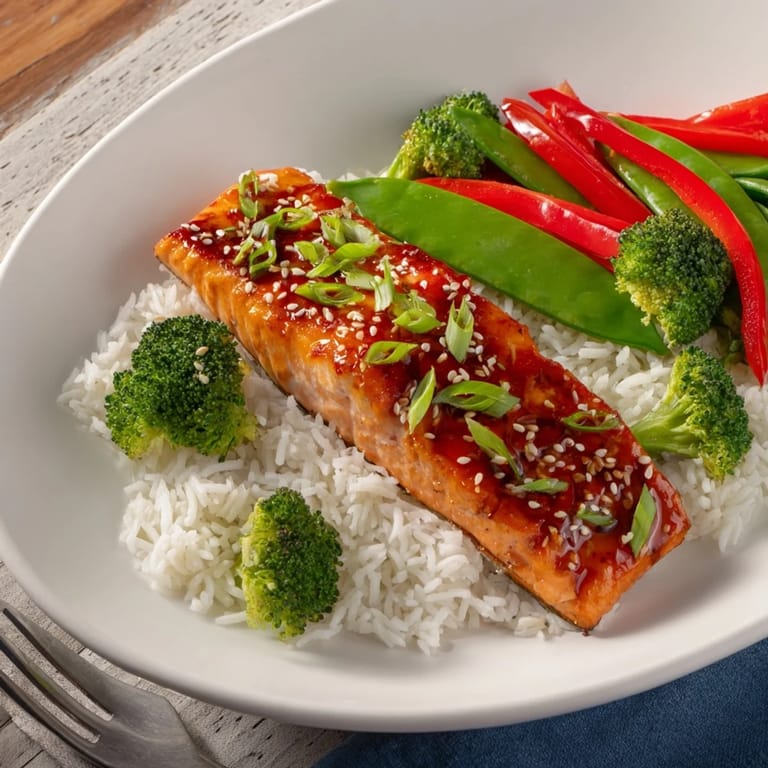
- Divide the fluffy rice among bowls, top with the crisp vegetables and glazed salmon, then drizzle any remaining glaze from the skillet over everything. Garnish with sliced green onions, toasted sesame seeds, and lime wedges for squeezing.
 Save to Pinterest
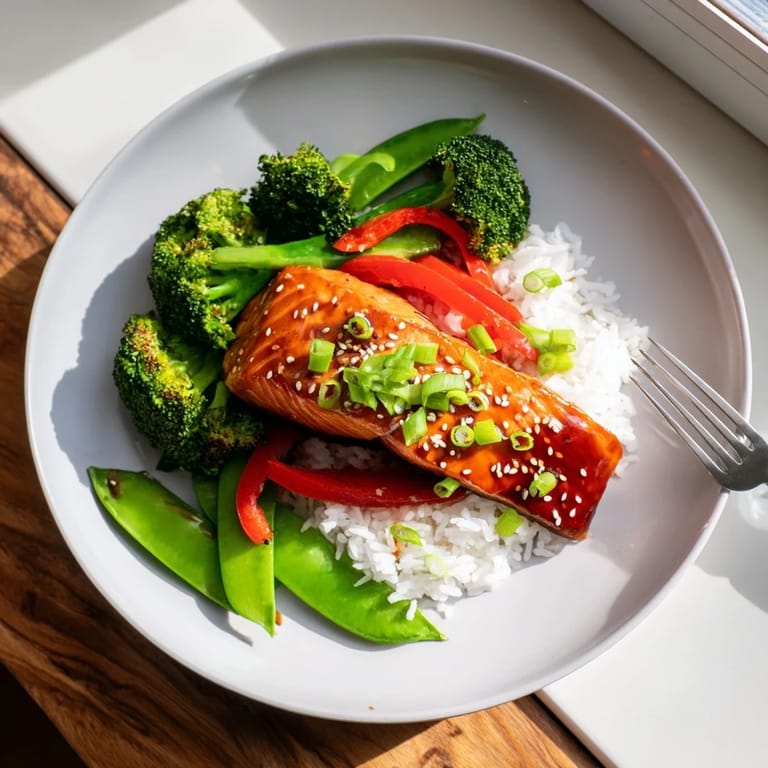
 The first time I plated this dish, I stood back and admired how vibrant it looked, almost too pretty to eat. My husband walked in, took one bite, and asked if we could have it every week. That moment reminded me that sometimes the simplest combinations create the deepest satisfaction, and a beautiful plate can turn an ordinary evening into something worth remembering.
Storing and Reheating
Leftovers keep well in an airtight container in the fridge for up to two days, though the glaze may soak into the rice a bit. Reheat gently in a skillet over low heat with a splash of water to loosen the glaze, or microwave in 30 second intervals to avoid drying out the salmon. The vegetables lose some of their snap when reheated, so I often eat them cold on the side or toss them into a quick salad the next day.
Customizing the Glaze
If you like a little heat, whisk in a pinch of red pepper flakes or a drizzle of sriracha when you make the glaze. Honey works beautifully in place of maple syrup if that is what you have on hand, though it will taste slightly floral instead of earthy. I have also added a splash of orange juice for a brighter citrus note, and it paired wonderfully with the ginger without overshadowing the soy.
Choosing Your Salmon
Wild caught salmon has a firmer texture and a deeper flavor, while farmed salmon tends to be richer and more buttery. Either works perfectly here, so choose based on what looks freshest at the market or what fits your budget. I have learned that thicker fillets hold up better to the glaze and stay moist, while thinner pieces cook faster but can dry out if you are not careful.
- Look for fillets with bright color and a clean ocean smell, never anything fishy or dull.
- If the skin is on, make sure it is scaled and dry before cooking so it crisps nicely.
- Let the salmon sit at room temperature for 10 minutes before cooking for more even heat distribution.
 Save to Pinterest
 This dish has become my go to when I want something nourishing without the fuss, and every time I make it, I remember that good food does not need to be complicated. I hope it brings you the same kind of easy joy it has brought to my table.
Common Recipe Questions
- → Can I prepare the glaze ahead of time?
Yes, you can whisk together the maple soy glaze up to 24 hours in advance. Store it in an airtight container in the refrigerator and give it a quick stir before using.
- → How do I know when the salmon is cooked through?
The salmon is done when it flakes easily with a fork and the flesh turns opaque throughout. This typically takes 6-7 minutes total cooking time. Avoid overcooking to maintain moisture.
- → What can I substitute for jasmine rice?
Basmati rice, brown rice, or white rice work well as substitutes. Adjust cooking times according to your chosen grain. Alternatively, try cauliflower rice for a lower-carb option.
- → Is this dish suitable for meal prep?
Yes, the salmon and vegetables can be prepared ahead and stored separately for 2-3 days. Keep the glaze separate and reheat gently before serving to maintain the best texture and flavor.
- → How can I make this spicier?
Add a pinch of red pepper flakes, sriracha, or a dash of chili oil to the glaze. Start with a small amount and adjust to your heat preference. Fresh jalapeño slices make a great garnish too.
- → What does skin-on salmon offer compared to skinless?
Skin-on salmon helps retain moisture during cooking and adds a crispy texture when cooked properly. The skin is nutritious and edible. If you prefer skinless, cook it slightly longer to prevent drying out.