 Save to Pinterest
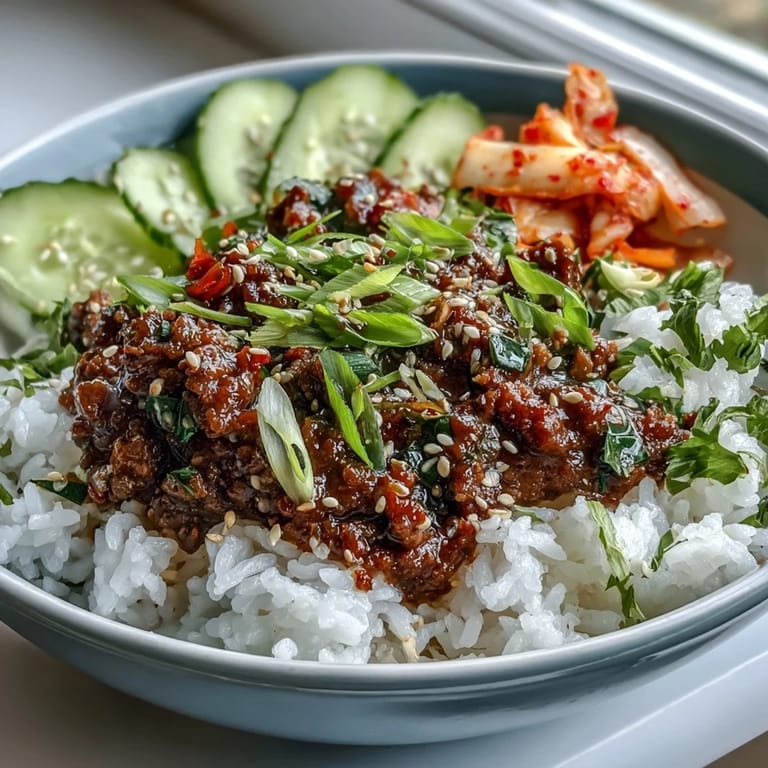
 My first Korean beef bowl came together almost by accident on a weeknight when I had gochujang in the fridge and ground beef thawing on the counter. I wasn't following any recipe, just layering flavors the way I'd eaten them in Seoul a few years back. The moment that spicy-sweet sauce hit the warm rice, something clicked, and I realized this wasn't just dinner, it was the kind of meal that makes you slow down between bites.
I made this for my partner after he mentioned craving Korean food, and watching his face light up when he took that first bite was worth every minute at the cutting board. He went back for seconds without hesitation, and now it's become our go-to when we want to impress friends without spending all evening cooking.
Ingredients
- Lean ground beef (1 lb): The foundation of this bowl, and using lean meat means less grease to drain and a cleaner final dish.
- Gochujang (3 tbsp): This fermented Korean chili paste is where all the magic lives, bringing umami depth and that signature heat that sets Korean food apart.
- Fresh garlic and ginger: These two aromatics become fragrant almost instantly when they hit the hot oil, and they anchor the entire flavor profile in something warm and alive.
- Soy sauce and sesame oil: Together they add saltiness and a toasted, nutty richness that prevents the dish from tasting one-dimensional.
- Brown sugar and rice vinegar: A small amount of each creates that sweet-sour tension that makes Korean food so craveable and keeps you reaching for another bite.
- Rice vinegar for the pickles (1/2 cup): Fresh, tangy pickled vegetables cut through the richness of the beef and rice, giving your palate a reset between mouthfuls.
- Cucumber, radish, and kimchi for serving: These raw and fermented elements add textural contrast and brightness that balances the cooked, saucy components.
- Toasted sesame seeds (1 tbsp): A small garnish that adds visual appeal and a subtle crunch that elevates the entire bowl.
Tired of Takeout? 🥡
Get 10 meals you can make faster than delivery arrives. Seriously.
One email. No spam. Unsubscribe anytime.
Instructions
- Make the pickled vegetables while everything else happens:
- Whisk together rice vinegar, sugar, and salt in a small bowl until the granules dissolve completely. Add your julienned carrot and daikon radish, give it a good toss, and let it sit while you work on the beef. By the time you're ready to assemble, they'll have softened slightly and taken on that bright, tangy flavor.
- Sear the aromatics until they wake up:
- Heat oil in a large skillet over medium-high heat and let it shimmer for a moment before adding minced garlic and ginger. You'll know they're ready when the kitchen smells impossibly good, usually within 60 seconds, and you'll see them turn golden at the edges.
- Brown the beef with purpose:
- Add your ground beef and break it into smaller pieces as it cooks, stirring occasionally so it browns evenly rather than steaming. After 5 to 6 minutes, it should be cooked through with no pink remaining, and you can drain any excess fat if there's more than a tablespoon pooling in the pan.
- Build the sauce and let it thicken:
- Stir in the gochujang, soy sauce, brown sugar, rice vinegar, and sesame oil, mixing well so the paste distributes evenly. Let everything bubble gently for 2 to 3 minutes until the sauce reduces slightly and clings to the beef in a glossy coat, then fold in half the green onions and remove from heat.
- Assemble with intention:
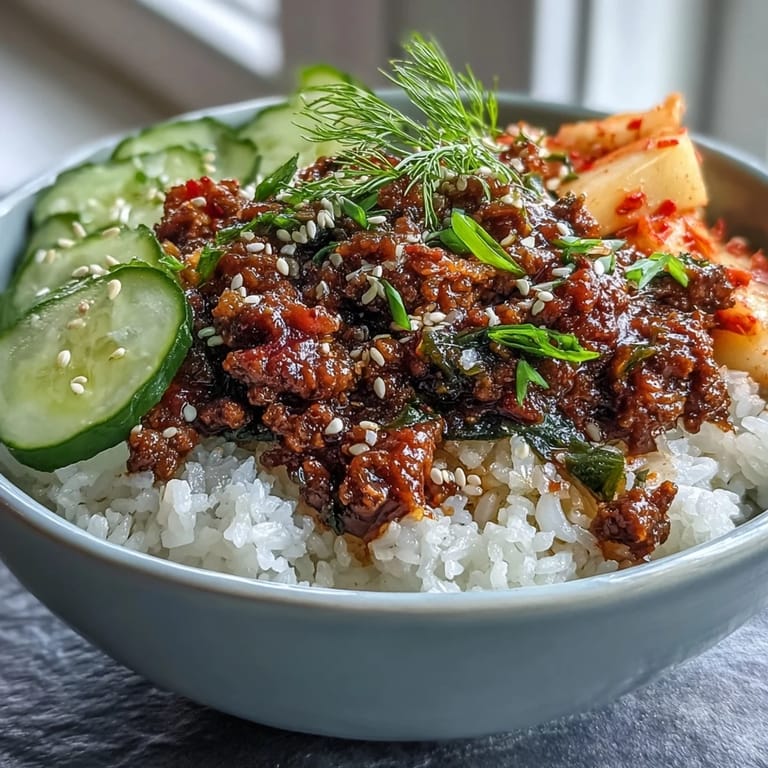
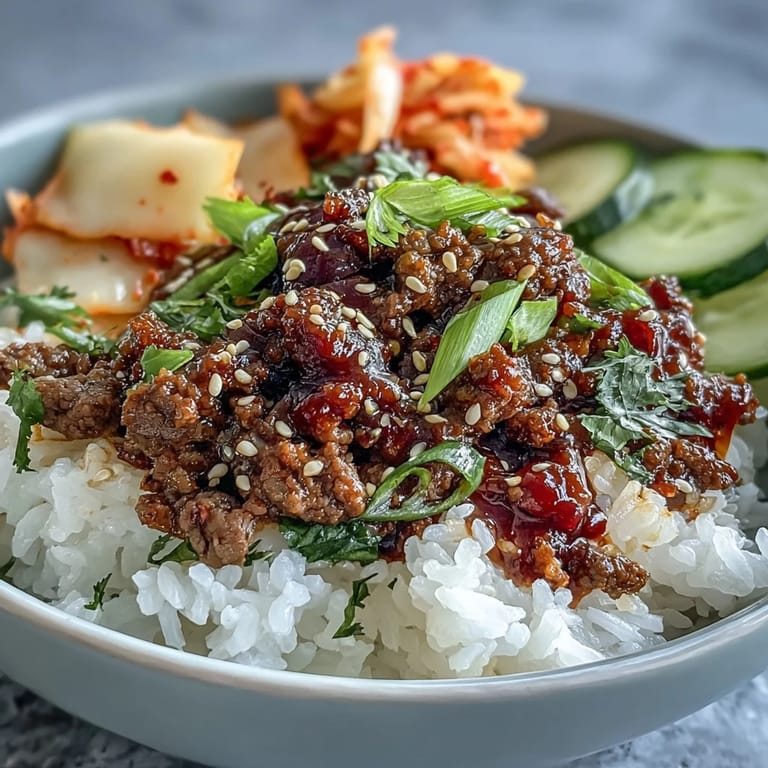
- Divide warm rice into four bowls, top each with a generous scoop of the beef mixture, then arrange the pickled vegetables, fresh cucumber, radish, and kimchi in little clusters around the beef. Finish with the remaining green onions and a sprinkle of toasted sesame seeds, and serve right away while everything is still warm.
 Save to Pinterest
 There's something deeply satisfying about a bowl that looks as beautiful as it tastes, where every component has its own moment to shine but works together to create something whole. This dish reminded me that Korean food is about balance, contrast, and never letting one flavor bully the others.
Why This Bowl Works
The genius of a Korean beef bowl is that it's not just seasoned meat on rice, it's a deliberate conversation between warm and cool, soft and crispy, fermented and fresh. Every element has a job, and when you eat it, your mouth is getting spice, sweetness, tang, umami, and textural variety in almost every bite. This is comfort food that doesn't bore you, which is why once you make it, you'll keep coming back.
Building Your Own Flavor
One of the beautiful things about this bowl is how forgiving it is to personalization. If you like more heat, a drizzle of sriracha or an extra tablespoon of gochujang transforms it into something fiercer without overwhelming the other flavors. You can swap ground chicken or turkey for the beef if that's what's in your fridge, and it works just as well, though the cook time might change by a minute or two depending on how finely ground it is.
Making It Your Own
The best part about mastering this recipe is realizing you can build it around what you have and what you're craving. Some nights I add a fried egg on top for richness, other times I'll toss in some sautéed mushrooms or spinach for more vegetables. The core sauce stays the same, but the bowl evolves with the season and your mood, which is the mark of a recipe that truly becomes yours.
- If you're making this for a crowd, you can cook the beef mixture hours ahead and gently reheat it just before serving, which keeps you out of the kitchen during the final rush.
- Keep extra gochujang in your pantry because once you have it on hand, you'll find yourself using it in stir-fries, marinades, and even as a condiment for eggs.
- Toasted sesame seeds make a surprising difference in the final bite, so don't skip them even though they seem like a minor garnish.
 Save to Pinterest
 This bowl has become a regular in my rotation because it tastes like the food I love, asks very little of me, and never disappoints. Make it once and you'll understand why Korean food has captured so many hearts.
Common Recipe Questions
- → What makes gochujang special?
Gochujang is a fermented Korean chili paste that delivers a complex blend of sweet, spicy, and umami flavors. Its fermentation process creates depth that fresh chilies can't match, making it the signature flavor base in Korean cooking.
- → Can I make this less spicy?
Reduce the gochujang to 1-2 tablespoons and balance with additional brown sugar. The heat level varies by brand, so taste as you go and adjust accordingly.
- → How long do pickled vegetables keep?
Quick-pickled carrots and daikon will stay fresh in the refrigerator for up to one week. Store them in a sealed jar with the pickling liquid for best results.
- → What other proteins work well?
Ground chicken, turkey, or pork make excellent alternatives. For a vegetarian version, use crumbled tofu or textured vegetable protein seasoned the same way.
- → Is this meal prep friendly?
Yes, prepare the beef and pickled vegetables up to 4 days in advance. Store components separately and assemble bowls fresh with warm rice for best texture.