 Save to Pinterest
 The sizzle hit before the smell did. I was standing over my biggest skillet, pushing cubed steak around with a wooden spatula, when that unmistakable sesame-soy aroma bloomed into the kitchen. My partner walked in, sniffed once, and said, Are we eating out? Nope—just recreating our favorite hibachi spot at home, minus the flying spatulas and the bill. That night taught me you don't need a flattop grill or theatrical knife skills to get that char-edged, umami-packed flavor we'd been craving since our last restaurant visit.
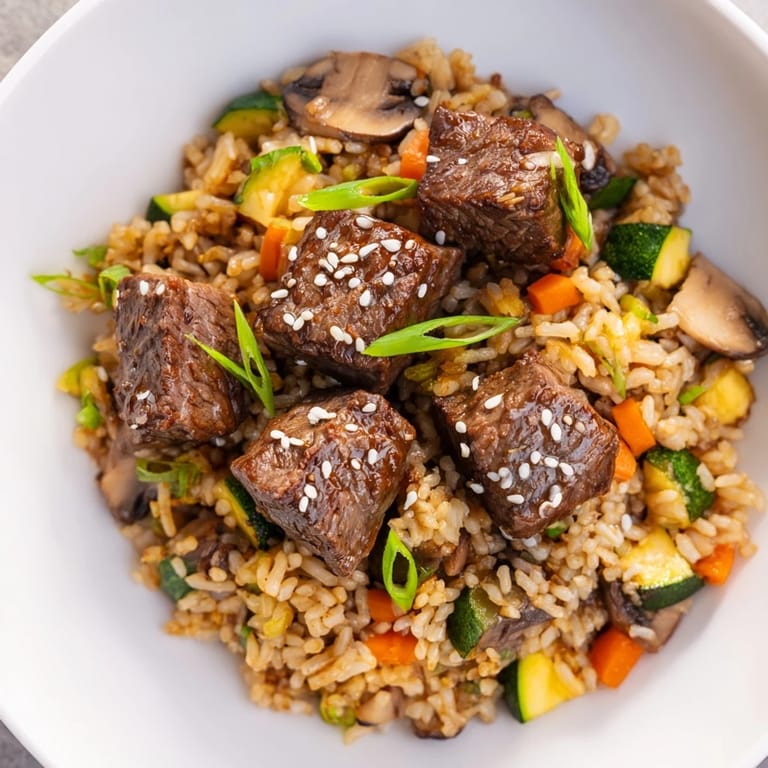
I made this the first time on a rainy Tuesday when takeout felt too expensive and cooking felt too hard. The marinade took two minutes to whisk together, and while the steak sat, I chopped vegetables without worrying about precision. My kids hovered near the stove, drawn by the sound of sizzling meat and the promise of fried rice. When I plated it with a sprinkle of sesame seeds, my youngest said it looked like restaurant food, and that small win made the whole week feel lighter.
Ingredients
- Sirloin steak, cut into 1-inch cubes: Sirloin is affordable and stays juicy when you don't overcook it; cut against the grain for maximum tenderness.
- Low-sodium soy sauce: Controls the salt level so you can adjust seasoning at the end without worry.
- Mirin: Adds a subtle sweetness that balances the soy; dry sherry works if you don't keep mirin on hand.
- Sesame oil: A little goes a long way—this is what gives the steak that nutty, toasted flavor.
- Garlic clove, minced: Fresh garlic is non-negotiable here; it blooms in the marinade and clings to every piece of meat.
- Cooked and cooled jasmine rice: Day-old rice is drier and fries up instead of turning gummy; spread fresh rice on a sheet pan to cool it fast if needed.
- Vegetable oil: High smoke point means you can crank the heat without burning.
- Onion, carrots, zucchini, mushrooms: This mix gives you sweetness, crunch, and umami; feel free to swap in bell peppers or broccoli.
- Frozen peas: They thaw in seconds and add pops of color and sweetness.
- Eggs: Scrambled right in the pan, they coat the rice and create little pockets of richness.
- Unsalted butter: Stirred in at the end, it makes everything glossy and adds a hint of richness you can taste but not name.
- Green onions: Half go in during cooking, half on top for a fresh, sharp finish.
Tired of Takeout? 🥡
Get 10 meals you can make faster than delivery arrives. Seriously.
One email. No spam. Unsubscribe anytime.
Instructions
- Marinate the steak:
- Toss the steak cubes with soy sauce, mirin, sesame oil, garlic, and black pepper in a bowl. Let them sit for at least 10 minutes while you prep everything else; the meat will soak up flavor and stay juicy when it hits the heat.
- Sear the steak:
- Heat 1 tablespoon of vegetable oil in a large skillet or wok over medium-high heat until it shimmers. Add the steak in a single layer and let it sit for a minute before stirring, so you get a nice brown crust; cook for 2 to 3 minutes total, then remove and set aside.
- Cook the vegetables:
- Add the remaining oil to the same pan and toss in the onion, carrots, zucchini, and mushrooms. Stir occasionally and let them soften and char slightly, about 4 to 5 minutes.
- Scramble the eggs:
- Push the vegetables to one side of the pan and pour the beaten eggs into the cleared space. Stir gently until just cooked, then mix them into the vegetables.
- Combine and fry the rice:
- Add the rice, peas, and cooked steak to the pan, breaking up any rice clumps with your spatula. Drizzle soy sauce over everything and toss until the rice starts to crisp and turn golden in spots.
- Finish and serve:
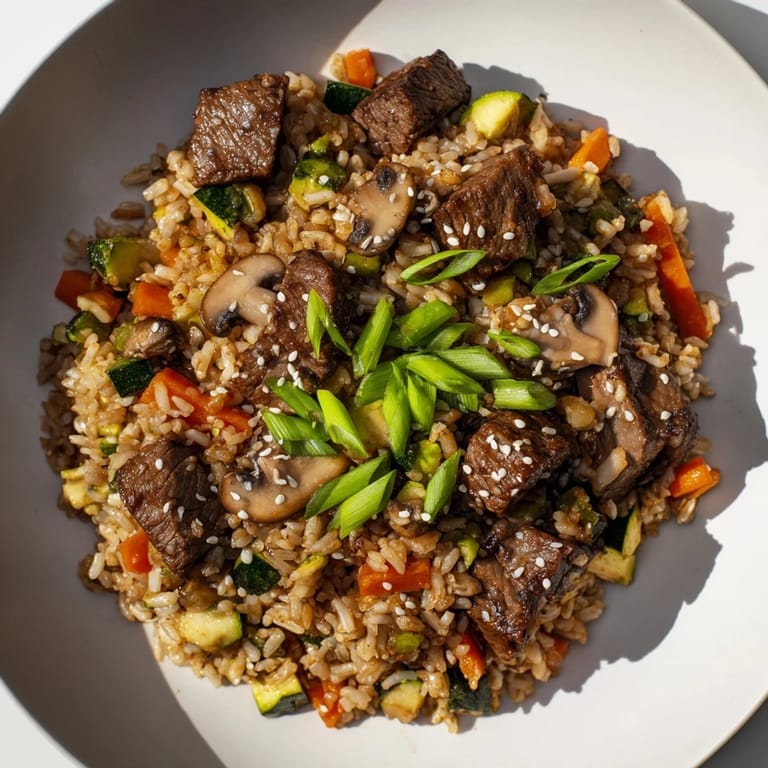
- Stir in the butter and half the green onions, then cook for another 2 to 3 minutes, tasting and adjusting salt and pepper as you go. Plate it hot, sprinkle with sesame seeds and the rest of the green onions, and enjoy immediately.
 Save to Pinterest
 This dish became our weeknight reset button. After long days when everyone felt scattered, we'd gather around the table with steaming plates of steak and rice, and the conversation would start to flow again. There's something about food that tastes special but doesn't demand hours in the kitchen—it reminds you that care doesn't always require complexity. Now, every time I hear that first sizzle, I think of full bellies, easy laughter, and the kind of comfort that doesn't need reservations.
Choosing Your Protein
Sirloin is my go-to because it's affordable and forgiving, but this recipe works beautifully with ribeye if you want extra marbling, or flank steak if you prefer a leaner cut. I've also swapped in chicken thighs, shrimp, or even firm tofu when I wanted to switch things up. Whatever you choose, cut it into uniform pieces so everything cooks evenly, and don't skip the marinade—it's what gives the protein that hibachi-style depth.
Vegetable Swaps and Add-Ins
The vegetables listed are just a starting point. I've used snap peas, bell peppers, baby corn, and even chopped bok choy with great results. The key is to keep the pieces roughly the same size so they cook at the same rate. If you're using something watery like tomatoes or spinach, add them at the very end so they don't make the rice soggy.
Serving and Storage
This fried rice is best eaten fresh, straight from the pan while the edges are still crispy. Leftovers keep in the fridge for up to three days and reheat well in a hot skillet with a splash of water to loosen things up. I've also packed it into meal prep containers with a side of yum yum sauce for quick lunches. Avoid microwaving if you can—stovetop reheating brings back that just-cooked texture.
- Drizzle with sriracha mayo or spicy ginger sauce for extra kick.
- Serve alongside miso soup or a simple cucumber salad for a full meal.
- Top with a fried egg if you want to make it even heartier.
 Save to Pinterest
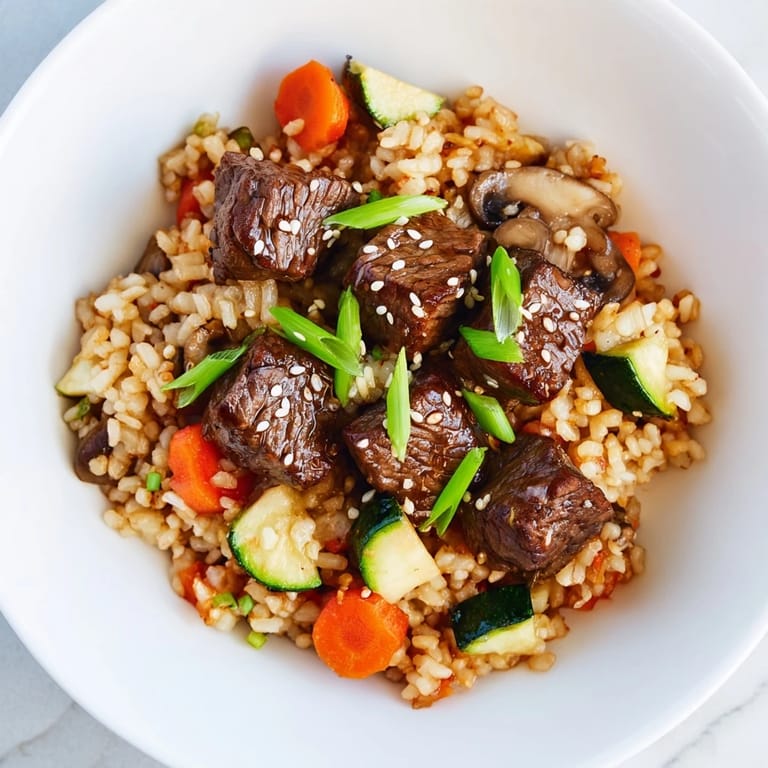
 This recipe taught me that restaurant flavors don't require restaurant equipment, just confidence and a hot pan. I hope it becomes a staple in your kitchen the way it has in mine.
Common Recipe Questions
- → Why should I use day-old rice for this dish?
Day-old rice grains are drier and firmer, preventing the mushy texture that fresh, warm rice creates. This allows each grain to stay separate and develop those desirable crispy, slightly charred edges when cooked in the hot pan.
- → Can I substitute the steak with other proteins?
Absolutely. Shrimp and chicken are excellent alternatives that cook quickly and absorb the savory marinade beautifully. Shrimp cooks in just 2-3 minutes, while diced chicken breast needs 3-4 minutes. Adjust seasoning as needed based on your protein choice.
- → What's the best way to prevent sticking when cooking fried rice?
Keep your pan or wok at medium-high heat and ensure it's properly preheated before adding oil. Use a spatula or wooden spoon to stir frequently, breaking up any rice clumps. The butter added at the end helps create those desirable crispy bits without excessive sticking.
- → How do I achieve that restaurant-style sear on the steak?
Pat the marinated steak cubes dry with paper towels before cooking—this removes excess moisture and promotes better browning. Use high heat and avoid overcrowding the pan, which drops the temperature and causes steaming instead of searing. Cook in a single layer for optimal crust development.
- → Can I prepare components ahead of time?
Yes, this dish is perfect for meal prep. Marinate the steak up to 4 hours ahead, dice all vegetables the night before, and cool cooked rice in the refrigerator. On cooking day, simply assemble and cook—the entire process takes just 20 minutes of active cooking time.
- → What sauces pair well with this dish?
Yum yum sauce and spicy mayo are traditional hibachi accompaniments that add creaminess and heat. Sriracha or chili oil drizzled on top brings additional complexity. For milder preferences, extra soy sauce or a squeeze of fresh lime juice brightens the flavors without overwhelming the dish.