 Save to Pinterest
 There's something almost meditative about assembling a Greek salad, the way each ingredient finds its place like pieces of a puzzle. My neighbor Maria taught me years ago that the secret isn't in some complicated technique—it's in respecting each component enough to let it shine. She'd stand at her kitchen counter on summer mornings, the Athens sun streaming through her window, and insist that the best salad is one made with intention, not haste. That lesson stuck with me, and now whenever I'm craving something bright and uncomplicated, this bowl is my go-to answer.
I made this for my book club last spring, and honestly, it was the quiet victory of the evening. Someone had expected a heavier spread, but the moment they tasted it, the conversation shifted—suddenly everyone was asking for the dressing recipe, and someone even went back for thirds. There's power in simplicity, and that night proved it to me once and for all.
Ingredients
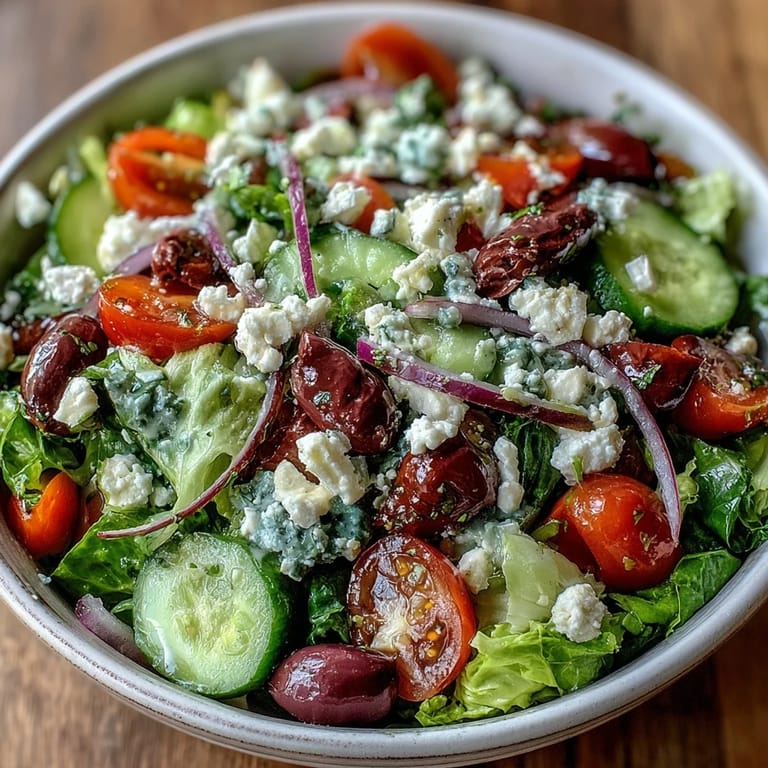
- Romaine lettuce: Choose heads that feel crisp and bright green; if it's wilted or brown at the edges, it won't carry the salad the way it should.
- Cherry tomatoes: Halve them just before assembly so they don't weep their juice and make everything soggy.
- Cucumber: Slice it thin enough to feel delicate on your tongue, thick enough to hold its structure.
- Red onion: A thin slice is all you need; this isn't about overpowering anyone with its sharpness.
- Feta cheese: Crumbled by hand tastes better than pre-crumbled, though I'll admit I don't always have the patience for that.
- Kalamata olives: Pit them yourself if you can—the flavor is brighter and less muted than the pre-pitted versions sitting in jars.
- Extra-virgin olive oil: This is where good olive oil actually earns its reputation; don't skimp or substitute.
- Red wine vinegar: The backbone of the dressing, sharp enough to wake up your palate but not so aggressive it overshadows everything else.
- Dried oregano: Rub it between your fingers as you sprinkle it into the vinaigrette to release its oils and deepen the flavor.
- Garlic: One clove minced fine means it dissolves into the dressing rather than lingering in chunks.
- Dijon mustard: Just a touch acts like an invisible hand, binding the oil and vinegar together.
Tired of Takeout? 🥡
Get 10 meals you can make faster than delivery arrives. Seriously.
One email. No spam. Unsubscribe anytime.
Instructions
- Build your base:
- Tear or chop your romaine into bite-sized pieces and pile it into a large bowl. There's no need to be precious about it; this salad celebrates looseness, not geometry.
- Add the vegetables:
- Scatter the tomatoes, cucumber, and red onion over the lettuce. At this point, it's just a pile of fresh things, but trust that it's about to become something more.
- Crown with cheese and olives:
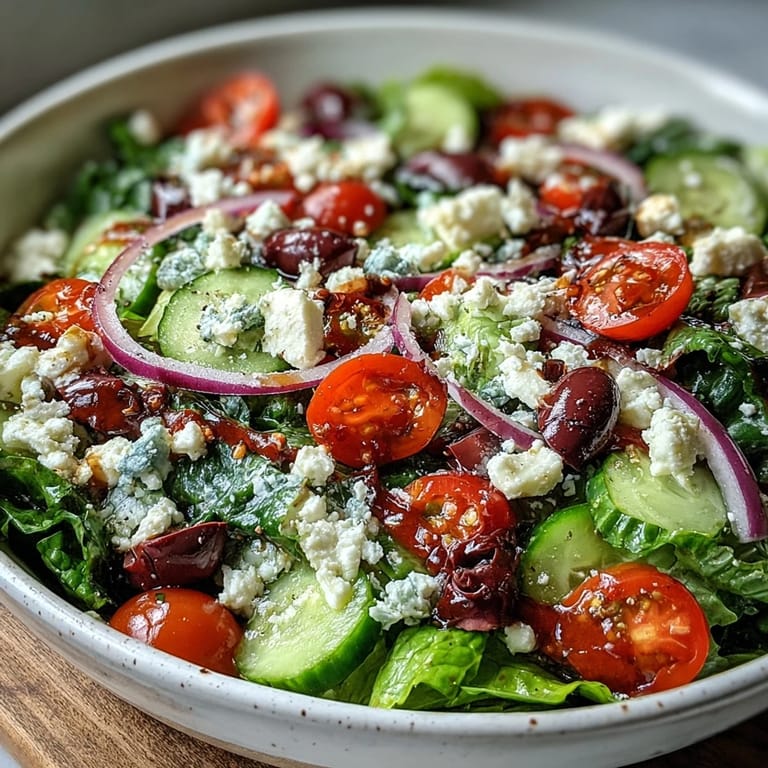
- Sprinkle the crumbled feta and halved olives across the top. This isn't just garnish—it's flavor architecture.
- Make the vinaigrette:
- Whisk together the olive oil, red wine vinegar, oregano, minced garlic, Dijon mustard, salt, and pepper in a small bowl or jar. Watch as it emulsifies and transforms into something glossy and golden, which means you're done.
- Dress and serve:
- Pour the vinaigrette over the salad just before serving, toss gently so everything gets touched but nothing gets bruised, and bring it to the table immediately. There's a window of perfection here—crisp lettuce, bright flavors—and it doesn't stay open long.
 Save to Pinterest
 This salad has become my answer to so many moments—quick weeknight dinners when cooking feels like too much, lunch that feels substantial without being heavy, side dish that actually makes people pause and eat vegetables without complaint. It reminds me that the best meals aren't always the complicated ones.
The Vinaigrette Secret
The magic happens when you whisk that oil and vinegar together with purpose. I used to just shake it all in a jar and hope, but Maria showed me the difference emulsification makes—how the mustard and garlic act like tiny ambassadors, helping the oil and vinegar actually get along instead of sitting on opposite sides of the bowl. Now I spend an extra minute really whisking, and every time I taste the difference. It's worth those few extra breaths of attention.
Timing and Freshness
There's something about fresh salad that tastes like you're eating the day itself. I learned the hard way that prepping everything hours ahead, even with the best intentions, doesn't quite work—the vegetables start to lose that crunch that makes this salad sing. Now I do my chopping right before serving, often while water boils for something else, which keeps everything sharp and alive.
Ways to Make It Your Own
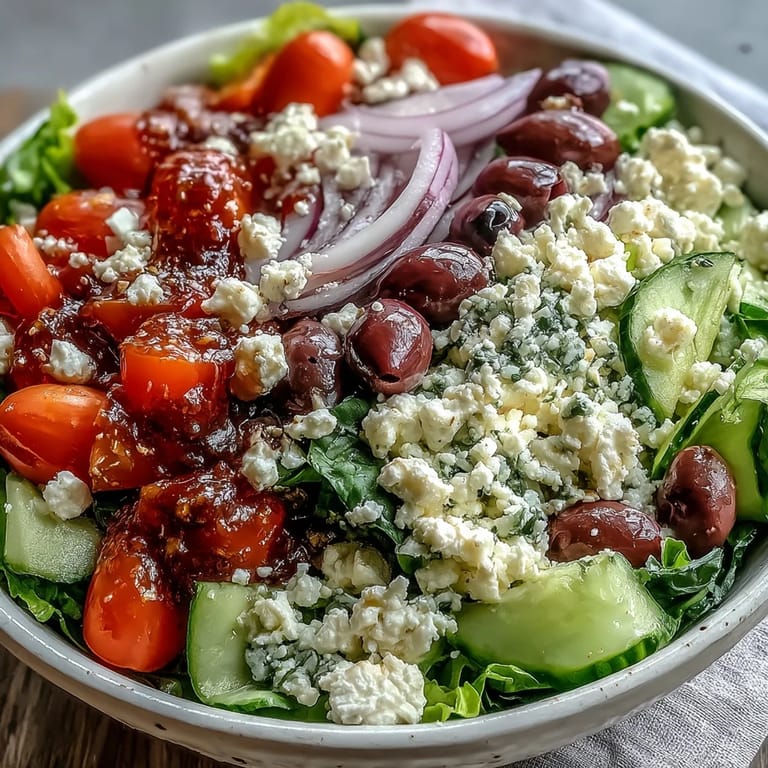
This is a salad that welcomes additions without losing its identity. I've added crispy chickpeas for protein, sliced bell peppers for color, fresh herbs like dill or mint when they're on hand, even crumbled whole grain bread for texture. The beauty is that you can adapt it based on what your garden or farmer's market offers without ever losing the Greek spirit of the thing. Think of it as a template rather than a mandate.
- Toss in sliced bell peppers or fresh dill for extra brightness and flavor.
- Add grilled chicken, chickpeas, or white beans if you want the salad to anchor an entire meal.
- Serve alongside warm pita bread for dipping into any vinaigrette that pools at the bottom.
 Save to Pinterest
 This salad has taught me that sometimes the best way to eat well is to stop overthinking and start honoring the ingredients in front of you. Every time I make it, I'm reminded why Maria was right all along.
Common Recipe Questions
- → What makes Greek salad authentic?
Authentic Greek salad features Kalamata olives, feta cheese, crisp vegetables, and a vinaigrette made with extra-virgin olive oil and red wine vinegar seasoned with dried oregano.
- → Can I make this ahead of time?
The vegetables can be chopped up to a day in advance. Store them separately from the feta and dressing, then combine just before serving to maintain crisp texture.
- → What can I substitute for feta cheese?
Vegan feta works well for dairy-free options. You could also use goat cheese for a milder flavor or halloumi for a saltier, firmer texture.
- → How long does the vinaigrette last?
The Greek vinaigrette keeps refrigerated in an airtight container for up to a week. Bring to room temperature and whisk well before using.
- → What proteins pair well with this salad?
Grilled chicken, lamb, or shrimp complement the Mediterranean flavors perfectly. Chickpeas or white beans also work well for vegetarian protein options.